



CCSD code G5100: Bypass of duodenum billing guide
CCSD code G5100 bills a bypass that leaves the duodenum in place CCSD code G5100...

Last Updated: Oct 16, 2026

CPT Code 15839 describes excision of excessive skin and subcutaneous tissue (includes lipectomy) for body areas not covered by more specific codes in the 15830 series.
Medical necessity documentation is the single biggest denial driver: payers require proof of functional impairment, not cosmetic intent, supported by photographs and physician notes.
Medicare considers CPT 15839 non-covered in purely cosmetic contexts; ICD-10 codes such as L98.7 (excess skin) and L30.4 (intertrigo rash) are often paired to show necessity.
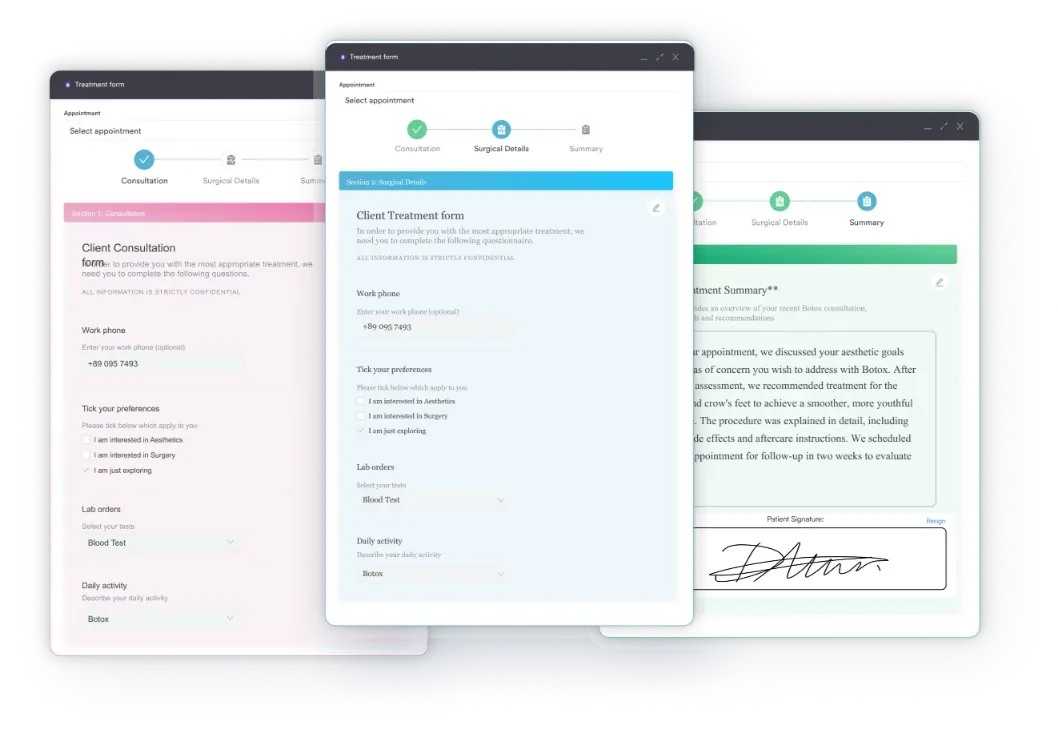
Practice management software like Pabau, along with digital clinical documentation tools, helps plastic surgery and aesthetic practices keep CPT 15839 photos, consent, and notes organized and audit-ready.
CPT Code 15839 describes excision of excessive skin and subcutaneous tissue, including lipectomy, for a body area not covered by the more specific codes 15830 through 15838. As a catch-all code, it’s treated by default as cosmetic by payers unless the medical record proves otherwise. For that reason, photographs, symptom history, and a diagnosis linked to physical impairment are what separate a paid claim from a denial.
This reference covers:
CPT Code 15839 is the catch-all code for excision of excessive skin and subcutaneous tissue (including lipectomy) for body areas not described by the more specific codes 15830 through 15838. Specifically, the American Medical Association’s CPT code set classifies it under the Integumentary System section, in the subsection covering repair and closure procedures. In other words, it is not limited to any single anatomical region.
The “other area” designation is meaningful from a billing standpoint. In practice, it signals that 15839 applies only when no other code in the series accurately captures the surgical site. For example, billing 15839 for a panniculectomy (which has its own designated code, 15830) is a coding error that payers flag routinely.
CPT Code 15839 is billed most often in two clinical contexts: post-bariatric body contouring and reconstructive closure following skin-destructive procedures. However, neither use case is medically necessary in payers’ eyes by default, which makes clinical documentation the deciding factor in reimbursement.
Plastic surgery and skin clinic teams encounter this code most often in the following situations:
In every case, the critical distinction is functional versus cosmetic intent. As a result, payers, including Medicare under Medicare Physician Fee Schedule guidelines, will not cover CPT Code 15839 when the primary driver is aesthetic improvement. For this reason, documentation must make the functional impairment explicit and primary.
Medical necessity is the threshold requirement for CPT Code 15839 claims. Specifically, payers apply a functional impairment standard: the excessive skin must cause demonstrable physical problems, not merely aesthetic concerns. Without documentation that meets this standard, the claim will be denied as cosmetic.
Required documentation often includes: pre-operative photographs showing the redundant tissue and its extent, a detailed history of conservative treatment attempts (barrier creams, antifungal therapy, weight management programs), physician notes describing the physical symptoms (rashes, infections, ulceration, restricted mobility), and a clear operative report explaining the surgical approach and the specific area treated. In practice.
Pairing CPT Code 15839 with a diagnosis code that reflects functional impairment, not aesthetic desire, is essential. The following ICD-10 codes are often used to support medical necessity, subject to individual payer review:
However, these codes should not be selected mechanically. Instead, the diagnosis code must reflect the patient’s actual documented condition. For this reason, payers will audit the medical record for consistency between the diagnosis code, the operative note, and the clinical history. For practitioners tracking ICD-10 pairing patterns across patients.
Applying the correct modifier to CPT Code 15839 is often the difference between a paid claim and a denial or reduced payment. Modifier selection depends on the number of procedures performed, the anatomical site, and the relationship of 15839 to other codes billed on the same date of service.
In particular, modifier -59 is often misapplied. Therefore, verify current AAPC coding guidelines and NCCI edits before using it to unbundle 15839 from any procedure on the same claim. Ultimately, the National Correct Coding Initiative table should be your reference point, not prior experience alone.
Medicare reimbursement for CPT Code 15839 is locality-dependent. Specifically, CMS sets Physician Fee Schedule rates every year, and practices should verify figures using the MPFS lookup tool for their specific geographic locality before relying on any published benchmark. However, the figures below reflect 2026 national averages and are provided for reference only.
Relative value units (RVUs) determine how Medicare calculates payment. Specifically, the three components, work, practice expense, and malpractice, are each multiplied by a geographic adjustment factor and then by the annual Medicare conversion factor. The conversion factor changes each calendar year, so the dollar amounts derived from RVUs are not fixed. Consult FastRVU’s 2026 RVU lookup for current work, practice expense, and malpractice RVU values by locality for CPT 15839.
In addition, commercial payer rates for CPT Code 15839 are negotiated separately and often exceed Medicare rates. But coverage decisions, not just payment rates, are the key variable. For example, a commercial payer may reimburse at 130% of Medicare for covered claims while at the same time denying all claims without specific medical necessity documentation. In short, rate and coverage are two different questions to resolve with each payer before submitting.
CPT Code 15839 is the final code in the 15830 to 15839 series and the only one without a designated anatomical site. Because of this, knowing which code in the series applies to a specific surgical site prevents coding errors and avoids the “wrong code for the site” denial type. The same logic applies to other Integumentary System repair codes.
CPT 15847 is not a general add-on for this series. It’s the add-on code specific to CPT 15830, reported when abdominoplasty with fascial plication accompanies a panniculectomy, and it isn’t reportable with CPT 15839. Because 15839 covers a non-specific “other area,” it has no series add-on code of its own.
When a session includes more than one non-specific excision site, each is reported as a separate 15839 line item, distinguished with modifier -51 or -59 as appropriate, not with 15847. Other codes in the Integumentary System’s grafting family follow the same site-specific structure.
Denials for CPT Code 15839 cluster around three root causes: cosmetic exclusion, wrong code selection, and bundling with another procedure. Each has a specific prevention strategy.
CPT 19342 covers delayed breast implant placement or breast reconstruction procedures. When 15839 is billed on the same date as 19342, some payers apply NCCI bundling edits and deny the secondary code, treating the skin excision as integral to the primary reconstructive procedure.
If the skin excision performed under CPT Code 15839 was truly distinct from the breast reconstruction (different anatomical location, separate incision, separate clinical indication), modifier -59 may be used to unbundle the codes. In turn, this requires the operative report to clearly document the separate nature of each procedure. Verify current NCCI edits before relying on -59 for this combination, as payer policies evolve. In addition, a general reference for CPT code lookup tools can help practices cross-check code pairs and bundling context before submission. Time-based and complexity-based selection can point at different codes, so the documented medical decision making decides. An itemized superbill keeps the required fields in one place: dates, codes, charges and provider identifiers.
Plastic surgery practices billing CPT Code 15839 face a documentation-intensive workflow. Every claim depends on pre-operative photographs, symptom history, prior authorization confirmation, and a detailed operative report that always uses the same clinical language as the submitted ICD-10 code. When any part of that chain breaks, the claim fails.
Pabau’s compliance and documentation tools are built for the paperwork this code demands. In practice, the platform keeps medically necessary and cosmetic procedures separated in patient records, which matters when payers audit documentation consistency. As a result, teams at plastic surgery practices using Pabau’s EMR can attach structured pre-operative checklists, consent forms, and photographic documentation to treatment records at the time of service, rather than reconstructing them at claim review.
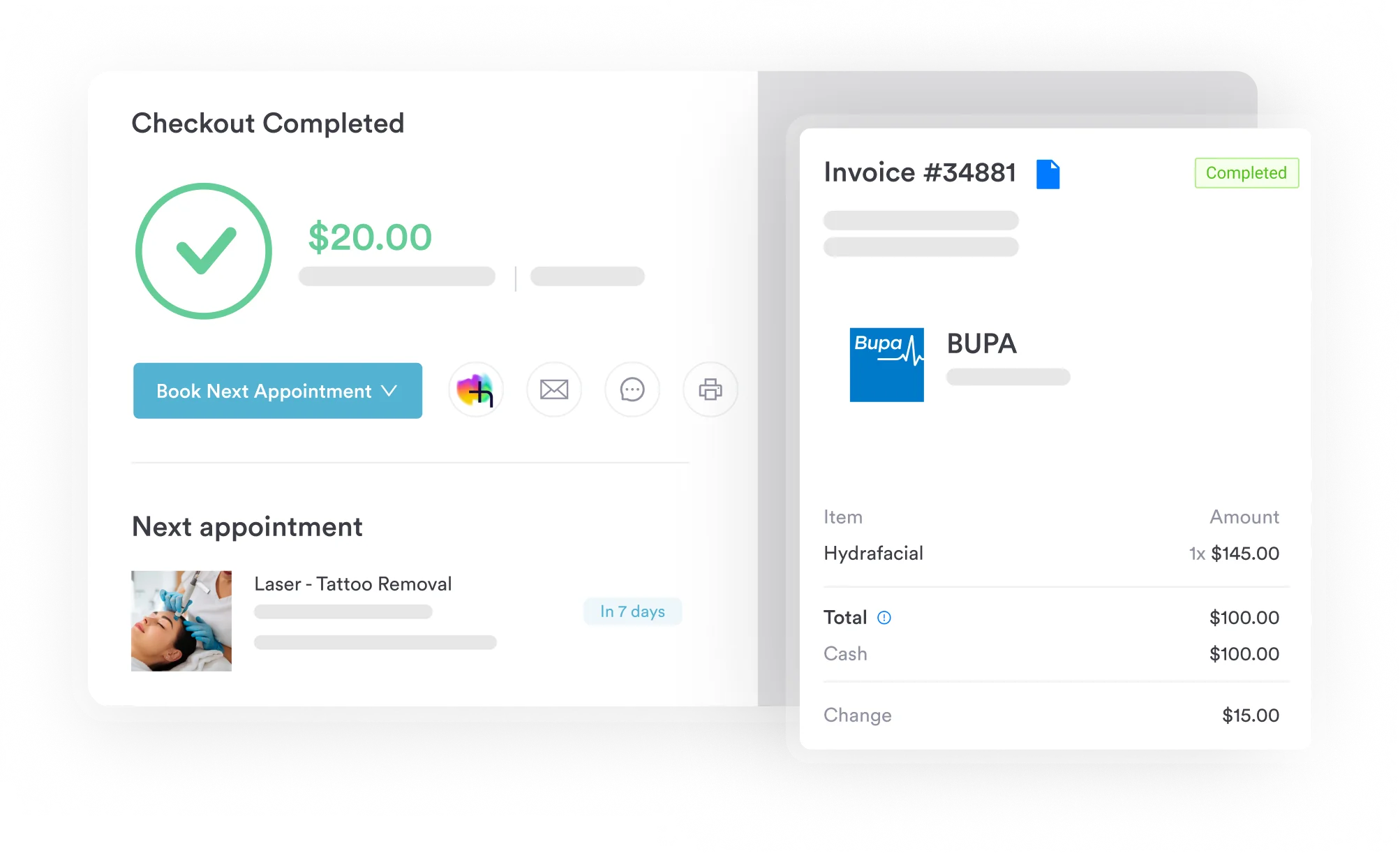
Consistent documentation matters as much as any single claim. Plastic surgery practices using plastic surgery EMR software that keeps operative notes, consent forms, and photographs in one record can catch a missing ICD-10 pairing or a missing prior authorization before the claim goes out, not after a denial comes back. For practices looking at options.
For practices managing a cosmetic surgery clinic, the documentation requirements for CPT Code 15839 also connect to broader compliance obligations, including how cosmetic versus medically necessary procedures are separated in billing records for payer audits. In practice. In addition.
Audit your last 20 CPT 15839 claims and find out which payers denied for cosmetic exclusion. Then, build a payer-specific documentation checklist that maps each payer’s stated medical necessity criteria to your pre-operative workflow. As a result, practices that tailor documentation to each payer’s Local Coverage Determination will more often see lower denial rates for skin excision procedures.

Pabau’s digital forms, photo storage, and treatment notes keep consent, pre-operative photos, and clinical notes organized in one record, so plastic surgery and aesthetic practices can produce complete, audit-ready documentation for every CPT 15839 claim.

CPT Code 15839 is simple on paper but hard to manage in practice. Specifically, the code itself is clear: excision of excessive skin and subcutaneous tissue in a body area not covered by a more specific code. However, what is not automatic is the documentation trail that separates a covered, medically necessary claim from a cosmetic exclusion denial.
Overall, practices that always pay attention to ICD-10 code selection, pre-operative photograph protocols, and payer-specific authorization requirements will see far fewer denials. Pabau’s documentation tools are built to support exactly this workflow. For a broader look at med spa compliance, see how documentation practices translate into claims accuracy, or book a demo to see how Pabau keeps CPT 15839 documentation organized and audit-ready.

Need a deeper look at a specific ICD-10 pairing? ICD-10 Code L08.9 breaks down the documentation and coding rules for the skin infection code used to support CPT 15839 claims.
Billing a skin graft alongside an excision? CPT code 15121 covers split-thickness autograft billing and the site-specific rules that keep the two codes from being bundled the wrong way.
Handling a wound repair on the same claim? CPT Code 12002 explains simple laceration repair billing, including the modifiers that separate it from an excision procedure.
CPT Code 15839 is a surgical code that describes excision of excessive skin and subcutaneous tissue (includes lipectomy) for body areas not covered by the more specific codes 15830 through 15838. It is used when the surgical site is any area other than the abdomen, thigh, leg, hip, buttock, arm, forearm/hand, or submental fat pad. Classified under the Integumentary System section of the AMA CPT code book, it applies in post-bariatric, reconstructive, and functional impairment contexts.
The most commonly used modifiers with CPT 15839 are -51 (multiple procedures, when 15839 is secondary to a primary surgical code), -59 (distinct procedural service, to unbundle from a bundled code at a separate anatomical site), and -LT/-RT (left/right side, for bilateral sites). Modifier -22 applies when the procedure required much greater work than typical and the operative report documents the added complexity.
Medicare covers CPT Code 15839 only when medical necessity for functional impairment is documented; it is excluded when the procedure is performed for cosmetic purposes. CMS Article A57221 addresses plastic surgery billing and coding policies. Geographic locality affects the reimbursement rate, and coverage determinations remain subject to individual contractor policies and Local Coverage Determinations. Commercial payer coverage varies by plan and state.
The most common denial reason is cosmetic exclusion: the medical record does not fully document functional impairment. Payers require pre-operative photographs, a documented history of conservative treatment failure, and clinical notes that clearly link the skin redundancy to a physical symptom (infection, rash, restricted mobility).



