Anja Dodevska
What state has the most plastic surgery per capita? America’s cosmetic map in 20 numbers
What state has the most plastic surgery per capita? Florida is America’s p...

Last Updated: Oct 16, 2026
Free PDF 1 page, print-ready Clinician-reviewed
Clinicians and post-surgical care teams use digital forms to send branded Embrace scar therapy aftercare instructions to patients within hours of surgery, ensuring consistent education and improving compliance. A comparable patient handout guides laser hair removal patients from immediately after treatment through the first month of recovery.
This guide explains the clinical rationale, application protocol, and outcome-tracking framework for integrating Embrace into your practice.
A ready-to-use patient instruction template covering proper Embrace application, dressing changes, wear schedule, activity guidance, and expected healing timeline post-surgery. Practices treating CO2 laser resurfacing patients use a similar aftercare template covering the first 48 hours, common side effects, and long-term sun protection.
Upload this PDF, or any form you already use, and Pabau's AI Form rebuilds it with tick boxes, text fields and a signature. Attach it to the treatment once, and every patient gets it on time.
AI Form rebuilds the consent, history and aftercare forms you already use. You review each one, then publish.
Patients complete forms on their phone before they arrive, so the front desk stops retyping paper.
Every signed form is versioned and attached to the treatment record, ready when you need it.
Set how long a consent stays valid. Returning patients skip forms they have already signed.
Supports HIPAA and GDPR compliance AES-256 encryption 4.8 on G2 4.7 on Capterra Trusted by 4,000+ practices worldwide

Embrace scar therapy is an FDA-cleared medical device using tension-offloading technology to prevent hypertrophic scar formation after surgery.
Active Scar Defense is designed for new scars (2-4 weeks post-op). Minimize is for established scars with weaker clinical evidence.
A published RCT measured scar appearance using the Visual Analogue Scale (VAS, its primary endpoint) and the Patient and Observer Scar Assessment Scale (POSAS, its secondary endpoint), showing statistically significant improvement versus standard care.
Pabau’s client portal and digital forms enable practices to distribute branded Embrace aftercare instructions and track scar outcomes systematically.

Embrace scar therapy is an FDA-cleared medical device that uses tension-offloading technology to reduce hypertrophic (raised, thickened) scars following surgery.
The silicone-based dressing is applied to closed surgical incisions where it mechanically offloads skin tension at the wound site during the critical healing and remodeling phases – typically weeks 2-12 post-operation.
Unlike passive silicone gels or sheets that rely on hydration alone, Embrace actively reduces mechanical tension on the wound, which is the primary driver of excessive collagen deposition and abnormal scar formation. This distinction makes it particularly valuable for high-tension surgical sites (abdominoplasty, facelift, breast surgery) where hypertrophic scarring is most likely.
Hypertrophic scars develop when wound tension triggers excessive fibroblast activity and collagen cross-linking during healing. Studies show that reducing mechanical stress at the incision site leads to thinner, flatter scars with better color match and texture.
A prospective randomized controlled trial published in Plastic and Reconstructive Surgery (2014) evaluated Embrace Advanced Scar Therapy versus standard wound care following abdominoplasty.
Its primary endpoint was the Visual Analogue Scale (VAS), scored from photographs at 6 and 12 months. Its secondary endpoint was the Patient and Observer Scar Assessment Scale (POSAS), scored at 7, 9, 11, and 13 weeks and again at 6 and 12 months. The Vancouver Scar Scale was not used in this trial.
Results showed statistically significant improvement on both endpoints. Investigator-rated POSAS scores favored the treated side on pigmentation, pliability, relief (roughness), vascularity, and overall opinion.
The 12-week protocol reflects the typical scar maturation window. Most clinicians observe visible improvement within 8-12 weeks of continuous wear, with further refinement possible up to 12-18 months post-surgery via natural remodeling.
Practices running virtual sessions through a telehealth platform can share and review worksheets on screen.
Embrace offers two distinct product lines for different clinical scenarios.
Active Scar Defense is the evidence-backed choice for primary prevention in high-risk surgical sites. Minimize may help improve the appearance of older scars but should not be positioned with the same level of clinical certainty as Active Scar Defense.
Ideal candidates are patients undergoing surgery with predictable high-tension wound closure or known genetic predisposition to hypertrophic scarring.
Timing is critical for maximal efficacy. Apply Embrace only after the surgical wound is fully closed with no drainage or dehiscence risk.
Instruct patients to personalize their treatment plan based on post-operative wound checks. Late starters (week 6+) can still benefit from Embrace, since the remodeling window remains open for 12+ weeks.
Practices using automated clinical documentation and digital forms can standardize the Embrace application teaching via branded patient instruction sheets (like the downloadable template above). Ensure staff follow this sequence.
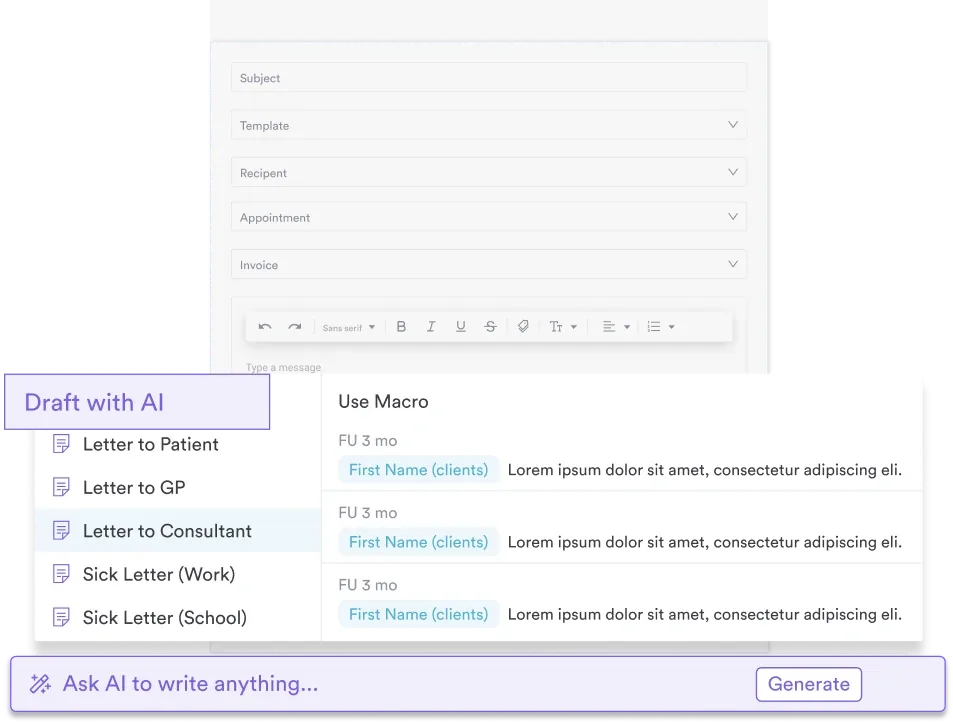
Practices that embed Embrace into their standard post-operative protocol. Use structured patient records to document initial scar assessment, Embrace start date, and follow-up progress.
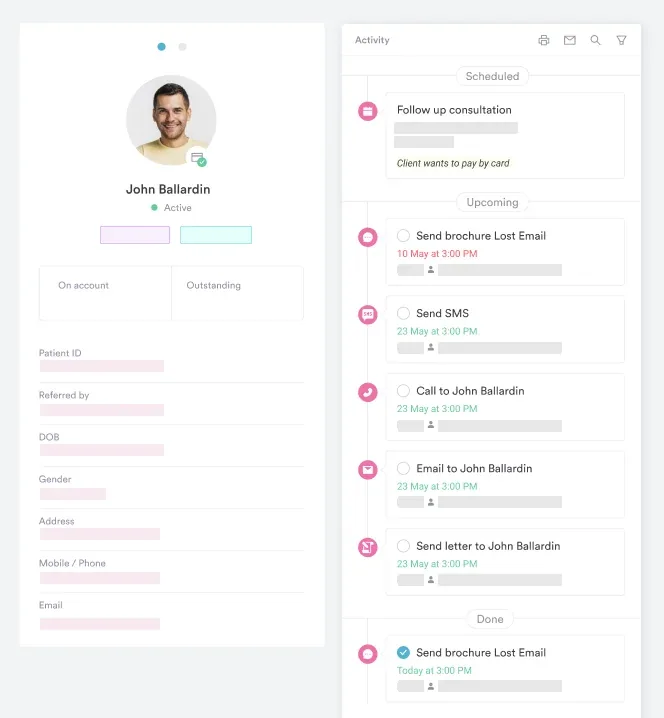
Post-operative follow-ups (weeks 2, 6, 12) give clinicians touchpoints to reinforce Embrace adherence and assess scar trajectory.
Use automated patient follow-ups to send reminder messages at week 2 (“start Embrace now”), week 6 (“midpoint check-in”), and week 12 (“final assessment”).

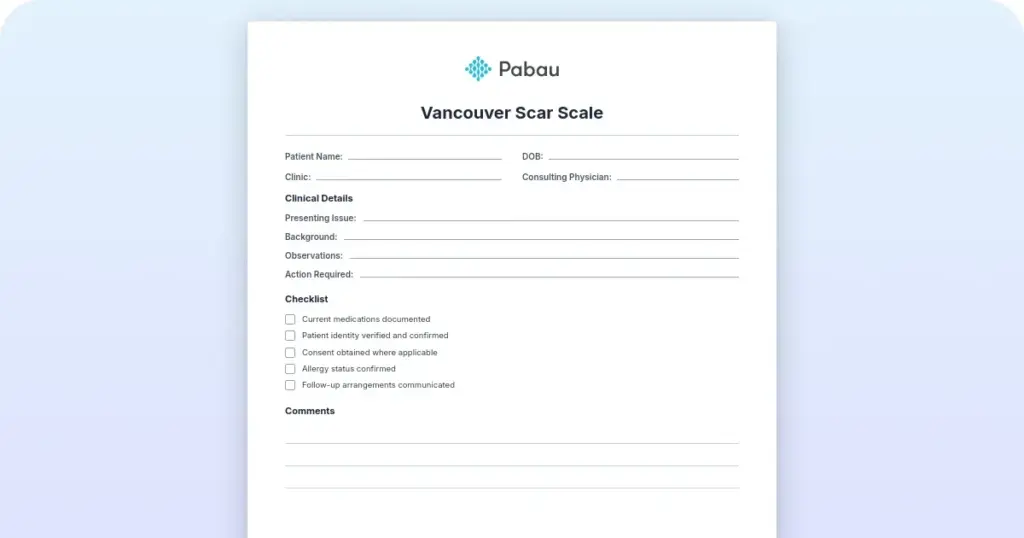
Standardized outcome measurement differentiates evidence-based practices from those relying on subjective impression. The Vancouver Scar Scale (VSS) is a widely used four-domain tool for tracking scar maturation in routine practice.
VSS is a separate instrument from the ones used in the Embrace RCT cited above, which measured outcomes with the Visual Analogue Scale (VAS) and the Patient and Observer Scar Assessment Scale (POSAS). VSS simply offers practices a practical, in-office option for their own ongoing scar tracking.
As a practical in-office cadence (distinct from the RCT’s own assessment schedule), consider documenting baseline VSS at week 2 (pre-Embrace), a midpoint check at week 6, and a final assessment at week 12. Progressive improvement across the four domains supports a picture of clinical progress. Measuring scar satisfaction via patient compliance tools ensures shared decision-making and reinforces adherence. Medical spa management software links the consultation, the consent and the treatment into one sequence.
Embrace scar therapy is a clinically validated, tension-offloading medical device that significantly reduces hypertrophic scar formation when applied 2-4 weeks post-operatively.
Success depends on timely initiation, patient compliance with the 12-week wear protocol, and structured outcome tracking using tools like the Vancouver Scar Scale.
Practices that integrate Embrace into their standard post-surgical workflow, using digital forms to distribute branded patient instructions and systematic documentation to track scar progression, achieve the best results.
Pabau’s patient engagement and outcome-tracking features help practices operationalize evidence-based Embrace protocols consistently, improving post-surgical scar outcomes and patient satisfaction.
Ready to streamline post-surgical scar management in your practice? Book a demo to see how digital forms, automated follow-ups, and structured outcome documentation help practices deliver evidence-based Embrace protocols at scale.

Looking to book more plastic surgery consults? plastic surgery marketing strategies shows how local search, before-and-after galleries, and fast follow-up win the most plastic surgery consults.
Preparing a consultation form for another procedure? breast reduction consultation form covers medical history screening, physical exam findings, aesthetic goals, informed consent, and a follow-up checklist.
Need aftercare instructions for a surgical procedure? areola reduction aftercare instructions covers wound care, compression garment use, activity limits, pain management, and warning signs after surgery.
Embrace scar therapy is an FDA-cleared medical device that uses tension-offloading technology to prevent and reduce hypertrophic scars following surgery. The silicone dressing is worn continuously for up to 12 weeks starting 2-4 weeks post-operation.
The standard protocol is 12 weeks of continuous wear. Most clinicians observe visible scar improvement within 8-12 weeks, though the remodeling window extends 12-18 months post-surgery.
Yes, Embrace scar therapy (Active Scar Defense) is FDA-cleared as a medical device via 510(k) premarket notification, confirming safety and efficacy for preventing hypertrophic scars.
Active Scar Defense is designed for new scars (2-4 weeks post-op) and has strong RCT evidence. Minimize is for established scars and has limited comparative data. It should not be positioned with the same clinical certainty as Active Scar Defense.
Embrace Minimize can be applied to scars months or years old, but clinical evidence is weaker than for Active Scar Defense. Best results occur when tension offloading begins within weeks 2-4 of surgery.
Start Embrace 2-4 weeks post-op once the surgical wound is fully closed and sutures are removed. Starting within this window optimizes clinical outcomes. Later starts (week 6+) can still be beneficial.