CPT code 93503: Swan-Ganz catheter billing and modifiers
CPT code 93503: Official descriptor and procedure overview In the AMA CPT code s...

Last Updated: Oct 23, 2026
L3215 is the HCPCS Level II code for orthopedic footwear, ladies shoe, oxford, each.
CMS maintains L3215 within its HCPCS Level II code set. DME suppliers and pedorthists use it when billing for a medically necessary Oxford-style orthopedic shoe for a female patient.
Let Pabau's smart automation suggest the right codes, reduce claim denials, and keep your practice compliant—effortlessly.
Automate repetitive tasks and focus on what matters most—your patients.
Reduce coding errors and ensure compliance with the latest regulations.
Clean claims, fewer denials, and faster reimbursements.
Powerful insights and reporting to help your practice thrive.
HIPAA compliant SOC 2 certified GDPR-compliant Trusted by 4,000+ clinics worldwide

HCPCS Code L3215 describes orthopedic footwear, ladies shoe, Oxford, each. Suppliers bill it per item under Medicare Part B as an HCPCS Level II footwear code, within the L3201-L3265 orthopedic footwear range
LCD L33641 and Policy Article A52481 govern L3215, an orthopedic footwear (ORF) L-code – it is not part of the diabetic therapeutic shoe benefit, which covers only A-codes (A5500, A5501, A5503-A5514) and never L-codes
Under SSA Section 1862(a)(8) and CMS IOM 100-02 Chapter 15, Section 290.B, Medicare statutorily excludes orthopedic shoes billed under L-codes unless the shoe is an integral, medically necessary part of a covered leg brace (the L1900-L2090 series) that the same supplier bills alongside the brace
When an Oxford shoe genuinely is integral to a covered leg brace, the supplier must bill it as L3224 (women) or L3225 (men) with a KX modifier attesting the requirement is met – not as L3215, which the MAC denies as statutorily excluded when submitted as a standalone claim
Practice management software like Pabau can help keep documentation organized, validate claim details, and track claims through to reconciliation – useful workflow discipline for any billing operation, though it is not a purpose-built US Medicare DME/HCPCS compliance tool
Medicare Part B does not cover HCPCS Code L3215 under the diabetic therapeutic shoe benefit. CMS Pub. 100-02, Chapter 15, §140 of the Medicare Benefit Policy Manual establishes that benefit under Social Security Act §1861(s)(12). It covers only A-codes (A5500, A5501, and A5503-A5514) – never L-codes.
L3215 is an orthopedic footwear (ORF) code. A separate policy governs it: DME MAC Local Coverage Determination (LCD) L33641, Orthopedic Footwear. Its companion Policy Article A52481 adds further detail.
Social Security Act §1862(a)(8) statutorily excludes orthopedic shoes and other supportive foot devices from Medicare coverage. CMS IOM 100-02, Chapter 15, §290.B, restates this rule.
This exclusion is narrow in one specific way. It doesn’t apply when the shoe is an integral part of a covered leg brace and the brace’s cost includes the shoe’s cost. Outside that exception, Medicare does not pay for orthopedic shoes billed under L-codes. This holds true no matter how complete the clinical documentation is.
To qualify for coverage, an Oxford-style shoe must be integral to one of these covered leg brace codes: L1900, L1920, L1980, L1990, L2000, L2005, L2010, L2020, L2030, L2050, L2060, L2080, or L2090.
The physician’s order should also reference a diagnosis that supports medical necessity for the brace. A joint disorder such as M36.1 is one of many conditions that might justify one. Coverage also requires that:
HCPCS Code L3215 itself describes an Oxford-style shoe that suppliers do not bill as part of a covered leg brace, and they must bill it without a KX modifier.
Because a standalone orthopedic shoe falls squarely within the statutory exclusion, Medicare does not cover an L3215 claim by itself. Coverage only applies when the claim ties to a covered brace – billed by the brace’s supplier, with the KX modifier, under L3224/L3225.
Billing staff who treat L3215 as a diabetic-shoe code – or who expect the same reimbursement Medicare gives A-codes – see their claims denied.
Full coverage criteria, the complete list of qualifying brace codes, and documentation standards for orthopedic footwear come from LCD L33641, and its companion Policy Article A52481.
A beneficiary who separately qualifies for both the diabetic shoe benefit and a leg brace can receive both. Suppliers bill them as two distinct benefits with separate codes and criteria. They don’t bill a diabetic shoe attached to a brace as a shoe modification under the diabetic shoe benefit.
Commercial and Medicaid payer coverage varies significantly. Non-Medicare payers require individual plan verification before billing L3215, as many do not follow the same orthopedic footwear framework or statutory exclusion Medicare applies.
Missing documentation is the fastest path to a denied L3215 claim. The DME MAC requires a complete file before processing payment. A single missing element triggers a request for additional information, or an outright denial. Use a paperless documentation workflow to ensure nothing falls through the cracks.
Orthopedic footwear has never used a Certificate of Medical Necessity (CMN) or the diabetic shoe benefit’s Certifying Physician Statement. CMS retired CMNs and DIFs across the board for DME MAC claims with dates of service on or after January 1, 2023. Even before that, footwear was never one of the code categories a CMN covered.
LCD L33641 and Policy Article A52481 govern documentation for a brace-integral Oxford shoe. Policy Article A55426 sets out the standard documentation rules. The required documentation set includes all of the following:
Per CMS guidance, only accredited DME suppliers may bill orthopedic footwear codes to Medicare. Suppliers without current accreditation from an approved organization are not eligible to submit these claims, regardless of the clinical documentation quality.
Do not use unofficial or template forms found online for the leg brace order or the integral-shoe documentation. If a workflow in your practice still references a CMN or a Certifying Physician Statement for L3215, it’s out of date, or your team borrowed it from the wrong benefit.
Orthopedic footwear coverage runs through the leg brace policy (LCD L33641 / Policy Article A52481), not the diabetic shoe benefit.
For practices managing EHR integrations, linking your documentation workflow to your billing system reduces the risk of submitting claims before your team collects all required documents.
CMS updates Medicare allowable rates for HCPCS Code L3215 annually, and they vary by locality. These figures apply when the same supplier bills the Oxford shoe within the covered leg brace pathway – as L3224 or L3225, with the KX modifier, alongside the brace.
Medicare statutorily excludes a standalone L3215 claim not tied to a covered brace from payment, regardless of the published rate.
The table below shows representative rate ranges for 2026 based on publicly available fee schedule data. For the current exact rate in your MAC jurisdiction, use the CMS Physician Fee Schedule tool.
Rates are subject to annual CMS updates. The figures above are representative; always verify against the current CMS DME fee schedule before submitting a claim. Regional MAC variations mean the allowable amount in one jurisdiction may differ from another for the same L3215 claim.
With software built for claims, orthotic and prosthetic billing stops living in a spreadsheet nobody trusts.
Billing HCPCS Code L3215 correctly requires following a specific workflow. Each step has a documentation checkpoint, and skipping any one of them is exactly what the DME MAC catches during claim review.
A structured patient care management process helps DME suppliers and pedorthists keep the billing pipeline moving smoothly from order to submission.
The two most common code-selection errors are billing a men’s shoe code for a female patient (or the reverse), and billing L3215 or L3219 when the shoe is actually integral to a covered brace. In that case, staff should bill L3224 or L3225 with a KX modifier instead. Both errors cause a denial and delay the corrected claim.
These are the denial patterns billing staff encounter most often with L3215 submissions:
For practices using billing-integrated practice management software, automating a pre-submission checklist against these denial triggers substantially reduces rework on L3215 claims.
L3215 sits within a group of closely related footwear codes, part of the broader family of orthotic and prosthetic L-codes. That family also covers devices like a rigid elbow orthosis (billed under L3762) and an unlisted prosthetic item (billed under L8499).
Selecting the correct footwear code depends on the patient’s sex, shoe style, and fitting requirements. The table below compares the adjacent L-codes most commonly confused with HCPCS Code L3215.
When a female patient needs an Oxford-style shoe that isn’t integral to a covered leg brace, L3215 is the correct descriptive code. Suppliers bill it without a KX modifier, though as a standalone item it remains statutorily excluded from Medicare payment.
If that same Oxford shoe is integral to a covered leg brace, suppliers bill it as L3224 with a KX modifier instead – not as L3215.
If the patient needs an extra-depth shoe to accommodate a custom orthotic insert, L3216 is more appropriate. These distinctions matter: billing the wrong code creates both a coding error and a documentation mismatch that triggers denial.
Before selecting between L3215 and L3216, confirm whether the patient’s prescription includes a custom orthotic insert. If the physician ordered an insert alongside the shoe, L3216 (depth inlay) is the correct code. Billing L3215 when the prescription includes an insert misrepresents the dispensed item and creates a documentation mismatch at audit.
L3215 claims usually fail because the documentation workflow breaks down somewhere between the certifying physician, the pedorthist, and the DME MAC submission. The clinical care itself is rarely the problem. That’s true whether it’s an orthopedic DME supplier, a physical therapy practice.
Practice management software like Pabau helps by keeping documentation organized, validating claim details before they go out, and tracking claims through to reconciliation. That workflow discipline keeps a billing operation running smoothly.
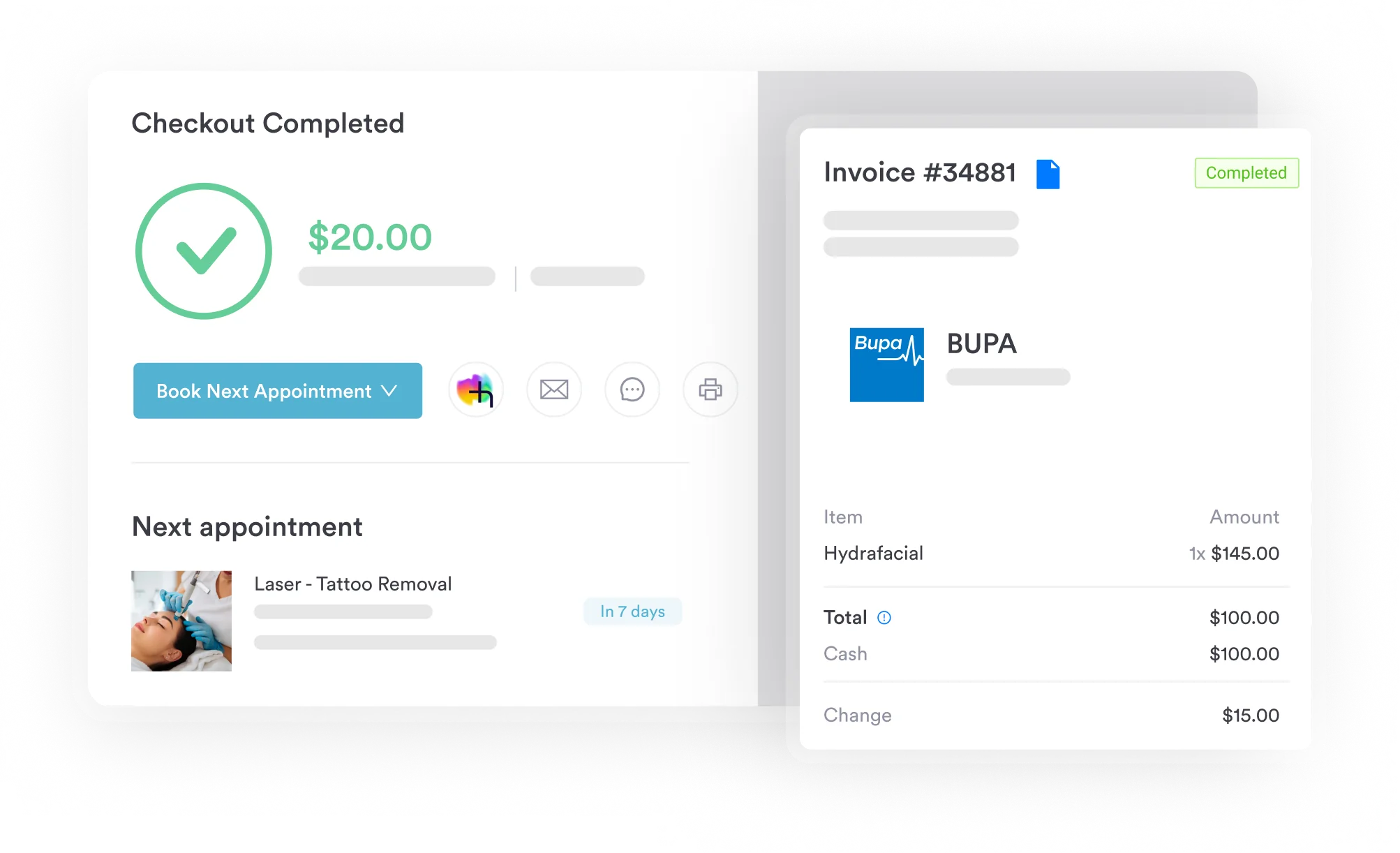
For practices managing footwear billing alongside their broader documentation workload, the key benefits of a dedicated practice management platform include:
Practices using paperless practice workflows tend to see fewer documentation-related denials, because the system enforces the checklist rather than relying on staff memory. For a practice billing L3215 and related L-codes at volume, a consistent documentation workflow with built-in checkpoints helps. It catches a missing statement or an incomplete form before it turns into a denial. A rejected electronic claim never reaches adjudication, so it does not appear in denial reporting. When a claim on this code comes back unpaid, the denial reason codes on the remittance name the cause.
See how Pabau’s practice management platform handles documentation and claim workflows for specialty billing practices. You can also explore automated billing workflows that reduce manual steps in the documentation-to-submission process.
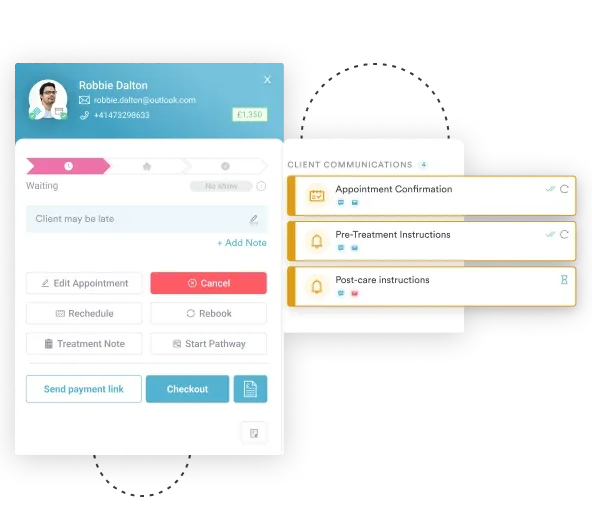

Pabau’s practice management platform helps billing teams keep documentation organized, validate claim details, and track claims through to resolution – so nothing falls through the cracks before submission.

HCPCS Code L3215 claims fail at the documentation stage more often than the clinical stage. Orthopedic footwear billed under L-codes has a narrow coverage path. Medicare statutorily excludes it unless the shoe is integral to a covered leg brace, and the DME MAC requires a complete file every time.
Getting the leg brace order, the brace-integral shoe documentation, the KX modifier, same-supplier billing, and proof of delivery aligned before submission makes all the difference. It’s the gap between a clean claim and a denial that adds weeks of rework.
Pabau’s HIPAA-compliant practice software gives billing teams a place to keep documentation organized, validate claim details, and track claims through to resolution. This catches missing pieces before they turn into denials. To see how Pabau supports specialty billing workflows, book a demo.

Billing a different Medicaid behavioral health service? H0038 covers documentation requirements for self-help and peer support services.
Managing a different bundled Medicare payment code? Q4081 covers Epoetin Alfa billing under the ESRD prospective payment system.
Billing another Medicaid supply code? T4524 covers documentation requirements for extra-large adult incontinence briefs.
HCPCS Code L3215 is an active Level II HCPCS code describing orthopedic footwear, ladies shoe, Oxford, each. Accredited DME suppliers and certified pedorthists use it when billing Medicare Part B for a medically necessary Oxford-style orthopedic shoe dispensed to a female patient. The code falls within the L3201-L3265 orthopedic footwear range that CMS maintains.
No, not on a standalone basis. LCD L33641 and Policy Article A52481 govern HCPCS Code L3215, an orthopedic footwear (ORF) L-code – not the diabetic therapeutic shoe benefit (which covers only A-codes). Under Social Security Act Section 1862(a)(8) and CMS IOM 100-02, Chapter 15, Section 290.B, Medicare statutorily excludes orthopedic shoes from coverage unless the shoe is an integral, medically necessary part of a covered leg brace (the L1900-L2090 series) that the same supplier bills alongside the brace. When that’s the case, the supplier bills the shoe as L3224 (or L3225 for men) with a KX modifier – not as L3215. The MAC denies a standalone L3215 claim not tied to a covered brace as statutorily excluded.
Billing an Oxford shoe under the orthopedic footwear (ORF) pathway requires several items. These include a signed order for the covered leg brace (L1900-L2090 series), documentation establishing that the shoe is an integral and medically necessary component of that brace, and evidence that the same DME supplier bills the shoe and brace together. The claim also needs a KX modifier on the shoe code (L3224 or L3225) attesting that the shoe meets the integral-to-brace requirement, proof of delivery that the patient signed, and evidence that the billing supplier holds current Medicare DME accreditation. A Certificate of Medical Necessity (CMN) and the diabetic shoe benefit’s Certifying Physician Statement do not apply to L3215. CMNs never covered footwear, and CMS retired them for all DME MAC claims with dates of service on or after January 1, 2023. The Certifying Physician Statement belongs to the separate diabetic shoe benefit, which covers only A-codes.
CMS updates Medicare allowable rates for HCPCS Code L3215 annually, and they vary by locality. These rates apply to claims billed within the covered leg brace pathway – as L3224 or L3225, with the KX modifier. Medicare statutorily excludes a standalone L3215 claim not tied to a covered brace from payment, regardless of the published rate. Use the CMS Physician Fee Schedule lookup tool at cms.gov to confirm the current 2026 rate for your specific MAC locality before submitting a claim.
The most common denial reasons include billing a standalone orthopedic shoe that isn’t tied to a covered leg brace – which SSA Section 1862(a)(8) statutorily excludes. Missing the KX modifier when the shoe is integral to a covered brace is another frequent trigger. Other common errors are billing L3215 instead of L3224 (or vice versa) when the shoe’s brace-integral status doesn’t match the code billed, and a different supplier billing the shoe than the one billing the leg brace. Missing documentation establishing the shoe’s integral role in the brace, a billing supplier lacking valid Medicare DME accreditation, and submitting without proof that the patient received the shoe round out the list.
L3219 and HCPCS Code L3215 both describe an Oxford-style orthopedic shoe billed per item. L3219 is the men’s code and L3215 is the women’s code, and both apply only when the shoe is not integral to a covered leg brace. Suppliers don’t use either code when the shoe is integral to a covered brace – in that case, the correct codes are L3224 (women) or L3225 (men), billed with a KX modifier. Billing the wrong sex-specific code for a patient generates a claim error. Always match the code to the patient’s sex as documented in the physician order and patient record.