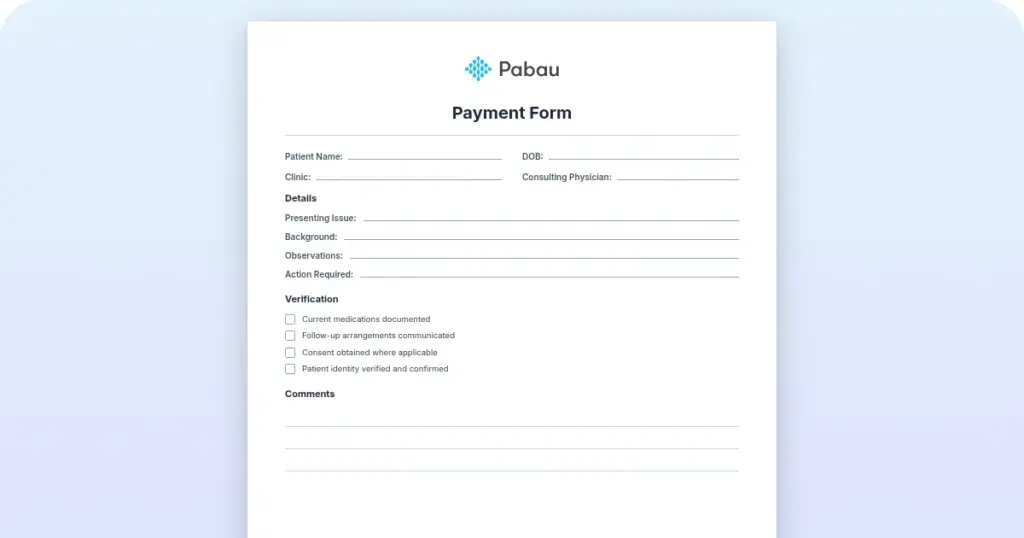
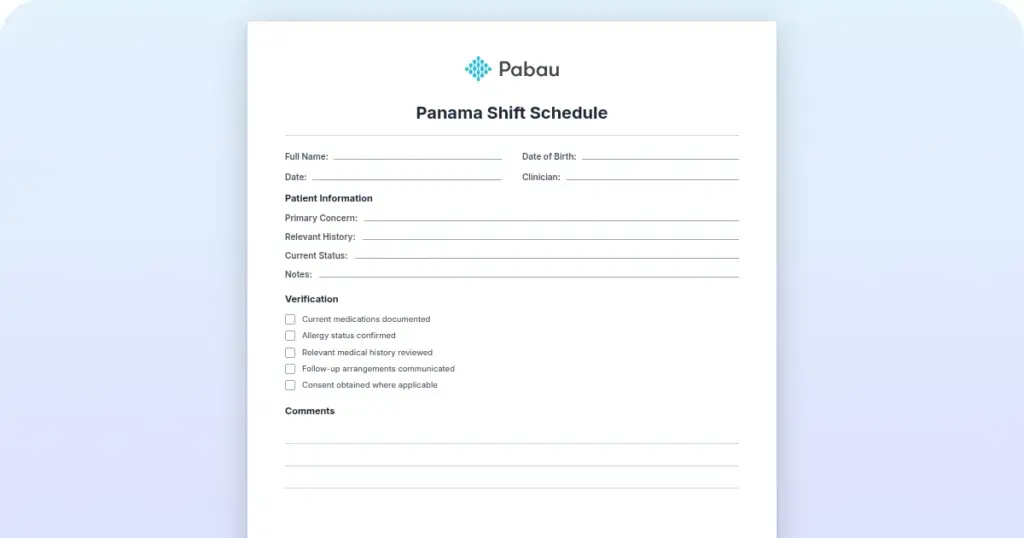
Free patient payment form template to download
A patient payment form is a signed document that records how a patient will pay ...

2
Last Updated: Oct 14, 2026

Practice management software runs a practice’s daily operations in one system, from scheduling and patient records to billing, communication, and reporting.
Practice management software and EHR software do different jobs — one handles the business side, the other the clinical record — and many practices run a system that combines both.
The right fit depends on your workflows, with all-in-one platforms, modular tools, and specialty systems each suited to different practices.
Running a practice means juggling appointments, patient records, billing, and messages, and every one of those tasks pulls time away from patient care.
Practice management software solves that. It’s a digital system that runs the daily operations of healthcare and private practices in one place, from scheduling and patient records to payments, reporting, and communication. For solo clinicians, that efficiency adds to the wider benefits of running a private practice.
If you’re wondering what practice management software is, how it works, and whether your practice needs it, this guide covers:
Practice management software is a digital system that helps healthcare practices and medi-aesthetic clinics manage their day-to-day operations and administrative tasks in one place. In a sentence, it’s the software that runs the business side of a practice. The schedule, client records, invoicing, and patient communication all live in a single system instead of scattered across tools. Practice management itself means the day-to-day coordination of scheduling, staffing, finances, and records, and the software simply automates that work.
The purpose of practice management software is to take repetitive admin off your team’s plate. As a practice owner or healthcare professional, you can handle bookings, client records, invoicing, patient emails, and the staff schedule from one screen, so more of the day goes to patients instead of paperwork.
In a 2024 industry survey drawn from over 33,000 physician practice administrators, 80% of practices adapting to recent coding updates credited practice management systems with reducing errors and streamlining billing within three months of adoption. See the survey.
Practice management solutions aren’t new, but they’ve changed a lot over the years.
The roots go back to the 1960s and the first electronic health records (EHR) systems. Most practices were priced out of them, so they stayed with the largest healthcare organizations.
It wasn’t until the 90s and early 2000s that medical offices widely adopted electronic records. That opened the door to more capable practice management systems like Pabau.
Today most solutions are cloud-based, so healthcare organizations, GP practices, medi-aesthetic clinics, and even IV therapy clinics can run their practice and reach patient information from any device. The latest focus has been on artificial intelligence in practice management, used for claims processing, drafting medical forms, and analytics.
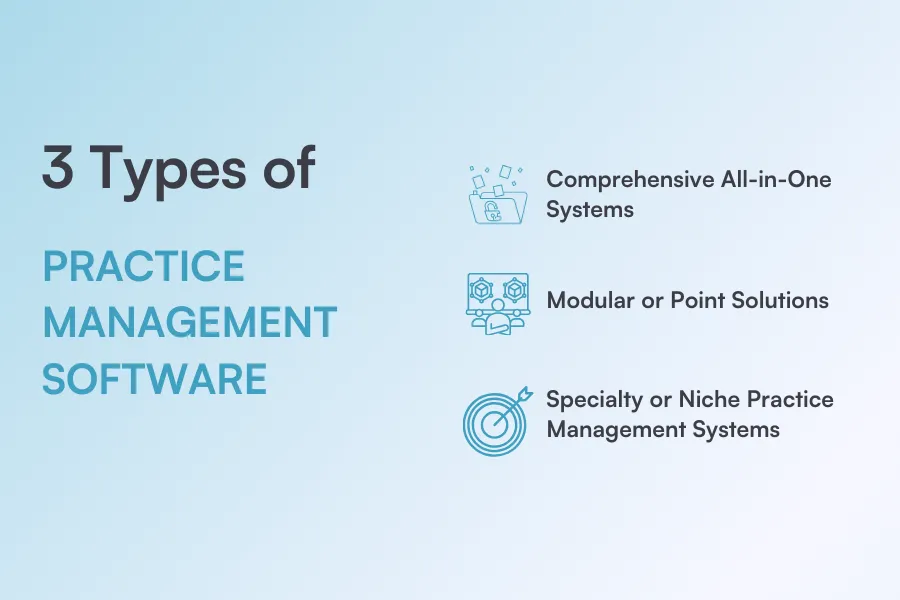
Practice management programs come in a few types, and each one suits a different kind of practice. The right choice depends on how complex your workflows are and how much you want to run from one system.
All-in-one systems bring scheduling, billing, patient records, reporting, and communication into one platform, and many include EMR or EHR features too. They cut the number of tools you juggle and save the team time. A platform like Pabau, for example, combines clinical tools and business management in one system, so growing practices run more smoothly without stitching several apps together.
Modular systems focus on one job, such as billing or patient messaging. They can work well for solo practitioners or small practices. But as a practice grows, running several separate tools tends to mean more admin, higher costs, and scattered data. Wellness and therapy practitioners often compare Practice Better and SimplePractice for this reason.
Some systems are built for specific fields like dental, dermatology, aesthetics, physical therapy, psychology, or men’s health. They include tools made for those specialties, such as treatment plans, coding, and custom reports, which suits practices with very specific workflows. Canadian dermatologists, for example, can compare dedicated platforms in our guide to dermatology software in Canada.
The clearest way to see what practice management software does is to follow one patient through your practice. The software handles each step in the background, from the first booking to post-visit follow-ups, so your team can stay with the patient in front of them.
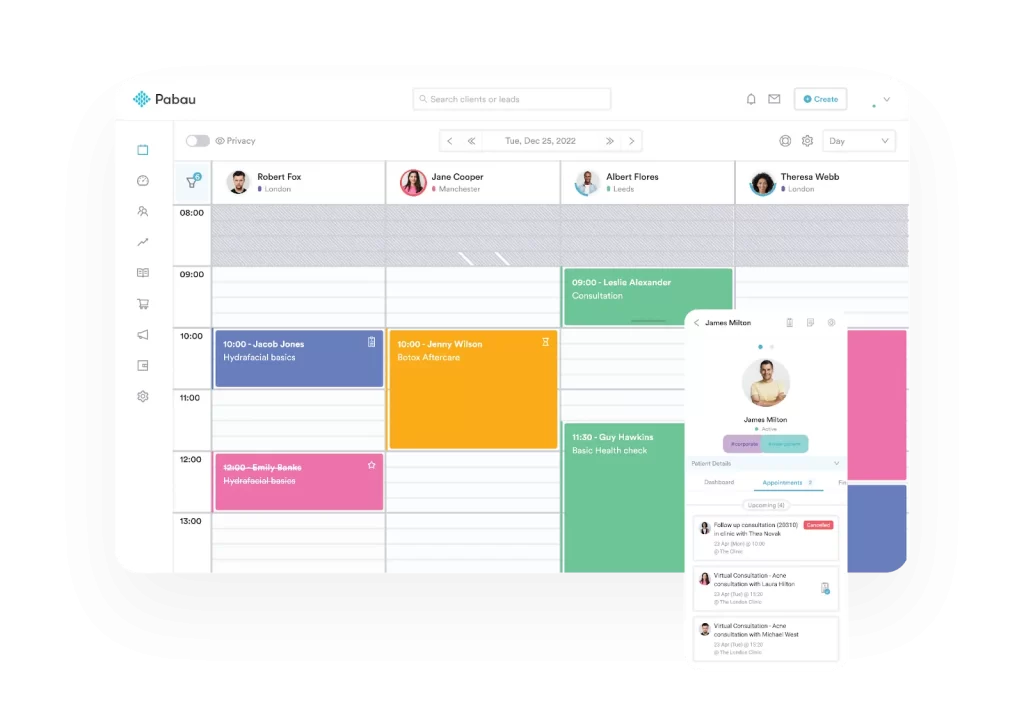
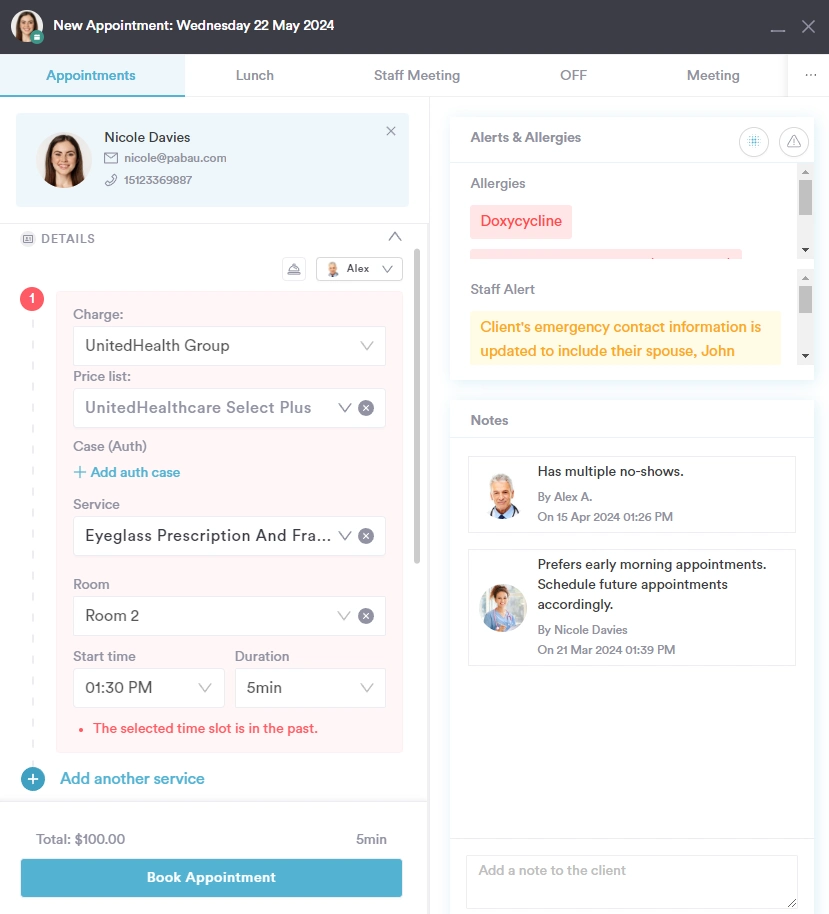
Patients book appointments online or through your front desk. The software updates the schedule in real time and checks staff availability, while automatic confirmations and reminders cut no-shows. If a slot opens up, the waitlist offers it to other patients, so calendars stay full and last-minute cancellations cost you less.
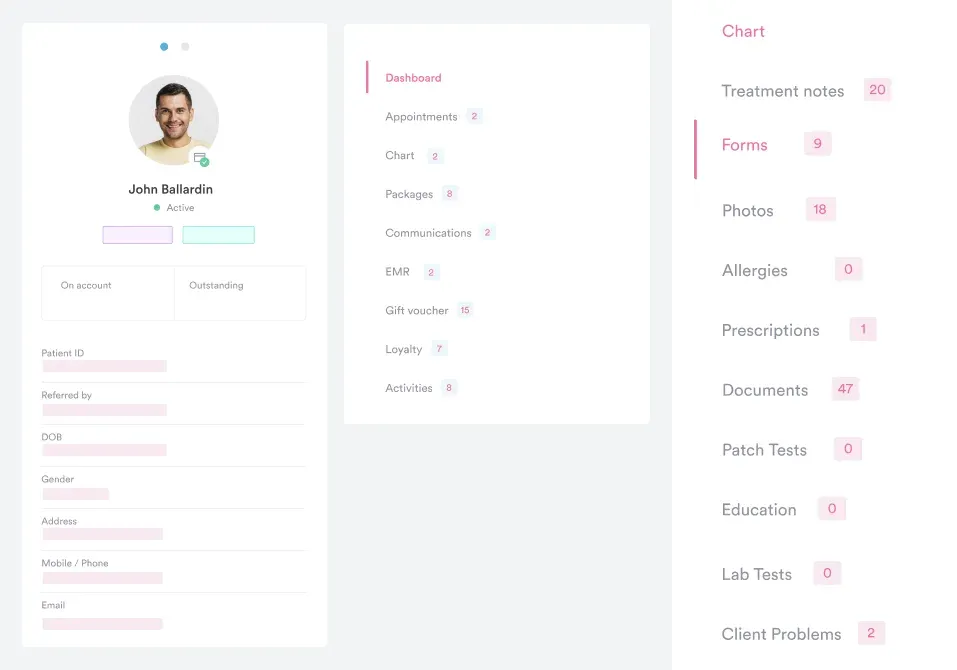
Before the visit, patients complete forms and update their details online. When they arrive, staff check them in with a few clicks. Everything is stored in their client record, so nothing is lost or asked twice. That speeds up reception, clears paperwork queues, and gives clinicians accurate information before the appointment starts.
During the visit, clinicians open patient records and add notes, photos, or treatment details on a desktop, tablet, or mobile app. Updates save right away, so nothing is missed or entered twice. Dictation and Pabau Scribe, our AI scribe, capture key details from the consultation and turn them into concise treatment notes without slowing the appointment down. Document templates save time too. Therapists can adapt an emotional support animal letter sample instead of drafting one from scratch.
After the appointment, invoices are created automatically from the services provided. Patients pay in person or online using payment links, cards, or mobile wallets. Payments are recorded instantly, which reduces errors, speeds up checkout, and smooths the whole experience. A Klarna integration also lets patients split larger treatment costs into installments.
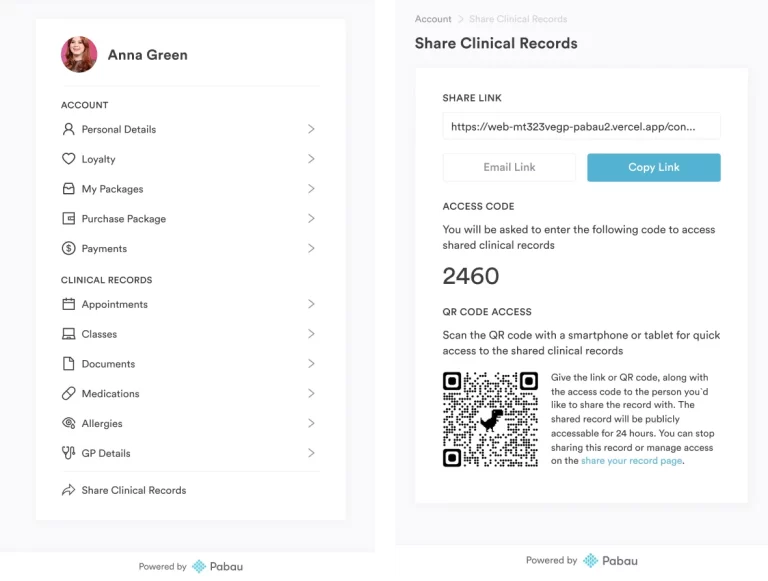
After the visit, the system sends follow-up messages, care instructions, and reminders to rebook. Patients stay engaged, and the team keeps schedules full without chasing every follow-up by hand.

If you’re deciding between PMS and EMR, this guide explains the difference and why many practices choose a system that combines both.
See the key features to weigh when choosing a cloud-based practice management system.
Dental business plan template covers what it costs to put one together in 2026.
Practice management software brings the tools that solve everyday problems into one system. Here are the core features to look for.
Managing bookings by phone or paper leads to double bookings, gaps, and missed appointments. Today’s medical practice scheduling software keeps calendars updated in real time, sends automatic reminders, and fills last-minute gaps with waitlists, so the team spends less time on the diary.
Paper files or scattered records make it hard to find patient information quickly. Digital records store notes, photos, and treatment history in one place. AI-generated treatment notes and clear consultation summaries save time and keep records accurate, so clinicians can focus on care.
Manual billing leads to errors, delays, and awkward payment conversations. Billing tools create invoices automatically and support flexible payment options. Payments are tracked instantly, making checkout faster for patients and easier for staff.
Missed calls and unanswered messages frustrate patients and overload the team. Automated messages, reminders, and patient portals keep communication clear and consistent, so patients stay informed and staff stop chasing confirmations.
Without proper tracking, practices risk running out of products or over-ordering stock. Inventory management tools monitor usage and stock levels in real time, so you can plan ahead, cut waste, and avoid last-minute shortages. Start from a written office supplies checklist, so the system has an item list to track usage against.
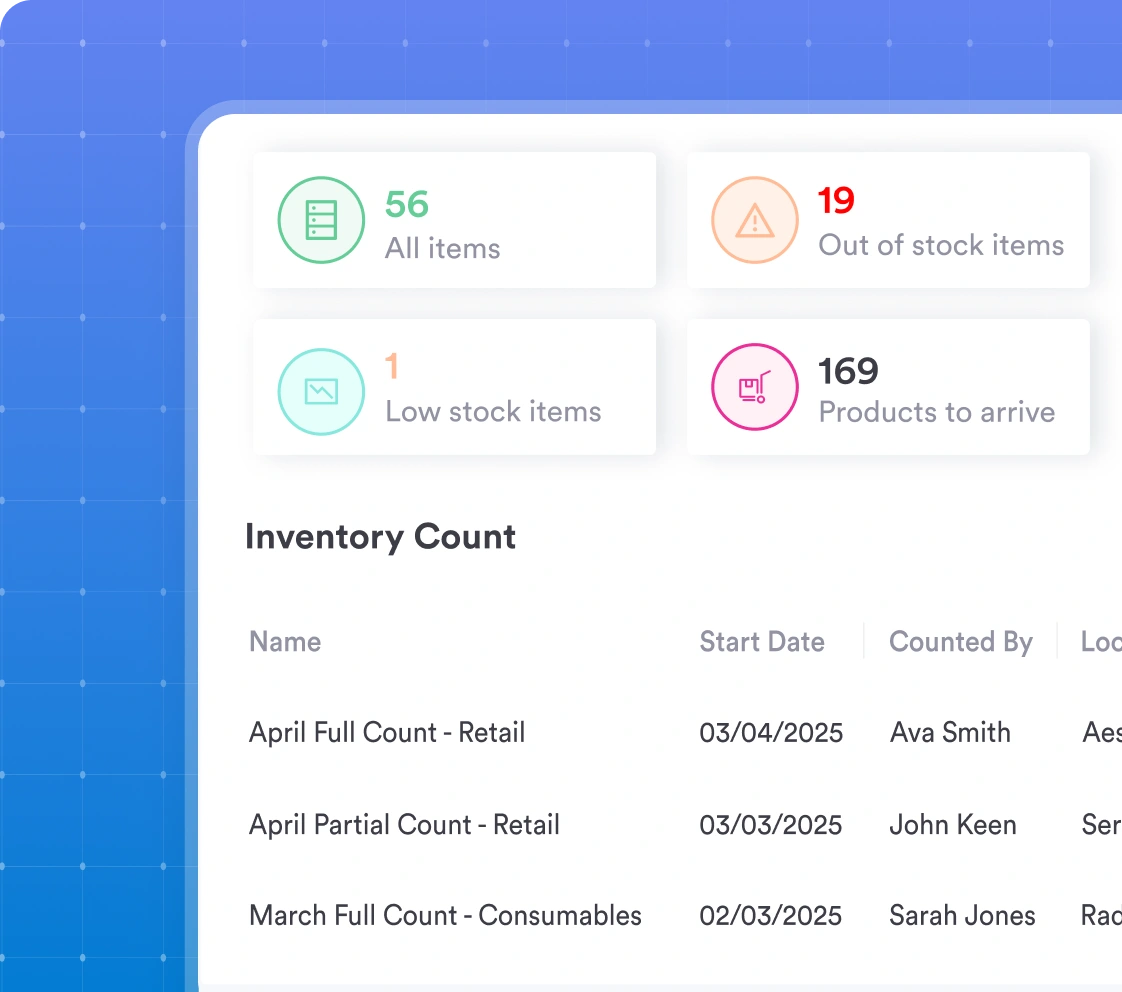
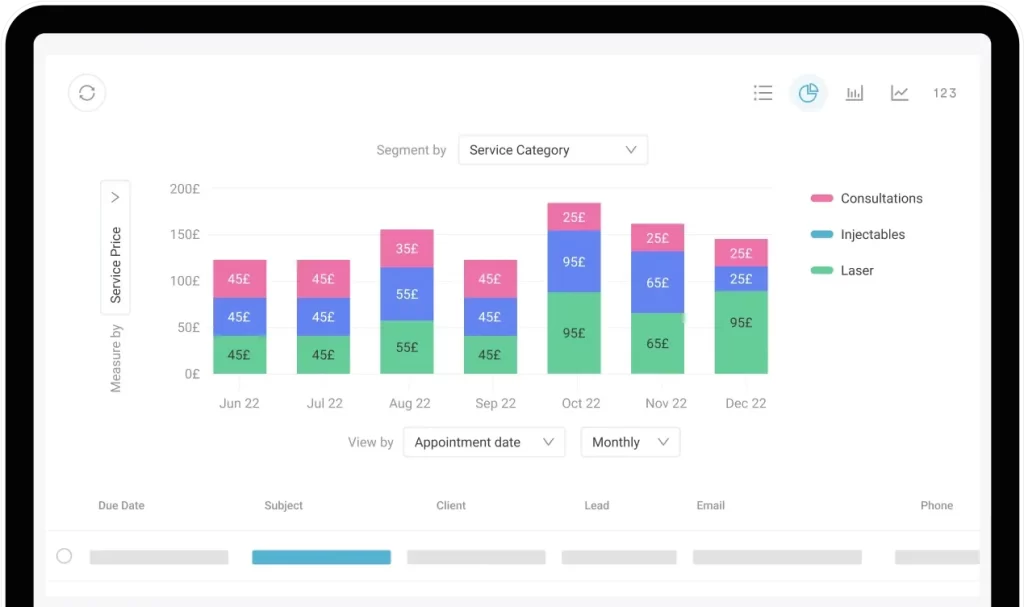
When data is spread across systems, it’s hard to see how the practice is really performing. Reporting tools turn activity into clear insight on revenue, bookings, and staff performance, so practice owners can decide without digging through spreadsheets.
People often use the terms interchangeably, but practice management software and EHR software do different jobs. Practice management software runs the business side of a practice: scheduling, billing, and communication. An EHR (electronic health record), sometimes called an EMR, holds the clinical record: charting, medical history, prescriptions, and treatment notes.
| Practice management software | EHR software |
|---|---|
| Main focus: the business side of the practice | Main focus: the clinical record |
| Core tasks: scheduling, billing, payments, communication, reporting | Core tasks: charting, diagnoses, prescriptions, treatment notes |
| Primary users: front desk, practice managers, owners | Primary users: clinicians and prescribers |
| Answers: how the practice runs and gets paid | Answers: what happened clinically with the patient |
In practice, the two overlap. A front desk uses practice management tools to schedule and invoice a visit, while a clinician documents the care in the EHR, and both draw on the same patient. That’s why many practices choose an all-in-one system that combines both, rather than paying for and reconciling two. For a deeper look, see our guide on PMS versus EMR. Small teams can start with our roundup of the best EMRs for small practices. Specialty practices weighing dedicated EHRs can compare ModMed and DrChrono.
For a modern medi-aesthetic or healthcare practice, practice management software handles admin in the background so you can focus on treating patients. Here’s how it helps you run the practice day to day.
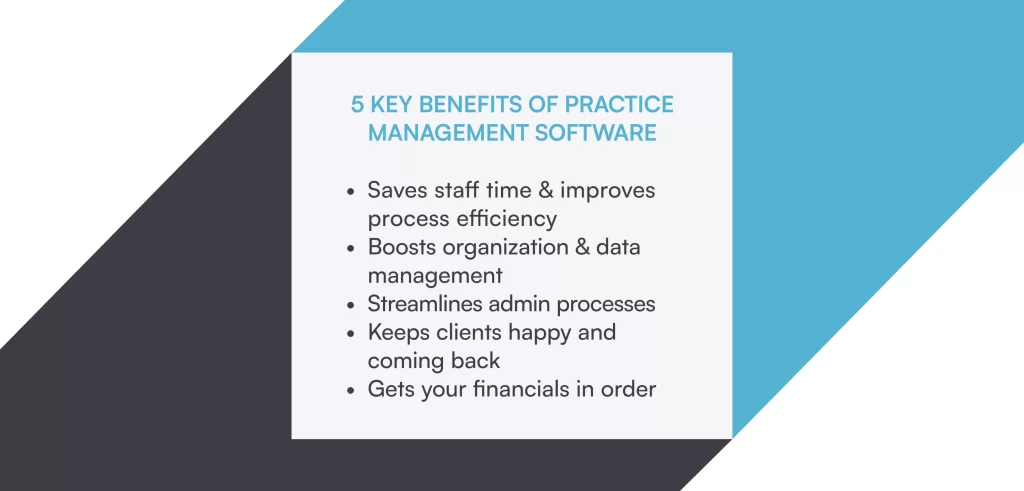
Practice management software saves time by automating your admin. Think about the hours spent looking up records in a cabinet, printing forms, getting them signed, and filing them back. The software collects and stores clients’ information, medical forms, treatment notes, photos, and lab results, so up-to-date information is always at your fingertips.
Patient communication is automated too, saving hours of back-and-forth. The system sends appointment confirmations and reminders by text and email, along with medical questionnaires and intake forms. That reduces no-shows and saves time when clients arrive. Billing sits in the same system with integrated payment processing for spas, so you can charge clients at a moment’s notice.
A practice management solution gives clinicians easy access to patient records. Medical history, diagnoses, billing, and other patient data are saved digitally in a client record, and can be retrieved whenever a patient visits or when you’re working on the go.
Role-based permissions let you control who sees sensitive patient information, which lowers the risk of records being lost or seen by the wrong person. Storing protected health information safely also helps your practice comply with HIPAA, and it’s one reason strong data protection practices matter so much. Practices also get a clear view of the staff schedule, making it easier to manage bookings, shifts, and tasks.
Practice management software transforms admin work, from collecting forms and scheduling to billing and claims processing. Patients no longer need to phone to book if they’d rather not. Self-scheduling tools guide them through the whole process, one of the clear benefits of self-service spa booking, with suitable dates and available practitioners shown up front. Completed intake forms update the patient record automatically, so there’s no manual data entry.
After the appointment, you can raise an invoice straight away, stored in the patient file for easy tracking. Medical dictation tools also turn conversations into clear notes, so clinicians aren’t typing for hours afterward, one of the practical benefits of medical dictation tools. Offering online bookings takes work off your staff and gives patients more control, as the Kingswood Aesthetics case study shows.
A survey found that over 90% of patients across all age groups (99% of Millennials, 97% of Gen Xers, and 92% of Baby Boomers) would use online booking for healthcare appointments.
Patient experience shapes how well your practice does, and it’s about more than the treatment itself. How you communicate matters just as much. A practice management system helps you deliver a more personalized, consistent experience.
You can automate everything from confirmation emails and reminders to pre-care and post-care instructions, so clients are less likely to no-show and turn up prepared. Technology doesn’t have to feel impersonal, either. Auto-filling details like a client’s name can make communication feel more personal. In fact, 72% of patients surveyed said they’d like communication from their doctor to be personalized with their name.
A practice management solution tracks financial transactions in real time and reports on how the practice is performing. Appointments, services, and sales are all recorded, then fed into customizable reports covering the medical practice management reports every practice should track.
So whenever you want to check last month’s appointments or total treatment revenue, the numbers are a few clicks away, which helps you make data-led decisions. Letting the software crunch the numbers and serve clear reports gives you sharper insight into your finances and reduces the risk of errors.
Once you understand what a practice management system is, you may also want to explore how it helps reduce claims in aesthetic practices.
So what is practice management software in healthcare, in practical terms? It sits at the center of the day-to-day work of running a practice, from a travel clinic to a multi-location group:
Now that you know what practice management software does and why it matters, the question is what to look for. There’s no single perfect system, since it depends on your needs and goals. Whether you’re starting out or comparing tools while you weigh the cost of opening a med spa, a few things should guide the decision. Aesthetics professionals licensing first can review the Texas cosmetology license requirements before investing in software.
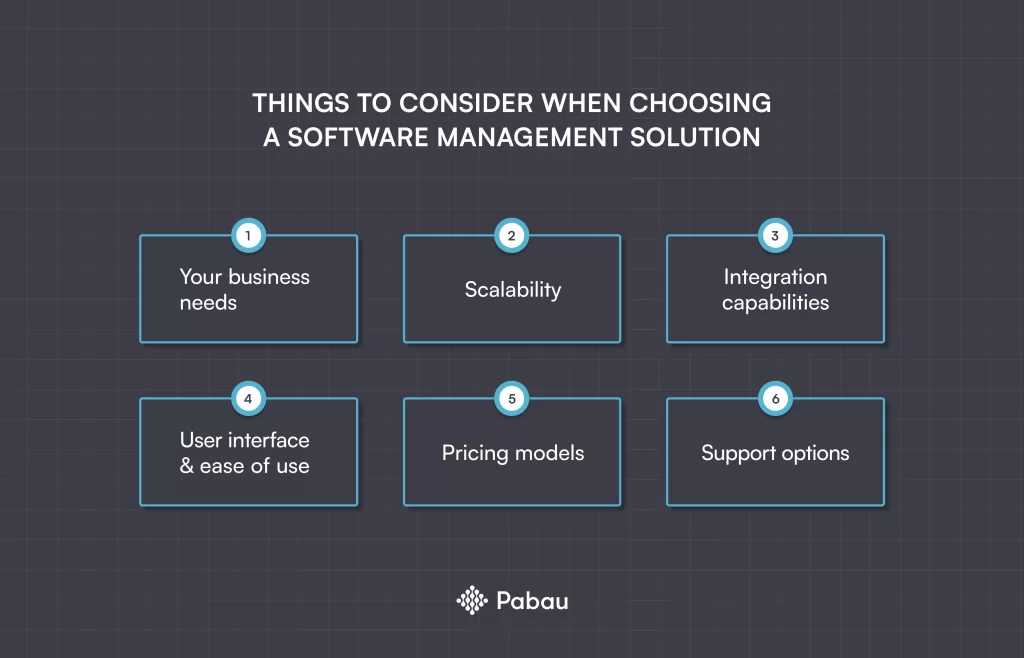
Plenty of practice management solutions come with flashy features, but not all of them cover the essentials you need to run a practice across the board.
Pabau is an all-in-one practice management solution built to handle the complex workflows and specific needs of a busy practice, with every feature included in your subscription. Here’s why it’s worth a look:
Want to see how a practice management system could work for your practice? Explore the top clinic management software solutions for increasing revenue, then see Pabau for yourself.
Less admin. More patients. One system. Book a Pabau demo to see how it fits your workflow.
It runs the operational and administrative side of a practice from one place, handling appointment scheduling, patient records, billing and payments, communication, and reporting, so the team spends less time on manual admin.
Options range from all-in-one platforms that combine business and clinical tools, to modular tools that do one job, to specialty systems built for fields like dental, dermatology, or aesthetics. Pabau is an example of an all-in-one system built for medical and medi-aesthetic practices.
A CRM is built to manage client relationships and marketing. A practice management system runs the operational work of the practice, such as scheduling, records, and billing, though many platforms include marketing and communication tools alongside it.
Reputable healthcare systems are built to support HIPAA compliance, with role-based permissions and secure storage for protected health information. Always confirm a vendor’s security and compliance credentials before you commit.
The key features are appointment scheduling, patient records, billing and payments, patient communication, inventory tracking, and reporting. All-in-one platforms like Pabau include every feature in one subscription, so nothing sits behind a higher tier.
The core modules are scheduling, patient registration, billing and claims, communication, reporting, and EHR integration. Some vendors sell these modules separately, while all-in-one systems bundle them so data flows between them automatically.
Accurate records keep clinicians working from current medical histories, support HIPAA compliance, and help invoices go out right the first time. Digital intake forms that update the client record automatically remove most manual entry errors.