CPT code 93503: Swan-Ganz catheter billing and modifiers
CPT code 93503: Official descriptor and procedure overview In the AMA CPT code s...

Last Updated: Oct 23, 2026
L8499 is the HCPCS Level II code for unlisted procedure for miscellaneous prosthetic services.
Let Pabau's smart automation suggest the right codes, reduce claim denials, and keep your practice compliant—effortlessly.
Automate repetitive tasks and focus on what matters most—your patients.
Reduce coding errors and ensure compliance with the latest regulations.
Clean claims, fewer denials, and faster reimbursements.
Powerful insights and reporting to help your practice thrive.
HIPAA compliant SOC 2 certified GDPR-compliant Trusted by 4,000+ clinics worldwide

HCPCS Code L8499 is the catch-all unlisted code for miscellaneous prosthetic services with no specific HCPCS Level II L-code assignment.
L8499 is priced by report (BR) under Medicare, meaning there is no fixed national fee schedule rate and Medicare Administrative Contractors (MACs) make individual payment decisions.
Use L8499 only after confirming no more specific L-code exists. Submitting it when a specific code is available is a common audit trigger.
Pabau’s claims management software helps billing teams document medical necessity, track prior authorization status, and submit HCPCS codes accurately.
HCPCS Code L8499 falls under the L-series of HCPCS Level II, which the Centers for Medicare and Medicaid Services (CMS) maintains for orthotics, prosthetics, and related devices. The L-series spans codes from L0000 through L9999, covering everything from spinal orthoses to artificial limbs and prosthetic socks.
Specifically, L8499 sits at the top of the miscellaneous prosthetics section (L8000-L8499) as its unlisted code.
The code has two official descriptions. The short description used on most claims forms is: Unlisted proc, misc prosth ser. The long description, which governs its clinical use, is: Unlisted procedure, miscellaneous prosthetic services.
When should you use it? Only when the prosthetic service or supply provided genuinely has no specific code in the L-series. This sounds straightforward, but in practice it requires a careful review of the full L8000-L8499 range before defaulting to the unlisted code.
Pabau’s claims management workflows can help billing teams track which L-codes have been checked and document the rationale for using L8499 in the patient record.
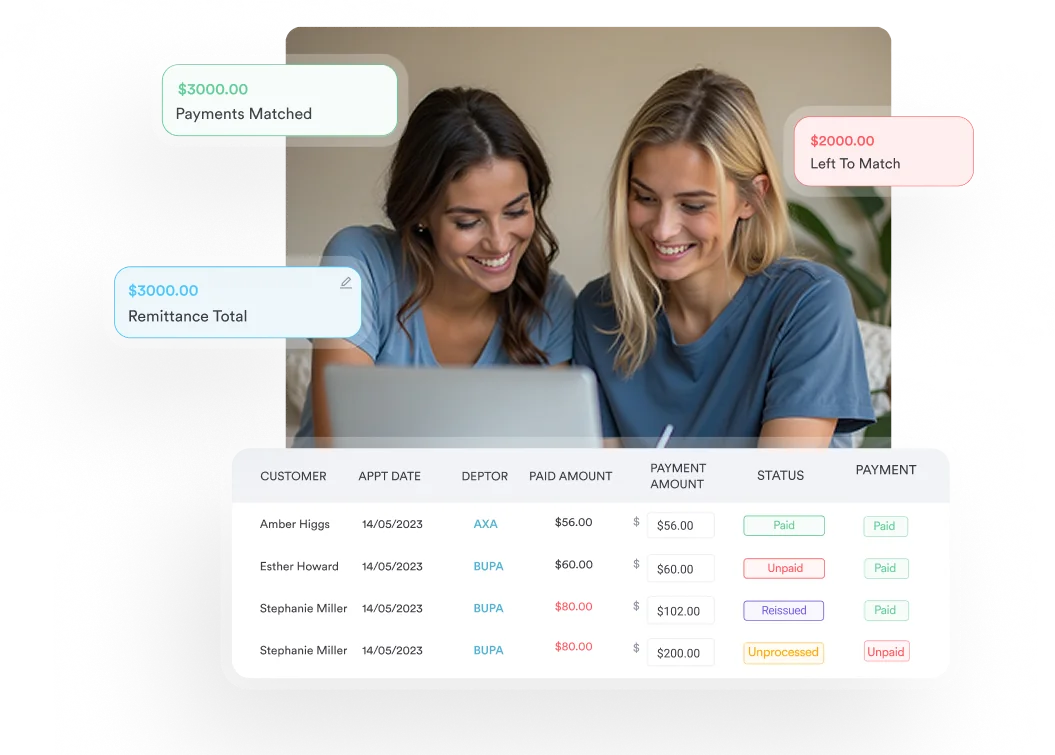
L8499 carries a “by report” (BR) pricing status under Medicare. There is no fixed national rate in the CMS Physician Fee Schedule for this code. Instead, each claim is priced case by case by the relevant Medicare Administrative Contractor (MAC) for the provider’s jurisdiction.
That’s a different pricing model from fixed-fee evaluation and management visits:
Billing by report means the reimbursement amount is not predetermined. Instead, the MAC reviews the paperwork submitted with the claim and makes a payment decision based on what the provider proves the service is worth. This process needs much more prep than standard code submissions.
What Medicare contractors need to make a payment decision for L8499:
However, MAC payment decisions are not uniform across jurisdictions. A claim approved by one contractor may be checked differently by another. So always verify L8499 coverage policy with the specific MAC assigned to your region before submitting.
For HIPAA compliance requirements around electronic claim submission, note that HCPCS Level II codes are mandated as part of the standard code set under HIPAA Transaction and Code Sets rules. Using L8499 in electronic claims needs the same compliant format as any other HCPCS code.
In most cases, L8499 claims are denied for one reason: submitting the unlisted code when a specific L-code exists. The billing workflow below reduces that risk.
For example. Capturing the right clinical details upfront means less chasing later.
Before submitting L8499, document your code review in the patient record. Note the specific L-codes you checked and why each was excluded. This creates an audit trail that supports your medical necessity argument and demonstrates due diligence to MAC reviewers and auditors.
In practice, poor documentation is the single biggest cause of L8499 denials. Because the code has no fixed description tied to a specific procedure, the supporting records carry the whole burden of establishing medical necessity and justifying the charge amount.
The documentation package for an L8499 claim should typically include:
Forms with condition-specific fields produce more precise clinical notes than generic intake templates.
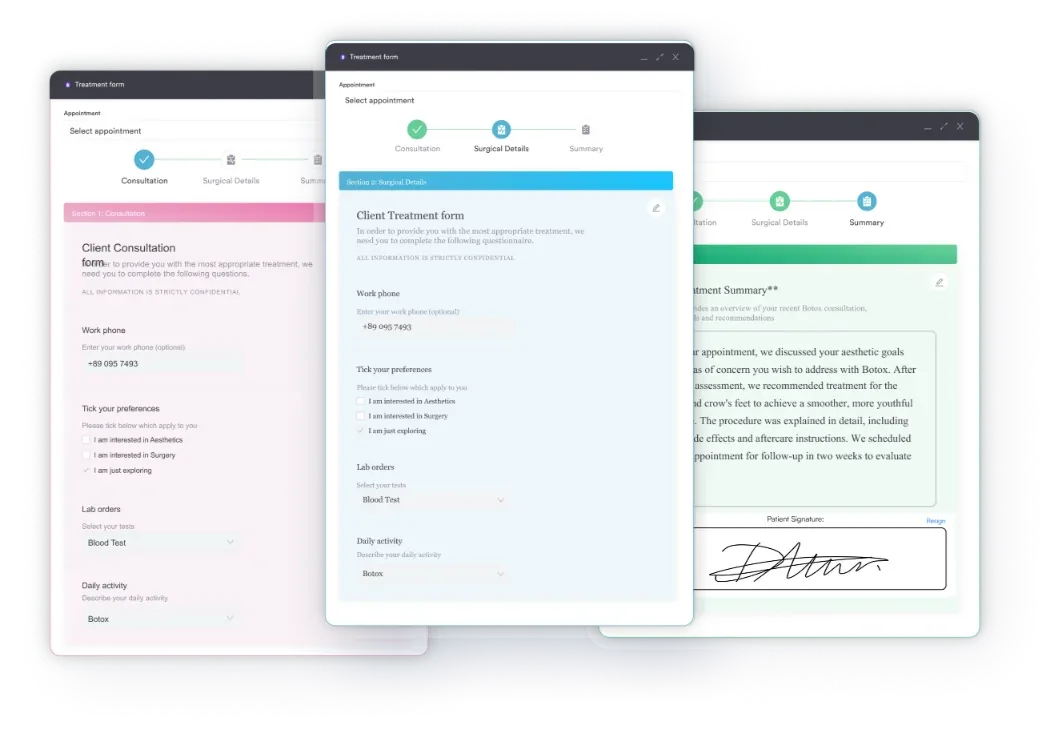
In addition, for practices managing many HCPCS claims, simpler practice management workflows around documentation can greatly cut per-claim prep time. Standardizing what gets captured at intake pays off every time an unlisted code is billed.
As with pricing, prior authorization requirements for L8499 vary by payer and, for Medicare, by MAC jurisdiction. Many payers require prior authorization for any unlisted code, reasoning that with no specific code, the service is naturally harder to predict in cost and need.
General guidance by payer type (always verify directly with the specific payer before service):
Therefore, when requesting prior authorization for an unlisted prosthetic code, be as specific as possible about what the device is, what it does, and why other specific codes do not apply. Vague PA requests for unlisted codes are usually denied.

Pabau helps prosthetics and DME providers track prior authorization status, document medical necessity, and submit HCPCS claims accurately, reducing rework and claim rejections.

First, though, the L8000-L8499 range contains specific codes for a wide range of prosthetic devices and supplies. Before defaulting to the unlisted code, review these commonly overlooked L-codes. Some accessories fall outside the L-series, like the adhesive skin support attachment for an external breast prosthesis, which bills under A4280.
For physical therapy and rehabilitation providers, physical therapy software with integrated HCPCS lookup can speed this review process considerably.
The same specific-code-first logic applies to orthotic L-codes: For billing teams who handle a mix of procedure types.
In fact, most billing errors with HCPCS Code L8499 fall into one of five patterns. Recognizing them before submission is far less costly than addressing them after denial. The same principle governs supply codes:
Good practice management software features for billing teams include pre-submission checklists that flag missing documentation before a claim goes out. Building that check into the workflow catches most of these errors before they cause denials.
By contrast, L8499 is one of the codes where payer-to-payer variation creates the most billing headaches. The same service can be reimbursed, denied, or approved at significantly different rates depending on who the payer is and which jurisdiction or plan applies.
Using compliance management tools to track payer-specific policies by code and payer lowers the risk of submitting without the needed prior authorization or missing a payer’s specific documentation format. Keeping a living reference doc by payer is a handy option for smaller billing teams.
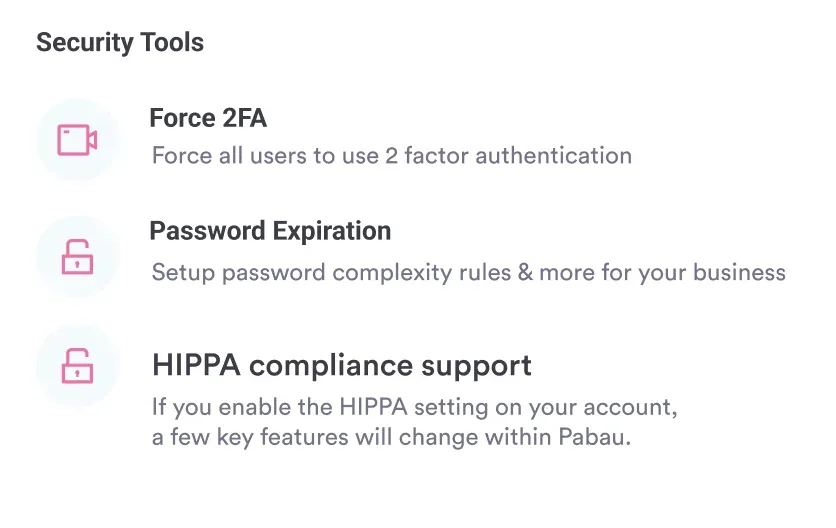
Protecting patient data security tools and maintaining compliant records is equally important when assembling documentation packages for by-report claims, as these packages often contain detailed clinical notes and cost data that need proper safeguarding.
Keep a payer policy log for L8499 and other unlisted codes you bill frequently. Record each payer’s PA requirements, documentation preferences, and any MAC-specific coverage articles. Update it after each denial with the reason. Over time, this log becomes more valuable than any single reference guide.
Finally, knowing when to use L8499 is as important as knowing how to bill it. This decision framework covers the scenarios where the unlisted code is and is not appropriate. No competing reference source provides this level of structured guidance for this specific code.
Still, the last scenario in that table is the most important. Uncertainty about coding is not a valid reason to use the unlisted code. If a coder is unsure whether a specific L-code applies, the right move is to finish a full review, ask a certified coder for help, or query the payer, not to default to L8499.
For practices building internal billing team competency. Both require the same discipline: documenting what was done and why, with a clear record of decisions made during the billing process.
Overall, prosthetics and DME providers billing HCPCS codes face a documentation and tracking challenge that generic practice management tools handle poorly. Purpose-built claims management software is built to support the level of detail needed for by-report codes like L8499. Teams can attach clinical notes, physician orders, and itemized cost documentation directly to patient records, making claim assembly faster and more complete. Denial rate by code shows which services are worth a process fix and which are one-off errors.
On the compliance side, Pabau’s built-in compliance tools help teams keep consistent documentation standards and track prior authorization needs by payer. Understanding practice management software for billing-heavy specialties is worth the time for any team managing a significant volume of HCPCS L-code claims.
In short, HCPCS Code L8499 is one of the harder codes to bill correctly. Its by-report pricing, changing prior authorization rules, and strict documentation demands mean billing teams need a solid process, not just code knowledge.
Yet the most common failure point is a missing system for gathering and submitting documentation consistently, even when the team knows exactly what the code requires.
Pabau’s billing and compliance tools help prosthetics and DME providers build that system: structured documentation at the point of care, claims tracking, and prior authorization management in one platform. Book a demo to see how Pabau handles complex HCPCS billing workflows.

Billing other DME support surfaces? E0185 covers the gel pressure pad billed for mattress overlays, and shares the same documentation-heavy audit profile as L8499.
Need the correct code for a mobility aid? E0143 breaks down billing for a folding, wheeled walker, including a common mix-up with CPT coding.
Billing reusable respiratory equipment? A7005 covers the non-disposable nebulizer set and how it differs from its disposable counterparts.
HCPCS Code L8499 is an unlisted procedure code used to report miscellaneous prosthetic services and supplies that have no specific HCPCS Level II L-code. It is the catch-all code within the L8000-L8499 prosthetics subsection and should only be used after confirming that no more specific code describes the service provided.
Medicare may cover L8499, but payment is determined on an individual basis by the Medicare Administrative Contractor (MAC) for the provider’s jurisdiction. There is no fixed national fee schedule rate. Coverage depends on the documentation submitted with the claim, including an itemized invoice and a letter of medical necessity.
Required documentation typically includes a letter of medical necessity from the treating physician, a signed physician order, an itemized invoice listing each component and its cost, relevant clinical notes, and a record of the code review confirming no specific L-code applies. Commercial payers may also require a prior authorization approval document.
Prior authorization requirements vary by payer. Most commercial insurers require prior authorization for any unlisted HCPCS code. Medicare requirements depend on the specific MAC and local coverage policies. Medicaid requirements vary by state. Always verify directly with the payer before providing the service.
L8499 has no fixed fee schedule rate for 2026. Under Medicare, it is classified as “by report” (BR), meaning the MAC determines reimbursement based on the documentation submitted. Commercial payer rates depend on the provider’s individual contract terms and the cost documentation included with the claim.
HCPCS Level II codes are a standardized coding system maintained by CMS for non-physician services, supplies, durable medical equipment, prosthetics, and orthotics. L8499 is part of the L-series, which covers orthotics and prosthetics, specifically the miscellaneous prosthetic services subsection spanning L8000 to L8499.
Use an unlisted HCPCS code only when you have reviewed all relevant specific codes and confirmed that none accurately describes the service, procedure, or supply provided. Unlisted codes like L8499 require more documentation than specific codes and receive greater payer scrutiny, so they should be a last resort rather than a default choice.