CPT code 93503: Swan-Ganz catheter billing and modifiers
CPT code 93503: Official descriptor and procedure overview In the AMA CPT code s...

Last Updated: Oct 23, 2026
T4524 is the HCPCS Level II code for adult sized disposable incontinence product, brief/diaper, extra large, each.
Selecting the wrong size or product-type code, missing a modifier, or leaving the physician order out of the file are the most common reasons T4524 claims come back denied.
Practice management software like Pabau, through its claims management software, helps DME suppliers and practices track documentation against each code, so claims go out clean rather than bouncing back for a missing order or modifier. For teams billing incontinence supplies regularly, a structured workflow matters as much as knowing the code itself.
Let Pabau's smart automation suggest the right codes, reduce claim denials, and keep your practice compliant—effortlessly.
Automate repetitive tasks and focus on what matters most—your patients.
Reduce coding errors and ensure compliance with the latest regulations.
Clean claims, fewer denials, and faster reimbursements.
Powerful insights and reporting to help your practice thrive.
HIPAA compliant SOC 2 certified GDPR-compliant Trusted by 4,000+ clinics worldwide

HCPCS Code T4524 describes an adult sized disposable incontinence product, brief/diaper, extra large, billed per unit (each).
T4524 is a T-code, classified under HCPCS Level II for Medicaid and SCHIP billing; traditional Medicare Parts A/B generally do not cover incontinence supplies as a standalone benefit.
Billing T4524 requires a physician order, documented medical necessity, and an appropriate ICD-10 diagnosis code; missing any one of these is the leading cause of claim denials.
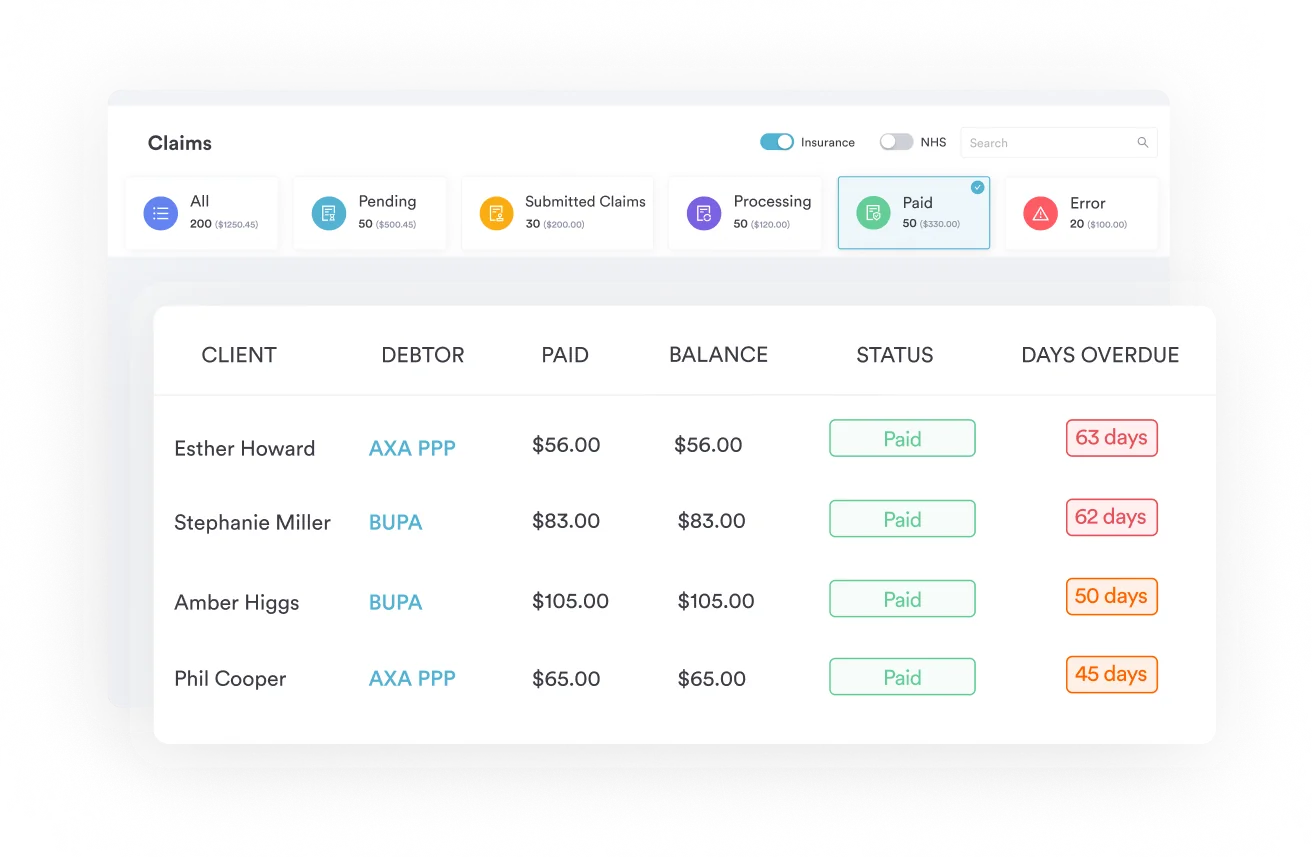
Pabau’s claims management software helps DME suppliers and healthcare practices track documentation requirements, manage claim submissions, and reduce denial rates for incontinence supply codes.
HCPCS Code T4524 has a precise, narrow description. It covers one specific product type, in one specific size, billed per individual unit. Substituting a nearby code without checking the size and product descriptors is one of the most common selection errors in this series.
Two terms in the description require attention. “Brief/diaper” indicates the product type. A pull-up or protective underwear style is captured by a different code, such as T4527. “Extra large” is the size qualifier. Billing T4524 for a medium or large product, or for a pull-up style, produces a code mismatch that payers catch on audit.
The “each” billing unit means the claim reflects individual units dispensed, not packs. Quantity limits imposed by state Medicaid programs apply per month, and those limits vary by state. Never assume a national quantity standard applies uniformly.
This is where billers most often run into trouble. Traditional Medicare Parts A and B generally do not cover incontinence supplies, including those described by HCPCS Code T4524, as a standalone outpatient benefit. The Centers for Medicare and Medicaid Services (CMS) does not include adult disposable briefs under the standard DMEPOS benefit for Parts A/B.
Coverage exceptions do exist, and they matter:
Practices billing T4524 to traditional Medicare Part B should expect denial. Route those claims to Medicaid or the appropriate Medicare Advantage plan instead. Accurate payer identification before submission prevents wasted claim cycles and compliance exposure from repeated incorrect filings.
Because traditional Medicare generally excludes incontinence supplies, there is no standard Medicare DMEPOS fee schedule rate for T4524 in the way that applies to covered DME items. Reimbursement for HCPCS Code T4524 comes primarily through state Medicaid fee schedules, which vary significantly by state. The table below provides a framework for understanding the rate landscape. The CARC denial code list is short enough to learn, and most rework traces to a handful of entries. Where a payer still requires a paper claim, the practice needs the current revision of the form.
For current Medicaid rate data, check your state Medicaid agency’s published fee schedule directly. The AAPC HCPCS code lookup provides additional code context, and the PGM Billing lookup tool offers free access to CMS-sourced HCPCS data. Always cross-reference with your state Medicaid fee schedule, as T-code rates are not nationally standardized.
T-codes (the T4521-T4545 range) are HCPCS Level II codes maintained specifically for Medicaid and the State Children’s Health Insurance Program. According to the CMS HCPCS code system, T-codes are designated for state health programs rather than traditional Medicare, which is why you will not find a Medicare DMEPOS allowable for T4524 the way you would for an E-code DME item.
Coverage rules at the state level differ in several important ways:
Check your state Medicaid agency’s patient care documentation requirements before billing. What applies in Minnesota does not apply in Texas. Policies update annually alongside state budget cycles.
Billing HCPCS Code T4524 correctly requires more than selecting the right code. Each claim needs a complete documentation package and the appropriate modifier appended. Skipping any element increases denial risk significantly.
Modifiers tell the payer how to process the claim. For incontinence supply billing, a small number of modifiers appear regularly. Always confirm which modifiers your state Medicaid plan requires before submitting.
Every T4524 claim needs a documentation file that supports both the code selection and the medical necessity determination. Auditors reviewing incontinence supply claims look for these elements specifically.
This documentation pattern is standard across HCPCS Level II supply codes. HCPCS Code E0185 and HCPCS Code L3762 both require the same physician order and proof-of-delivery trail before a claim is billable.
The physician order usually comes from the patient’s primary care team. Practices running GP clinic software can attach the signed order directly to the encounter note, so the DME supplier has everything it needs without a separate fax or portal upload.
Keeping these documents organized is a core function of any solid digital forms and documentation system. Pabau allows practices to capture, store, and retrieve patient documentation against each encounter, reducing the time spent locating records during payer audits.
T4524 sits within a structured size and product-type series. Selecting the right code requires matching both the product style and the size to the correct code. The table below covers the core brief/diaper codes in the range most commonly billed for adult patients.
The critical distinction between the brief/diaper codes (T4521-T4524) and the pull-up/protective underwear codes (T4525 onward) is product design. A tabbed brief is a brief; a pull-up is a pull-up. Billing T4524 for a pull-up product, or vice versa, creates a code-product mismatch that state Medicaid audits detect.
Always match the product dispensed to the correct code in the series. That same precision applies across HCPCS Level II generally, whether the code describes a supply, an orthosis.
For more on building compliant medical documentation workflows that support these distinctions, Pabau’s documentation tools help track product-to-code matching at the point of care.

Pabau helps DME suppliers and healthcare practices organize patient documentation, manage billing requirements, and build workflows that catch errors before they become denials. See how it works for your team.

Every T4524 claim must be supported by an ICD-10 diagnosis code that establishes medical necessity for an adult incontinence product. Payers use this code to confirm the product supplied matches the patient’s clinical condition, so reporting an unrelated or insufficiently specific diagnosis code is a common reason for medical necessity denials.
Urinary and fecal incontinence often overlap with pelvic floor dysfunction.
Use the most specific code supported by the clinical documentation. Reporting R32 (unspecified) when the chart contains a specific diagnosis of urge incontinence (N39.41) is under-coding and may prompt payer queries.
Good clinical record management practices ensure the ICD-10 code reported on the claim matches the diagnosis documented in the encounter note, which is exactly what auditors check. Practices managing incontinence patients alongside other services benefit from clear documentation workflows in a shared client management system.
Denial patterns for T4524 claims are consistent. The same errors appear repeatedly across Medicaid programs and Medicare Advantage plans. Knowing them in advance is the practical difference between a clean claim and a 30-day delay chasing a retro-auth.
Structured compliance management tools help practices build checklists that catch these errors before submission rather than after denial. Pabau’s practice management features allow teams to attach documentation requirements to specific billing codes, flagging missing elements at the workflow stage.
The documentation standards that apply to HIPAA compliance overlap substantially with what Medicaid auditors look for in incontinence supply billing. A consistent approach to record-keeping pays off across every claim type, not just this one.
HCPCS Code T4524 is one of the narrower codes in the incontinence supply series, and its specificity is exactly where billing errors cluster: wrong product type, wrong size, missing physician order, or the wrong payer.
Traditional Medicare Parts A/B generally will not cover this code as a standalone benefit, and Medicaid coverage rules vary enough by state that assuming uniform rules is a reliable path to denials.
Pabau’s practice management platform helps teams that bill DME and supply codes build the documentation processes that keep claims clean from the start. If your team handles incontinence supply billing alongside other services, book a demo to see how Pabau’s workflows and compliance tools reduce the back-and-forth with payers.

Coding anesthesia for lithotripsy treatment? CPT Code 00872 covers anesthesia for extracorporeal shock wave lithotripsy performed with a water bath.
Coding anesthesia for major lower abdominal vessels? CPT code 00880 covers anesthesia for major lower abdominal vessel procedures not otherwise specified, carrying 15 base units.
HCPCS Code T4524 is an adult sized disposable incontinence product, specifically a brief or diaper style, in extra large size, billed per individual unit. It is classified as a HCPCS Level II T-code used primarily for Medicaid and SCHIP billing of incontinence supplies. The code does not apply to pull-up or protective underwear styles, which fall under separate codes in the T4525-T4528 range.
Traditional Medicare Parts A and B generally do not cover incontinence supplies, including those described by T4524, as a standalone outpatient benefit. Medicare Advantage (Part C) plans may cover incontinence products as a supplemental benefit, but coverage rules vary by plan. Dual-eligible beneficiaries may receive coverage through state Medicaid rather than Medicare. Verify with the specific payer before billing.
Billing T4524 requires a current signed physician order specifying the product type, size, and quantity; clinical documentation establishing medical necessity for an incontinence product; a supporting ICD-10 diagnosis code such as N39.41 (urge incontinence) or N39.46 (mixed incontinence); proof of delivery confirming the patient received the supplies; and, where required by state Medicaid, a prior authorization number. Missing any of these is a leading cause of claim denial.
Common modifiers include KX (requirements specified in the medical policy have been met, used for Medicare Advantage), GA (waiver of liability on file when an ABN has been signed), GY (item is non-covered, used when billing traditional Medicare for balance billing purposes), and NU (new supply, required by some state Medicaid programs). Modifier requirements vary by payer and state; always confirm with the specific plan before submitting.
Most state Medicaid programs cover incontinence supplies including T4524, but coverage conditions vary significantly. States typically require a physician order, a qualifying diagnosis, and documented medical necessity. Many impose monthly quantity limits and may require prior authorization above a set threshold. Check your specific state Medicaid agency’s current fee schedule and policy for accurate coverage rules.
T4523 describes an adult sized disposable incontinence brief/diaper in large size, while T4524 describes the same product style in extra large size. The only difference is the size qualifier. Billing T4523 when the product dispensed is extra large, or T4524 when the product is large, is a code-product mismatch that generates denials on audit. Always verify the product size against the code before submitting the claim.
T4524 describes an extra large (XL) adult brief or diaper style incontinence product. Size designations in the T4521-T4524 series correspond to small (T4521), medium (T4522), large (T4523), and extra large (T4524). The product must be a tabbed brief or diaper design; pull-up or protective underwear styles of the same size are captured by codes starting at T4525.