HCPCS code G0257: Unscheduled or emergency dialysis billing guide
HCPCS code G0257: Official descriptor and code overview HCPCS code G0257 is defi...

Last Updated: Oct 27, 2026
B9999 is the HCPCS Level II code for noc for parenteral supplies.
When a parenteral supply item has no dedicated HCPCS code, B9999 becomes the correct code to bill. It functions as a catch-all within the parenteral therapy supply category.
Billers and coders working in IV therapy, home infusion, or parenteral nutrition programs encounter B9999 when a newer supply product or custom compounded solution lacks a specific code in the current HCPCS code set. The code signals to payers that the item is a legitimate parenteral supply that simply does not have its own dedicated billing code yet.
Let Pabau's smart automation suggest the right codes, reduce claim denials, and keep your practice compliant—effortlessly.
Automate repetitive tasks and focus on what matters most—your patients.
Reduce coding errors and ensure compliance with the latest regulations.
Clean claims, fewer denials, and faster reimbursements.
Powerful insights and reporting to help your practice thrive.
HIPAA compliant SOC 2 certified GDPR-compliant Trusted by 4,000+ clinics worldwide

HCPCS Code B9999 is the Not Otherwise Classified (NOC) code for parenteral supplies when no specific HCPCS code accurately describes the item being billed.
Medicare has no fixed national allowable for B9999 – reimbursement is determined case-by-case, requiring individual consideration and a detailed narrative description with every claim.
B9999 covers parenteral supplies; its counterpart B9998 covers enteral supplies. Using the wrong code is a common billing error that triggers denials and audit flags.
Pabau’s claims management software helps practices attach narrative descriptions, track NOC code submissions, and reduce denial rates for parenteral billing claims.
HCPCS Code B9999 should only be billed after confirming that no specific HCPCS code exists for the parenteral supply item in question. Using an NOC code when a specific code is available is a billing error that draws payer scrutiny.
The correct sequence for determining whether to use B9999 is straightforward. Coders working in IV therapy clinic software or home infusion billing typically follow this path:
If the uncoded item is durable medical equipment or an accessory rather than a parenteral supply, the correct catch-all is A9999. State Medicaid programs use a separate NOC route for retail-purchased therapeutic supplies, billed under T1999.
Common parenteral supply items that may require B9999 include newly approved infusion accessories, custom compounded parenteral nutrition formulations, and specialty catheter maintenance products that have not yet received their own HCPCS codes. The AAPC HCPCS code lookup tool can help verify whether a specific code exists before defaulting to B9999.
Always verify through PDAC before billing HCPCS Code B9999. PDAC maintains the authoritative product classification list for DME and parenteral nutrition supplies. Submitting B9999 for a product that has an assigned specific code is a billing error that can trigger post-payment audits and recoupment demands.
The most frequent coding confusion in the enteral and parenteral therapy range involves B9998 and B9999. Both are NOC codes, but they cover different therapy types. Billing one when the other applies is a consistent source of claim denials.
The clinical distinction is the route of administration. Parenteral nutrition bypasses the gastrointestinal tract entirely, delivered through a central or peripheral venous catheter. Enteral nutrition uses the gastrointestinal tract, typically through a feeding tube. Practitioners working in mobile IV therapy operations deal almost exclusively with parenteral supplies, making B9999 the relevant NOC code for their unbilled items.
Good practice management software for medical practices turns supplies used in a visit into billed line items automatically.
HCPCS Code B9999 is billed under the Medicare Part B DME benefit. Medicare covers parenteral nutrition and its associated supplies for beneficiaries who meet specific medical necessity criteria, typically those with a non-functional gastrointestinal tract or a condition preventing adequate oral or enteral nutrition.
Reimbursement for B9999 is not straightforward. Unlike most HCPCS codes, B9999 carries no fixed national allowable amount. The Centers for Medicare and Medicaid Services (CMS) determines payment on a case-by-case basis, considering the specific supply being billed and its relationship to covered parenteral therapy items. Practices billing for IV therapy services should expect variable reimbursement timelines compared to specific-code claims.
Practitioners should verify current coverage criteria with their local MAC before submitting B9999 claims. The CMS Physician Fee Schedule lookup tool does not provide a rate for B9999 given its NOC status, which is itself a useful indicator for billers: no rate listed means individual payer review is required.
HCPCS Code B9999 has no published national fee schedule rate for 2025 or 2026. This is by design: NOC codes exist precisely because the supply being billed cannot be mapped to a standard pricing file entry.
For current DMEPOS fee schedule data, practices should consult the CMS HCPCS overview page, which links to annual DMEPOS fee schedule files. These files will confirm that B9999 carries no published payment amount, reinforcing the need for individual review documentation.
Documentation is the make-or-break factor for HCPCS Code B9999 claims. Because there is no fixed price and no product-specific code, payers rely entirely on the information provided at claim submission to determine coverage and payment. Thin documentation means denied claims.
CGS Medicare’s billing guidance, consistent with broader CMS policy, specifies that NOC code claims must include a detailed narrative description of the supply item. This is not optional. Without the narrative, the claim will be returned or denied. Practices using digital intake forms and clinical documentation tools can build narrative attachment workflows that reduce the likelihood of submission errors.
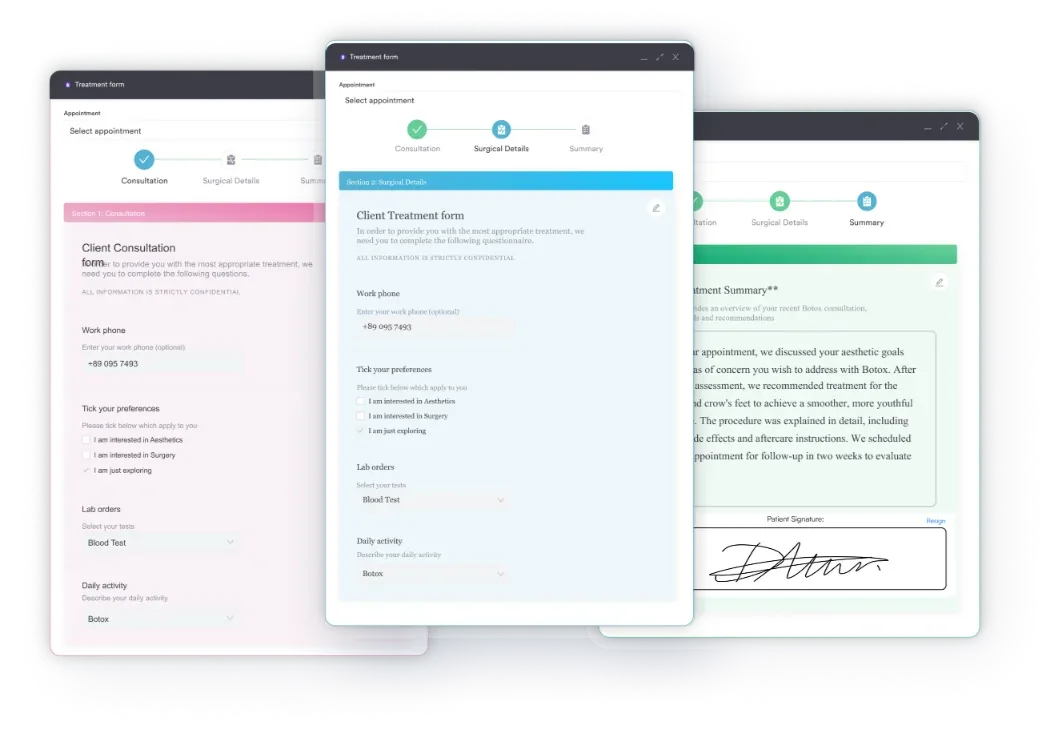
The required documentation set for a compliant B9999 claim typically includes:
Maintaining complete records for patients receiving parenteral nutrition is also a practical requirement for HIPAA-compliant record keeping under the Privacy Rule. Patient records must be retained per applicable state law and Medicare’s record retention requirements, which typically extend to five years post-service.
Modifiers clarify the circumstances of a claim and are often required by payers when billing NOC codes. For HCPCS Code B9999, the applicable modifiers depend on the payer and the specific supply being billed.
The KX modifier is particularly important for B9999 claims. Medicare contractors look for it as confirmation that the supplier has verified coverage criteria are met. Submitting B9999 without KX when coverage requirements apply is a common reason claims are flagged for medical review. Check your MAC’s local coverage determinations (LCDs) for parenteral nutrition to confirm which modifiers are required for your jurisdiction. The PGM Billing HCPCS lookup tool can assist with modifier verification against current CMS data. Practices outside a payer network hand the claim work to the patient, so a superbill form has to be complete.
NOC codes attract more scrutiny than specific-code claims. Payers and Medicare Administrative Contractors know that NOC codes require individual review, which means incomplete submissions go straight to the denial queue. Understanding IV therapy clinic best practices for documentation can materially reduce these errors.
The most common billing errors with B9999 fall into three categories:
From an audit risk perspective. The OIG has historically identified parenteral nutrition billing as an area of elevated scrutiny in its annual work plans. NOC codes within this category are considered higher risk than specific-code claims because the absence of a standard price creates opportunity for inflated billed charges.
Run a quarterly internal audit of all B9999 claims submitted in the prior period. Check each claim for: a narrative description, KX modifier (where applicable), a matching physician order in the medical record, and proof of delivery. If any element is missing from more than 5% of claims, your documentation workflow needs a correction before a payer audit finds it first.
This is the content gap that separates strong NOC code billing programs from problematic ones: most practices still handle B9999 claims manually. The narrative description gets typed fresh each time. The modifier checklist lives in someone’s head. The physician order gets attached to the claim only when someone remembers to check.
Practice management platforms with integrated claims management software can build the B9999 workflow into the submission process rather than leaving it to individual coder discipline. Specifically, software can prompt for a narrative description before allowing a B9999 claim to advance to submission, flag claims where KX is missing, and link directly to the associated clinical record for medical necessity verification.
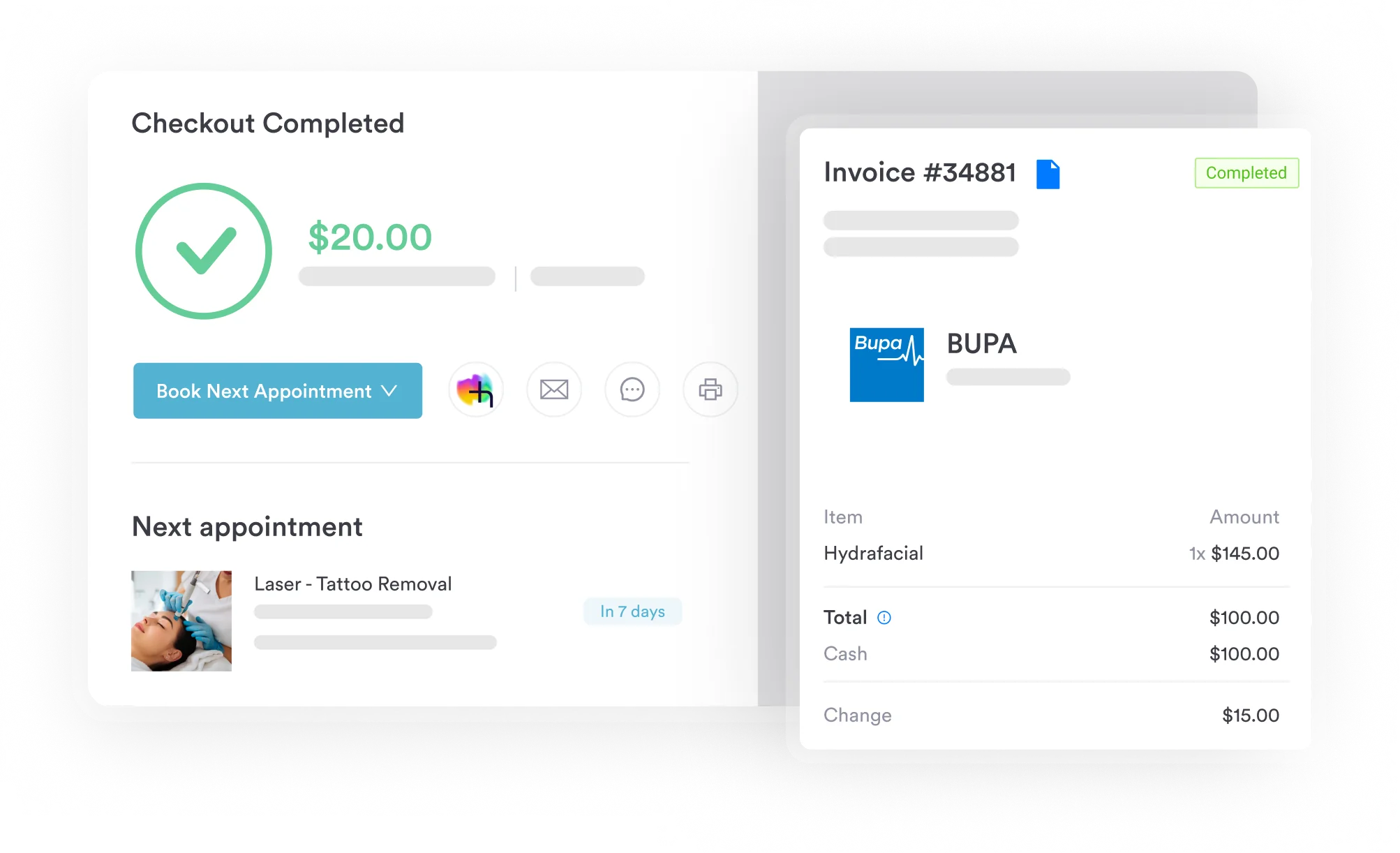
For practices offering parenteral nutrition services or running an IV therapy clinic, the compounding effect of systematic documentation is significant. A single missing narrative description on a B9999 claim costs time to appeal and potentially the full payment amount. Across hundreds of monthly claims, that exposure adds up.
Pabau’s automated billing workflows help clinics build standardized submission steps so that documentation requirements for NOC codes get addressed consistently rather than on a best-effort basis. The result is fewer denials, faster reimbursement cycles, and a defensible audit trail.
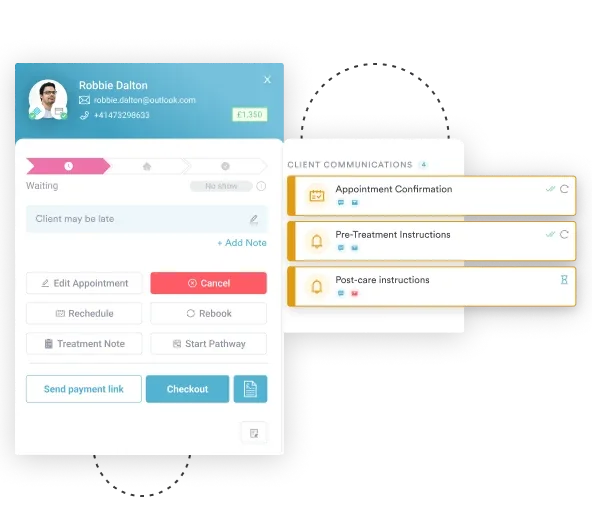
Practices using IV therapy documentation workflows within a purpose-built platform also benefit from centralised record storage. When a MAC requests supporting documentation for a B9999 claim, retrieving the physician order, clinical notes, and delivery records from a single system takes minutes rather than hours spent across disconnected filing systems.

Pabau helps parenteral therapy practices build compliant B9999 submission workflows, attach narrative descriptions automatically, and maintain the documentation trails that Medicare audits demand.

HCPCS Code B9999 is a narrow but important billing code. It fills the gap when parenteral supply items lack a specific HCPCS designation, but that flexibility comes with a compliance cost: every claim requires a detailed narrative, modifier accuracy, physician order documentation, and medical necessity support. Missing any one of those elements turns a reimbursable claim into a denial.
For practices that bill parenteral nutrition regularly, the best defence against NOC code denials and audit risk is a consistent submission workflow. Pabau’s claims management tools help build those workflows so your team can focus on patient care rather than chasing documentation at the point of claim submission. To see how Pabau handles this in practice, book a demo.

Coding a federally qualified health center visit? FQHC encounter billing guide explains how HCPCS code T1015 bills an all-inclusive visit alongside an E/M or procedure code.
Billing targeted case management time? case management billing guide covers payer eligibility, time thresholds, and modifier use for HCPCS code T1017.
Coding non-emergency transportation claims? non-emergency transportation billing guide explains why HCPCS code T2003 is Medicaid-only and how documentation requirements vary by state.
HCPCS Code B9999 is the Not Otherwise Classified (NOC) code for parenteral supplies. It is used when a parenteral supply item has no specific HCPCS code assigned to it in the current HCPCS Level II code set. Common applications include newly approved infusion accessories, custom compounded parenteral nutrition components, and specialty catheter maintenance products awaiting their own code designation.
NOC stands for Not Otherwise Classified. In HCPCS Level II coding, NOC codes function as catch-all categories for items that do not have a dedicated specific code. They require additional documentation from the billing provider, specifically a detailed narrative description of the item being billed, because payers cannot determine coverage or payment without knowing what the item is.
B9998 is the NOC code for enteral supplies (delivered through the gastrointestinal tract, such as tube feeding accessories), while B9999 is the NOC code for parenteral supplies (delivered intravenously, bypassing the GI tract). Using the wrong code for the therapy type will result in a claim denial. Confirm the route of administration before selecting between these two codes.
Medicare Part B may cover B9999 under the DMEPOS benefit when a patient meets medical necessity criteria for parenteral nutrition, typically a non-functional gastrointestinal tract or a condition preventing adequate enteral nutrition. Coverage is not automatic: each claim is reviewed individually, and reimbursement is determined on a case-by-case basis since B9999 carries no fixed national allowable amount.
Reimbursement for HCPCS Code B9999 is determined individually by each payer based on the detailed narrative description submitted with the claim. Medicare does not publish a fixed allowable for B9999. Instead, the MAC reviews the documented supply details, compares them to similar covered items, and makes a coverage and payment determination. Commercial payers follow their own coverage policies, which may require prior authorization.
Yes, HCPCS Code B9999 remains an active code in the 2026 HCPCS Level II code set. Annual updates to the HCPCS code file are published by CMS, and B9999 has not been terminated or replaced. Billers should verify active status in the current CMS HCPCS release file each year to confirm ongoing validity before submission.