CCSD code H4430: Examination of rectum under anaesthetic
CCSD code H4430 pays for the examination alone CCSD code H4430 is the UK private...

Last Updated: Oct 20, 2026

CPT Code 20520 describes simple removal of a foreign body from subcutaneous tissue or a muscle/tendon sheath, classified under the AMA’s musculoskeletal system section.
Use CPT 20520 for superficial removals only – when depth or complexity increases, CPT 20525 (deep/complicated) applies instead.
Missing laterality modifiers (LT/RT) and inadequate documentation of medical necessity are the two most common denial triggers for this code.
Pabau’s claims management software helps practices attach the right modifiers, pair accurate ICD-10 codes, and reduce 20520 claim denials before submission.
CPT Code 20520, as defined by the American Medical Association, describes: Removal of foreign body in muscle or tendon sheath; simple. The code sits within the musculoskeletal system section of the CPT code set, under the General Introduction or Removal subsection.
It applies when a foreign body – a metal fragment, glass shard, splinter, or similar object – has lodged in subcutaneous tissue or within a muscle or tendon sheath, and is removed using a straightforward technique without requiring deep dissection or extensive tissue manipulation.
The “simple” qualifier is what distinguishes 20520 from CPT 20525. It signals that the foreign body is accessible without entering deep anatomical planes, and that no significant complication (such as neurovascular proximity or extensive scarring) is present.
Selecting the wrong code between 20520 and 20525 is the most common upcoding risk in this procedure family. The distinction rests on the documented depth, complexity, and technique required – not on the size of the object removed.
The operative note must justify the complexity level selected. If the note describes “incision and removal” without specifying depth, tissue planes encountered, or anatomical landmarks, a payer audit may downcode 20525 to 20520 or deny the claim entirely. For CPT coding for specialist procedures across your practice, the principle is the same: documented complexity must match the selected code.
Payers require the ICD-10-CM diagnosis code to establish medical necessity. The foreign body’s anatomical location determines the correct code – a single catchall diagnosis code will not satisfy documentation requirements across all sites. Use the most specific code available based on the documented site. For broader diagnosis code pairing accuracy across clinical specialties, the same site-specificity principle applies.
The 7th character is critical: “A” for initial encounter (active treatment), “D” for subsequent encounter, and “S” for sequela. Submitting an initial encounter code on a follow-up visit – or vice versa – is a frequent denial trigger. You can verify current ICD-10-CM code descriptions and hierarchies using the CDC/NCHS ICD-10-CM web tool.
When the foreign body site is known and specific, always select the most anatomically precise T code over M79.5. Payers can flag M79.5 as insufficiently specific when a more detailed foreign-body-by-site code clearly applies to the documented encounter.
Modifier selection for CPT Code 20520 depends on the laterality of the procedure, whether multiple procedures were performed in the same session, and payer-specific NCCI edit requirements. Applying the wrong modifier – or omitting one that payers require – is a direct path to denial. The table below covers the most commonly applicable modifiers, though practices should verify current NCCI edit requirements for each payer, as rules can vary.
Modifier 59 requires careful justification. Payers increasingly audit its use, and submitting it without clear documentation that the services are clinically distinct will draw scrutiny. Check each payer’s billing guidelines before applying modifier 59 alongside any procedure from the musculoskeletal section. For sports medicine practices, where multiple musculoskeletal codes often appear on the same date of service, modifier 51 and 59 interactions are a common audit flag.
Medicare reimbursement for CPT Code 20520 is calculated using the Resource-Based Relative Value Scale (RBRVS). The total payment reflects three RVU components: work, practice expense, and malpractice, each adjusted by the CMS geographic multiplier for the practice’s locality. The CMS Physician Fee Schedule lookup tool provides the authoritative rates for the current year; the figures below represent 2026 national averages and will vary by region. For RVU-level detail, the FastRVU 2026 RVU lookup tool provides work, PE, and MP RVU breakdowns by locality. Most claim errors are structural rather than clinical, which is why scrubbing rules catch them. An appeal filed after the timely filing window is denied on timeliness alone, whatever the coding showed.
Place of service affects reimbursement materially. In a non-facility setting (office), the practice receives a higher payment because it bears the overhead cost. In a facility setting (hospital outpatient or ASC), the facility bills its own facility fee separately, so the physician’s payment is lower.
Always verify the exact dollar amounts for your locality using the CMS MPFS tool before setting fee schedule expectations with patients. National averages can differ significantly from payments in high-cost regions such as New York or San Francisco. Rates are updated each January under the CMS CY2026 Final Rule.

Pabau’s claims management tools help you attach the right modifiers, pair accurate ICD-10 codes, and catch documentation gaps before your 20520 claims go out the door.

Medical necessity must be documented before the procedure begins – not reconstructed after a denial. A well-structured digital intake form and procedure note should capture every element payers require to adjudicate the claim on first submission. The checklist below reflects the elements most commonly cited in claim denials and audit findings for this code. For practices using HIPAA-compliant documentation workflows, ensuring these elements are embedded in the procedure note template is the most effective preventive step.
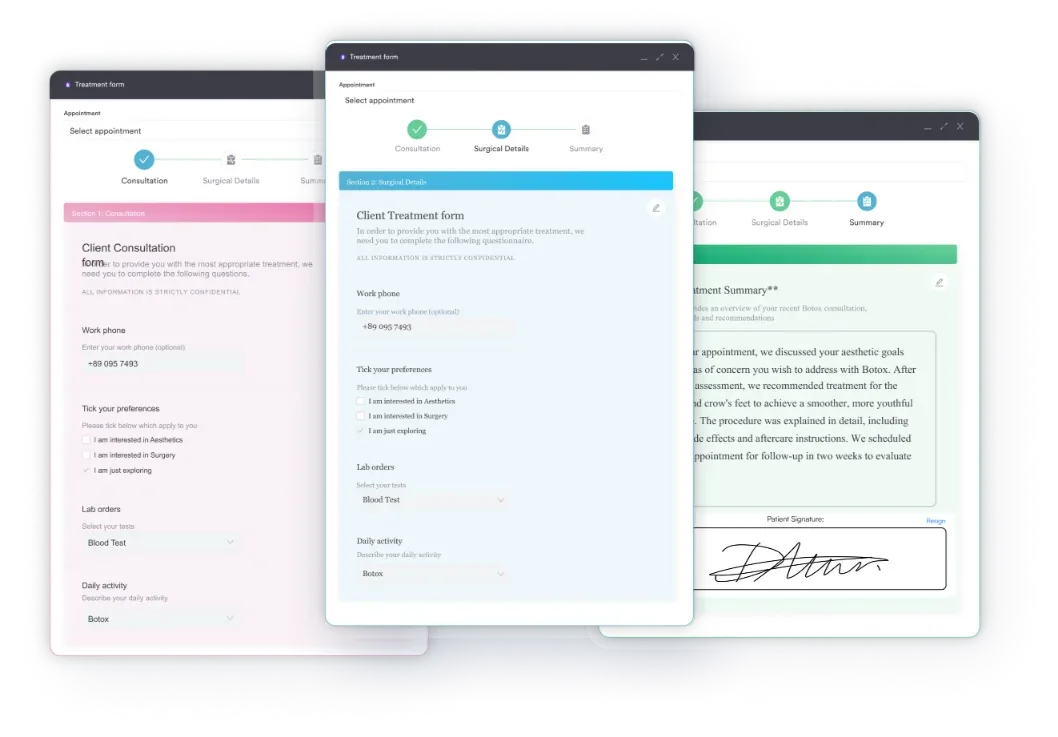
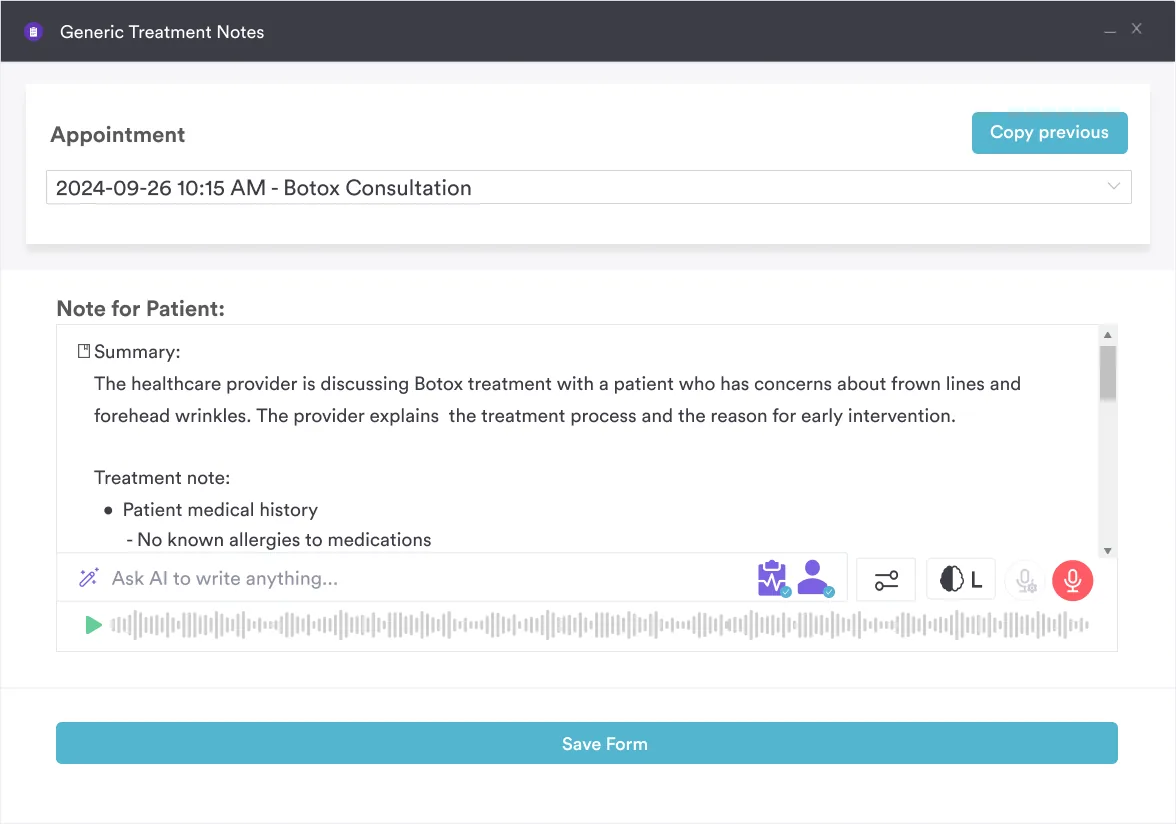
If imaging guidance is used to locate the foreign body before or during removal, a separate CPT code (such as 77002 or 77012 for fluoroscopic guidance) may apply. Billing imaging guidance without a separate order and documentation of its medical necessity is an audit risk. Practices can streamline this documentation using AI-assisted clinical note generation, which structures procedure notes to capture required elements consistently.
The denial patterns for CPT Code 20520 are predictable. Most rejections fall into one of five categories, each of which is correctable with better front-end documentation and coding review. Practices looking to reduce denial rates for the broader fee schedule will recognise these patterns across musculoskeletal procedure codes.
Use a pre-submission claim review step – either manual or software-assisted – to catch these errors before the claim leaves the practice. For procedure-level billing accuracy across high-volume code sets, a structured pre-bill review reduces denial rates measurably.
Practices billing CPT Code 20520 frequently encounter adjacent codes that either apply instead of 20520 or alongside it. Understanding when each code applies reduces selection errors and prevents bundling denials. You can cross-reference CPT-to-ICD-10 medical necessity pairings using the CrossCoder CPT-to-ICD-10 crosswalk tool.
The distinction between 10120/10121 and 20520/20525 is a frequent point of confusion. The 10120 family describes subcutaneous tissue specifically; the 20520 family specifies the muscle or tendon sheath as the site. If the documentation clearly places the foreign body in a muscle or tendon sheath, 20520 is appropriate. If it’s purely subcutaneous, 10120 may be the more accurate selection – though payer policies differ and some treat them interchangeably for superficial removals.
Billing errors for CPT Code 20520 cluster around three failure points: incorrect code selection, missing modifiers, and inadequate documentation. Practices using disconnected tools – a separate EHR, a manual billing spreadsheet, and a standalone claim scrubber – have more gaps between those three stages where errors slip through.
Pabau’s claims management software connects clinical documentation directly to billing, so the procedure note, ICD-10 pairing, and modifier selection happen in one workflow rather than three. Coders can review documentation completeness before the claim is submitted, not after a denial arrives. Practices using automated billing workflows in Pabau also benefit from rule-based alerts that flag missing laterality modifiers or mismatched diagnosis codes for codes like 20520 before submission.
For high-volume musculoskeletal practices, Pabau’s AI medical scribe generates structured procedure notes that consistently capture the depth, technique, and medical necessity language that payers require – reducing the manual documentation burden on clinicians and the rework burden on billing teams. See how Pabau handles this end-to-end: book a demo.
Before submitting any 20520 claim, run a three-point check: (1) Does the ICD-10 code match the documented site and encounter type? (2) Is a laterality modifier (LT or RT) present for a paired anatomical site? (3) Does the procedure note explicitly state that removal was at the subcutaneous or muscle/tendon sheath level – not below deep fascia? All three must be confirmed before submission.

Coding an intraparenchymal hemorrhage diagnosis? Intraparenchymal hemorrhage ICD-10-CM codes covers the I61.x series along with documentation tips and coding best practices.
Coding left ankle and foot pain? ICD-10 code M25.572 covers the code and the Excludes2 interactions that quietly invalidate claims.
Coding a specified jaw disease? ICD-10 code M27.8 covers cherubism, fibrous dysplasia, oral exostosis, and condylar hyperplasia or hypoplasia.
CPT Code 20520 denials are preventable. The most common causes – upcoding to 20525, missing laterality modifiers, and vague medical necessity language – each trace back to documentation gaps that exist before the claim is submitted.
Pabau’s claims management software connects the clinical note to the billing workflow, so modifier rules and ICD-10 pairings are reviewed before submission rather than corrected after denial. To see how Pabau handles musculoskeletal procedure billing end to end.
CPT Code 20520 covers the simple removal of a foreign body located in a muscle or tendon sheath, or in the subcutaneous tissue. It applies when the object is accessible with minimal dissection and no deep tissue complications are present. The code sits within the AMA’s musculoskeletal system section under General Introduction or Removal.
CPT 20520 is used for simple removal where the foreign body is accessible without extensive dissection. CPT 20525 applies when the foreign body is deep within muscle or requires complicated tissue dissection, often in an ASC or hospital OR. The operative note must explicitly document the depth and complexity to justify 20525 over 20520.
The most commonly used modifiers with CPT 20520 are LT (left side), RT (right side), 50 (bilateral procedure), 51 (multiple procedures), and 59 (distinct procedural service). Laterality modifiers LT and RT are required by Medicare and most commercial payers for procedures performed on paired anatomical structures. Modifier applicability may vary by payer, so verify against current NCCI edit policies.
The procedure note must document: the type and location of the foreign body, the anatomical site with laterality, confirmation that the removal was at the subcutaneous or muscle/tendon sheath level (not below deep fascia), the technique used, and the clinical indication (pain, infection risk, or functional limitation). Missing any of these elements is a common denial trigger.
Common ICD-10-CM codes paired with CPT 20520 include M79.5 (residual foreign body in soft tissue) for retained objects from prior injuries, and site-specific T codes such as S60.849A (foreign body of wrist/hand) or S80.849A (foreign body of lower leg) for acute encounters. Always apply the correct 7th character: “A” for initial encounter, “D” for subsequent, “S” for sequela.
No – imaging guidance is not required for CPT 20520. When image guidance (such as fluoroscopy under CPT 77002) is used and medically necessary, it may be billed separately with supporting documentation. However, bundling image guidance with 20520 without demonstrating independent medical necessity is an audit risk and may be denied based on payer NCCI policies.