CPT code 93503: Swan-Ganz catheter billing and modifiers
CPT code 93503: Official descriptor and procedure overview In the AMA CPT code s...

Last Updated: Oct 23, 2026
E0231 is the HCPCS Level II code for non-contact wound warming device (temperature control unit, ac adapter and power cord) for use with warming card and wound cover.
Claims for non-contact wound warming devices get denied more often than almost any other DME category, and the reason is almost always the same: the device code (E0231) and the supply code (E0232) are billed incorrectly, or the supporting ICD-10 documentation is missing. HCPCS Code E0231 has been active since 2002, yet billing errors persist because coders conflate the device with its consumable warming card.
Let Pabau's smart automation suggest the right codes, reduce claim denials, and keep your practice compliant—effortlessly.
Automate repetitive tasks and focus on what matters most—your patients.
Reduce coding errors and ensure compliance with the latest regulations.
Clean claims, fewer denials, and faster reimbursements.
Powerful insights and reporting to help your practice thrive.
HIPAA compliant SOC 2 certified GDPR-compliant Trusted by 4,000+ clinics worldwide

HCPCS Code E0231 describes the non-contact wound warming device: temperature control unit, AC adapter, and power cord for use with the warming card (E0232).
E0231 is a Durable Medical Equipment (DME) code billed under Medicare Part B, subject to medical necessity criteria and applicable Local Coverage Determinations.
Always bill E0231 (the device unit) and E0232 (the warming card supply) as separate line items; bundling them on a single claim is a common error that triggers denials.
Pabau’s claims management software helps DME suppliers and wound care practices track E0231 submissions, flag missing documentation, and reduce denial rates.
The official CMS description for E0231 reads: Non-contact wound warming device (temperature control unit, AC adapter, and power cord) for use with warming card. Every component listed in that description is included under a single E0231 claim. The warming card itself is a separate consumable billed under E0232.
The Centers for Medicare and Medicaid Services (CMS) HCPCS program maintains E0231 as part of the E-series DME codes. All E-series codes require the durable medical equipment supplier to be enrolled with the appropriate DME Medicare Administrative Contractor (DME MAC) for the beneficiary’s jurisdiction before submitting claims.
Medicare reimburses E0231 through the DME fee schedule, which CMS updates annually. Payment amounts vary by DME MAC jurisdiction (A, B, C, D) and by participating status. The figures below reflect general Medicare fee schedule structure; always verify current rates directly against the CMS fee schedule lookup tool before submitting claims, as rates change each January 1.
Verify exact dollar amounts for your DME MAC jurisdiction using the CMS annual HCPCS code list or the AAPC HCPCS code reference. Third-party rate aggregators can serve as a starting point, but CMS.gov is always the authoritative source for final payment amounts.
Medicare Part B covers E0231 under the DME benefit when the device is medically necessary for the treatment of a covered wound condition. Coverage is subject to applicable Local Coverage Determinations (LCDs) issued by the beneficiary’s DME MAC, which set out the specific clinical criteria a claim must meet.
Medical necessity for E0231 generally requires documentation of a chronic or non-healing wound that has not responded to standard wound care after a clinically appropriate trial period. Wound care clinics and DME suppliers dealing with HIPAA billing requirements will want to review HIPAA compliance standards for medical offices alongside the applicable LCD to ensure full documentation alignment.
If an LCD has been issued for non-contact wound warming by your DME MAC, review the specific diagnosis code lists and coverage limitations it contains before submitting E0231 claims. Coverage is never guaranteed; payer decisions are based on individual claim documentation. Practices managing wound care programs alongside their clinical software will find that wound care clinic software that integrates documentation with billing workflows can reduce the gap between clinical notes and claim data.
Run a coverage verification query with your DME MAC before dispensing E0231 for new patients. Confirm the beneficiary’s Part B enrollment status, check for any active prior authorization requirement in your jurisdiction, and document the treating physician’s order in the patient record on the same date as dispensing.
With built-in stock tracking, every brace or device billed under these codes is deducted from inventory automatically.
Billing E0231 correctly hinges on understanding exactly what is included in the code versus what is billed separately. The temperature control unit, AC adapter, and power cord are all bundled into a single E0231 line item. The warming card is not included and must always be billed under E0232.
For practices managing multiple DME claims. Reviewing billing code documentation requirements from similar specialty coding contexts reinforces the documentation discipline needed for DME claims.
Using digital forms for DME documentation can help practices capture physician orders, delivery confirmations, and patient signatures in a structured format that is immediately accessible at the time of claim submission.
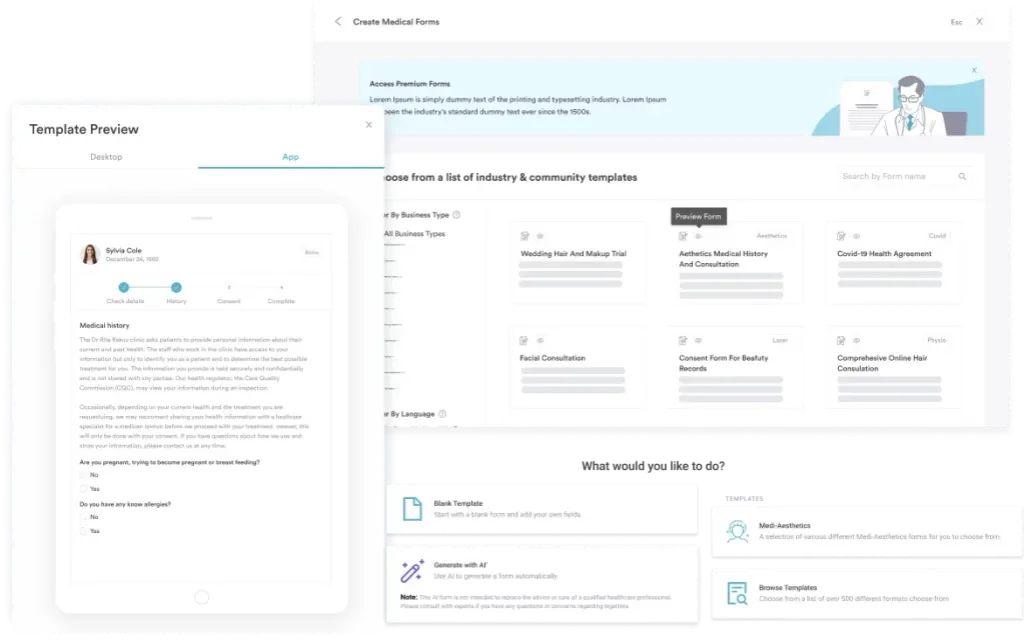

Pabau’s claims management tools help wound care practices and DME suppliers track HCPCS code submissions, flag documentation gaps before submission, and monitor reimbursement outcomes across E0231 and companion codes.

E0231 and E0232 are companion codes that must be billed together when a non-contact wound warming system is in use. E0231 covers the durable device (the capital equipment that belongs to the patient or is rented), while E0232 covers the single-use warming cards consumed during treatment sessions.
Coders managing DME portfolios that span multiple wound care codes will find the related procedure billing codes reference useful when establishing internal coding crosswalk documentation for similar DME categories. For more general HCPCS lookup capabilities, the PGM Billing HCPCS lookup tool provides free verification using CMS source data.
Every E0231 claim must include at least one ICD-10-CM diagnosis code that establishes the medical necessity for non-contact wound warming therapy. The diagnosis code documents the wound condition being treated. Claims submitted without a matching, covered ICD-10 code are a primary cause of medical necessity denials for HCPCS Code E0231.
Select the most specific ICD-10-CM subcategory available for the patient’s wound condition. For pressure ulcers (L89.xxx), coders must include the stage and anatomical site in the code selection. For diabetic ulcers (E11.621, E10.621), additional codes for the laterality and severity of the ulcer may be required as secondary diagnoses. Consult the current ICD-10-CM tabular list for complete code selection guidance; verify against the applicable LCD’s covered diagnosis code list before submitting. Using an ICD-10 diagnosis code reference as a secondary check helps ensure code specificity requirements are met. For broader context on specialty billing code pairings, the same specificity discipline applies across DME and procedure code categories. The CARC denial code list is short enough to learn, and most rework traces to a handful of entries.
Check your DME MAC’s LCD for non-contact wound warming before finalising ICD-10 code selection. LCDs often include explicit lists of covered and non-covered ICD-10-CM codes for E0231 claims. Using a code outside the LCD’s covered list, even if clinically appropriate, is a leading cause of medical necessity denials that require lengthy appeal processes.
DME billing for wound care codes like E0231 carries above-average audit risk. Medicare’s Recovery Audit Contractors (RACs) and DME MAC post-payment reviews frequently target wound care equipment claims due to high denial rates across the category. Operational discipline in claim management reduces both denial rates and audit exposure.
Practices using claims management software can automate pre-submission documentation checks, flag missing physician orders or ICD-10 mismatches before the claim leaves the practice, and track E0231 reimbursement outcomes by payer over time. This is the operational gap between standalone HCPCS lookup tools and an integrated billing workflow: reference databases tell you what the code means; integrated billing software tells you whether your current claim is ready to submit without denial risk.
Tracking denial patterns across E0231 and E0232 claims using denial tracking and reporting tools gives billing managers a structured view of which documentation gaps are most frequently triggering payer rejections. Linking this data to the patient encounter level transforms denial management from a reactive appeals process into a proactive workflow fix. Clinics managing broader revenue cycle performance will also benefit from reviewing practice management software options that integrate coding, documentation, and claims submission into a single environment. For reference on how specialty billing code pairings are structured across clinical workflows, the same denial-prevention discipline applies.
The PGM Billing HCPCS lookup and the AAPC HCPCS code reference are useful verification tools during the pre-submission check phase, particularly for confirming active status and description accuracy before submission.

Billing epoetin alfa for a non-dialysis patient? HCPCS code J0885 covers epoetin alfa billing for non-dialysis patients, including the modifier and diagnosis pairing rules.
Billing an IV antibiotic infusion claim? HCPCS code J1364 covers billing for erythromycin lactobionate injections across physician offices and infusion centers.
Billing an intramuscular gamma globulin injection? HCPCS code J1460 covers billing units, NDC rules, and ICD-10 pairings for gamma globulin injections.
E0231 denials almost always trace back to the same root causes: E0232 bundled on the same line item, missing KX modifiers, or ICD-10 codes outside the DME MAC LCD’s covered list. Getting these right before submission is a documentation discipline problem, not just a coding problem.
Pabau’s denial tracking and reporting gives wound care practices and DME suppliers a structured view of where E0231 and E0232 claims are failing, so teams can fix documentation gaps at the encounter level rather than fighting denials after the fact. To see how Pabau handles DME billing workflows end to end, book a demo.
HCPCS Code E0231 is used to bill Medicare Part B for a non-contact wound warming device, specifically the temperature control unit, AC adapter, and power cord supplied to a patient for chronic wound treatment. The code covers only the durable device unit; the warming card consumable is billed separately under E0232. E0231 falls under the DME benefit and requires medical necessity documentation, an active physician order, and DME MAC supplier enrollment before a claim can be submitted.
E0231 covers the non-contact wound warming device itself (the temperature control unit, AC adapter, and power cord), while E0232 covers the warming card, which is the single-use supply consumed during each treatment session. E0231 is typically billed once on initial dispensing; E0232 is billed per the quantity of warming cards dispensed over the course of treatment. Bundling both onto a single claim line is a coding error that will cause the claim to be denied.
Medicare Part B covers E0231 when the device is medically necessary for a patient with a chronic wound (such as a pressure ulcer, diabetic foot ulcer, or venous stasis ulcer) that has not adequately responded to conventional wound care. Documentation must include a treating physician’s written order, a supported ICD-10-CM diagnosis code, and evidence of prior wound care attempts. Specific criteria depend on the Local Coverage Determination (LCD) issued by the beneficiary’s DME MAC jurisdiction; always check the applicable LCD before dispensing.
The DME MAC jurisdiction is determined by the beneficiary’s permanent address, not the supplier’s location. The four DME MAC jurisdictions (A, B, C, and D) are administered by Noridian Healthcare Solutions (Jurisdictions A and D), CGS Administrators (Jurisdiction B), and Palmetto GBA (Jurisdiction C). Each jurisdiction may issue its own LCD for non-contact wound warming, so coverage criteria and covered ICD-10 code lists can vary by region. Confirm the applicable jurisdiction and its LCD before submitting E0231 claims.
The most commonly used ICD-10-CM codes with HCPCS Code E0231 are pressure ulcer codes (L89.xxx, requiring stage and site specificity), diabetic foot ulcer codes (E11.621 for type 2, E10.621 for type 1), venous ulcer codes (I83.xxx), and non-pressure chronic lower limb ulcer codes (L97.xxx). Always select the most specific subcategory available and verify the chosen code appears on the covered diagnosis list in the applicable DME MAC LCD for non-contact wound warming.
Yes. E0231 is routinely billed alongside E0232 for the warming card and may appear on claims with wound assessment or debridement procedure codes depending on the clinical services rendered in the same encounter. Check for any NCCI (National Correct Coding Initiative) edit pairs between E0231 and other wound care codes before submission, as bundling edits can deny otherwise legitimate combinations. The DME MAC LCD for non-contact wound warming will also indicate any code combinations that require modifiers or additional documentation.