ICD-10 Code Y76.0: Diagnostic obstetric and gynecological devices
ICD-10 Code Y76.0: Definition and billable status ICD-10 Code Y76.0 is a valid, ...

Last Updated: Oct 23, 2026
Billable Code Specific Code
M72.2 is the billable ICD-10-CM code for plantar fascial fibromatosis.
Let Pabau's smart automation suggest the right codes, reduce claim denials, and keep your practice compliant—effortlessly.
Automate repetitive tasks and focus on what matters most—your patients.
Reduce coding errors and ensure compliance with the latest regulations.
Clean claims, fewer denials, and faster reimbursements.
Powerful insights and reporting to help your practice thrive.
HIPAA compliant SOC 2 certified GDPR-compliant Trusted by 4,000+ clinics worldwide

ICD-10 Code M72.2 is the billable diagnosis code for both plantar fascial fibromatosis and plantar fasciitis – plantar fasciitis is an included synonym, not a separate code.
M72.2 has no laterality subcodes: document left, right, or bilateral involvement in the clinical notes, not through a subcode.
When a calcaneal spur is confirmed alongside plantar fasciitis, report M77.30, M77.31, or M77.32 as an additional code alongside M72.2.
Practice management software like Pabau helps physical therapy and podiatry practices link M72.2 accurately to CPT codes and reduce claim denials.
Most denials for plantar fasciitis claims trace back to one avoidable error: using the wrong descriptor or misunderstanding what the plantar fasciitis ICD-10 code (M72.2) actually covers. Physical therapists, podiatrists, and orthopedic coders encounter this daily, yet the dual-use nature of the code is rarely explained clearly.
The ICD-10 code for plantar fasciitis is M72.2, regardless of which foot is affected or whether the case is bilateral. The official descriptor for M72.2, as maintained by NCHS/CDC’s ICD-10-CM Tabular List, is plantar fascial fibromatosis. Plantar fasciitis is listed as an included synonym.
Plantar fascial fibromatosis (Ledderhose disease) involves benign fibrous nodules forming along the plantar fascia. Plantar fasciitis is an inflammatory condition causing heel pain. Coding conventions allow M72.2 for both, but documentation must reflect which condition is being treated.
M72.2 falls under ICD-10-CM chapter M00-M99 (Musculoskeletal and Connective Tissue Diseases), subcategory M70-M79 (Other soft tissue disorders), within the fibroblastic disorders grouping M72. Additionally, the CDC/NCHS ICD-10-CM web tool confirms it is a valid, billable code for FY2026.
Coders at physical therapy practices often ask why a fibromatosis code is used to bill an inflammatory condition. The answer lies in how the ICD-10-CM tabular list handles inclusions. Plantar fasciitis is explicitly listed as an included term under M72.2. NCHS/CDC maintains that inclusion term in the Tabular List, and CMS co-approves it through the ICD-10 Coordination and Maintenance Committee.
Clinically, the two conditions differ. Plantar fascial fibromatosis (Ledderhose disease) produces palpable fibrous nodules along the plantar fascia, tends toward slow progression, and may require surgical intervention when conservative treatment fails. By contrast, fasciitis is an inflammatory enthesopathy at the calcaneal insertion of the plantar fascia, typically presenting as first-step heel pain in the morning.
Despite the clinical distinction, ICD-10 Code M72.2 applies to both because they share the same anatomical structure and code family.
For billing purposes, documenting which clinical presentation prompted the visit matters. A SOAP note that clearly identifies nodules (fibromatosis) or inflammatory heel pain (fasciitis) protects against medical necessity denials, particularly for Medicare and Medicaid claims. As a result, using M72.2 without supporting clinical documentation is a leading driver of payer audits and denials in this code category. Front-desk data entry and back-office coding both feed cash collection, so errors compound downstream.
Accurate digital intake forms and clinical notes are the foundation of successful M72.2 billing. The CMS ICD-10-CM coding guidelines require that every diagnosis code be supported by clinical documentation in the patient record. Specifically, your notes must capture the following.

Physical therapy practices following physiotherapy compliance requirements should build laterality and functional impact prompts directly into intake templates to prevent incomplete documentation at the point of care.
Flag M72.2 claims for internal audit when notes lack laterality documentation or a functional outcome measure. Payers treat absent laterality as incomplete documentation even though no subcode exists – a brief note like ‘right plantar fascia affected’ resolves it immediately.
Every laterality search points to the same answer: M72.2 does not change based on which foot is affected. What changes is what you write in the note. The table below maps each laterality search to the code and the documentation phrase that satisfies payer standards.
Left-sided plantar fasciitis still codes to M72.2. Write “left plantar fascia” or “left foot” directly in the assessment line of the note. No left-specific ICD-10 code exists for this diagnosis, so a coder searching for one won’t find it because it isn’t there.
Right-sided cases use the same M72.2 code. A few third-party coding tools list a separate code, such as M72.21, for right-foot plantar fasciitis. That code does not exist in the ICD-10-CM tabular list, and billing it will trigger a rejection. Stick with M72.2 and document the side in the note instead.
Bilateral involvement is still billed as a single M72.2 line, not two units or a bilateral modifier on the diagnosis code. Modifier 50 applies to procedural CPT codes, not to the ICD-10 diagnosis itself (see modifier application below). Document “bilateral plantar fascia” in the note to support both feet being treated in the same encounter.
When the note does not specify a side, M72.2 is still billable, though most payers now expect a laterality statement. Add the affected side, or “bilateral,” at the next visit before it becomes an audit flag.
The fibroblastic disorders category M72 includes several related codes, and a few codes outside that category get confused with M72.2 too. Knowing which adjacent codes apply in common clinical scenarios prevents under-coding and supports accurate claim submission. Below is a reference chart covering M72.2 alongside the most frequently paired and most frequently confused codes in plantar fasciitis billing workflows. A quick-reference coding guide gathers CPT, ICD-10, and HCPCS ranges in one place for coders switching between code sets.
Selecting the right CPT code alongside M72.2 determines whether a claim passes or fails NCCI bundling edits. These pairings are common in outpatient physical therapy and podiatry settings.
Practices using claims management software can build crosswalk rules that flag mismatched CPT-to-ICD pairs before submission. Always verify payer-specific bundling edits before billing, as NCCI rules apply to Medicare and many commercial payers adopt similar logic.


Pabau helps physical therapy and podiatry practices link diagnosis codes to CPT codes accurately, automate intake documentation, and cut claim rejection rates. See how it works for your practice.

Plantar fasciitis claims under M72.2 follow predictable denial patterns. Knowing them reduces rework significantly.
Payers deny M72.2 claims when the clinical note lacks a functional limitation, a clear diagnosis statement, or a treatment plan tied to the coded condition. To resolve this, document a measurable functional deficit (gait score, pain scale, activity restriction) alongside the ICD-10 code on every claim.
CPT 97010 (hot/cold packs) and CPT 97012 (traction) face bundling restrictions under NCCI edits when billed alongside higher-level PT codes like 97110 or 97140. Therefore, document each service as distinct and medically necessary with separate clinical rationale in the SOAP note. Practices following standard physical therapy clinic requirements typically build these NCCI checks into their billing workflow before claim submission.
When bilateral plantar fasciitis is treated in a single session, the timed PT and modality codes (97110, 97140, 97010, 97012) capture both feet through pooled treatment minutes converted to billable units under the 8-minute rule, not modifier 50. Modifier 50 is reserved for bilateral-eligible surgical and procedural codes, such as 28119 performed on both feet in the same session.
For a one-sided procedure, such as a single corticosteroid injection (20550) into one plantar fascia, append modifier RT or LT to the CPT code. The ICD-10 diagnosis code M72.2 carries no such modifier, since laterality is a CPT-level distinction, not a diagnosis-code one.
Verify payer-specific bilateral billing policies before appending modifiers, as commercial payers and Medicare handle bilateral procedures differently. For clinics opening a physiotherapy practice, establishing clear modifier policies from the start prevents retroactive claim adjustments.
Run a 90-day M72.2 denial audit before renewing any payer contract. If denials cluster around a single CPT pairing (often 97010 or 97012 bundled with 97140), that signals an NCCI edit problem – not a documentation problem. Update your billing crosswalk rules accordingly.
Plantar fasciitis is one of the most common diagnoses in outpatient physical therapy. Consequently, M72.2 appears alongside PT CPT codes in high volume, making it a consistent target for payer audits. Three billing practices reduce audit exposure for practices managing physiotherapy clinic workflows.
Practices using structured patient record documentation with condition-linked note templates can apply these requirements consistently across all providers, reducing variability that leads to denied claims.
Billing plantar fasciitis accurately depends on understanding that ICD-10 Code M72.2 carries a dual identity: the official descriptor is plantar fascial fibromatosis, but plantar fasciitis is a fully valid included synonym. Additionally, the code is billable for FY2026, has no laterality subcodes, and commonly pairs with calcaneal spur codes (M77.3x) when imaging confirms a heel spur alongside the diagnosis.
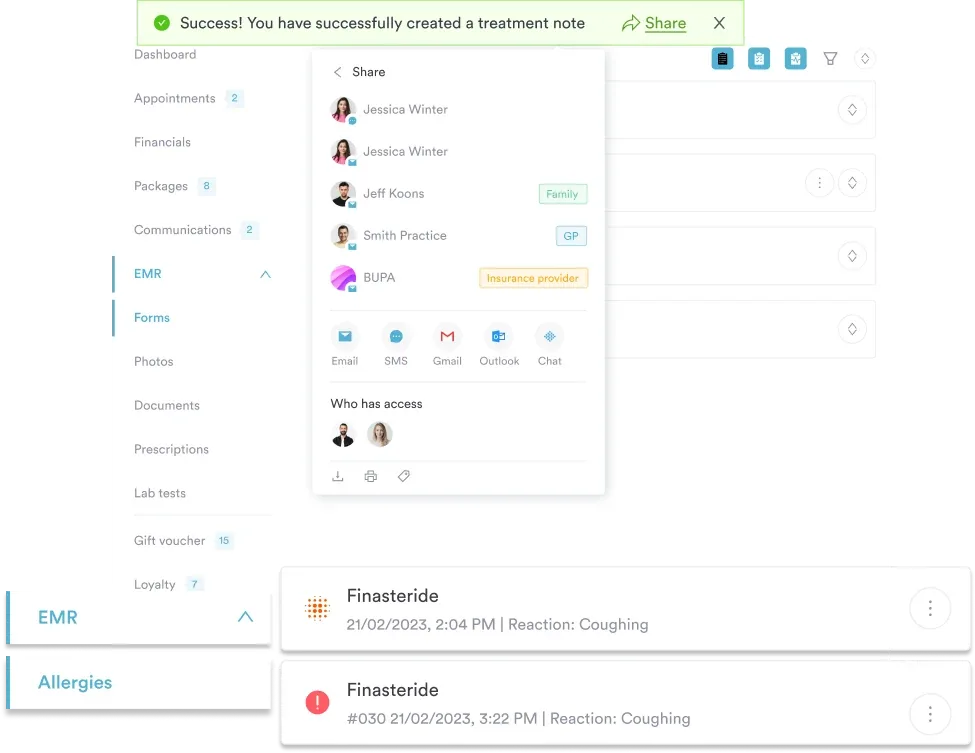
For physical therapy, podiatry, and sports medicine practices, the highest-leverage improvement is documentation quality at intake. Pabau’s AI-powered clinical documentation helps practitioners capture laterality, functional limitations, and treatment rationale consistently at the point of care, reducing the manual review burden that often precedes M72.2 denials. To see how Pabau streamlines billing workflows for musculoskeletal practices, book a demo.

Coding a humerus fracture malunion? Humerus fracture malunion coding guide covers S42.211P, a right proximal humerus fracture at a subsequent encounter that has resulted in malunion.
Coding a humerus fracture with delayed healing? Humerus fracture coding guide covers S42.223G, a displaced fracture at a subsequent encounter showing delayed healing rather than nonunion.
Also coding foot pain before a diagnosis is confirmed? M79.671 applies when documentation states foot pain but a specific condition like plantar fasciitis has not yet been established.
ICD-10 Code M72.2 is a billable ICD-10-CM code for plantar fascial fibromatosis, with plantar fasciitis listed as an included synonym. It falls under the fibroblastic disorders category (M72) within the musculoskeletal chapter.
M72.2 is billable for both. Plantar fasciitis is an included term under ICD-10-CM coding conventions and has no separate code.
No. M72.2 has no left, right, or bilateral subcodes. Document the affected foot — left, right, or bilateral — in the clinical note to meet payer standards.
Clinically they differ — fibromatosis involves nodular growths, fasciitis is inflammatory heel pain — but both map to M72.2. The distinction matters for documentation and audit defense, not code selection.
M77.30, M77.31, or M77.32 (calcaneal spur codes) can be added when imaging confirms a heel spur. M72.4, M35.4, and M72.6 are each coded to their own specific code — the Excludes1 note listing them sits under M72.8, not M72.2 — so all three still require separate documentation.
CPT 97110 and 97140 are the most common PT pairings. CPT 97010 and 97012 face NCCI bundling edits. CPT 28008 or 29893 apply for surgical plantar fascia release, while 28119 is for calcaneal spur excision.
No. A long-standing or recurring case still bills to M72.2 – there is no chronic-specific variant. Note the duration and prior treatment history in the chart, since payers use that detail to support medical necessity for extended physical therapy episodes.