CPT code 93503: Swan-Ganz catheter billing and modifiers
CPT code 93503: Official descriptor and procedure overview In the AMA CPT code s...

Last Updated: Oct 23, 2026
A5120 is the HCPCS Level II code for skin barrier, wipes or swabs, each.
HCPCS Code A5120 bills each skin barrier wipe or swab supplied for ostomy care under Medicare's DMEPOS program.
A skin barrier wipe or swab is a liquid or gel applicator that coats the peristomal skin with a thin protective film before an ostomy appliance goes on. That film shields the skin from adhesive and output and helps the pouch or barrier form a stronger, longer-lasting seal.
A practitioner typically applies one during each barrier and pouch change. Because each wipe or swab is a separate item, A5120 is reported per unit supplied.
Billing rules for A5120 are more specific than the short code description suggests, and getting them right avoids the claim edits that hold up payment.
Let Pabau's smart automation suggest the right codes, reduce claim denials, and keep your practice compliant—effortlessly.
Automate repetitive tasks and focus on what matters most—your patients.
Reduce coding errors and ensure compliance with the latest regulations.
Clean claims, fewer denials, and faster reimbursements.
Powerful insights and reporting to help your practice thrive.
HIPAA compliant SOC 2 certified GDPR-compliant Trusted by 4,000+ clinics worldwide

HCPCS Code A5120 identifies skin barrier wipes or swabs used in ostomy care, billed as a DMEPOS supply under the Medicare prosthetic device benefit.
The AU modifier is required when billing A5120 alongside ostomy, urological, or tracheostomy supplies, per CMS Policy Article A52487.
Medicare fees for A5120 carry a ceiling of approximately $0.28 per unit. Always verify against the current CMS fee schedule before submitting claims.
Practice management software like Pabau streamlines DMEPOS claim submission and modifier tracking, helping billing staff catch AU modifier errors before they trigger denials.
CMS formally defines A5120 as “skin barrier, wipes or swabs, each” — a per-unit ostomy supply billed separately from the pouch or barrier it prepares the skin for. Suppliers that track modifier and quantity rules against every claim, rather than relying on memory, close most of the errors that trigger denials.
HCPCS Code A5120 sits within the Incontinence Devices and Supplies range (A5102 to A5200), which is maintained by the Centers for Medicare and Medicaid Services (CMS) as part of the HCPCS Level II code set. The code has been valid since January 1, 2006.
Billing teams sometimes look this supply up as CPT A5120, but A5120 is a HCPCS Level II code, not a CPT code. CPT codes describe physician services and procedures, while HCPCS Level II codes like A5120 cover the supplies, equipment, and products that CPT does not.
The BETOS classification as a prosthetic/orthotic device is significant: it means A5120 is reimbursed under the Medicare prosthetic device benefit, not as a routine medical supply. That distinction affects both coverage criteria and the documentation burden required to support payment.
Other DME skin-protection categories.
Ostomy supplies are covered under the Medicare prosthetic device benefit when the patient has a permanent or long-term colostomy, ileostomy, or urostomy. Coverage is governed by Local Coverage Determination (LCD) L33828 and its companion CMS Policy Article A52487, which defines which HCPCS codes fall under the ostomy supply benefit and what modifier requirements apply.
When those criteria are met, A5120 is paid through the Medicare Part B durable medical equipment benefit. Medicare covers 80 percent of the approved amount once the patient has met the annual Part B deductible, and the patient is responsible for the remaining 20 percent coinsurance.
HCPCS Code A5120 is one of only three HCPCS codes for which the AU modifier may be used under this policy — the others are A4450 and A4452.
That specificity matters. Billing A5120 without the AU modifier when it is supplied alongside ostomy supplies will generate a claim edit with most Medicare Administrative Contractors (MACs).
Urinary ostomy pouches billed under A4432 share the same AU modifier logic and are often ordered alongside A5120 for urostomy patients, so billing teams handling both codes should apply the same pre-submission checks to each.
To bill A5120 to Medicare, the provider must be enrolled as a DMEPOS supplier with an active National Provider Identifier (NPI) and must meet all CMS supplier standards. The same enrollment rule applies across other DME categories.
Physicians or hospitals that supply ostomy items incidental to a professional service may bill differently. Verify the appropriate billing pathway with your MAC before submitting.
LCD L33828 sets a usual maximum quantity of 150 wipes or swabs per 6 months for A5120. This figure functions as a utilization guideline rather than a hard cap.
Quantities must stay consistent with the patient’s documented ostomy type, output volume, and peristomal skin condition. Billing above 150 units in a 6-month period requires medical-record documentation justifying the higher volume. Claims for quantities that appear excessive relative to the documented clinical picture are a primary audit trigger for Noridian and Palmetto GBA.
Run a pre-submission quantity check on every A5120 claim. Compare units billed against the patient’s most recent ostomy nurse assessment note. If quantities increased from the prior claim period, confirm the clinical rationale is in the record before submitting.
Billing supply codes accurately starts with inventory management software that knows what actually left the shelf.
The AU modifier signals that the item was furnished in conjunction with ostomy, tracheostomy, or urological supplies. For HCPCS Code A5120, the AU modifier is required whenever the skin barrier wipe or swab is being provided as part of an ostomy supply kit or alongside separately billed ostomy pouches, barriers, or accessories.
Per CMS Policy Article A52487 and confirmed by Noridian’s JD DME guidance (updated December 2025), A4450, A4452, and A5120 are the only codes under the ostomy policy where AU modifier use is explicitly permitted. Applying AU to other ostomy codes is incorrect and will generate modifier-mismatch edits.
Teams documenting tracheostomy care alongside these supplies can pair their charting with a tracheostomy care plan template to keep modifier use and clinical notes consistent.
AU also applies when A5120 is furnished with urological or tracheostomy supplies, using the same modifier logic as the ostomy scenario above. The AV modifier is unrelated to urological billing. It applies to A5120 only under the separate Facial Prosthesis LCD, so using AV to indicate urological context is incorrect and will not match payer edits.
VA Community Care fee schedule data shows A5120 billed with AU at approximately $0.66 per unit and with AV, for its facial prosthesis use, at approximately $0.65 per unit. Always verify the current year rate before submitting. Fee schedules update annually.

Pabau’s claims management tools help DMEPOS billing teams track modifier requirements, flag missing documentation, and submit cleaner claims. See how it works for ostomy supply billing.

Medicare sets a fee ceiling for A5120 of approximately $0.28 per unit based on published CMS data, though actual payment amounts vary by MAC jurisdiction and are updated in the annual fee schedule. Always confirm the current rate using the CMS fee schedule tool before making reimbursement projections.
VA Community Care data provides a useful benchmark: A5120 with the AU modifier reimburses at approximately $0.66 per unit, and with the AV modifier, under its separate facial prosthesis use, at approximately $0.65. These figures are higher than the Medicare ceiling, reflecting different fee schedule methodologies between Medicare and the VA.
Do not use VA rates as a proxy for Medicare billing projections.
Practices billing both Medicare and VA Community Care for the same patient population should track each payer’s rate separately in their billing system. Conflating the two fee schedules is a common source of revenue projection errors.
Medicare requires specific documentation to support A5120 claims. Missing or vague records are the leading cause of post-payment audit recoupments for ostomy supplies. Maintaining HIPAA-compliant documentation workflows is essential for any practice billing DMEPOS codes.
Practices using digital intake forms can build ostomy supply order templates that prompt clinicians to capture all required fields at the time of the order, reducing the missing documentation that triggers DMEPOS audits. A paperless practice compliance approach keeps that documentation centralized and searchable rather than stored in paper files.
A primary care compliance checklist can help practices structure their record-keeping processes before the first audit letter arrives.
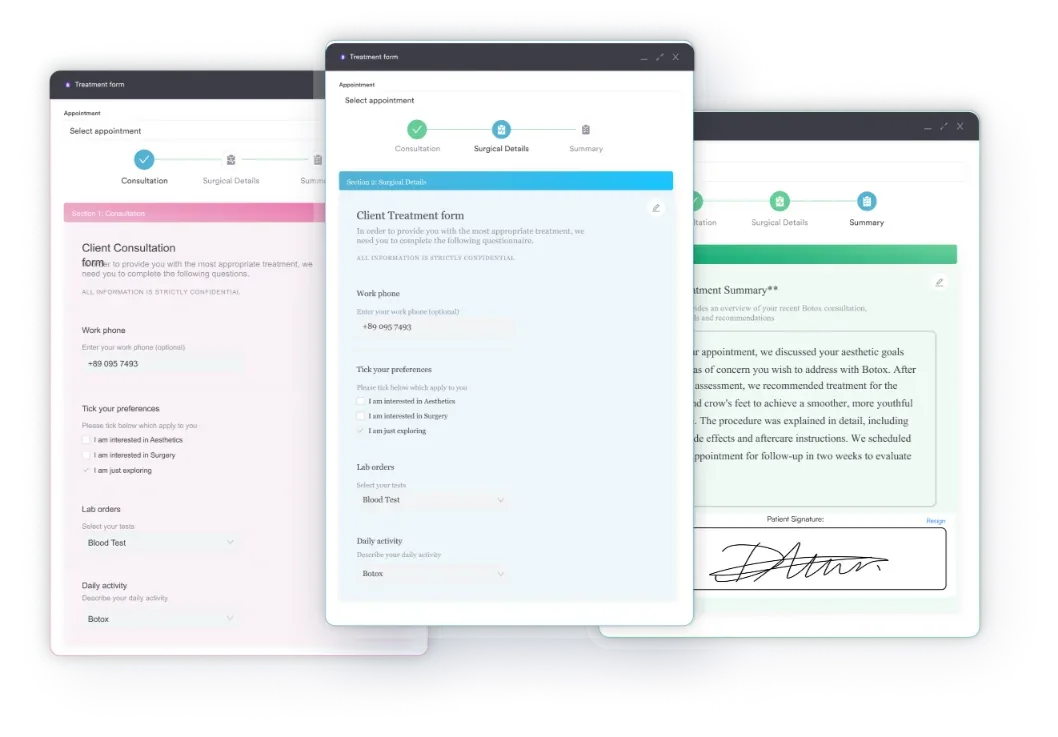
Audit your A5120 files quarterly. Pull five to ten claims at random and verify that each has a current written order, proof of delivery, and a refill request log. If any element is missing, correct the record before the next billing cycle rather than waiting for a MAC audit request.
Coding accuracy for ostomy supplies depends on selecting the right code for each product type. A5120 specifically covers single-use skin barrier wipes and swabs. It does not cover solid or formed skin barriers, which have their own distinct HCPCS codes. Confusing these codes generates claim denials and, in audit contexts, overpayment allegations.
Use the AAPC Codify HCPCS lookup to verify the current code descriptions and any applicable coverage notes before submitting claims across the ostomy supply range. The billing team at practices handling more complex procedure billing.
Billing teams sourcing incontinence supplies alongside ostomy care should apply the same coding discipline used for A4335. The same logic applies to T4535, a related incontinence product with its own distinct billing rules.
The practical difference between A5120 and A5121 is the physical product form. A wipe or swab is a liquid or gel applicator used to prepare peristomal skin before applying a solid barrier, while A5121 is the solid barrier itself.
Billing A5121 when the product supplied was actually a liquid skin prep wipe is both a coding error and a potential overpayment. Train billing staff to confirm product format from the packing slip or supply manifest before selecting the HCPCS code.
DMEPOS audits for ostomy supply codes have increased in recent years, as MACs focus on quantity irregularities and modifier accuracy. The denial patterns for HCPCS Code A5120 are predictable and preventable with the right pre-submission workflow.
Tracking these denials as part of a broader revenue cycle management process, rather than in isolation, makes them easier to catch before they recur.
The most avoidable denial in this list is the missing AU modifier. Because A5120 is almost always billed alongside ostomy pouches, barriers, or irrigation supplies, the AU modifier should be the default for nearly every A5120 claim.
A claim scrubber rule that checks for co-billed ostomy codes and flags the absence of AU will catch the majority of these before they leave the billing queue.
A scrubber can also flag a supply line that should not be there at all. Adding P9020 to a PRP claim that already carries 0232T or G0465 draws an unbundling denial, because both descriptors include preparation.
Practices looking to automate this kind of pre-submission check can explore automated billing workflows to build these rules into their standard claim preparation process.
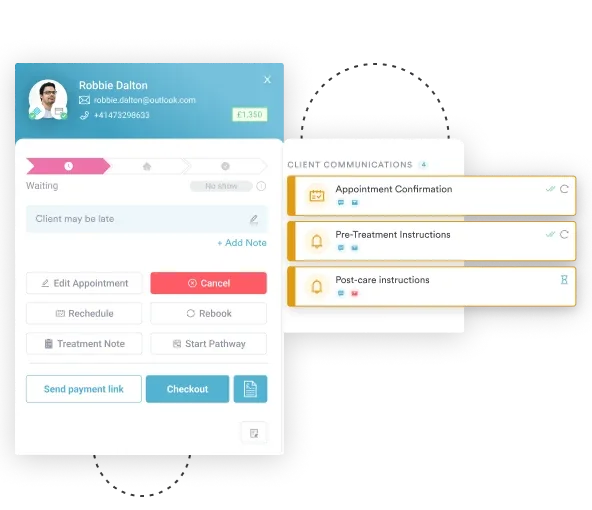
A clean A5120 claim follows a consistent six-step sequence from order to remittance. Practices that standardize this sequence reduce rework time and post-payment audit exposure. Billing teams managing both DMEPOS and professional service claims will recognize parallels with other supply-code workflows.
The same workflow discipline applies across other DME categories.
Practices billing DMEPOS codes alongside professional services should consider how their medical spa software or practice management platform handles supply code workflows separately from appointment-based billing. Supply billing runs on a different timeline and documentation model than E/M or procedure codes.
HCPCS Code A5120 is a low-unit-cost supply code with a disproportionate audit footprint. The AU modifier requirement, quantity justification standards, and multi-element documentation checklist mean that billing errors compound quickly across high-volume ostomy patient populations. Teams comparing their broader billing stack can start with our review of the best medical billing software on the market. The 1500 claim form and its electronic equivalent ask for the same data in a different layout.
Pabau’s claims management software gives billing teams the modifier-tracking and documentation-linking tools to keep A5120 claims clean before submission. To see how Pabau handles DMEPOS billing workflows, book a demo with the team.

Also billing a vedolizumab infusion? HCPCS code J3380 billing guide covers unit conversion, ICD-10 codes, prior authorization, and Medicare reimbursement for vedolizumab infusions.
Also billing a vitamin B-12 injection? HCPCS code J3420 billing guide covers the drug only, so pair it with CPT 96372 and a covered ICD-10 diagnosis code.
Also billing a vitamin K injection? HCPCS code J3430 billing guide covers billing phytonadione per 1 mg, with every claim requiring a JW or JZ modifier.
HCPCS Code A5120 is used to bill for skin barrier wipes or swabs supplied as part of ostomy care. Each individual wipe or swab is billed as one unit under this code, which falls within the Incontinence Devices and Supplies range (A5102-A5200) and is reimbursed under the Medicare prosthetic device benefit through the DMEPOS program.
Yes, but with special coverage instructions. Medicare covers A5120 under the prosthetic device benefit when the patient has a documented permanent or long-term colostomy, ileostomy, or urostomy. Coverage is governed by LCD L33828 and CMS Policy Article A52487. A valid written order and proof of delivery are required for every claim.
The AU modifier is required when A5120 is billed in conjunction with ostomy supplies, per CMS Policy Article A52487. A5120 is one of only three HCPCS codes (along with A4450 and A4452) for which the AU modifier is explicitly permitted under the ostomy supply policy. Omitting AU when ostomy supplies are co-billed is the most common denial trigger for this code.
The Medicare fee ceiling for A5120 is approximately $0.28 per unit based on CMS published data, though actual rates vary by MAC jurisdiction and are updated annually. The VA Community Care fee schedule shows higher rates: approximately $0.66 with the AU modifier and $0.65 with AV. Always verify current rates using the CMS fee schedule lookup before submitting claims or building reimbursement projections.
A5120 covers single-use skin barrier wipes or swabs (liquid or gel applicators used to prepare peristomal skin). A5121 covers a solid skin barrier in a 6×6 or equivalent format. They describe physically different products: a wipe used before applying a barrier vs. the solid barrier itself. Billing A5121 for a liquid wipe product, or vice versa, is a coding error that can trigger denial or overpayment findings on audit.
A5120 is a HCPCS Level II code, not a CPT code, though many billing teams search for it as CPT A5120. Its official long description is ‘Skin barrier, wipes or swabs, each,’ so each individual skin barrier wipe or swab is billed as one unit. CPT codes describe physician services and procedures, while supplies like this fall under HCPCS Level II.