CPT code 93503: Swan-Ganz catheter billing and modifiers
CPT code 93503: Official descriptor and procedure overview In the AMA CPT code s...

Last Updated: Oct 23, 2026
G0438 is the HCPCS Level II code for annual wellness visit; includes a personalized prevention plan of service (pps), initial visit.
Let Pabau's smart automation suggest the right codes, reduce claim denials, and keep your practice compliant—effortlessly.
Automate repetitive tasks and focus on what matters most—your patients.
Reduce coding errors and ensure compliance with the latest regulations.
Clean claims, fewer denials, and faster reimbursements.
Powerful insights and reporting to help your practice thrive.
HIPAA compliant SOC 2 certified GDPR-compliant Trusted by 4,000+ clinics worldwide

HCPCS Code G0438 covers a patient’s first Annual Wellness Visit (AWV) under Medicare. The patient must have held Part B coverage for more than 12 months.
G0438 is billed only once per patient lifetime. Every AWV after that one uses G0439 instead.
The visit is free to patients when the provider accepts Medicare assignment. Adding a same-day E&M requires Modifier 25 and separate documentation.
Practice management software like Pabau can automate G0438 eligibility checks, documentation templates, and claim submission to reduce denials.
HCPCS Code G0438 bills Medicare Part B for a patient’s first Annual Wellness Visit (AWV). The Centers for Medicare and Medicaid Services (CMS) lists it in HCPCS Level II, so it is a G-code and not a CPT code. It was created under Section 4103 of the Affordable Care Act (ACA) and took effect on January 1, 2011.
The official CMS descriptor reads: Annual wellness visit; includes a personalized prevention plan of service (PPPS), initial visit. That phrase carries four clinical obligations. You need a health risk assessment (HRA), a full medical and family history review, a prevention plan, and a set of preventive screenings.
Below you will find the eligibility rules, the G0439 distinction, 2026 reimbursement rates, the same-day E&M rules, and the documentation an audit asks for.
Choosing between G0438 and between G0438 and G0439 is the first decision on any AWV claim. Billing G0438 for a patient who already had an AWV is one of the most common over-billing errors. The table below compares both codes side by side.
G0439 is not limited to the same provider. If your patient had their initial AWV at another practice, you still bill G0439. Medicare tracks AWV history at the beneficiary level, not at the practice level. Claims management software that flags prior AWV history at the eligibility check catches this before the claim goes out.
Four conditions must all be true before G0438 can be billed. Missing any one of them results in denial.
Practices using wellness clinic software with Medicare eligibility verification can surface all four conditions at scheduling. Checking then, rather than at billing, removes the most common G0438 eligibility denials.
Many practices and patients confuse the AWV with the IPPE (G0402). They serve different purposes and cover different populations. Sequencing matters too. A patient who received an IPPE cannot have a G0438 within the following 12 months. Once that window expires, G0438 is billable.
CMS requires specific clinical elements to be completed and documented before G0438 can be billed. A visit that omits any mandatory component is not a billable AWV, regardless of the time spent with the patient. Practices using standardized medical forms for each visit element reduce the risk of an incomplete record.
None of the required elements is a physical examination, which keeps the AWV distinct from a routine annual exam. A commercially insured patient’s well-woman visit is billed separately, with S0610 covering a new patient’s gynecological examination.
Documentation failures account for a significant share of G0438 claim denials. The RAC audit program’s CMS-approved topic 0028 specifically targets AWV excessive units and inadequate documentation. Your medical record must contain each of the following to withstand an audit.
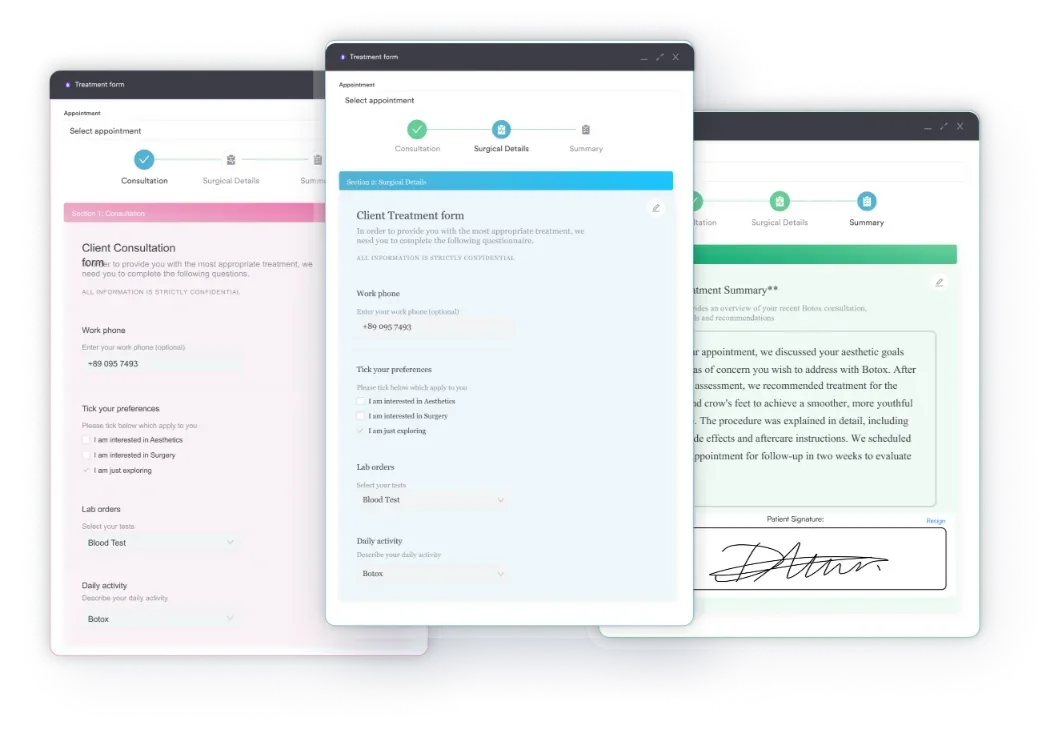
Practices that use digital intake forms tied to structured clinical templates can auto-populate most of these fields. Patient-completed questionnaires cut the documentation load on clinicians and reduce the risk of missing a required element.
Run a pre-visit eligibility check for every scheduled AWV. Confirm Part B enrollment date, check for any prior G0438 or G0439 claim, and verify no IPPE was billed in the prior 12 months. Catching eligibility issues before the visit prevents rework and protects revenue.
Billing G0438 follows a defined sequence. Skipping or misordering any step introduces denial risk. Practices that run scheduling and billing from the same primary care software can automate most of these steps. Every payer sets its own timely filing window, and a correctly coded claim still fails once that window closes.
Medicare reimbursement for G0438 varies by geographic locality. The national average for 2026 falls in the range of $170 to $180 for the initial AWV. Always verify your local rate with the CMS Physician Fee Schedule lookup tool. Rates are adjusted by geographic practice cost indices (GPCI) and updated each year in the fee schedule final rule.
Rates above reflect national averages and are subject to locality adjustments. Practices in high-cost urban markets typically receive higher rates. Rural practices may receive lower rates, or draw on rural health clinic supplemental payments. Confirm your own rate each January, once CMS publishes the final fee schedule.
Yes, in certain circumstances. CMS permits billing a medically necessary Evaluation and Management (E&M) service on the same date as G0438. The rules are strict, and RAC auditors look closely at these pairings.
The E&M service must be:
Two scenarios qualify often. The first is a patient raising an acute complaint during the visit, such as a new skin lesion that needs assessment. The second is a positive depression screen that leads into a fuller psychiatry interview and clinical decision-making.
The depression screen is part of G0438 rather than a separately billable service. Medicare pays G0444 for a standalone annual depression screen only alongside a subsequent AWV, not this initial visit.
CMS RAC approved topic 0028 targets AWV excessive units, including inappropriate same-day E&M pairings. If your documentation does not clearly separate the two services, the E&M claim will be denied. Both notes are held to the same privacy and retention standards as any other record under HIPAA.
Physicians, nurse practitioners, physician assistants, and clinical nurse specialists enrolled with Medicare can all perform and bill the AWV. Incident-to billing situations vary. Confirm edge cases with your Medicare Administrative Contractor (MAC), especially shared visits and supervision requirements.
The AWV does not require a physician. A fully credentialed NP or PA can complete the visit and bill G0438 under their own NPI. All required elements still have to be completed and documented.

Build a G0438 visit checklist into your EHR or practice management platform. Assign each required element as a structured task, from the HRA through to the PPPS. Every task has to be marked complete before the AWV claim can go out. That is what stops incomplete-documentation denials at scale.
The following mistakes appear repeatedly in Medicare AWV audits and claim denials. Most are preventable with the right billing system configuration and a short staff briefing.
Every G0438 claim requires at least one supporting ICD-10-CM diagnosis code. CMS requires the diagnosis code to reflect the reason for the visit. For a standard AWV with no acute findings, Z00.00 is the correct primary code. When the visit uncovers abnormal findings that are documented and addressed, Z00.01 applies instead.
Only attach additional Z codes for screenings that were performed and documented at this visit. Do not default-add screening codes without matching documentation. The AAPC HCPCS code database lists the code ranges, and the CMS annual wellness visit page covers how CMS treats AWV diagnosis coding.
Most AWV denials come from workflow breakdowns rather than coding knowledge. Coders know the rules. Three things tend to go wrong instead.
Practice management software like Pabau closes all three. With automated billing workflows, you set rules that fire at the right point in the visit.
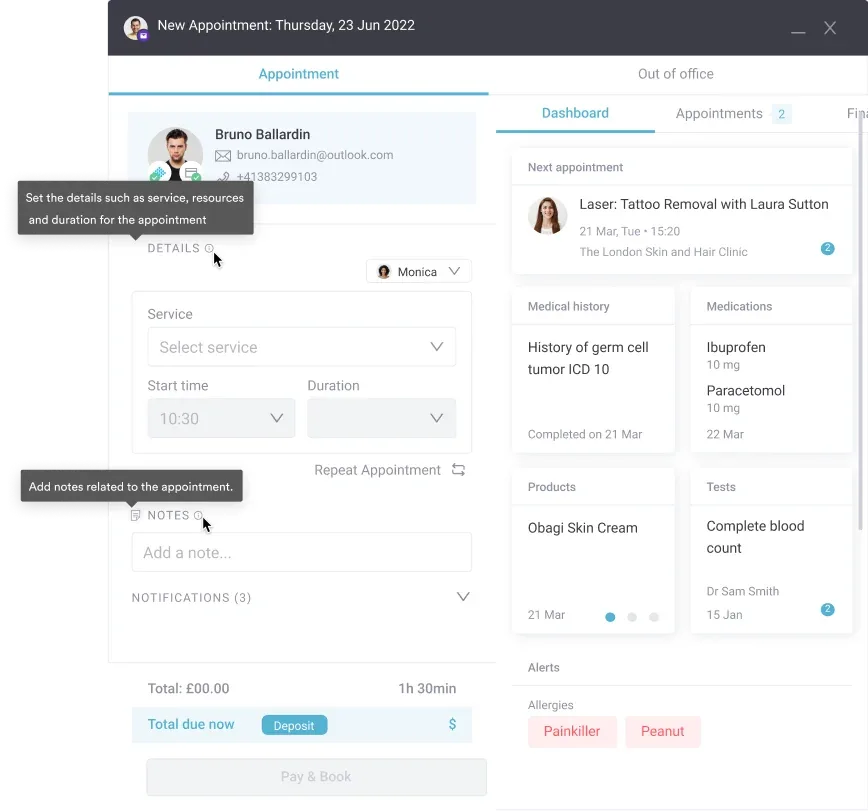
Pabau also supports structured AWV documentation templates, clearinghouse submission, and real-time eligibility verification. For practices running high volumes of preventive visits, that cuts administrative time per visit. It also helps them keep AWV revenue that leaks out through avoidable billing errors.

Pabau helps primary care and wellness practices verify G0438 eligibility, complete structured AWV documentation, and submit claims to Medicare Part B, all from one platform.

G0438 can only be billed once for each patient, so a wrong code choice is rarely fixed by a resubmission. That makes the pre-visit eligibility check the highest-value step in the whole workflow. Confirm the Part B enrollment date, the AWV history, and any IPPE in the past 12 months before the patient arrives.
Everything after that follows from documentation. Capture the HRA, the screenings, and the PPPS as structured fields rather than free text. The claim and the audit trail then build themselves while the visit happens, instead of afterwards.
Pabau builds those checks into scheduling, charting, and claim submission. Book a demo to see how it handles Medicare AWV workflows from booking through to payment.

Need to bill a disease management follow-up? Disease management follow-up billing guide covers reporting a follow-up visit that reviews progress and adjusts an enrolled patient’s care plan.
Billing a behavioral health screening on its own? H0002 walks through how that screening is coded when it sits outside the wellness visit.
Need to bill a vision prescription lens? Bifocal lens billing guide covers billing a bifocal safety, athletic, or sunglass lens correctly per individual lens.
Need to bill a preventive gynecological exam? Gynecological exam billing guide covers billing an annual gynecological and clinical breast exam without a pelvic evaluation.
HCPCS Code G0438 is an HCPCS Level II G-code for a patient’s initial Annual Wellness Visit (AWV). The visit must include a personalized prevention plan of service (PPPS). It is distinct from a routine physical exam and focuses entirely on preventive planning, health risk assessment, and screenings required under the Affordable Care Act.
G0438 covers only the patient’s first-ever Medicare Annual Wellness Visit. It is a once-per-lifetime code. G0439 covers every subsequent AWV and can be billed once per calendar year after the initial visit. If your patient has ever received an AWV under Medicare at any practice, you must bill G0439, not G0438.
The national average reimbursement for G0438 in 2026 is approximately $170 to $180, subject to geographic locality adjustments. Verify your specific rate with the CMS Physician Fee Schedule lookup tool. Rates vary by region and are updated each January in the annual fee schedule final rule.
Yes, if the E&M service is medically necessary, distinct from the AWV’s preventive scope, and separately documented with its own clinical note. The E&M code must be appended with Modifier 25 to indicate a significant, separately identifiable service. Without Modifier 25 and separate documentation, the E&M claim will be denied and may trigger a RAC review under CMS topic 0028.
Yes, when the provider accepts Medicare assignment, the AWV (G0438 or G0439) is provided at no cost to the patient with no copay or coinsurance. If a same-day E&M service is also billed, the patient may owe standard cost-sharing for that separate service.
G0438 is an HCPCS Level II G-code, not a CPT code. Many practices mistakenly search for an “Annual Wellness Visit CPT code,” but no CPT code covers the Medicare AWV. G0438 and G0439 are the correct HCPCS codes for billing Medicare Part B for initial and subsequent AWVs respectively.
G0402 is the Initial Preventive Physical Examination, also called the Welcome to Medicare visit. It covers patients in their first 12 months of Medicare Part B enrollment, and it includes a physical examination. G0438 is for patients enrolled for more than 12 months who have never had an AWV. It focuses on preventive planning and has no physical exam component. Receiving G0402 within the prior 12 months disqualifies a patient from G0438 billing until that window expires.
Yes. Nurse practitioners (NPs), physician assistants (PAs), and clinical nurse specialists (CNS) enrolled with Medicare can perform and bill G0438. They bill under their own NPI, provided every required AWV element is completed and documented. CMS does not require physician involvement for the AWV, though incident-to billing situations may have additional supervision requirements depending on the practice setting.