






Pabau GO app

The new Pabau GO is heredownload on the App Store

Download on the App Store
Book a demo Book a demo
Billing Codes

CCSD Code 0514G: UK private healthcare billing guide

What to include in the clinical record

  • Procedure narrative: document exactly what was performed, using language that aligns with the CCSD code description for 0514G.
  • Clinical indication: record the reason for the procedure, including relevant history and examination findings that support medical necessity.
  • Consent: written informed consent should be recorded and retained. Digital consent forms make this straightforward to capture and retrieve at audit.
  • Date of service: confirm the date of procedure matches the date submitted on the claim form.
  • Clinician details: include the treating clinician’s GMC number and recognition number with the relevant insurer.
  • Laterality and complexity: where applicable, document laterality (left, right, bilateral) and any factors that affect the coding, such as a bilateral procedure rule under the insurer’s schedule.

Practices using dedicated claims management software can attach clinical notes directly to each insurance invoice, reducing the risk of documentation gaps when claims are queried. This is especially useful for procedures where insurers may request clinical justification as part of their audit process.

When insurers pay, Pabau does the heavy lifting for you

Pro Tip

Audit your clinical records against the CCSD Technical Guide’s chapter-specific coding principles before submission. A five-minute review of laterality, bilateral rules, and procedure narrative alignment will prevent the majority of documentation-related rejections.

Coding principles and combination rules

The CCSD Technical Guide sets out general coding conventions that apply across all procedure codes, as well as chapter-specific principles that govern how individual codes may be combined, modified, or reported. Practitioners billing CCSD Code 0514G should review the coding principles attached to its chapter before combining it with any other code.

General CCSD coding conventions to know

Unbundling is a common trigger for claim rejection and, in some cases, fraud flags. The CCSD Technical Guide explicitly addresses when codes may and may not be combined. For surgical procedures in particular, some codes include the repair of a donor site or the excision of surrounding tissue, meaning those elements cannot be billed separately. Freedom Health’s published chapter 15 schedule, for example, notes that skin graft codes “relate to the formation, division and transfer of the graft and include the repair of the donor site,” explicitly excluding a separate billing for the donor site repair.

Apply the same logic when billing 0514G: identify what is included within the code’s narrative and do not bill separately for included elements. If you are uncertain whether a combination is permitted, check the coding principles for 0514G’s chapter in the CCSD schedule or contact the insurer’s provider helpline before submission.

Coding principle What to do
Included elements Check the code narrative for procedures that are included within 0514G. Do not bill these separately.
Bilateral procedures Check the insurer’s bilateral rule for this chapter. Some insurers pay 100% for the first side and 50% for the second; others require a separate code.
Combining with other codes Refer to the chapter coding principles in the CCSD Technical Guide. Only combine codes where this is explicitly permitted.
Anaesthetic Anaesthetic fees are typically billed separately by the anaesthetist; do not include these in the surgeon’s CCSD claim unless the insurer’s schedule specifies otherwise.

Simplify CCSD billing for your private practice

Pabau supports Healthcode-integrated claim submission with built-in CCSD code management, helping UK private practices reduce errors and get paid faster.

Pabau practice management software for UK private healthcare billing

How to submit CCSD Code 0514G correctly

Most UK private insurers accept electronic claim submission via Healthcode, the standard billing clearinghouse for private medical insurance. Healthcode validates claims against the CCSD schedule before forwarding them to the insurer, which means errors in code format or missing fields are flagged before the claim reaches the insurer’s adjudication team. Private practices that integrate their billing workflow with Healthcode report fewer manual corrections and faster payment cycles.

Step-by-step claim submission for 0514G

  1. Confirm pre-authorisation: obtain and record the insurer’s pre-authorisation reference number before the procedure takes place, if pre-authorisation is required for the patient’s policy.
  2. Verify the code: look up 0514G in your CCSD schedule or the relevant insurer’s code portal to confirm the current narrative, chapter, and any applicable coding principles.
  3. Complete the clinical record: document the procedure, clinical indication, and any relevant laterality or complexity notes. Attach any required supporting documents.
  4. Create the insurance invoice: enter 0514G as the procedure code, along with the clinician’s recognition number, the date of service, and the insurer’s reference number.
  5. Submit via Healthcode: upload the invoice through Healthcode or your practice management system’s Healthcode integration. Check the validation response for any error flags before the claim is forwarded to the insurer.
  6. Track the claim status: monitor the claim through to payment confirmation. If the claim is queried or partially paid, retrieve the clinical record and respond with supporting documentation promptly. Effective private practice management means tracking claim status as a routine process, not an exception.

Pro Tip

Flag claims for 0514G that involve bilateral procedures before submission. Confirm the relevant insurer’s bilateral payment rule in their published fee schedule, then document both sides clearly in the clinical record and on the invoice to avoid split-payment disputes.

Common claim errors and how to avoid them

Claim rejections for CCSD procedure codes fall into a small number of recurring categories. Knowing these patterns in advance is the fastest way to reduce your practice’s billing cycle time. For UK private practices operating across multiple compliance frameworks, a consistent pre-submission checklist prevents most of these errors from reaching the insurer.

Top rejection reasons for CCSD procedure codes

  • Missing pre-authorisation: submitting a claim for a procedure that required pre-authorisation but was not pre-authorised. Always verify before the appointment.
  • Incorrect or outdated code: the CCSD schedule is updated periodically. A code that was valid in a previous year may have been amended or retired. Check the current schedule annually and after any CCSD bulletin update.
  • Unbundling errors: billing separately for a component that is included within 0514G’s code narrative. Review the code’s included elements before adding secondary codes.
  • Missing clinician recognition number: insurers require the treating clinician to hold recognition with them. A claim submitted without the correct recognition number will be rejected regardless of the code accuracy.
  • Documentation mismatch: the clinical record does not support the code submitted. Ensure your procedure note uses language consistent with the CCSD narrative for 0514G.
  • Wrong insurer reference number: submitting with an incorrect pre-authorisation reference or membership number is one of the simplest errors to avoid and one of the most common. Build a verification step into your booking workflow. Understanding how UK private healthcare pathways connect helps billing teams capture the right patient and insurer details at the point of booking.
Error type Prevention action
Missing pre-authorisation Verify before booking; record reference number in the patient file
Outdated code Check the CCSD schedule at least annually and after each CCSD bulletin
Unbundling Review included elements in the code narrative before adding secondary codes
Missing recognition number Confirm clinician recognition with each insurer; store recognition numbers in the practice system
Documentation mismatch Align procedure note language with the CCSD code narrative before finalising the record

When billing CCSD Code 0514G, your team should also be aware of adjacent codes within the same chapter. Related codes may cover similar but distinct procedures, and selecting the wrong code, even within the same chapter, can trigger a clinical mismatch query from the insurer’s auditing team.

To identify related codes, access the CCSD schedule and review the section or subsection surrounding 0514G. Look for codes with similar narratives and compare the included/excluded elements carefully. The CCSD Technical Guide also publishes coding principles bulletins, such as the January 2025 edition, that clarify how specific code groups should be applied when ambiguity exists.

For practices billing a range of CCSD procedure codes across specialties, maintaining compliant, auditable patient records under UK data protection requirements is as important as getting the code right. Insurers have the right to audit claims and request clinical records; your documentation needs to hold up under scrutiny for each code you bill, including 0514G.

The Allianz Care UK fee schedule (effective December 2024) is publicly available and provides a useful cross-reference for CCSD code narratives and fee benchmarks, even if you do not primarily bill Allianz Care. Because Allianz Care bases its schedule on the CCSD standard, the narratives listed there often clarify the clinical scope of adjacent codes. Use it as a reference tool, then verify against the CCSD schedule itself before submitting.

How Pabau supports CCSD billing for UK private practices

UK private practices billing CCSD codes face the same administrative friction as any insurance-heavy workflow: pre-authorisation tracking, documentation alignment, Healthcode submission, and claim status monitoring all need to happen reliably for every patient episode. Pabau’s claims management software is built for this environment, with Healthcode integration that supports electronic submission of CCSD-coded invoices directly from the platform.

For practices handling CCSD Code 0514G alongside a broader procedure mix, Pabau lets teams attach clinical notes to each insurance invoice, store insurer recognition numbers per clinician, and track outstanding claims without switching between systems. Skin clinics and surgical practices in the UK find this particularly useful when billing multiple insurers with different pre-authorisation rules across a shared patient caseload.

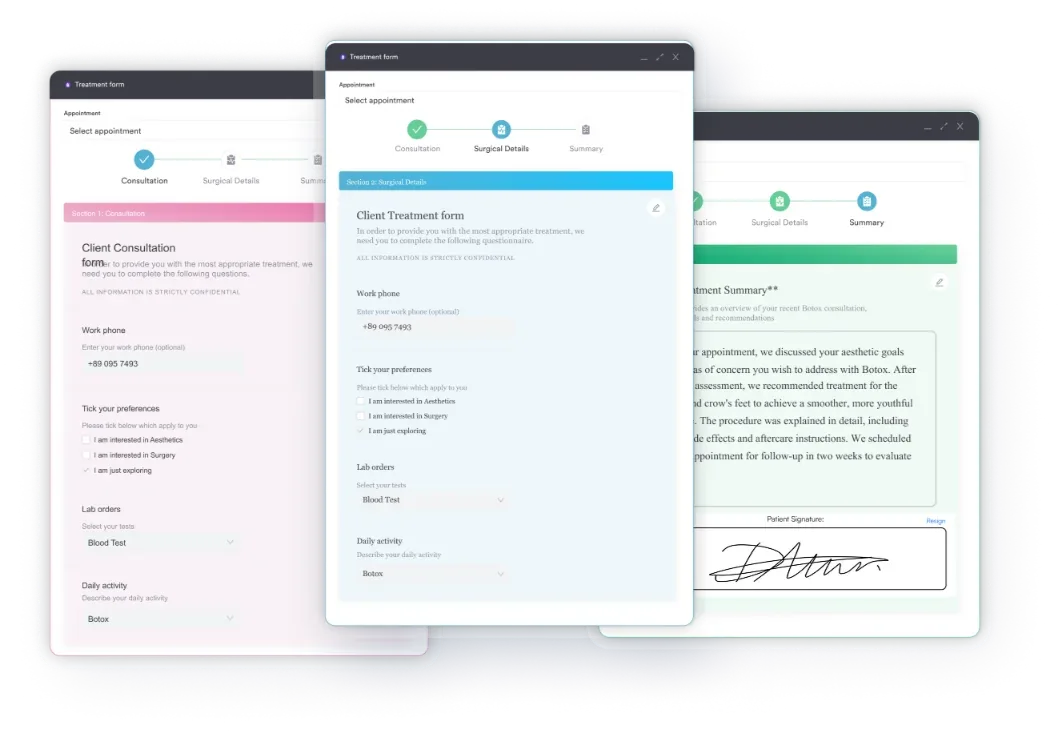
Pabau also supports digital consent and intake forms, making it easier to capture the pre-procedure documentation that insurers require when auditing CCSD claims. Rather than managing paper consent forms separately from the billing record, practices can keep everything in one place. For independent practitioners building a sustainable private practice, that kind of end-to-end workflow reduces administrative overhead without adding headcount.

Customizable consent and intake forms

Conclusion

Billing CCSD Code 0514G accurately requires three things: verifying the code’s current narrative and chapter in the CCSD schedule, confirming pre-authorisation requirements with the specific insurer, and aligning your clinical documentation with the code’s scope before submission. Getting any one of these wrong is enough to delay payment or trigger a rejection.

Pabau’s Healthcode-integrated billing workflow handles the submission side of this process, while its digital forms and claims management tools keep documentation and invoice records connected. To see how Pabau supports CCSD billing in practice, book a demo with the team.

Continue your research

Continue your research

Need a full overview of Bupa CCSD codes and how they work? Bupa CCSD codes: complete guide for UK clinics covers all 20 chapters, common claim errors, and how to use Bupa’s code search tool.

Managing claims across a UK private practice? Pabau’s claims management software supports Healthcode-integrated CCSD code submission and invoice tracking for independent practitioners.

Setting up a private practice and navigating insurer requirements for the first time? Leaving the NHS for private practice covers what to expect from insurer recognition, billing setup, and administrative workflows.

Frequently Asked Questions

What is CCSD Code 0514G?

CCSD Code 0514G is a procedure code within the UK Clinical Coding and Schedule Development (CCSD) Group schedule, used by private medical insurers including Bupa, AXA Health, Aviva, and others to identify and reimburse specific clinical procedures. The “G” suffix confirms it is a procedural code rather than a diagnostic service charge. The full clinical narrative and chapter assignment must be verified directly via the login-gated CCSD schedule.

What is a CCSD code used for in UK private healthcare?

CCSD codes are the standard procedure coding system for UK private healthcare billing. Independent practitioners submit them on insurance invoices to identify what procedure was performed, enabling insurers to process and reimburse claims. The CCSD Group, hosted under Grant Thornton UK, maintains approximately 2,859 procedure codes across 20 chapters, updated periodically through coding bulletins and schedule revisions.

How do I look up CCSD Code 0514G in the CCSD schedule?

Access the CCSD schedule at ccsd.org.uk, which requires registration and login. Once logged in, search for 0514G in the procedure schedule to find its clinical narrative, chapter classification, and any applicable coding principles. Bupa’s public code search tool at codes.bupa.co.uk may also display the narrative for registered providers without full CCSD schedule access.

How do I submit a CCSD code claim to Bupa?

Submit CCSD-coded claims to Bupa electronically via Healthcode, the standard UK private healthcare billing clearinghouse. Your invoice must include the CCSD code (0514G), the clinician’s Bupa recognition number, the date of service, and the patient’s Bupa membership and pre-authorisation reference numbers where applicable. Healthcode validates the claim format before forwarding it to Bupa for adjudication.

What documentation is required when billing CCSD Code 0514G?

Your clinical record must include the procedure narrative aligned with the CCSD code description, the clinical indication with supporting history and examination findings, written informed consent, the date of service, laterality where applicable, and the treating clinician’s GMC and insurer recognition numbers. Insurers may request this documentation during claims audits, so it should be complete and retrievable at the time of submission.
CCSD Code 0514G: procedure definition and chapter classification

CCSD Code 0514G is a procedure code within the Clinical Coding and Schedule Development (CCSD) Group schedule, the standard coding system for UK private healthcare billing. Like all codes carrying the “G” suffix, it denotes a procedural entry rather than a diagnostic service charge. As the CCSD Group confirms in its FAQs, diagnostic service charges “do not constitute procedures” and are handled separately from the main procedural schedule.

Because the full CCSD schedule is login-gated at ccsd.org.uk, the precise clinical narrative and chapter assignment for 0514G are not publicly indexed. Independent practitioners should verify the exact description and chapter placement directly within the CCSD schedule or through their insurer’s code search portal before billing. Misidentifying the chapter can result in claim rejection or requests for additional clinical justification.

What is confirmed: the CCSD schedule organises procedure codes into numbered chapters by body system or specialty. Based on the code range and the Freedom Health chapter 15 schedule (skin and subcutaneous tissue procedures), 0514G likely sits within a surgical or procedural specialty chapter. Confirm the exact chapter before submission. Our complete Bupa CCSD codes guide covers how the schedule is structured and how to navigate chapters efficiently.

How the CCSD schedule is organised

The CCSD schedule contains approximately 2,859 procedure codes across 20 chapters, as documented in the February 2026 edition of the Pabau Bupa CCSD reference guide. Codes are grouped by clinical specialty or body system, with each chapter carrying its own coding principles and, in some cases, insurer-specific fee modifiers.

When looking up 0514G, your practice management system or the relevant insurer portal (such as Bupa’s code search tool) will typically display the chapter number, the procedure narrative, and any applicable coding principles. Keep that information on file for documentation purposes.

Code element Detail
Code 0514G
Code type Procedure code (confirmed by “G” suffix)
Schedule CCSD Procedure Schedule (UK private healthcare)
Chapter Verify directly via CCSD schedule (login required)
Clinical narrative Verify directly via CCSD schedule (login required)
Maintained by CCSD Group (hosted under Grant Thornton UK)

Which UK insurers accept CCSD Code 0514G

The major UK private medical insurers all use CCSD codes as their standard procedure coding system. That means Bupa, AXA Health, Aviva, Allianz Care, Freedom Health, Vitality, and The Exeter will each recognise CCSD Code 0514G in a correctly submitted claim, provided the procedure is covered under the patient’s specific policy and any required pre-authorisation has been obtained.

Insurer acceptance of a code does not guarantee payment. Reimbursement depends on the patient’s benefit level, any applicable policy exclusions, and whether the procedure was pre-authorised. For independent practitioners new to private practice billing, this distinction matters: the code being in the schedule is the starting point, not the finish line.

Pre-authorisation requirements by insurer

Pre-authorisation rules differ by insurer and by policy type. Some insurers require pre-authorisation for all surgical procedures above a certain complexity; others apply pre-authorisation requirements only to specific chapters or code ranges. Always contact the insurer before treatment to confirm whether 0514G requires pre-authorisation for your patient’s policy.

  • Bupa: uses its own code search portal at codes.bupa.co.uk to indicate pre-authorisation requirements per code and policy type.
  • AXA Health: publishes procedure code chapters through its specialist forms portal; pre-authorisation rules are chapter-specific.
  • Aviva: provides fee schedule detail and pre-authorisation guidance through its provider portal.
  • Allianz Care: publishes a UK national fee schedule (effective December 2024) based on CCSD codes; pre-authorisation requirements are set out separately by plan type.
  • Freedom Health: organises its fee schedule by CCSD chapter (e.g. chapter 15 for skin and subcutaneous tissue); check the relevant chapter for coding principles and any bilateral or combination restrictions.
  • Vitality: provides a fee finder tool that allows providers to look up CCSD codes and associated benefit levels.

Practices billing multiple insurers after moving from the NHS to private practice often find that maintaining a pre-authorisation checklist per insurer is the single most effective way to prevent avoidable claim rejections.

Documentation requirements for accurate billing

Robust documentation is the foundation of a clean CCSD claim. Insurers audit claims against the clinical record, and incomplete notes are one of the most common reasons for delayed payment or outright rejection. The CCSD Technical Guide (October 2025) sets out the coding conventions and principles that apply across the schedule; practices should read the chapter-specific principles that govern 0514G’s chapter in particular.

What to include in the clinical record

  • Procedure narrative: document exactly what was performed, using language that aligns with the CCSD code description for 0514G.
  • Clinical indication: record the reason for the procedure, including relevant history and examination findings that support medical necessity.
  • Consent: written informed consent should be recorded and retained. Digital consent forms make this straightforward to capture and retrieve at audit.
  • Date of service: confirm the date of procedure matches the date submitted on the claim form.
  • Clinician details: include the treating clinician’s GMC number and recognition number with the relevant insurer.
  • Laterality and complexity: where applicable, document laterality (left, right, bilateral) and any factors that affect the coding, such as a bilateral procedure rule under the insurer’s schedule.

Practices using dedicated claims management software can attach clinical notes directly to each insurance invoice, reducing the risk of documentation gaps when claims are queried. This is especially useful for procedures where insurers may request clinical justification as part of their audit process.

When insurers pay, Pabau does the heavy lifting for you

Coding principles and combination rules

The CCSD Technical Guide sets out general coding conventions that apply across all procedure codes, as well as chapter-specific principles that govern how individual codes may be combined, modified, or reported. Practitioners billing CCSD Code 0514G should review the coding principles attached to its chapter before combining it with any other code.

General CCSD coding conventions to know

Unbundling is a common trigger for claim rejection and, in some cases, fraud flags. The CCSD Technical Guide explicitly addresses when codes may and may not be combined. For surgical procedures in particular, some codes include the repair of a donor site or the excision of surrounding tissue, meaning those elements cannot be billed separately. Freedom Health’s published chapter 15 schedule, for example, notes that skin graft codes “relate to the formation, division and transfer of the graft and include the repair of the donor site,” explicitly excluding a separate billing for the donor site repair.

Apply the same logic when billing 0514G: identify what is included within the code’s narrative and do not bill separately for included elements. If you are uncertain whether a combination is permitted, check the coding principles for 0514G’s chapter in the CCSD schedule or contact the insurer’s provider helpline before submission.

Coding principle What to do
Included elements Check the code narrative for procedures that are included within 0514G. Do not bill these separately.
Bilateral procedures Check the insurer’s bilateral rule for this chapter. Some insurers pay 100% for the first side and 50% for the second; others require a separate code.
Combining with other codes Refer to the chapter coding principles in the CCSD Technical Guide. Only combine codes where this is explicitly permitted.
Anaesthetic Anaesthetic fees are typically billed separately by the anaesthetist; do not include these in the surgeon’s CCSD claim unless the insurer’s schedule specifies otherwise.

How to submit CCSD Code 0514G correctly

Most UK private insurers accept electronic claim submission via Healthcode, the standard billing clearinghouse for private medical insurance. Healthcode validates claims against the CCSD schedule before forwarding them to the insurer, which means errors in code format or missing fields are flagged before the claim reaches the insurer’s adjudication team. Private practices that integrate their billing workflow with Healthcode report fewer manual corrections and faster payment cycles.

Step-by-step claim submission for 0514G

  1. Confirm pre-authorisation: obtain and record the insurer’s pre-authorisation reference number before the procedure takes place, if pre-authorisation is required for the patient’s policy.
  2. Verify the code: look up 0514G in your CCSD schedule or the relevant insurer’s code portal to confirm the current narrative, chapter, and any applicable coding principles.
  3. Complete the clinical record: document the procedure, clinical indication, and any relevant laterality or complexity notes. Attach any required supporting documents.
  4. Create the insurance invoice: enter 0514G as the procedure code, along with the clinician’s recognition number, the date of service, and the insurer’s reference number.
  5. Submit via Healthcode: upload the invoice through Healthcode or your practice management system’s Healthcode integration. Check the validation response for any error flags before the claim is forwarded to the insurer.
  6. Track the claim status: monitor the claim through to payment confirmation. If the claim is queried or partially paid, retrieve the clinical record and respond with supporting documentation promptly. Effective private practice management means tracking claim status as a routine process, not an exception.

Common claim errors and how to avoid them

Claim rejections for CCSD procedure codes fall into a small number of recurring categories. Knowing these patterns in advance is the fastest way to reduce your practice’s billing cycle time. For UK private practices operating across multiple compliance frameworks, a consistent pre-submission checklist prevents most of these errors from reaching the insurer.

Top rejection reasons for CCSD procedure codes

  • Missing pre-authorisation: submitting a claim for a procedure that required pre-authorisation but was not pre-authorised. Always verify before the appointment.
  • Incorrect or outdated code: the CCSD schedule is updated periodically. A code that was valid in a previous year may have been amended or retired. Check the current schedule annually and after any CCSD bulletin update.
  • Unbundling errors: billing separately for a component that is included within 0514G’s code narrative. Review the code’s included elements before adding secondary codes.
  • Missing clinician recognition number: insurers require the treating clinician to hold recognition with them. A claim submitted without the correct recognition number will be rejected regardless of the code accuracy.
  • Documentation mismatch: the clinical record does not support the code submitted. Ensure your procedure note uses language consistent with the CCSD narrative for 0514G.
  • Wrong insurer reference number: submitting with an incorrect pre-authorisation reference or membership number is one of the simplest errors to avoid and one of the most common. Build a verification step into your booking workflow. Understanding how UK private healthcare pathways connect helps billing teams capture the right patient and insurer details at the point of booking.
Error type Prevention action
Missing pre-authorisation Verify before booking; record reference number in the patient file
Outdated code Check the CCSD schedule at least annually and after each CCSD bulletin
Unbundling Review included elements in the code narrative before adding secondary codes
Missing recognition number Confirm clinician recognition with each insurer; store recognition numbers in the practice system
Documentation mismatch Align procedure note language with the CCSD code narrative before finalising the record

When billing CCSD Code 0514G, your team should also be aware of adjacent codes within the same chapter. Related codes may cover similar but distinct procedures, and selecting the wrong code, even within the same chapter, can trigger a clinical mismatch query from the insurer’s auditing team.

To identify related codes, access the CCSD schedule and review the section or subsection surrounding 0514G. Look for codes with similar narratives and compare the included/excluded elements carefully. The CCSD Technical Guide also publishes coding principles bulletins, such as the January 2025 edition, that clarify how specific code groups should be applied when ambiguity exists.

For practices billing a range of CCSD procedure codes across specialties, maintaining compliant, auditable patient records under UK data protection requirements is as important as getting the code right. Insurers have the right to audit claims and request clinical records; your documentation needs to hold up under scrutiny for each code you bill, including 0514G.

The Allianz Care UK fee schedule (effective December 2024) is publicly available and provides a useful cross-reference for CCSD code narratives and fee benchmarks, even if you do not primarily bill Allianz Care. Because Allianz Care bases its schedule on the CCSD standard, the narratives listed there often clarify the clinical scope of adjacent codes. Use it as a reference tool, then verify against the CCSD schedule itself before submitting.

How Pabau supports CCSD billing for UK private practices

UK private practices billing CCSD codes face the same administrative friction as any insurance-heavy workflow: pre-authorisation tracking, documentation alignment, Healthcode submission, and claim status monitoring all need to happen reliably for every patient episode. Pabau’s claims management software is built for this environment, with Healthcode integration that supports electronic submission of CCSD-coded invoices directly from the platform.

For practices handling CCSD Code 0514G alongside a broader procedure mix, Pabau lets teams attach clinical notes to each insurance invoice, store insurer recognition numbers per clinician, and track outstanding claims without switching between systems. Skin clinics and surgical practices in the UK find this particularly useful when billing multiple insurers with different pre-authorisation rules across a shared patient caseload.

Pabau also supports digital consent and intake forms, making it easier to capture the pre-procedure documentation that insurers require when auditing CCSD claims. Rather than managing paper consent forms separately from the billing record, practices can keep everything in one place. For independent practitioners building a sustainable private practice, that kind of end-to-end workflow reduces administrative overhead without adding headcount.

Customizable consent and intake forms

Conclusion

Billing CCSD Code 0514G accurately requires three things: verifying the code’s current narrative and chapter in the CCSD schedule, confirming pre-authorisation requirements with the specific insurer, and aligning your clinical documentation with the code’s scope before submission. Getting any one of these wrong is enough to delay payment or trigger a rejection.

Pabau’s Healthcode-integrated billing workflow handles the submission side of this process, while its digital forms and claims management tools keep documentation and invoice records connected. To see how Pabau supports CCSD billing in practice, book a demo with the team.

Frequently Asked Questions

What is CCSD Code 0514G?

CCSD Code 0514G is a procedure code within the UK Clinical Coding and Schedule Development (CCSD) Group schedule, used by private medical insurers including Bupa, AXA Health, Aviva, and others to identify and reimburse specific clinical procedures. The “G” suffix confirms it is a procedural code rather than a diagnostic service charge. The full clinical narrative and chapter assignment must be verified directly via the login-gated CCSD schedule.

What is a CCSD code used for in UK private healthcare?

CCSD codes are the standard procedure coding system for UK private healthcare billing. Independent practitioners submit them on insurance invoices to identify what procedure was performed, enabling insurers to process and reimburse claims. The CCSD Group, hosted under Grant Thornton UK, maintains approximately 2,859 procedure codes across 20 chapters, updated periodically through coding bulletins and schedule revisions.

How do I look up CCSD Code 0514G in the CCSD schedule?

Access the CCSD schedule at ccsd.org.uk, which requires registration and login. Once logged in, search for 0514G in the procedure schedule to find its clinical narrative, chapter classification, and any applicable coding principles. Bupa’s public code search tool at codes.bupa.co.uk may also display the narrative for registered providers without full CCSD schedule access.

How do I submit a CCSD code claim to Bupa?

Submit CCSD-coded claims to Bupa electronically via Healthcode, the standard UK private healthcare billing clearinghouse. Your invoice must include the CCSD code (0514G), the clinician’s Bupa recognition number, the date of service, and the patient’s Bupa membership and pre-authorisation reference numbers where applicable. Healthcode validates the claim format before forwarding it to Bupa for adjudication.

What documentation is required when billing CCSD Code 0514G?

Your clinical record must include the procedure narrative aligned with the CCSD code description, the clinical indication with supporting history and examination findings, written informed consent, the date of service, laterality where applicable, and the treating clinician’s GMC and insurer recognition numbers. Insurers may request this documentation during claims audits, so it should be complete and retrievable at the time of submission.

×