CPT code 93503: Swan-Ganz catheter billing and modifiers
CPT code 93503: Official descriptor and procedure overview In the AMA CPT code s...

Last Updated: Oct 23, 2026

CCSD code 0047G is the pan-cardiomyopathy panel, a genetic test that sequences around 100 genes linked to inherited heart muscle disease. It is billed to UK private medical insurers such as Bupa, AXA Health, Aviva, and Vitality Health.
Because it is a genetic test, 0047G claims hinge on three things insurers scrutinise closely: a clear clinical indication, documented consent for genetic testing, and pre-authorisation. Predictive or family (cascade) testing is treated very differently from diagnostic testing in a symptomatic patient.
Coverage and reimbursement for genetic testing vary widely by insurer and policy. Never assume 0047G is covered without checking the relevant insurer’s fee schedule or authorisation portal first.
Practice management software like Pabau helps UK private practices track authorisation statuses, attach consent and referral documentation, and submit claims accurately via Healthcode integration.
This guide covers how to bill CCSD code 0047G correctly: what documentation each claim needs, how Bupa, AXA Health, Aviva, Vitality Health, and Allianz Care apply their own rules on top of the CCSD schedule, and where the common denials come from.
Genetic tests draw more scrutiny from UK private medical insurers than routine procedures, and 0047G is no exception. Pre-authorisation is often mandatory, predictive testing is covered differently from diagnostic testing, and a single mismatched detail between diagnosis and test type is enough to trigger a rejection. Practice management software like Pabau helps UK private practices track pre-authorisation status, attach consent and referral documentation, and submit claims accurately, so fewer of these denials happen in the first place.
CCSD code 0047G is the pan-cardiomyopathy panel: a genetic test that sequences a broad set of genes, around 100, associated with inherited cardiomyopathies. Rather than testing one gene at a time, the panel uses next-generation sequencing to screen the whole set in a single run.
That’s why it’s the go-to test when a clinician suspects an inherited heart muscle condition but doesn’t yet know which one.
The panel spans the main inherited cardiomyopathies, including hypertrophic cardiomyopathy (HCM), dilated cardiomyopathy (DCM), arrhythmogenic right ventricular cardiomyopathy (ARVC), restrictive cardiomyopathy, and left ventricular non-compaction. It’s typically run from a blood or saliva sample and supports diagnosis, prognosis, treatment planning, and screening of at-risk family members.
In UK private practice, a consultant cardiologist or clinical geneticist usually requests it, often alongside genetic counselling.
The code sits within the CCSD Schedule of Procedures, the standard coding framework used across UK private medical insurance. The Clinical Coding and Schedule Development (CCSD) Group maintains the schedule on behalf of the sector. Claims that reach insurers with the wrong code, no pre-authorisation, or a diagnosis that doesn’t support genetic testing are routinely rejected, and genetic tests draw more scrutiny than most because of their cost and the coverage restrictions many policies carry.
The CCSD Technical Guide, updated October 2025, sets out the coding principles and business rules that govern every code in the schedule, including 0047G. Reviewing it before submitting a code type for the first time is standard practice for any UK private billing team.
The most common coding slip with 0047G is billing the comprehensive pan-cardiomyopathy panel when the laboratory actually ran a narrower, single-condition test, such as an HCM-only or DCM-only panel, which carries its own CCSD code. Bill the code that matches the test the lab performed and reported, not the broadest one available. Coding a wider panel than was delivered is an auditable error and a predictable source of denials and clawbacks.
Because coverage for genetic testing differs so much between insurers, confirm that 0047G is recognised and payable by the specific payer before you submit. The table below shows where to check for each major insurer.
A claim that carries the right CCSD code but lacks supporting documentation is almost as likely to be rejected as one with the wrong code. For genetic testing especially, UK private medical insurers cross-reference the procedure code against the clinical indication, consent records, and referral details before they pay. For practices billing through an integrated claims workflow, these documents attach automatically to each submission, cutting the manual preparation time significantly.
The following documentation is typically required when submitting a claim for the pan-cardiomyopathy panel. Requirements vary by insurer, so always confirm against the relevant provider guide.
Practices running private practice models in the UK often find that missing documentation stems from disconnected workflows. The referral sits in one system, consent on paper, the billing code in another tool, and the authorisation reference on a spreadsheet.
Centralising these steps reduces errors at the point of submission.
Genetic testing is one of the areas insurers most often restrict, so pre-authorisation matters more here than for routine procedures. Requirements for 0047G depend on the insurer and the patient’s policy: some cover genetic testing only when it is diagnostic and clinically necessary, some exclude predictive or family (cascade) testing entirely, and some require individual code-level approval every time. Do not assume that cover for a related cardiac investigation extends to the pan-cardiomyopathy panel.
When requesting authorisation, provide the insurer with:
Once authorisation is granted, record the reference number in the patient record and attach it to the claim at submission. Practices using digital clinical forms can build pre-authorisation and consent fields directly into the patient record workflow, reducing the risk of a reference being misplaced or omitted at billing time.
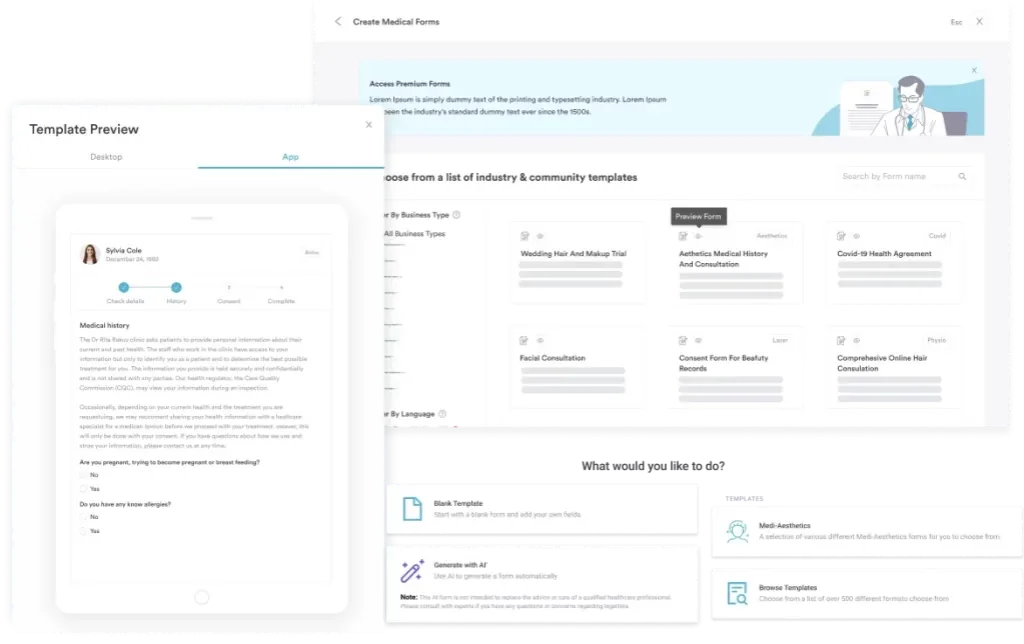
Before requesting authorisation for the pan-cardiomyopathy panel, confirm in writing whether the policy treats predictive and cascade (family) testing differently from diagnostic testing. This single check heads off the most expensive genetic-testing denials, where the test is run for an asymptomatic relative the policy never intended to cover.
Each major UK private medical insurer applies its own fee schedule and acceptance rules on top of the CCSD code set. The CCSD Group sets the codes and narratives; reimbursement rates and specific acceptance policies are determined by individual insurers. This matters even more for genetic testing than for standard procedures, because whether a policy covers the pan-cardiomyopathy panel at all can vary from one insurer, and one policy tier, to the next.
Bupa operates its own code search portal at codes.bupa.co.uk, which confirms code acceptance, applicable fee chapters, and any insurer-specific coding rules. Before billing Bupa for 0047G, search the portal for the exact code to confirm it is listed, check the fee chapter it falls under, and note any rules that apply to genetic testing specifically. Our full guide to Bupa CCSD codes covers the submission process in detail, including how to read fee chapters and handle disputes.
Bupa requires providers to be formally recognised. If 0047G is billed by a clinician who has not been granted Bupa recognition in the relevant specialty, or processed by a laboratory that isn’t recognised, the claim will be rejected regardless of coding accuracy.
AXA Health uses a dedicated portal for specialist procedure codes and fee verification. Search the code at the AXA Health specialist portal before submission to confirm whether 0047G is recognised under the relevant fee chapter and what its genetic-testing rules require. AXA also applies unbundling rules: if the panel is billed alongside individual gene tests or a narrower panel that the comprehensive code already covers, the component claims will be rejected.
Aviva publishes a fee schedule that lists accepted CCSD codes with their associated fees and guidelines. Aviva’s invoicing requirements are detailed in its provider guidelines and must be followed exactly. The fee schedule is available through Aviva’s provider section and is updated periodically. Practices billing Aviva for 0047G should confirm the current fee, whether the policy covers genetic testing, and any limits that apply to the code.
Vitality Health operates a fee finder tool at vitality.co.uk/healthcare-providers/fee-finder that lets recognised providers look up CCSD codes and check applicable fees and rules. Vitality’s fee structure is CCSD-based, so 0047G should appear in the tool if Vitality recognises it. Practices new to billing Vitality should confirm provider recognition status, and whether the patient’s plan includes genetic testing, before submitting claims for this code.
Allianz Care, Cigna UK, and WPA all use CCSD codes within their fee schedules but apply their own acceptance rules and fee values. For genetic testing in particular, the safest approach is to contact provider relations directly before billing 0047G for the first time to confirm coverage and any specific submission requirements. Practices that recently left the NHS often underestimate how much insurer-to-insurer variation exists in the UK private healthcare billing environment.
The same insurer-verification principle applies to other genetic and diagnostic panels. See our guides to 0043G.

Pabau helps UK private practices track pre-authorisation statuses, attach consent and referral documentation to claims, and submit accurately via Healthcode. See how it works for your practice.

Most CCSD claim denials stem from a small set of repeating errors. For genetic tests like the pan-cardiomyopathy panel, the patterns below appear most frequently. Addressing them at the point of workflow design is more effective than correcting claims after rejection.
Practices that use integrated billing tools report fewer denials because the system prompts for authorisation references and flags diagnosis-test mismatches at the point of data entry, not after submission. Catching errors pre-submission is faster and less costly than the appeals process.
When a claim for CCSD code 0047G is denied, the insurer will typically provide a reason code. Collect that reason code and compare it against the common errors above before submitting an appeal. Appeals that repeat the original submission without addressing the stated reason are almost always unsuccessful.
For denials related to missing documentation, resubmit with the complete clinical record, consent, and referral attached. For coverage-related denials, check whether the policy covers genetic testing at all before appealing, since no amount of documentation will overturn a genuine exclusion. For coding-related denials, confirm against the CCSD schedule or Bupa code search that 0047G matches the panel the lab performed, and include that reference in the appeal. Practices that track denial patterns as part of revenue cycle management are better positioned to spot systemic issues before they escalate.
Keep a simple log of all claim denials by insurer and reason code. After 10-15 denials for the same code, a pattern becomes visible. For genetic testing, watch specifically for denials tied to coverage exclusions, addressing the root cause at the workflow level is far more efficient than handling each denial individually.
Healthcode is the primary electronic data interchange (EDI) clearinghouse for UK private healthcare claims. Most major insurers, including Bupa, AXA Health, Aviva, and Vitality, accept electronic claims submitted via Healthcode. For practices billing CCSD code 0047G, submitting via Healthcode rather than paper or direct portal entry reduces processing time and provides a verifiable audit trail.
Practices weighing up UK medical billing software often start with direct insurer portals before moving to Healthcode once claim volumes justify the setup. Either route is acceptable, but the data requirements are the same: correct CCSD code, supporting diagnosis code, pre-authorisation reference, and accurate provider and patient details.
Practices that use integrated claims management software can automate steps 4 and 5 for established insurers, reducing the administrative time per claim. The UK GDPR obligations around patient data apply with particular force to genetic information, which is a special category of personal data, so any system handling it in the billing workflow must be managed in line with ICO guidance.
For practices that bill multiple insurers, maintaining a simple insurer-by-insurer reference that records the pre-authorisation process, preferred submission route, and any genetic-testing rules for 0047G reduces the risk of applying the wrong rules to the wrong payer. In England.
Billing CCSD code 0047G accurately comes down to treating it as a genetic test, not a routine procedure. That means confirming the pan-cardiomyopathy panel is the test being run, checking the policy covers genetic testing, securing pre-authorisation, and matching the claim to a diagnosis and indication that support it.
Each insurer applies its own rules on top of the CCSD schedule, so a claim that passes Bupa’s checks may still be rejected by AXA or Aviva if their coverage or documentation rules aren’t followed.
Pabau’s claims management tools help UK private practices attach consent and referral documentation to claims, track authorisation references, and monitor submission status across multiple insurers. To see how Pabau supports your private healthcare billing workflow, book a demo.

Billing a pacemaker lead instead? HCPCS code C1779 guide covers billing the transvenous VDD single-pass pacemaker lead as a device supply code.
Need the full fee schedule for Bupa procedures? Bupa fee schedule provides a detailed reference for UK private healthcare billing teams.
Billing another genetic panel? CCSD code L8515 covers bilateral EVLT billing for UK private practices.
Billing an implantable mesh device? HCPCS code C1781 guide covers billing the implantable mesh device used during a covered surgical procedure.
Billing an ocular device instead? HCPCS code C1784 guide covers billing the ocular device used during detached retina repair surgery.
CCSD code 0047G is the pan-cardiomyopathy panel, a genetic test within the UK private healthcare CCSD Schedule of Procedures. It uses next-generation sequencing to screen around 100 genes linked to inherited heart muscle disease, including hypertrophic, dilated, arrhythmogenic, and restrictive cardiomyopathies. It is usually requested by a consultant cardiologist or clinical geneticist to diagnose an inherited cardiac condition or to screen at-risk family members.
Coverage varies widely by insurer and policy. Major UK private medical insurers, including Bupa, AXA Health, Aviva, Vitality Health, Allianz Care, Cigna UK, and WPA, use the CCSD code set, but genetic testing is an area many policies restrict or exclude, particularly for predictive or family testing. Always verify 0047G against the relevant insurer’s portal or fee schedule, and confirm the policy covers genetic testing, before submitting a claim.
Almost always, yes. Genetic testing is one of the areas insurers most commonly require prior approval for, and some cover it only when it is diagnostic and clinically necessary. Contact the insurer before the sample is taken to confirm whether authorisation is needed for 0047G and whether the policy covers genetic testing, then record the authorisation reference number in the patient file before submitting the claim.
Reimbursement rates for 0047G are set by each insurer individually and are not published by the CCSD Group. Use the relevant insurer’s fee schedule or fee finder tool: Bupa’s code search portal, Vitality’s fee finder, or AXA Health’s specialist forms portal. Rates change periodically, so confirm the current figure before invoicing.
For genetic tests, the most frequent causes are missing pre-authorisation and coverage exclusions, where the policy doesn’t cover genetic testing, or doesn’t cover predictive or family testing in an asymptomatic relative. Coding the comprehensive panel when a narrower single-condition panel was run, diagnosis-test mismatches, and incorrect provider or laboratory details also generate a high proportion of avoidable denials. Confirming coverage and pre-authorisation before the test is run addresses most of them.