CCSD code H4430: Examination of rectum under anaesthetic
CCSD code H4430 pays for the examination alone CCSD code H4430 is the UK private...

Last Updated: Oct 20, 2026

CCSD code 0002T is the UK private healthcare diagnostic code assigned to the Immunoscore assay, a validated colorectal cancer prognostic test developed by HalioDx.
The code was granted by the CCSD Working Group in January 2020 following a review of clinical evidence for the Immunoscore assay.
Pre-authorization is typically required before using CCSD code 0002T; always confirm with the patient’s insurer before ordering the test.
Pabau’s claims management software helps UK private practices track CCSD code submissions, flag missing documentation, and reduce claim rejections.
CCSD code 0002T is the diagnostic code assigned by the Clinical Coding and Schedule Development (CCSD) Working Group to the Immunoscore assay, a laboratory test used to assess the immune response in colorectal cancer tumor tissue. The code sits in the CCSD Diagnostic Schedule, not the Procedural Schedule, a distinction that matters for claim routing and fee schedule lookup.
This guide covers what the code covers, which insurers recognize it, what documentation is required, and how to submit a claim correctly.
The Immunoscore assay was developed by HalioDx, an immuno-oncology diagnostics company. It quantifies the density of cytotoxic and memory T-lymphocytes at the tumor core and invasive margin of colorectal cancer specimens, producing a score on a scale from Immunoscore 0 (IS0) to Immunoscore 4 (IS4). Higher scores correlate with better prognosis.
In January 2020, HalioDx announced that the CCSD Working Group had reviewed the clinical evidence for the assay and formally granted it a dedicated diagnostic CCSD code. That code is 0002T.
Before the code was granted, UK private consultants ordering the Immunoscore assay had no standardized way to bill for it within the CCSD framework. The 0002T designation resolved that gap and enabled the test to appear on recognized insurer fee schedules. Note: CCSD code grant is not equivalent to NICE appraisal or MHRA approval; those are separate regulatory processes.
In the CCSD Diagnostic Schedule, the four-digit stem identifies the individual test and the trailing letter identifies the specimen type (for example, B for blood, S for skin, and O for other body fluids). The “T” in 0002T denotes a tissue specimen, consistent with the Immunoscore assay being performed on colorectal tumor tissue. This is unrelated to the deleted US CPT Category III code 0002T, which happens to share the same number. For a CCSD code frequently confused with its US CPT namesake.
The key practical difference: 0002T is a diagnostic code. It must be submitted on a diagnostic test invoice, not on a surgical or procedural invoice. Mixing procedural and diagnostic codes on the same claim line is a common billing error that triggers rejection.
Confirm the chapter placement before submitting. The CCSD Technical Guide (updated October 2025) places 0002T in chapter 35 of the Diagnostic Schedule. If your practice management system routes diagnostic codes through a different workflow than procedural codes, make sure 0002T is mapped to the diagnostic pathway.
The CCSD schedule provides the coding framework; individual insurers decide whether and at what fee they will reimburse a given code. Recognition status for newer codes like 0002T can vary by insurer and changes over time as clinical evidence accumulates. Always verify current recognition directly with the patient’s insurer before ordering the test.
The following insurers publish CCSD-based fee schedules and are the primary payers likely to be relevant when billing 0002T in UK private practice. For up-to-date code recognition status, use each insurer’s portal directly:
For any insurer not listed here, check whether they use the CCSD Diagnostic Schedule as their coding standard. If they do, 0002T should be submittable. Insurers that use non-CCSD coding frameworks will require a different code or a manual mapping.
Most UK private insurers require pre-authorization (also called prior authorization) for diagnostic tests beyond routine blood panels, particularly for tests that are relatively new to the CCSD schedule. Given that 0002T was only added in 2020, pre-authorization requirements may still apply at most major insurers.
Pre-authorization requirements vary by insurer, policy year, and patient plan tier. Submitting a claim for 0002T without a valid pre-authorization reference number, where one is required, is the most common reason for rejection at this code. Build pre-authorization verification into the patient journey before the test is ordered. Good private practice management workflows capture this reference at the point of referral, not after the invoice is sent.

Pabau helps UK private practices track CCSD code submissions, store pre-authorization references against patient records, and flag missing documentation before claims go out. Fewer rejections, less admin.

Accurate CCSD codes are only half the job — day-to-day practice management decides how quickly insurers pay.
A valid CCSD code gets a claim to the insurer’s intake system. Thorough documentation gets it paid. For CCSD code 0002T, the documentation burden reflects the fact that it covers a specialist oncology diagnostic test, not a routine procedure.
The following documentation should accompany or be available to support any 0002T claim:
Maintaining complete documentation is not just a billing requirement. Under UK data protection law, patient records must be accurate, complete, and accessible. Using digital forms to capture referral information and consent at the point of consultation reduces the risk of documentation gaps appearing only when the invoice is prepared. For UK-specific compliance requirements.

Store pre-authorization references directly against the patient’s record at the point they are received, not at the point of invoicing. When a claim goes out weeks after the test, teams often cannot locate the authorization reference quickly. A structured intake workflow that captures the reference upfront cuts this retrieval problem entirely.
Claim submission for CCSD diagnostic codes follows the same general workflow as procedural CCSD codes, with one key difference: 0002T must appear on a diagnostic invoice, not a surgical episode invoice. Mixing the two in a single submission is a reliable path to rejection.
Using claims management software that supports CCSD coding can reduce the error rate at step 3. Systems that allow CCSD codes to be attached to patient records and automatically validate invoice completeness before submission catch missing fields before they become rejection reasons. For clinics handling a high volume of private billing across multiple codes, this is where admin time is most effectively reduced.
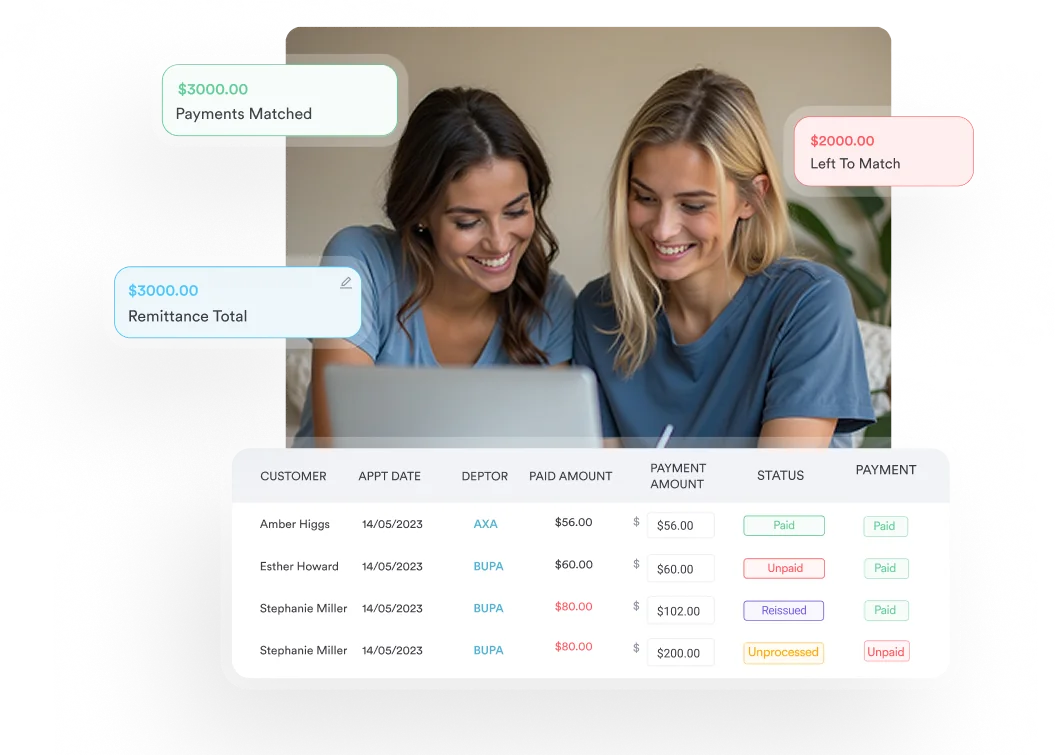
For oncology-focused private practices. Practice management software with CCSD support reduces the manual work involved in maintaining separate billing streams for diagnostic and procedural codes.
Understanding where 0002T sits within the broader CCSD framework helps avoid coding errors that stem from schedule misclassification. The CCSD schedule is the industry-standard coding framework for UK private healthcare, maintained by the CCSD Working Group. It covers two main schedules: procedural codes and diagnostic codes.
The CCSD Technical Guide (updated October 2025) sets out the coding conventions, business rules, and chapter structure for both schedules. According to the Technical Guide, the code in question sits in chapter 35 of the Diagnostic Schedule. Practitioners accessing the schedule directly need to register with the CCSD to use the full search function, as the schedule is available only to registered users.
New codes are added following a formal code request process. Providers, manufacturers, and clinical bodies can submit code requests through the CCSD website. The Working Group reviews the clinical evidence and, if satisfied, grants a code and assigns it to the appropriate chapter. The HalioDx announcement in 2020 confirms this process was followed for 0002T.
CCSD code 0002T resolves a specific billing gap: it gives UK private healthcare providers a standardized way to invoice the Immunoscore colorectal cancer assay under the CCSD Diagnostic Schedule. Used correctly, with pre-authorization confirmed, documentation complete, and the code placed on a diagnostic invoice, it should process through major insurers without difficulty.
Where claims for this code fail, it is almost always due to a documentation gap or a procedural/diagnostic invoice mix-up, not a dispute about clinical validity. Pabau’s claims management tools help UK private practices catch these errors before submission. To see how Pabau handles CCSD billing workflows, book a demo.

Need a full reference for Bupa CCSD codes? Bupa CCSD codes: complete guide for UK clinics covers how to find codes, avoid denial triggers, and submit electronically to Bupa.
Billing a cardiac device implant instead? HCPCS code C1722 guide covers billing the single-chamber defibrillator as a facility-only C-code on the UB-04.
Need a guide for an angioplasty catheter code? HCPCS code C1725 guide covers documentation for the non-laser transluminal angioplasty catheter and its common denial triggers.
CCSD code 0002T is the UK private healthcare diagnostic code assigned to the Immunoscore assay, a prognostic test that measures T-lymphocyte density in colorectal cancer tumor tissue. The code was granted by the CCSD Working Group in January 2020 following a review of clinical evidence submitted by the test developer, HalioDx. It sits in the CCSD Diagnostic Schedule, not the Procedural Schedule.
Bupa, AXA Health, Aviva, and Allianz Care UK all use CCSD-based fee schedules and are therefore positioned to recognize 0002T, but recognition status and fee levels vary by insurer and policy year. Always confirm with the patient’s specific insurer before ordering the test, as newer codes may require pre-authorization or may not yet appear on all fee schedules.
Pre-authorization is likely required for most UK private insurers when billing 0002T, given that it covers a specialist diagnostic test added to the schedule relatively recently. The requirement varies by insurer and patient plan. Contact the insurer before ordering the test to confirm, and record the authorization reference number in the patient’s file before preparing the invoice.
The CCSD Procedural Schedule covers surgical and clinical procedures (such as operations and interventions), while the CCSD Diagnostic Schedule covers laboratory tests, imaging studies, and other diagnostic investigations. CCSD code 0002T belongs to the Diagnostic Schedule because the Immunoscore assay is a laboratory diagnostic test. Claims for diagnostic codes should be submitted on a separate diagnostic invoice, not bundled with procedural codes.
CCSD codes are the industry-standard coding framework for UK private healthcare. Major insurers including Bupa, AXA Health, and Aviva require CCSD codes on all submitted invoices. Claims submitted without a valid CCSD code are typically rejected before clinical review. Using the correct code ensures the insurer can match the claim to their fee schedule, apply the correct reimbursement rate, and process payment without manual intervention.