



CCSD code G5100: Bypass of duodenum billing guide
CCSD code G5100 bills a bypass that leaves the duodenum in place CCSD code G5100...

Last Updated: Oct 16, 2026

CCSD Code 0014B is the diagnostic code for the Acromegaly Tolerance Test, used in UK private healthcare billing to claim for pituitary function diagnostic services.
0014B is a diagnostic service charge code, not a procedural code – it must be submitted alongside the relevant consultation or procedural CCSD code, not as a standalone procedure.
Fees for CCSD Code 0014B are set by individual private medical insurers (PMIs), not by CCSD – always verify the reimbursement rate directly with Bupa, AXA Health, Aviva, or your patient’s specific insurer before invoicing.
Pabau’s claims management software helps UK private clinics submit CCSD diagnostic codes accurately, reducing claim rejections and keeping billing records audit-ready.
CCSD Code 0014B identifies the Acromegaly Tolerance Test in the UK private healthcare billing system. If you are running a private practice that offers endocrinology or pituitary diagnostic services, this is the code you will use to invoice private medical insurers for that specific test.
The code sits within the CCSD Diagnostic Schedule, maintained by the Clinical Coding and Schedule Development (CCSD) Group – the body responsible for setting the industry-standard coding framework used across UK private healthcare. Every claim submitted to Bupa, AXA Health, Aviva, Vitality Health, or any other private medical insurer (PMI) must carry the correct CCSD code.
CCSD Code 0014B was added to the diagnostic schedule as part of a scheduled update to the CCSD private reimbursement schedule, listed alongside other new diagnostic codes for laboratory and biochemical tests. Its formal descriptor is the Acromegaly Tolerance Test, reflecting its clinical use in confirming or ruling out acromegaly through growth hormone suppression assessment.
Acromegaly is a condition caused by excess growth hormone, usually from a benign pituitary tumor. Diagnosis requires a dynamic suppression test rather than a single hormone measurement. The Acromegaly Tolerance Test (also referred to in clinical settings as the oral glucose tolerance test for acromegaly, or OGTT-GH) involves administering an oral glucose load and measuring serial growth hormone levels to assess suppression. Failure to suppress confirms autonomous GH secretion consistent with acromegaly.
For billing purposes, the clinical specifics matter because documentation must accurately reflect what was performed. The diagnosing specialist performing the tolerance test at a private facility uses CCSD Code 0014B to claim for the diagnostic service.
Importantly, 0014B codes the diagnostic service charge itself. It does not replace any procedural code for blood draws, cannulation, or the consultation associated with reviewing results. Those components require their own separate CCSD procedural codes from the relevant chapters.
Any treatment that follows is coded separately too. Surgery to remove the pituitary gland through a craniotomy, for instance, falls under B0100 in chapter 2 of the Procedural Schedule.
The CCSD schedule operates two separate frameworks: the Procedural Schedule (for clinical interventions) and the Diagnostic Schedule (for diagnostic services). CCSD Code 0014B belongs to the Diagnostic Schedule. According to the CCSD Technical Guide (October 2025), diagnostic service charge codes do not constitute procedures and should not be loaded into a procedure code table.
This distinction has practical billing implications. Three things every billing team should understand:
This framework mirrors how other diagnostic codes in the 0000B series operate. If you are familiar with how to submit codes like 0002B or 0010B, the same logic applies to 0014B.
UK private healthcare providers must maintain clinical records that substantiate every code billed. For CCSD Code 0014B, that means the patient file should contain clear evidence of the diagnostic test having been clinically indicated and performed. Weak documentation is the most common reason a claim is queried after submission.
Using digital forms for structured test documentation reduces the risk of incomplete records and ensures each required data point is captured at the time of the appointment. Meeting compliance requirements for private clinics also means ensuring patient consent, data retention, and access controls align with UK GDPR and CQC expectations alongside clinical coding accuracy.
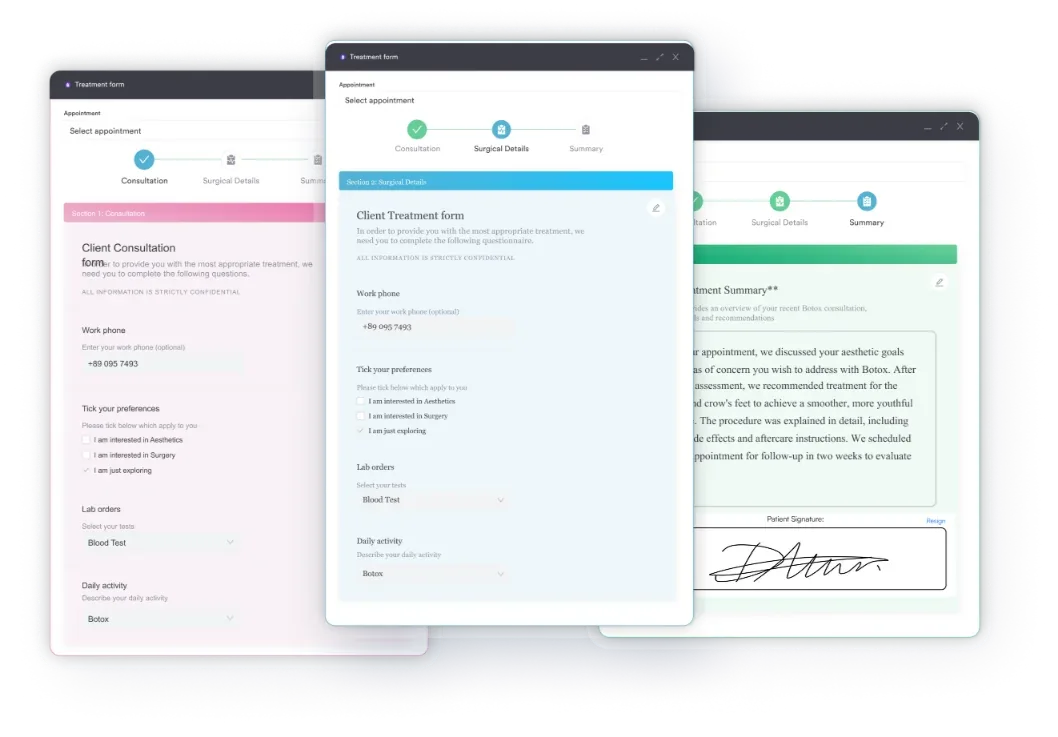
The minimum documentation set for a 0014B claim should include:
Insurers may request clinical notes to validate the claim. Records should be stored securely and remain accessible for audit in line with your UK GDPR obligations.
Flag the pre-authorization requirement before the test date. Most PMIs require prior approval for specialist diagnostic tests including the Acromegaly Tolerance Test. A claim submitted without pre-authorization – even for a correctly coded, well-documented test – is likely to be rejected outright. Check with the specific insurer before the appointment.
All major UK private medical insurers use the CCSD coding framework as the industry standard for private healthcare claims. CCSD Code 0014B, as a code within the Diagnostic Schedule, is recognized across the PMI market. However, recognition of the code does not mean automatic reimbursement at a fixed rate – each insurer maintains its own fee schedule.
For clinics that see patients with policies from multiple insurers. The table below summarizes the key insurers and where to verify their current rates for diagnostic codes including 0014B:
Never assume a published fee applies to every patient. Policy type, excess level, and whether the test was pre-authorised all affect reimbursement. Always confirm the applicable rate before invoicing the insurer.

Pabau helps UK private healthcare providers manage CCSD code submissions, patient records, and insurer billing from one platform. Fewer rejected claims, less admin.

Most UK private healthcare claims are submitted electronically through Healthcode, the industry-standard clearinghouse for PMI claims. If your clinic submits via Healthcode, the workflow for CCSD Code 0014B follows the same path as any other diagnostic code submission.
Good claims management software builds these steps into the workflow so nothing is missed before submission. The submission sequence for 0014B looks like this:
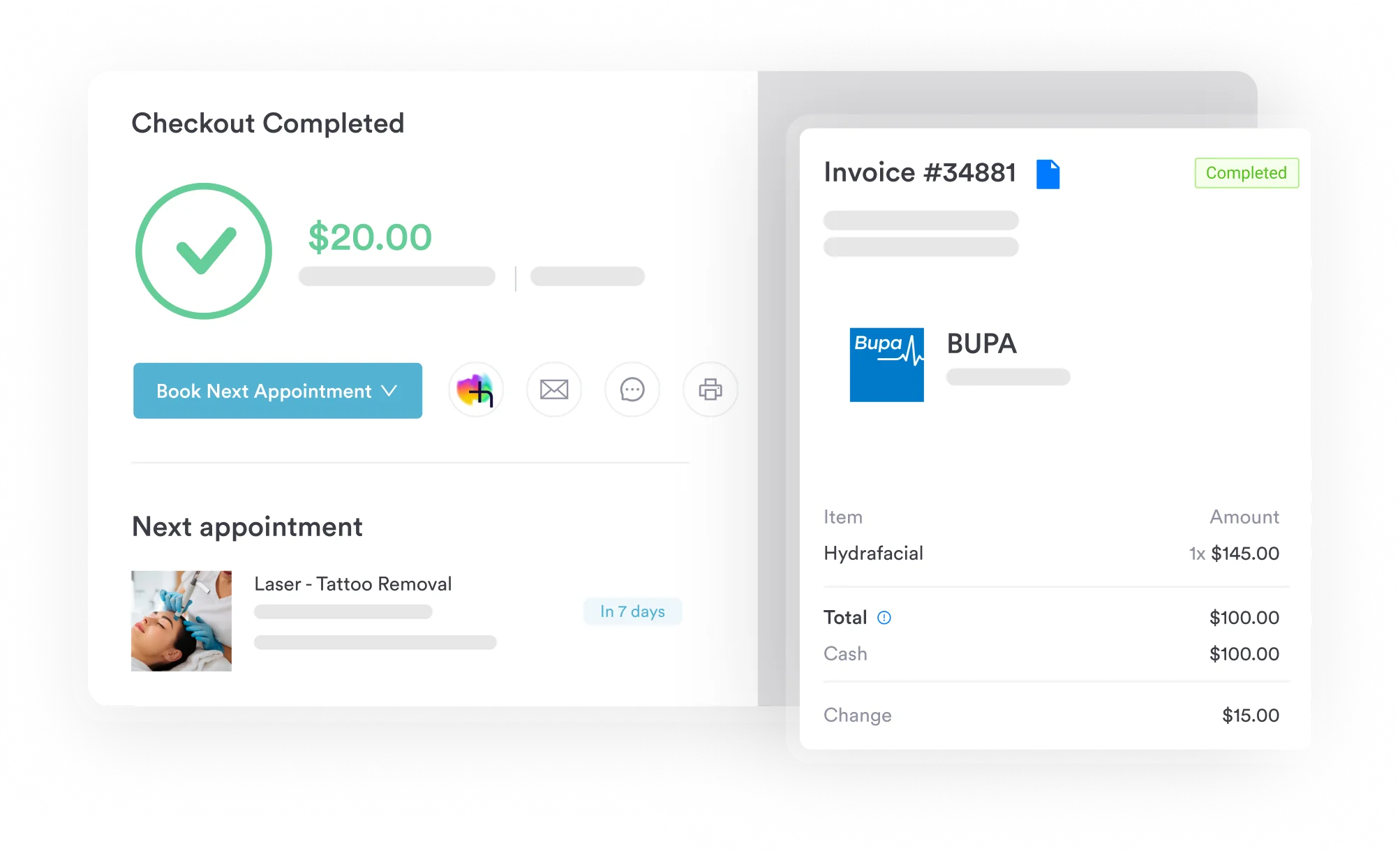
Practices building these steps into a consistent billing workflow benefit most from billing software that removes manual steps from the claims process rather than adding complexity.
Claims for diagnostic codes like 0014B fail for predictable reasons. Most errors are avoidable with a consistent pre-submission check. Here are the most frequent mistakes billing teams make with this code:
Effective private practice management depends on catching these issues before submission, not after. A structured billing review step – ideally supported by software that flags incomplete submissions – reduces the rework cycle significantly.
Build a pre-submission checklist for diagnostic code claims. Before filing any CCSD 0014B claim, verify: pre-authorization reference present, correct consultation code added, insurer-specific fee confirmed, clinical documentation complete. A five-point check at submission saves hours of rework per rejected claim.
Endocrinology practices frequently use several diagnostic codes alongside or near 0014B. Knowing the adjacent codes reduces the risk of miscoding a similar test. The 0000B series in the CCSD Diagnostic Schedule covers a range of specialist diagnostic service charges. For worked examples of how other CCSD codes are billed.
For the full list of current diagnostic codes, log in to the CCSD schedule portal or refer to the CCSD Technical Guide for the most recent code listings and business rules. The schedule is updated periodically; always use the current version when building or reviewing your procedure code table.
CCSD Code 0014B is a straightforward code in its structure but one that trips up billing teams who treat it like a procedure code. It is a diagnostic service charge, not a standalone procedure. That distinction shapes everything – from how it is submitted, to what documentation must accompany the claim, to how the fee is set. Get those fundamentals right and the claim process is predictable.
For UK private clinics handling endocrinology and pituitary diagnostic billing. Book a demo to see how Pabau supports private practice billing workflows from coding to claim submission.

Need a complete guide to Bupa CCSD billing? Bupa CCSD codes guide covers how to find, verify, and submit codes to Bupa’s system.
Billing an electrophysiology ablation catheter? HCPCS code C1733 guide covers the catheter’s billing status on hospital outpatient claims under OPPS.
Coding a colonoscopy device instead? HCPCS code C1749 guide covers billing the implantable retrograde colonoscope device used during a colonoscopy procedure.
CCSD Code 0014B is the UK private healthcare billing code for the Acromegaly Tolerance Test, a diagnostic service used to assess growth hormone suppression and confirm or exclude acromegaly in patients with suspected pituitary dysfunction. It belongs to the CCSD Diagnostic Schedule, not the Procedural Schedule.
Yes, in most cases. Most UK private medical insurers require prior authorization before specialist diagnostic tests are performed. Submit a pre-authorization request to the patient’s insurer before the Acromegaly Tolerance Test is carried out and record the reference number in the patient file before invoicing.
No. CCSD Code 0014B is a diagnostic service charge and must be submitted alongside a relevant consultation or procedural CCSD code reflecting the clinical encounter. A standalone 0014B submission without a supporting code is likely to be queried or rejected by the insurer’s claim processing system.
Each private medical insurer sets its own fee for CCSD diagnostic codes. Check directly with your patient’s insurer using their provider portal: Bupa via codes.bupa.co.uk, Vitality via the Vitality fee finder, and Allianz Care via their published UK fee schedule PDF. Do not apply one insurer’s rate to a different insurer’s claim.
CCSD Code 0014B is listed in the Diagnostic Schedule of the CCSD coding framework. This is separate from the Procedural Schedule and means the code represents a diagnostic service charge rather than a clinical procedure. Access the full schedule via the CCSD website, which requires a registered login.



