



CCSD code G5100: Bypass of duodenum billing guide
CCSD code G5100 bills a bypass that leaves the duodenum in place CCSD code G5100...

Last Updated: Oct 16, 2026

CPT code 25492 covers prophylactic fixation of both the radius and ulna, using nailing, pinning, plating, or wiring.
The code carries a 90-day global surgical period, so most post-op services are bundled and cannot be billed separately.
Modifier -50 is generally wrong on this code, because the descriptor already covers both forearm bones.
Pair the code with forearm ICD-10 codes such as M84.533, not the upper-arm codes that sit beside them in the tabular list.
Practice management software like Pabau tracks global periods and flags code-pair conflicts before claims go out.
CPT code 25492 is prophylactic treatment (nailing, pinning, plating, or wiring) with or without methylmethacrylate of the radius AND ulna. The American Medical Association (AMA) publishes and maintains that descriptor as part of the CPT code set.
The key word is AND. This code applies when the surgeon treats both forearm bones in a single operative session, to prevent an impending or pathological fracture. It is not used when only one bone is treated.
Clinical scenarios where CPT code 25492 is indicated include:
The surgeon may use any of the listed techniques: nailing, pinning, plating with screws, or wiring. Nailing is typically intramedullary. Methylmethacrylate, better known as bone cement, may or may not be used, and it does not change the code.
Documentation has to establish why prophylactic fixation is clinically appropriate before a fracture has occurred. That reasoning is what separates this code from the fracture repair family.
CPT 25491 and CPT code 25492 are adjacent codes in the same descriptor family. The only structural difference is the number of bones treated. That difference still carries real billing and RVU consequences.
Coders sometimes bill CPT 25491 twice, once for each bone, when the operative note describes treatment of both the radius and ulna. Others append modifier -50 to 25491 instead. CPT code 25492 is the correct code in both scenarios, and billing 25491 twice creates audit exposure.
Orthopedic practices with complex bone disease caseloads benefit from claims management software that flags code-pair conflicts at the pre-submission stage. That is earlier than a payer’s edit engine would catch them.
The Centers for Medicare and Medicaid Services (CMS) assigns Relative Value Units (RVUs) to each CPT code to determine payment. RVUs for CPT code 25492 reflect the physician work involved in fixing two bones, not one. CMS updates these values annually, so always verify against the current CMS Physician Fee Schedule for the applicable year. Most claim errors are structural rather than clinical, which is why scrubbing rules catch them. A resubmission does not restart the clock, so the original filing limit still governs.
Medicare payment is calculated as: [(Work RVU × Work GPCI) + (PE RVU × PE GPCI) + (MP RVU × MP GPCI)] × Conversion Factor. Each RVU component carries its own Geographic Practice Cost Index (GPCI) for the locality, so there is no single geographic multiplier.
The 2026 conversion factor is set by CMS through the annual Physician Fee Schedule final rule.
Commercial payers negotiate rates independently and typically reimburse at a percentage of Medicare, often 110-150%. That share varies widely by payer contract. Never apply a Medicare rate to a commercial claim without confirming the applicable fee schedule.
Run your RVU calculations using the official CMS Physician Fee Schedule tool, not a third-party blog. CMS publishes the annual Physician Fee Schedule final rule in November, and the updates go live January 1. Download the database file and cross-reference by locality code for your geographic area.
Setting matters significantly for CPT code 25492. Prophylactic fixation of both the radius and ulna is typically performed in a hospital or ambulatory surgical center (ASC). That places the physician in the facility reimbursement category, and the facility bills separately for its own costs.
For practices managing orthopedic billing, physical therapy and orthopedic workflows benefit from software that separates professional and technical components at the claim level. That separation reduces the risk of duplicate billing or a setting mismatch.
CPT code 25492 carries a 90-day global surgical period, as listed in the CMS global days file. Medicare bundles most related post-operative services into the procedure payment for those 90 days. Other major orthopedic procedures behave the same way, including CPT code 22600.
Bundled services include routine post-operative visits, suture removal, wound checks, and uncomplicated follow-up assessments related to the fixation. Coders cannot separately bill evaluation and management (E/M) services for these encounters. The exception is a separately identifiable new problem, which takes modifier -24.
Tracking 90-day global periods across a busy orthopedic or sports medicine practice is prone to error when managed manually. Software with built-in post-op tracking stops E/M codes going out inside an active global period. That single error drives a large share of surgical denials and recoupments.
Medical necessity for CPT code 25492 is established through ICD-10-CM diagnosis codes. The diagnosis has to support prophylactic fixation of both bones. Payers may apply Local Coverage Determinations (LCDs) that restrict coverage to specific diagnoses, so check the applicable LCD before submission.
Watch the middle digit in these families. In M84.5, M88.8, and M85.0, the middle digit of the final three sets the body part. A 2 means upper arm, and a 3 means forearm.
So M84.521 describes the humerus, and pairing it with 25492 is a medical necessity mismatch. Humerus work has its own procedure and diagnosis codes, including CPT code 24410 and ICD-10 code S42.302K.
For metastatic bone disease, code the primary malignancy alongside the bone involvement. ICD-10-CM sequencing guidelines require the primary site even when the encounter is for the metastatic site. A prostate primary managed with hormone therapy also generates its own drug claims under HCPCS code J1950.
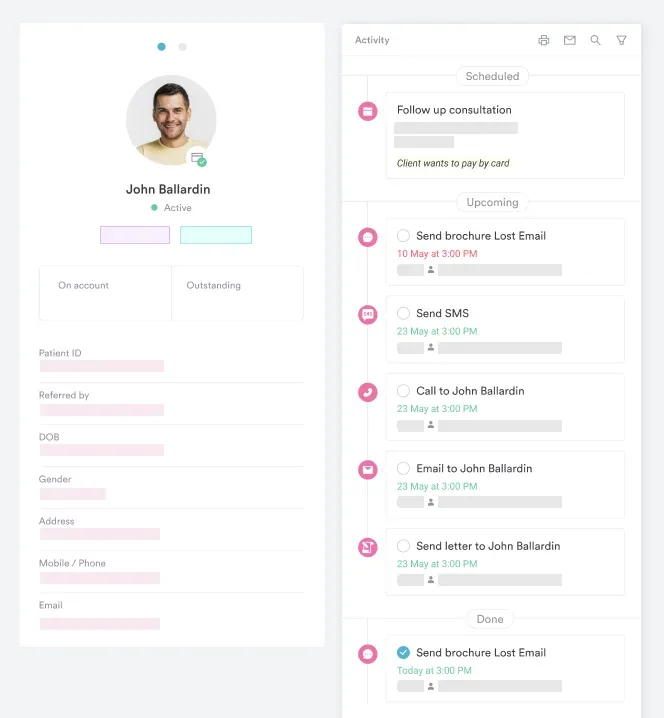
Structured clinical record workflows keep that pairing documented in the patient record. Practices then have audit-ready evidence of how each medical necessity decision was reached.
Modifier selection for CPT code 25492 carries meaningful risk if applied incorrectly. The two most commonly misapplied modifiers are -50 for a bilateral procedure and -59 for a distinct procedural service.
The -50 modifier requires particular care. CPT code 25492 already includes both the radius and ulna in its descriptor. Appending -50 to indicate a bilateral procedure invites a denial or an audit. Treating both forearms in one session is an unusual scenario, and it needs payer guidance rather than a reflex modifier.
Practices with established HIPAA-compliant documentation practices are better placed to defend modifier usage during payer audits. The rationale for each modifier is recorded in the patient record at the time of service.
The National Correct Coding Initiative (NCCI) sets code pairs that Medicare treats as inherently bundled. Those pairs cannot be billed together without a valid modifier override. NCCI edits are updated quarterly, so always check the current NCCI edit files before billing 25492 with another procedure on the same date.
Key bundling considerations for CPT code 25492:
One code in that range is CPT 25608, open treatment of a distal radial intra-articular fracture with internal fixation of 2 fragments. It requires that the surgeon open the wrist and fix exactly two articular fragments.
Automated billing workflows reduce NCCI-related denials by cross-checking code pairs before the claim goes out. The check happens while the operative note is still in front of the coder.
Disputing an NCCI edit takes a valid modifier and an operative note showing the two services were clinically distinct and medically necessary. Document the decision-making in the operative report, not just on the claim.
Check the CMS NCCI edit files quarterly at cms.gov, rather than at the moment of claim submission. A quarterly review in your billing team’s calendar catches bundling changes before they cause denials. The NCCI Policy Manual for Medicare Services also explains the intent behind each edit category.
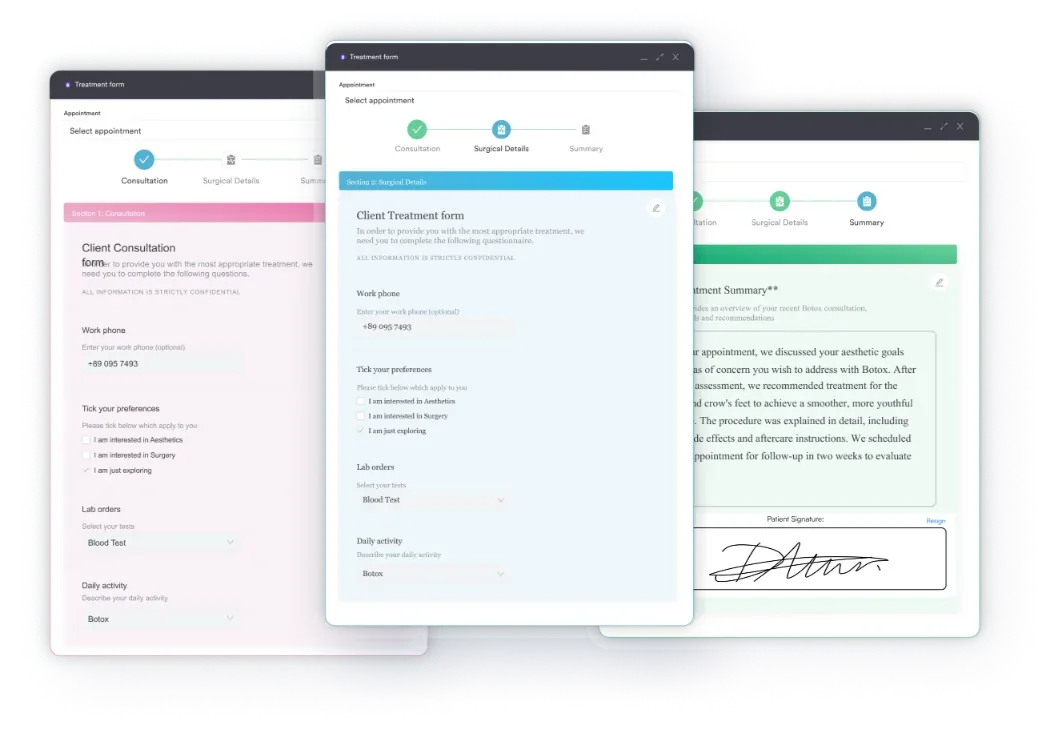
Orthopedic practices handling oncology referrals can connect pre-operative digital forms straight to the clinical record. The medical necessity rationale captured at intake then flows into the claim without being retyped.
In most orthopedic practices, the pieces of this claim live in different places. The operative date sits in the surgical schedule and the post-op visits sit in the calendar. The global period sits in someone’s head, or in a spreadsheet. Day 63 after surgery looks like an ordinary follow-up until the denial arrives.
Practice management software like Pabau keeps the operative note, the global period, and the claim on one record. When a post-op appointment is booked inside the 90-day window, the E/M code can be held back before it reaches the payer. Code-pair checks run at the same moment, so an NCCI conflict shows up while the coder can still fix it.
The result is fewer denials on a code with a 90-day tail, and less time spent rebilling work that was documented correctly the first time. Every Pabau subscription includes the claims, records, and scheduling tools involved, so nothing here depends on an upgrade.

Pabau’s claims management tools help orthopedic and surgical practices track global periods, flag code-pair conflicts, and manage documentation for complex procedures like CPT code 25492.

The two decisions that carry the most risk on this code are both made before the claim goes out. Match the code to the number of bones treated. Then pick the forearm diagnosis code, not the upper-arm one sitting beside it in the tabular list.
After that, the 90-day global period does the rest of the damage on its own. Every post-op encounter for three months has to be checked against it, and no coder does that reliably from memory for long.
So build the checks into the system that already holds the operative note. Book a demo to see how Pabau keeps surgical documentation, global periods, and claims in one place.

Need the coding rules for percutaneous fixation? CPT code 21452 shows how the surgical approach changes the documentation a payer expects.
Billing an open fracture repair next? CPT code 21465 walks through another 90-day global procedure and its post-op modifiers.
Unsure which seventh character to submit? ICD-10 code S33.140A breaks down encounter characters on a musculoskeletal claim.
Treating the humerus rather than the forearm? CPT code 24410 covers the upper-arm procedure family, with its own RVUs and ICD-10 pairings.
Working out what bundles into a surgical claim? CPT code 11043 explains debridement billing and the NCCI edits that come with it.
CPT code 25492 is prophylactic treatment (nailing, pinning, plating, or wiring) with or without methylmethacrylate of both the radius and ulna. It is used when a surgeon stabilizes both forearm bones to prevent an impending or pathological fracture. The usual reasons are bone metastases, fibrous dysplasia, Paget’s disease, or severe osteoporosis.
CPT 25491 covers prophylactic fixation of the radius OR ulna, meaning one bone. CPT code 25492 covers both the radius AND ulna in the same operative session. Using 25491 twice, or appending modifier -50 when both bones are treated, is incorrect. Code 25492 is the single correct code for the two-bone scenario.
Modifiers -LT and -RT apply, to specify the operative side. Modifier -50 for a bilateral procedure is generally not appropriate, because the descriptor already includes both bones. Modifier -59 may apply when 25492 runs alongside a procedure subject to an NCCI edit and the services are clinically distinct. That use needs supporting documentation and a payer policy check.
CPT code 25492 carries a 90-day global surgical period. Routine post-operative services within those 90 days are bundled into the payment and cannot be billed separately. Use modifier -24 for an unrelated E/M service. Modifier -78 covers a return to the OR for a related complication, and -79 covers an unrelated procedure.
Generally no. Methylmethacrylate, or bone cement, is included in the CPT code 25492 descriptor and is not separately payable under most Medicare and commercial payer policies. Some payers do allow a separate HCPCS supply code for the cement itself. Check that payer’s fee schedule and LCD before billing it as a supply item.
Four families cover most claims. C79.51 covers secondary malignant neoplasm of bone. M84.53x covers pathological fracture in neoplastic disease of the radius or ulna. M88.831 and M88.832 cover Paget’s disease of the forearm, while M85.03x covers fibrous dysplasia of the forearm. Always confirm the code satisfies the Local Coverage Determination for your Medicare Administrative Contractor jurisdiction.



