Patient financing: How to offer it and stay compliant
Patient financing lets patients spread the cost of treatment over weeks or month...

Last Updated: Oct 7, 2026

Only expand when your first location has been consistently profitable for 12+ months and can run without you in the room.
Your second location is a new business, not a copy. Document every system before you sign the lease so a new team can run it to your standard.
If the new site is in a different state, the ownership, medical director, and MSO rules can change. Confirm them before you commit.
Budget for the location to lose money for the first 6 to 12 months, and keep enough working capital in the bank to cover it.
Run both locations from one platform so bookings, records, inventory, and reporting stay consistent as you grow.
Your first med spa is booked out, profitable, and running like clockwork, so opening a second location should be a copy-paste job.
Not quite. Opening a second med spa location is a different problem from opening your first. The first one works because you are in the room, making the calls and setting the standard by example. A second location forces all of that onto paper, into systems, and into people who are not you.
Get it wrong and you can weaken both locations at once. Get it right and you build a med spa business that grows without needing you on-site every day.
This guide covers how to open a second med spa location the right way: knowing when you are ready, choosing the site, handling the state rules, budgeting the build, and running both locations as one. For that last step, our ranking of the best medical spa software includes a pick for multi-location med spas.
Expanding is exciting, but a second location magnifies whatever your first one is doing, good or bad. Before you commit, pressure-test your med spa against four things.
First, the money has to be there. A second location carries real startup costs, including:
On top of those, you need working capital to cover the new location until it turns a profit, which often takes 6 to 12 months. Some owners bridge that stretch with a med spa business loan instead of draining their first location’s cash flow.
A simple test: has your first location been consistently profitable for at least 12 months? Med spa profit margins typically run in the mid-teens to mid-twenties as a share of revenue once a site is established.
If your first location is still swinging month to month, fix that before you expand, because a second location will not rescue a shaky first one. It will stretch it thinner.
Next, look at how your first location actually runs. Are your days smooth, or are you personally putting out fires?
The honest question is whether your systems live in writing or only in your head. Standard operating procedures for opening and closing, patient flow, treatment protocols, hiring, and even your med spa consent forms need to be documented well enough that someone else can follow them.
Writing them down is often the most useful thing you do before expanding, because it forces you to make the invisible parts of your first location explicit. If it only works when you are there, it is not ready to copy yet.
Supply and demand still rule. Before opening a medspa across town, confirm there is unmet demand for your treatments, not just demand you already serve at location one.
Look at your waitlists, your booking lead times, and how often you turn people away. Strong demand you cannot currently meet is a green light. Thin or seasonal demand is a reason to wait.
Finally, is the model itself built to scale? A single high-performing site can hide processes that only work at small scale.
When you strip it back, what is a med spa business but a repeatable system of treatments, pricing, and client care? Owning a med spa that runs on your personal reputation is far harder to duplicate than one built on a repeatable brand, a set treatment menu, and clear pricing.
If you can hand a new manager your playbook and expect the same result, you are ready. Some owners go further and turn the model into a med spa franchise, licensing the brand and systems to other operators rather than owning every site.
You can have the best staff, the latest devices, and a loved brand, but the wrong site undoes all of it. Choosing where to open your second location is part math, part market fit. Here is how to weigh it.
Clients should be able to find and reach the new location without effort. Prioritize good foot traffic or drive-by visibility, easy parking or transit access, and a storefront that signals the quality of what is inside.
A site that is cheaper but hidden down a side street costs you in walk-ins and brand impressions every single day.
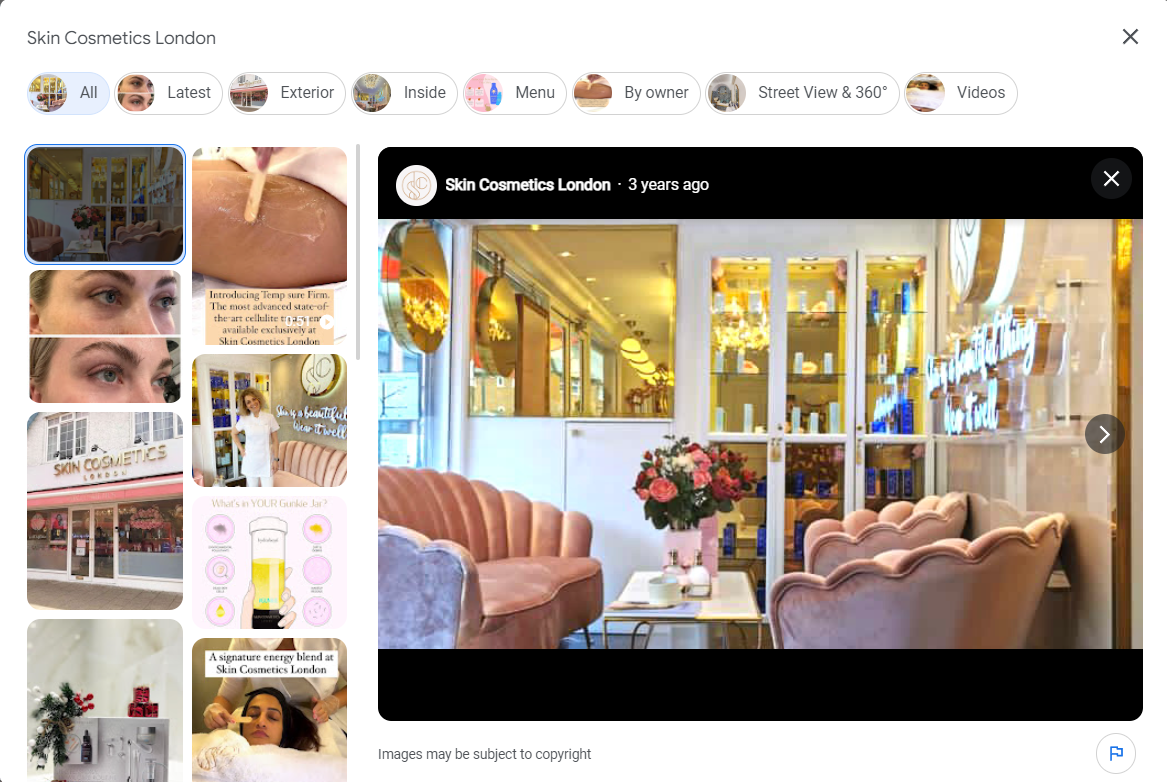
Not every neighborhood fits a med spa. Research the local demographics and make sure they match your offer.
If your first location succeeds on a cash-pay premium audience, do not open where the median household income is half of your current area. The treatments you sell, your med spa pricing strategy, and the brand you have built all need to fit the new market.
A little competition proves the market wants what you sell. Too much makes it hard to stand out.
Do the math before you fall for a site. Count the competing med spas within a three-mile radius, then weigh that against the population. Roughly one med spa per twenty thousand residents points to an open market; three per ten thousand is crowded. Underserved markets are far easier to win in your first year.
The space itself matters as much as the address. Check that the layout suits treatment rooms, plumbing, and equipment power needs, and that it can be made accessible and compliant.
Factor build-out time and cost into your plan. A cheap lease that needs a gut renovation is rarely the bargain it looks like.
One decision quietly shapes everything else: do you open near your first location or in a new city?
Same-city expansion is easier to run, since you can be on-site fast and share staff. The risk is cannibalization, where the second location pulls clients from the first instead of adding new ones. That only makes sense if your first site turns away more business than it can handle.
A new city keeps the patient bases separate, but it is harder to manage and slower to build. As a rule, keep the second location within about 90 minutes so you can spend at least one full day a week there for the first six months.
For a deeper walkthrough, see our guide to med spa service expansion.
Crossing a state line can change more than the address. If your second location moves into a new state, the rules that governed your first med spa may not apply.
Who can own the business, whether you need a medical director, and how you structure the company all vary by state. What was simple at home can be restricted next door. Confirm the rules for the new state before you sign anything, ideally with a healthcare attorney. The overview below is a starting point, not legal advice.
California enforces the corporate practice of medicine strictly. The entity that delivers medical treatments has to be owned by a licensed physician, so a nurse or physician assistant generally cannot own the medical side outright.
Many med spas here use a management services organization (MSO), where the owner runs the business side and a physician-owned professional corporation holds the medical side. Budget time to set that structure up correctly.
Texas is also a corporate-practice-of-medicine state, so the medical entity typically needs physician ownership, with treatments delegated to nurses or physician assistants under a supervising physician.
The MSO model is common here too. If your first location sits in a more permissive state, expect more paperwork and a clearer delegation structure when you open a med spa in Texas.
Florida is generally more flexible on ownership, and a non-physician can often own the business itself. You still need appropriate physician oversight and, for some services, facility registration.
Those lighter ownership rules are one reason Florida is a popular second-location state. Flexibility on ownership does not remove the need for a proper medical director and compliant protocols, though.
If your expansion crosses into Canada, Ontario runs on a different system entirely. Medical acts are controlled under provincial health-profession rules, and treatments are delegated by regulated professionals through the College of Physicians and Surgeons of Ontario and related colleges.
US ownership structures do not carry over, so treat an Ontario location as a fresh regulatory project and confirm the current provincial requirements before you plan the build.
Once you know you are ready, where you are going, and what the local rules require, the build follows a familiar order. Here are the steps for opening a second med spa location.
Your second location is a new business, not a footnote to the first, so it needs its own medical practice business plan. Reuse what you have learned, but rebuild the numbers for the new site.
A solid business plan for a med spa expansion covers the local market, your treatment menu and pricing, staffing, projected revenue, and the startup budget. Where a business plan for medical spa startups has to guess at demand, you have real data from location one to ground your projections, which is a genuine advantage.
Clients should get the same experience whether they visit location one or two, and that consistency comes from standardized systems, not luck.
Document and centralize the pieces that must match across sites: booking rules, consultation scripts, treatment protocols, consent forms, pre- and aftercare, and inventory ordering. The goal is one way of doing things that any location can follow, so quality does not depend on which door a client walks through.
A new location means a new round of licenses and permits, even if you have done it all before. Depending on where you are, that can include business registration, facility or health-department permits, provider license verification for every clinician, and confirmation that the new site is HIPAA compliant.
Do not assume your first location’s approvals transfer. Build a compliance checklist for the new site early, since permits and inspections are the steps most likely to delay an opening.
Kit out the new location with devices that match your treatment menu and expected volume, whether you run an injectables-first med spa or a laser-focused skin clinic. Buying the same core equipment as location one keeps training and protocols consistent, and ordering for two sites can earn you better pricing.
Do not over-buy for treatments you have not validated yet. Start with your proven money-makers and add specialist devices once demand is clear.
Staffing is where most second locations succeed or stall, and injectors are usually the bottleneck. You have two options: move an experienced provider from location one, or hire and train someone new.
Moving your best injector often weakens the first location, which is the site funding the whole expansion. Hiring fresh takes time, so start four to six months out. Above all, hire a strong practice manager before opening day and give them real authority, because no owner can be in two places at once.
Finally, make sure the new neighborhood knows you exist. Local med spa marketing takes months to compound, so fund it for at least the first six months rather than switching it on at the last minute.
Set up the new location’s Google Business Profile, build local reviews, and run local search and social campaigns tied to the new address. A confirmed launch offer and a booked-out opening week give the location early momentum and a stream of reviews to build on.
So how much does it cost to open a med spa when it is your second one? Typically somewhere between $165,000 and $485,000, though it swings with size, location, and equipment. The upside is that a second location often costs less to launch than your first med spa, because you already own systems, a brand, and supplier relationships.
Here is a typical breakdown, alongside the working capital you should hold to cover early losses.
Most second locations do not break even until month six to twelve. The $30,000 to $80,000 working capital line above is a launch cushion, not the full runway. Depending on your monthly running costs, a full 6 to 12 month ramp can call for a larger reserve, so size it to your own overheads before you sign the lease.
If your first location cannot absorb the drag, wait or raise more capital rather than opening thin.
Everything above gets harder when your tools do not talk to each other. The key to scaling is managing multiple locations as one operation, and that is a software problem as much as a management one.
Practice management software like Pabau, an all-in-one platform, lets you run every location from a single system:
Ageless Enhancements Med Spa ran into this problem directly. Clients kept showing up at the wrong site until its booking system started asking which location they meant.
Choosing the right medical spa software early means your second location launches on the same rails as your first, and your third and fourth do too. Instead of stitching together separate tools per site, you grow on one system.
Want to see how Pabau handles multi-location scheduling, reporting, and client records in one place? Book a demo and we will walk through your expansion setup.

Not sure your systems are ready to duplicate? Med spa expansion breaks down what to standardize before you open.
Want one system across every location? Med spa software shows how multi-location management actually works.
Curious how other spas scaled? Ageless Enhancements grew across locations on Pabau.
It depends on the state. In more flexible states like Florida, a physician assistant, or the business entity, can often own a medical spa while a physician acts as medical director. In strict corporate-practice-of-medicine states like California and Texas, the medical entity generally has to be physician-owned, so a PA usually cannot own it outright. Confirm the rules where you plan to open.
A DNP is a doctor of nursing practice, not a physician, so ownership follows your state’s nurse-ownership rules rather than physician rules. In states that let nurse practitioners own a practice, a DNP may be able to own a med spa. In corporate-practice-of-medicine states, the medical entity typically has to be owned by a licensed physician regardless of a nursing doctorate. Check your state board first.
Look for one system that runs both sites, not two logins bolted together. The essentials are a single client database, per-location scheduling and pricing, centralized inventory, online booking that sends clients to their nearest site, and reporting you can filter by location. Getting this right before you open keeps your second location consistent with your first from day one.
For multi-location growth, an all-in-one practice management platform usually beats a stack of single-purpose tools, because your bookings, records, payments, and marketing stay connected as you add sites. Prioritize a platform where every location gets the full feature set without paying more per feature, so expanding never means re-buying software each time you grow.