



CCSD code G5100: Bypass of duodenum billing guide
CCSD code G5100 bills a bypass that leaves the duodenum in place CCSD code G5100...

Last Updated: Oct 16, 2026

CCSD Code 0048B is a UK private healthcare procedure code maintained by the Clinical Coding and Schedule Development (CCSD) Group and used for billing to insurers including Bupa, AXA Health, Aviva, and Vitality.
The CCSD schedule is login-restricted at ccsd.org.uk; verify the current narrative and fee for 0048B directly with your insurer or through the CCSD member portal before submitting claims.
Pre-authorisation is required by most PMI providers before treatment; submitting a claim without a valid authorisation reference is the single most common reason for denial on CCSD-coded claims.
Pabau’s claims management software lets UK private practices build CCSD codes into invoices, track authorisation references, and submit via Healthcode without manual re-entry.
Most claim denials in UK private healthcare trace back to one of three mistakes: wrong code, missing authorisation, or incomplete documentation. CCSD Code 0048B is no exception, and getting it right starts with understanding where it sits in the schedule.
CCSD Code 0048B belongs to the Clinical Coding and Schedule Development (CCSD) Group‘s Schedule of Procedures, the single coding standard used across UK private medical insurance (PMI). Every procedure billed to Bupa, AXA Health, Aviva, Vitality, WPA, Allianz Care, or any other recognised PMI provider must carry a valid CCSD code. For practices that are leaving the NHS for private practice, learning this system is one of the first operational priorities.
The “B” suffix in 0048B indicates this is a procedural schedule code rather than a diagnostic schedule entry. CCSD diagnostic codes follow a separate numbering convention and should not be loaded into your procedure code table. The full procedure narrative for 0048B is held within the login-gated CCSD schedule. Insurers publish their own fee schedules that reference CCSD code numbers, so the most reliable source for the exact narrative and current fee is your insurer’s portal or the Bupa CCSD code schedule if Bupa is your primary payer.
The CCSD Procedural Schedule organises codes into chapters by clinical specialty or body system. Codes in the 00xxB range generally appear in early chapters covering foundational or cross-specialty procedures. Each entry carries a short narrative (the official description), a chapter reference, and any applicable coding principles.
The CCSD Technical Guide (updated October 2025) sets out coding conventions, bundling rules, and the criteria for including or amending codes. Any practice billing CCSD codes regularly should have a working copy of this guide. It is the authoritative reference for disputes with insurers over co-billing or unbundling queries.
Download a copy of the CCSD Technical Guide from ccsd.org.uk and save it in your billing team’s shared folder. When an insurer queries whether two codes can be billed together, the Technical Guide’s bundling rules are the first document to cite in any written response.
All major UK PMI providers use the CCSD schedule as their coding foundation. Acceptance of a specific code such as 0048B does not mean every insurer will reimburse at the same rate; fees are commercially confidential and vary by contract, recognition level, and policy type.
The table below shows where to look up fees and submission requirements for 0048B across the main PMI providers. Check each portal directly before submitting claims.
Insurer acceptance of CCSD Code 0048B depends on your individual recognition agreement and the patient’s specific policy cover. Always obtain an authorisation reference before undertaking any procedure you intend to claim under a CCSD code. The Vitality fee finder and the Bupa code search portal both allow recognised providers to look up current fees by code number.
Published insurer fee schedules show baseline rates. Practitioners with individual recognition agreements may receive different rates. If you have not yet applied for recognition with a PMI, the benefits of running a private practice include being able to negotiate recognition terms directly with each insurer once your practice is established.
A correctly coded claim is only half the picture. Missing documentation is the second most common reason PMI providers query or reject claims.
The following documentation should be in place before submitting any CCSD-coded claim. Insurers may request supporting records at any point, including during routine audit.
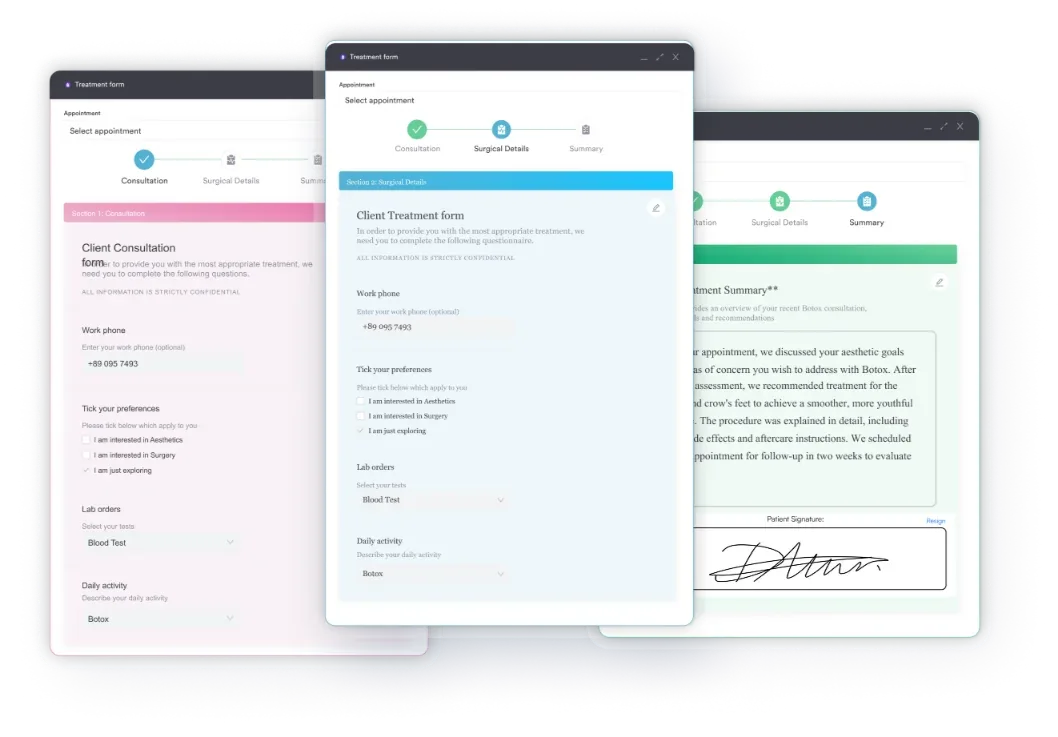
Using digital consent and clinical forms that attach directly to the patient record reduces the risk of documentation gaps at claim submission. Paper-based workflows create the most common audit failures because forms get separated from the file or are not dated correctly.
The CCSD Technical Guide requires that the code used reflects the procedure actually performed, not the procedure intended. If a planned procedure is modified intraoperatively or during the appointment, the code on the invoice must reflect the final procedure. Billing the originally planned code when a different procedure was performed is a coding error that can result in recovery action by the insurer.
Document any deviation from the planned procedure clearly in the clinical notes, with a brief explanation. This protects you if the claim is audited later. For practices concerned about UK data protection compliance alongside billing accuracy, digital record systems that timestamp entries on creation provide a stronger audit trail than retrospectively completed paper notes.

Pabau’s claims management tools let you build CCSD codes into invoices, attach authorisation references, and track every claim from submission to payment, all in one place.

CCSD coding stays consistent when your private practice management routine keeps procedures, invoices, and insurer rules in one place.
Healthcode is the UK private healthcare EDI (electronic data interchange) network. Most major PMI providers accept, and some require, electronic submission through Healthcode. Paper claims are still accepted by some insurers but carry a higher rate of administrative queries and slower payment cycles.
The submission workflow for CCSD Code 0048B follows the same process as any other CCSD-coded claim:
For practices managing multiple CCSD codes across different insurers, a dedicated billing workflow inside your practice management system reduces manual keying errors. The Bupa procedure codes fee schedule is a useful reference for checking current Bupa rates against your invoiced amounts before submission.



