ICD-10 Code Y76.0: Diagnostic obstetric and gynecological devices
ICD-10 Code Y76.0: Definition and billable status ICD-10 Code Y76.0 is a valid, ...

Last Updated: Oct 23, 2026
Billable Code Specific Code
A65 is the billable ICD-10-CM code for nonvenereal syphilis.
Travel medicine practices, dermatology practices treating patients from endemic regions, and sexual health providers encounter A65 most often.
Let Pabau's smart automation suggest the right codes, reduce claim denials, and keep your practice compliant—effortlessly.
Automate repetitive tasks and focus on what matters most—your patients.
Reduce coding errors and ensure compliance with the latest regulations.
Clean claims, fewer denials, and faster reimbursements.
Powerful insights and reporting to help your practice thrive.
HIPAA compliant SOC 2 certified GDPR-compliant Trusted by 4,000+ clinics worldwide

ICD-10 code A65 is the billable, specific diagnosis code for nonvenereal syphilis (bejel/endemic syphilis) valid for 2026 reimbursement claims.
A65 falls under the A65-A69 category (Other spirochetal diseases) within Chapter 1: Certain infectious and parasitic diseases (A00-B99).
Accurate documentation must distinguish nonvenereal from venereal syphilis (A50-A53) – confusing the two leads to claim denials and compliance risk.
Practice management software like Pabau, including its claims management and digital intake tools, helps infectious disease and dermatology practices code A65 encounters accurately from intake through billing.
ICD-10 code A65 describes nonvenereal syphilis, a chronic bacterial infection caused by Treponema pallidum subspecies endemicum. It is distinct from venereal syphilis (caused by T. pallidum subspecies pallidum) in its mode of transmission, affected populations, and geographic distribution. The World Health Organization classifies it under the broader treponematoses group alongside yaws (A66) and pinta (A67).
The condition is also widely known as bejel or endemic syphilis. It predominantly affects children in dry, arid regions of sub-Saharan Africa, the Middle East, and parts of Central Asia, spreading through direct skin-to-skin or mucous membrane contact rather than sexual transmission.
Clinicians in dermatology practices, or those using sexual health clinic software, should consider A65 in the differential when a patient’s syphilis-like presentation lacks the sexual transmission history expected for venereal forms.
A65 is a billable and specific ICD-10-CM code valid for reimbursement in fiscal year 2026. It can be used directly on claims to indicate a confirmed diagnosis of nonvenereal syphilis without requiring a more granular subcategory.
This is a key practical distinction from several adjacent codes in the A65-A69 range, such as A69.2 (Lyme disease), which are non-billable parent codes requiring subcategory selection before claim submission.
Understanding where A65 sits in the ICD-10-CM hierarchy prevents misrouting to the sexually transmitted infection (STI) chapter, which is a common documentation error. The WHO’s international ICD-10 browser confirms the following hierarchy for this code:
The block A65-A69 sits immediately after A50-A64 (infections with a predominantly sexual mode of transmission). This adjacency is intentional in the ICD-10 structure: treponematoses that were historically confused with sexually transmitted infections are grouped nearby but kept distinct. Coders working in dermatology EMR software environments should configure their code selection screens to distinguish these blocks clearly.
Many infectious conditions are triaged remotely first, making telehealth software a practical front door for these diagnoses.
ICD-10 code A65 includes several synonyms and inclusion terms. Knowing these matters because clinical notes often use the local or regional name for the condition rather than the ICD-10 official descriptor. Any of the following terms on a clinical note maps to A65 for coding purposes:
Coders should flag any of these terms in clinical notes as mapping to A65. If a note says “bejel confirmed” or “endemic syphilis consistent with travel history,” A65 is the correct code. For practices managing high-volume digital intake forms that include travel and exposure history fields, capturing this data at intake supports accurate code selection downstream.
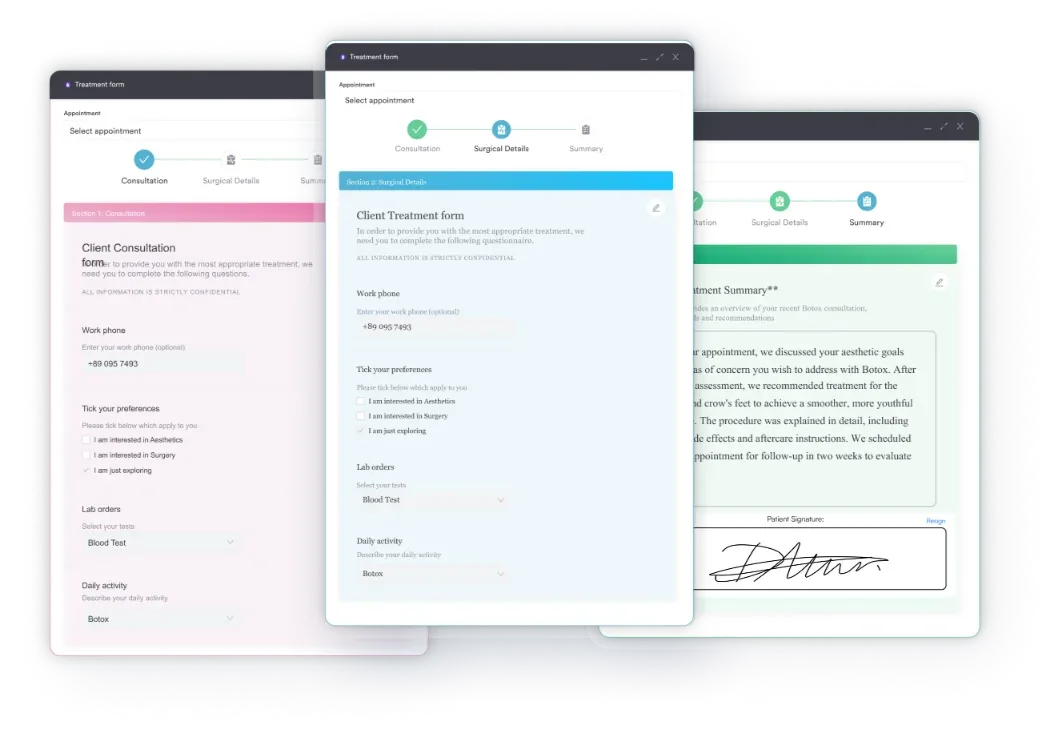
Flag intake forms with a travel history section for patients from sub-Saharan Africa, the Middle East, or Central Asia. A documented exposure history from an endemic region, combined with characteristic mucocutaneous lesions and a negative sexual transmission history, creates the clinical basis for A65 rather than A51-A53. Document the region, approximate exposure period, and any serology results in the same encounter note.
A65 is the first code in the A65-A69 block. Understanding the full range helps coders identify when A65 is appropriate versus when a different spirochetal disease code applies. The AAPC Codify ICD-10-CM lookup provides the complete block listing, summarized below:
A65 stands out as the only single-code, directly billable entry in this block. All other categories (A66-A69) require the coder to drill into subcategories. This makes ICD-10 code A65 administratively simpler to submit than its neighbouring spirochetal codes, though the clinical documentation requirements are the same.
The most consequential coding decision around A65 is distinguishing it from the A50-A53 venereal syphilis range. Assigning the wrong code creates downstream problems: incorrect epidemiological reporting, payer audits, and potential HIPAA-related compliance documentation issues. The distinction rests on three documented clinical factors.
Nonvenereal syphilis (A65) is caused by Treponema pallidum subspecies endemicum. Venereal syphilis (A51-A53) is caused by T. pallidum subspecies pallidum. Standard serological tests (RPR, VDRL, TPHA) cannot reliably distinguish between subspecies because all three treponematoses produce cross-reactive antibodies. The clinical note must document the transmission route (non-sexual skin-to-skin or mucous membrane contact) and geographic or epidemiological context to justify A65.
Bejel typically presents in a three-stage progression distinct from venereal syphilis. Early stage: mucocutaneous patches around the mouth and oropharynx, often in children. Secondary stage: widespread papules and condylomata-like lesions on the trunk and extremities.
Late stage: gummatous lesions affecting skin, bone, and cartilage, sometimes causing destructive rhinopharyngitis (gangosa). Cardiovascular and neurological late-stage manifestations, which are characteristic of venereal syphilis, are uncommon in bejel. Documenting the specific lesion type, location, and stage in the clinical note substantiates A65 coding.
A65 is endemic in arid rural communities of sub-Saharan Africa (particularly the Sahel belt), parts of the Middle East, and isolated communities in Central Asia. Practices with patient populations from these regions, or travel medicine practices evaluating returning travelers, are the most likely clinical settings for ICD-10 code A65 encounters.
Capturing country of origin and travel history in the patient record is not optional; it is the primary evidentiary support for the code. Practices using skin clinic software with structured clinical notes can template this documentation into their encounter workflows.
Payer audits on infectious disease codes increasingly focus on whether the clinical record supports the specific code submitted rather than a related but less precise alternative. For ICD-10 code A65, the documentation checklist should include all of the following elements before the claim is generated.
Our guide to clinical documentation software covers tools built to enforce checklists like this one at the point of care.
Practices managing these encounters through patient records management systems that support structured clinical notes can template these five documentation elements into their infectious disease encounter workflows. This reduces the risk of submitting A65 without the supporting documentation that payers expect.
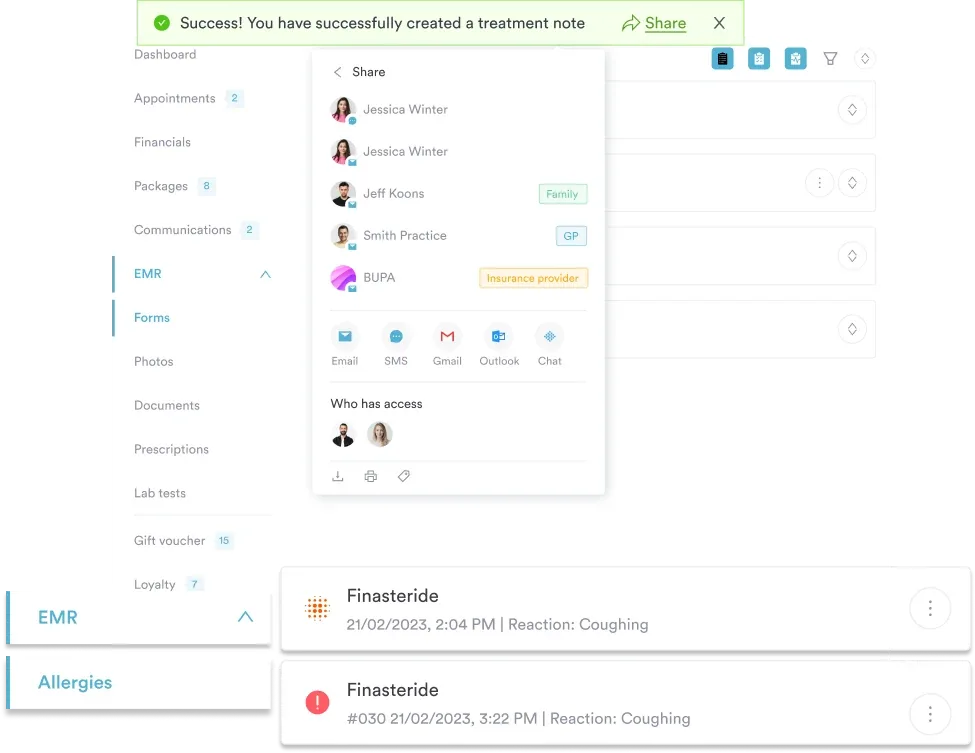
Run a quarterly audit of A65 claims against encounter notes. Pull any claim submitted with A65 and verify the note contains: (1) an explicit diagnosis statement using one of the accepted synonyms, (2) geographic or contact exposure history, (3) lesion description with stage, and (4) serology results. Claims missing any of these elements are vulnerable to denials on medical necessity grounds. Use your compliance management workflows to build this audit into a standard quarterly review cycle.
Coders working with A65 need familiarity with several adjacent and related codes. The CDC/NCHS ICD-10-CM web tool is the authoritative lookup for confirming current billable status and hierarchical relationships. Below are the codes most commonly encountered in the same clinical context as A65.
Coders managing other infectious disease diagnoses may also encounter ICD-10 code A55 (chlamydial lymphogranuloma venereum), which sits in the adjoining A50-A64 sexually transmitted block and follows similar documentation logic. ICD-10 code A70 (Chlamydia psittaci infections) shows how Chapter 1 extends well beyond the treponematoses covered here.
For practices reviewing historical claims or dealing with legacy payer systems, ICD-10 code A65 maps from ICD-9-CM code 104.0 (Nonvenereal endemic syphilis). The transition to ICD-10 in October 2015 did not change the clinical definition, only the classification system. Claims submitted before October 1, 2015 using 104.0 are equivalent to post-2015 A65 submissions.
The CMS ICD-10-CM guidelines and the NCHS Official Guidelines for Coding and Reporting provide the framework for applying A65 correctly. Several practical notes apply specifically to this code. A shared coding reference also standardizes how two coders handle the same borderline case.
Recently published guides cover similar billable, single-code diagnoses and their documentation patterns, including ICD-10 code A33 (tetanus neonatorum), ICD-10 code I40.0 (infective myocarditis).
Unlike some codes in the infectious disease chapter, A65 carries no Type 1 Excludes or Type 2 Excludes notes in the 2026 ICD-10-CM tabular list. This means A65 can be coded alongside other diagnosis codes from the same encounter without restriction from the code itself. However, clinical documentation must still support each code submitted on the same claim.
A65 is most often the principal diagnosis when the encounter is specifically for evaluation and management of the spirochetal infection. It becomes a secondary diagnosis when the patient presents for a different primary complaint and the nonvenereal syphilis is a comorbidity documented and addressed during the encounter.
Sequencing follows the general ICD-10-CM sequencing guidelines: the condition primarily responsible for the visit goes first.
A65 is a diagnosis code only and must be paired with appropriate CPT or HCPCS procedure codes on the claim. Typical accompanying codes include an established-patient E/M code such as CPT code 99214. When an infection encounter includes a drug administration, the drug carries its own HCPCS entry, such as HCPCS code S0081 for piperacillin sodium.
Practices using claims management software can configure code pairing rules to flag encounters with A65 that lack a corresponding E/M or procedure code before submission.
Nonvenereal syphilis (bejel) is not a nationally notifiable condition in the United States under current CDC reporting requirements, unlike venereal syphilis, which is notifiable. However, state-level reporting requirements vary, and some jurisdictions may require reporting of any confirmed treponematosis.
Clinicians should verify local public health reporting obligations when diagnosing A65. Practices supporting compliance management workflows should include a state-specific reporting checklist within their infectious disease encounter protocol. Our roundup of HIPAA compliance software covers additional tools for building that checklist into daily workflows.
Infectious disease coding accuracy depends on two things happening consistently: structured data capture at the point of care, and workflow checkpoints before claim submission. Both break down in practices relying on free-text notes and manual coding review.
Pabau’s dermatology intake form template allows practices to build structured travel history and exposure history fields into their patient onboarding process. Practices without a specialty-specific starting point can adapt a new client intake form template instead.
For any infectious disease encounter, a patient arriving from an A65-endemic region will have that geographic context captured in a queryable field rather than buried in a free-text paragraph. That structured data flows into the clinical note, making code selection defensible at audit.
On the billing side, Pabau’s claims management software supports code-pairing validation, so an A65 diagnosis submitted without a corresponding E/M or procedure code triggers a pre-submission alert rather than a post-submission denial. See our medical billing guide for how this fits into the wider claims cycle. The clearinghouse validates structure before the payer validates content, which is why an electronic claim can fail twice.
For dermatology practices, sexual health practices, and travel medicine providers who encounter nonvenereal spirochetal infections, this kind of front-end validation reduces rework. See how it fits your workflow by booking a demo.
ICD-10 code A65 is a specific, billable code for nonvenereal syphilis (bejel) that requires careful clinical documentation to distinguish from the venereal syphilis range (A51-A53). The key documentation anchors are: an explicit diagnosis statement using A65’s accepted synonyms, a documented non-sexual transmission history with geographic context, lesion description with stage, and serology results placed in clinical context.
For practices that see patients from A65-endemic regions, building these documentation elements into structured encounter templates prevents audit exposure and supports accurate epidemiological reporting. Pabau’s patient records management and clinical documentation tools are built to support exactly this kind of structured coding workflow across dermatology, sexual health, and travel medicine settings.

Need guidance on coding other infectious and parasitic disease diagnoses? ICD-10 code B09 covers unspecified viral infections with skin lesions, a documentation pattern that shares bejel’s mucocutaneous presentation.
Coding a traumatic brain injury follow-up visit? diffuse TBI subsequent encounter code is billable for FY2026 and covers 31 to 59 minutes of documented loss of consciousness.
Coding a brain contusion sequela? right cerebrum contusion sequela code is billable once loss of consciousness lasted more than 24 hours before full recovery.
Nonvenereal syphilis is a chronic bacterial infection caused by Treponema pallidum subspecies endemicum, transmitted through non-sexual skin-to-skin or mucous membrane contact rather than sexually. Also called bejel or endemic syphilis, it predominantly affects children in arid rural communities of sub-Saharan Africa, the Middle East, and parts of Central Asia. Clinically it presents with mucocutaneous and later gummatous lesions, and is coded as ICD-10 code A65 in the US classification system.
Yes, A65 is a billable and specific ICD-10-CM code valid for reimbursement claims in fiscal year 2026. It requires no subcategory selection and can be used directly on claims to indicate a confirmed or clinically supported diagnosis of nonvenereal syphilis. Supporting documentation in the clinical note is required to defend the code on audit.
Venereal syphilis (coded A51-A53) is sexually transmitted and caused by Treponema pallidum subspecies pallidum; nonvenereal syphilis (A65) is transmitted through non-sexual contact and caused by T. p. subspecies endemicum. Standard serology cannot distinguish between them, so the code selection depends on documented transmission history, geographic context, and clinical presentation rather than lab results alone.
The A65-A69 block covers Other spirochetal diseases: A65 (nonvenereal syphilis/bejel), A66 (yaws), A67 (pinta/carate), A68 (relapsing fevers), and A69 (other spirochetal infections, including Lyme disease at A69.2). Only A65 and selected subcategories of A69 (such as A69.9 and A69.20) are directly billable; A66, A67, A68, and A69 at the parent level require subcategory selection.
ICD-10 code A65 includes four accepted synonyms: bejel (the most common clinical term), endemic syphilis, nonvenereal childhood syphilis, and Treponema endemicum infection. Any of these terms in a clinical note maps to A65 for coding purposes. If a note documents “bejel confirmed” without using the ICD-10 descriptor “nonvenereal syphilis,” A65 is still the correct code.