ICD-10 Code V28.01XD: E-bike driver noncollision accident, nontraffic, subsequent encounter
ICD-10 Code V28.01XD: Definition and billable status ICD-10 Code V28.01XD is the...

Last Updated: Oct 20, 2026
Billable Code Specific Code
S43.491S is the billable ICD-10-CM code for other sprain of right shoulder joint, sequela.
The code sits in the S43.4 subgroup for sprain of the shoulder joint, and it is specific to the right side. Documentation has to name the right shoulder and show that the visit treats a sequela rather than an active injury. Practices working from structured clinical records can flag sequela visits at the point of care, before a 7th-character error reaches the claim. Some payers require prior authorization for this service, and a claim without it is denied regardless of coding. Diagnosis pointers on the claim form link each service line to the diagnosis that justifies it.
Let Pabau's smart automation suggest the right codes, reduce claim denials, and keep your practice compliant—effortlessly.
Automate repetitive tasks and focus on what matters most—your patients.
Reduce coding errors and ensure compliance with the latest regulations.
Clean claims, fewer denials, and faster reimbursements.
Powerful insights and reporting to help your practice thrive.
HIPAA compliant SOC 2 certified GDPR-compliant Trusted by 4,000+ clinics worldwide

ICD-10 code S43.491S covers other sprain of right shoulder joint, sequela, and it is billable for FY2026.
The 7th character S means the visit treats a late effect of the original sprain, not the active injury.
Sequela coding needs a documented link between the current shoulder problem and the earlier sprain.
Missing that causal statement is a common audit finding on sequela claims.
Practice management software like Pabau keeps sequela documentation and claims data in one patient record.
The 7th character is the most consequential position in a traumatic injury code. Chapter 19 codes offer three options in that slot: A for initial encounter, D for subsequent encounter, and S for sequela. Payers read the character to judge whether the care billed matches the stage of the injury.
Sequela describes a condition that arises as a direct result of an earlier injury. That is the definition used in the CMS ICD-10-CM guidelines. The sequela code belongs on the visit that treats the late effect, not on the injury itself.
Coders trip most often on the line between subsequent encounter and sequela. A patient who returns three weeks later with a shoulder that is still healing is a subsequent encounter, so D applies.
Sequela applies once the sprain is considered resolved and the patient still has stiffness, pain, or lost function caused by it. Chart notes should make that distinction explicit.
Chapter 20 external cause codes use the same three characters. A follow-up visit after a marine mammal strike takes D and reports W56.32XD, not the initial or sequela form.
All three variants of S43.491 are billable. What separates them is the episode of care, not the severity of the injury or the procedure performed.
Sequencing matters once you reach for S43.491S. Section I.C.19.a of the ICD-10-CM guidelines puts the nature of the sequela first. A code such as M25.511 for pain in the right shoulder leads the claim. S43.491S follows it and establishes the link back to the original injury.
The same order applies at other joints. A healed jaw dislocation that still limits opening leads with the residual condition, and ICD-10 code S03.00XS follows it.
Practices that also code fracture aftercare will recognize the pattern from codes like S42.409P, where the 7th character carries the whole story. Keeping that order consistent across the record saves the coder a second reading.
Checking the parent structure confirms you have landed at the right level of specificity. S43.491S is a leaf-level code, so no further subdivision exists and it satisfies the billable-code requirement.
The other sprain label at the S43.491 level covers sprains that do not map to a more specific S43.4x code. An acromioclavicular sprain, for example, has its own subcategory.
If the note names the ligament or joint structure involved and a more specific code exists, use the specific one. The CDC ICD-10-CM tool shows the full tabular view for that check.
Our roundup of alternatives to Jane App looks at platforms that pair injury coding with rehab treatment plans.
Three things have to be in the chart before you assign S43.491S. The patient had a prior right shoulder sprain. That injury has resolved, or it is no longer being actively treated. The current problem is a direct consequence of it.
Common presentations where S43.491S applies include:
Sports medicine and orthopedic practices see this pattern in returning athletes. A player is treated through the acute and recovery phases, then comes back months later with residual weakness or pain. That final visit is a sequela encounter.
Workers’ compensation billing layers its own requirements on top of the coding rules. In occupational injury cases, sequela codes come up long after the original injury. A worker returns to a claims-adjusted physician with residual shoulder pain or disability.
Jurisdictional rules vary. Some states want the original injury claim number on sequela claims. Others want the primary treating physician’s records appended.
One requirement is universal: The record must document the causal chain from the occupational injury to the current condition. A note that reads only shoulder pain, history of sprain will not clear most workers’ comp payers.
Where the payer or state program also wants an external cause code, that code takes the same 7th character as the injury code. The sequela of an audio device entering a natural orifice, for example, is reported with W44.G1XS.
The status code that separates a paid-work injury from a leisure one is the exception. Coders assign Y99.8 or a sibling once, at the initial encounter, and never on the sequela claim.
For practices carrying high volumes of occupational injury cases, note templates that prompt for the causal statement are worth the setup time. Denials cluster where that language is missing.
Document the causal link explicitly. A line such as ‘current right shoulder stiffness is a direct sequela of the sprain sustained [date]’ meets the guidelines’ causal-relationship requirement. A generic ‘chronic shoulder pain’ entry with no link is what drives S43.491S denials.
S43.491S is a diagnosis code, not a procedure code. It has to be paired with the CPT codes that describe what was done at the visit. The codes below appear most often on sequela shoulder sprain claims.
Payer policy decides which of them count as medically necessary for this diagnosis. Local Coverage Determinations (LCDs) and National Coverage Determinations (NCDs) set those limits, so confirm the pairing with each payer before you submit.
Practices billing physical therapy codes alongside S43.491S should check that their claims management software applies the right diagnosis-to-procedure pairings. Payers sometimes query a sequela code sitting next to acute-phase CPT codes.
A therapy evaluation such as 97161 can trigger a records request, to confirm the visit treats a late effect rather than an ongoing acute injury. The AAPC code lookup lists the coding notes and associated procedure codes attached to S43.491S.
S43.491S belongs to a wider family of shoulder sprain codes. Knowing the neighbors helps you pick the most specific option, instead of defaulting to other sprain. The table covers the codes referenced most often in the S43.4x range.
Laterality errors account for a large share of shoulder code rejections, so confirm right or left from the note before you assign. The WHO ICD-10 browser gives a hierarchical view of the full S43 block for cross-referencing.
Anyone opening a new physical therapy practice should build laterality confirmation into intake and documentation from day one. Retrofitting it across a year of charts is far more work.
Run a monthly audit on your S43.4x claims. Filter for S43.499S submissions, which almost always reflect thin documentation rather than a genuinely unspecified case. Asking the treating clinician for a chart addendum before submission costs far less than a post-payment audit or a refund request.
Several ICD-10-CM codes describe right shoulder conditions that overlap with sequela sprain presentations. Picking the wrong one creates a mismatch between the claim and the medical record, even with the right 7th character.
The documented causal statement is the clearest differentiator. M-chapter codes describe chronic or degenerative conditions. Chapter 19 codes carrying an S describe conditions that arise from a prior injury.
Where the chart documents causation from the original sprain, the Chapter 19 sequela code takes precedence. Defining that split inside your clinical note templates removes most of the ambiguity at coding time.
In most practices, the missing causal statement surfaces after the denial arrives. The coder reads the note, cannot find the link back to the original sprain, and emails the clinician for an addendum. That round trip holds the claim for days.
Practice management software like Pabau moves the prompt to the point of care. Pabau Scribe.
The result is a chart that answers the payer’s question before it is asked. Coders see the causal statement in the note, claims leave with matched diagnosis and procedure codes, and fewer visits come back for records review.
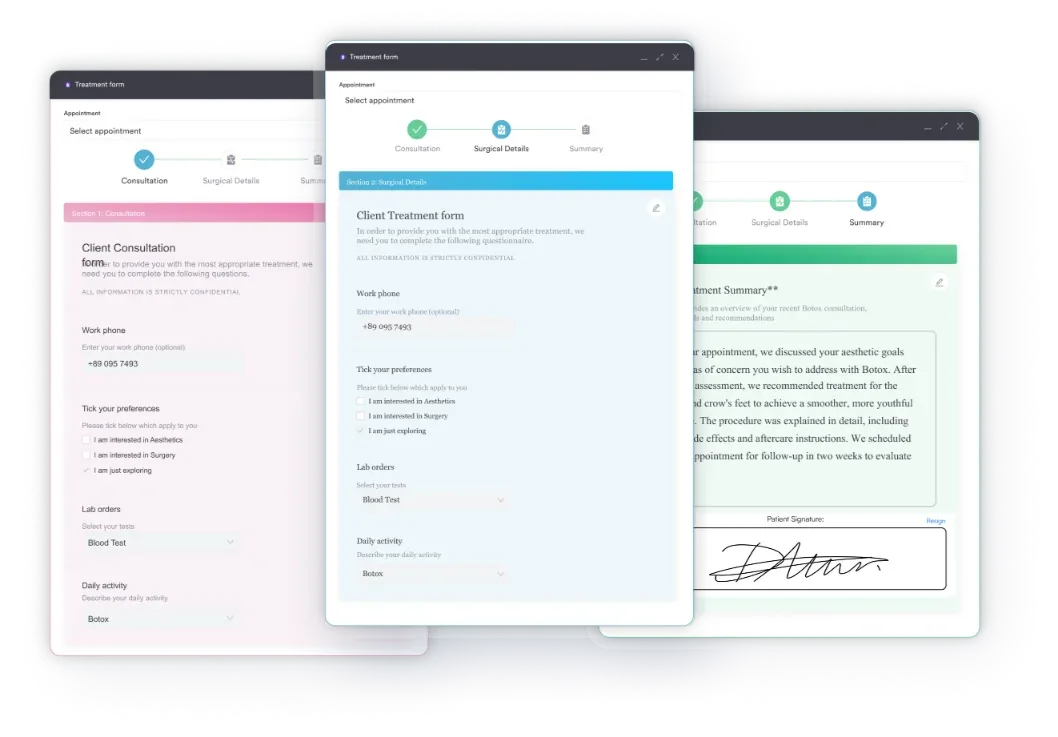

Pabau’s clinical documentation and claims tools build sequela evidence into every encounter. Coders get what they need without chasing clinicians for addenda.

Sequela coding rewards the practice that writes the causal sentence once, at the point of care. S43.491S itself is simple. The record around it decides whether the claim gets paid.
The trade-off is worth remembering. You either spend the effort in the note template now, or in addenda and appeals later. Practices that choose the template see fewer denials and shorter payment cycles.
Book a demo to see how Pabau keeps sequela documentation and claims in step for physical therapy, sports medicine, and orthopedic practices.

Coding a fresh shoulder injury instead? S40.019A covers contusion at the initial encounter, and shows how laterality changes the code you submit.
Billing a deep shoulder abscess drainage? 23030 walks through the procedure code, the documentation it needs, and the diagnoses that support it.
Billing more than one nail avulsion? CPT 11732 nail avulsion add-on covers the add-on code for each extra nail plate billed alongside primary code 11730.
Coding a radius fracture with malunion? S52.355R radius fracture coding covers the subsequent-encounter code for malunion after an open Gustilo type III radial shaft fracture.
Billing a subungual hematoma drainage? CPT 11740 subungual hematoma guide covers the code that fits electrocautery, a heated needle, or laser drainage after nail trauma.
S43.491S is a billable ICD-10-CM diagnosis code meaning other sprain of right shoulder joint, sequela. It applies when the patient has a late effect of a resolved right shoulder sprain, such as chronic pain or stiffness. It is not used for an active or healing injury.
Yes. S43.491S is billable and specific, and it is valid for the FY2026 edition effective October 1, 2025. You can submit it on a claim without a more granular code.
All three share the same base code and differ only in the 7th character. A is the initial encounter, when the acute sprain is actively treated. D is the subsequent encounter, while the injury is still healing. S is the sequela encounter, after the original injury has resolved.
Use D while the original sprain is still healing and the patient is in routine care. Use S once the injury is considered resolved and a residual condition remains, such as chronic pain or restricted movement. The chart has to state that the residual condition comes from the prior sprain.
Yes. Sequela codes are used in workers’ compensation billing when an injured worker returns with residual shoulder symptoms. Documentation has to establish the causal chain from the occupational injury to the current condition. Requirements for referencing the original claim number vary by state.
S43.491S took effect on October 1, 2025 for the FY2026 code set and remains valid through September 30, 2026. CMS updates the code set every October, so check the current tabular list each fiscal year.