Mental health self-care checklist
A mental health self-care checklist is a structured daily tool for tracking the ...

6
Last Updated: Oct 20, 2026

The MDS-16 is a validated 16-item self-report scale covering the frequency, intensity, and distress of maladaptive daydreaming.
Each item is rated from 0% to 100% in 10% steps, and the score is the average of the 16 ratings.
A score of 40 or higher points to suspected clinical-level maladaptive daydreaming, and 39 or below sits in the normal range.
There is no validated low, moderate, and high banding, so 40 is the only threshold to work from.
Maladaptive daydreaming is not a DSM-5 diagnosis, so the score opens a clinical conversation rather than closing one.
A ready-to-use form carrying all 16 MDS-16 statements, each with the 0% to 100% response scale and its wording anchors. It also includes the scoring method, the 40-point cutoff, a notes field, and the original research citation.
Download templateMaladaptive daydreaming rarely comes up unprompted, so it usually needs a screening question to surface. This guide gives you a downloadable maladaptive daydreaming test built from the validated MDS-16 scale. It also sets out the scoring method, which many free online versions of the scale state incorrectly.
The score is the average of the 16 item ratings, on a 0 to 100 scale. A result of 40 or higher points to suspected clinical-level maladaptive daydreaming. The test suits psychology, psychiatry, ADHD assessment, and general mental health practice alike.
It also separates the condition from ordinary daydreaming, which is what makes it useful at a first appointment. This article covers what maladaptive daydreaming is, why screening matters, how the MDS-16 is scored, and what to do with the result.
Maladaptive daydreaming is a pattern of excessive, immersive fantasy that interferes with daily functioning, relationships, work performance, or emotional well-being. Normal daydreaming is brief, occasional, and easy to set aside. Maladaptive daydreaming episodes are vivid, prolonged, emotionally consuming, and often set off by music, pacing, or another familiar cue.
The distinction that matters clinically is control. Normal daydreaming is voluntary and fleeting, while maladaptive daydreaming feels compulsive and intrusive. Patients describe losing hours, missing appointments, neglecting responsibilities, and feeling distressed that they cannot stop. Physical triggers such as listening to music while pacing are close to universal.
Maladaptive daydreaming is not a separate diagnosis in the DSM-5. It appears in the clinical literature as a symptom cluster that warrants intervention. It often co-occurs with ADHD, anxiety, trauma, or dissociative symptoms.
Adding a screening question to your digital intake forms makes the subject easy to raise. Do it in the first appointment, while early intervention is still possible.
Because the presentation overlaps with so many other conditions, the screen works best alongside a full assessment. Many practices pair it with a psychiatric evaluation template, so the daydreaming picture sits next to history, risk, and functioning in the same record. A broader outcome measure such as the CORE-OM sits well beside it.
The hallmark symptoms cluster around how often episodes happen, how absorbing they are, and how much they cost the patient. The MDS-16 items map onto the same three dimensions.
Not every sign has to be present. Frequent episodes, functional impairment, poor control, and clear distress together make a strong case for formal screening.
The causes remain under-researched, but clinical observation and early studies point to several contributing factors.
Treatment planning follows the patient’s own context. That means their history, their comorbidities, and the age at which the daydreaming started. The MDS-16 does not identify a cause. Read the score next to the clinical interview, and the pattern usually becomes clear.
A good patient management system files each completed scale under the right patient automatically.
The Maladaptive Daydreaming Scale is a self-report instrument developed by clinical psychologist Eli Somer and colleagues. Somer, Lehrfeld, Bigelsen, and Jopp published the original 14-item scale in Consciousness and Cognition in 2016. That version reported 95% sensitivity and 89% specificity.
The 16-item MDS-16 revision came later, adding two items on how patients use music to trigger and sustain daydreaming. Its items cover how often episodes occur, how immersive and hard to control they are, and how much distress they cause.
The scale has been used in studies across several countries, and it is the most widely validated measure of this presentation available to clinicians. It stays a screening tool rather than a diagnostic one, so a high score flags a patient who warrants a fuller clinical interview.
Scoring is where online copies of the MDS-16 most often go wrong. Each of the 16 items is rated from 0% to 100% in 10% increments. That gives an 11-point response scale rather than a 1 to 10 Likert scale.
The wording anchors differ per item, running from “never” up to “extremely frequently” or “extreme distress”. The total score is the average of the 16 ratings, not their sum, so it always lands between 0 and 100.
Patients take 5 to 10 minutes to complete the form, which makes it practical at intake. Running the test inside your mental health EMR keeps screening in your normal workflow. Responses land in the patient record, so the score sits alongside the history you already hold.
The maladaptive daydreaming test is straightforward to use in a clinical setting. Administer it at initial intake, on paper, digitally through your patient portal, or verbally during the interview.
Digital administration through secure clinical notes cuts manual entry errors, timestamps the responses, and leaves an audit trail. If any part of that workflow uses AI, check it against the standards for HIPAA-compliant AI tools.
The MDS-16 has one working threshold. A score of 40 or higher indicates suspected clinical-level maladaptive daydreaming, and 39 or below sits within the normal range. There is no validated low, moderate, and high banding, so a three-tier table you find elsewhere is not part of the scale.
Because the score is a mean, no single item can carry a patient over the threshold on its own. A score of 40 usually means moderate ratings spread across most items, or extreme ratings on a handful. Both patterns deserve a conversation, and the item-level answers tell you which one you are looking at.
The cutoff is a screening threshold rather than a diagnostic one. A score above 40 means the patient warrants clinical attention, not that a condition has been confirmed. An Italian validation study proposed a higher threshold of 51, which is another reason to read 40 as a trigger.
Cultural and individual differences also affect how freely people report fantasy. Read the number alongside the patient’s own account of their week.
Evidence-informed approaches center on awareness, acceptance, and structured coping. The research base is still emerging, but the following strategies show promise.
Graded exposure and response prevention also features in OCD treatment, where clinicians measure change against the Y-BOCS severity bands. The MDS-16 stays your measure here, because the Y-BOCS rates obsessive-compulsive symptoms rather than daydreaming.
Progress is rarely linear, and relapses are part of the picture. Re-administering the MDS-16 every few months turns that into something you can track, because you compare the same 0 to 100 average each time.
Keeping each round in your psychology practice software puts the scores in one timeline. Pairing that with regular patient feedback shows you whether the coping strategies are holding up between sessions.
Consider referral if a patient reports any of the following.
Early referral matters, and it is easier to justify when you have a documented score to point to. Patients are often relieved to learn that the pattern has a name and responds to treatment.
Long-term therapeutic work also depends on a sustainable caseload.
The MDS-16 usually arrives on paper. Someone hands it over in the waiting room, and the ratings get averaged by hand after the session. Scores get transcribed wrong, forms go missing, and the baseline is hard to find three months later.
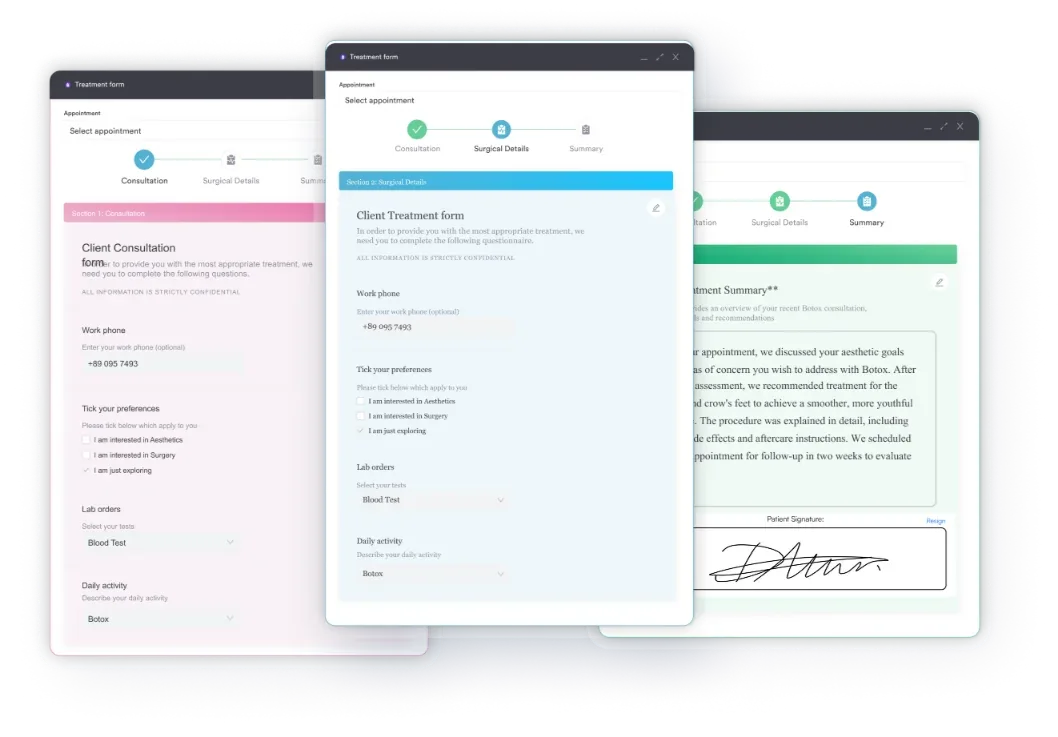
Practice management software like Pabau moves that step in front of the appointment. You build the 16 statements into a digital intake form and send it when the patient books. Their answers are already in the record when they sit down, timestamped for your audit trail.
From there the score lives with the rest of the clinical picture. You write the average into the treatment note and dictate the session with Pabau Scribe. At review you re-send the same form and compare it against the baseline.
The result is a screening step your team completes every time, rather than one that depends on remembering the clipboard.

Send the MDS-16 as a digital intake form before the appointment, and keep every rating in the patient record. Re-send it at review to track progress. Your team stops chasing paper, and no score gets lost between sessions.

The MDS-16 earns its place at intake because it is short, validated, and read against a single number. Average the 16 ratings, compare the result to 40, and you know whether daydreaming belongs in the treatment plan. Anything more elaborate than that threshold is not supported by the research.
The trade-off worth remembering is that the score describes a pattern, not a person. A patient at 38 who has organized their week around fantasy still needs the conversation. A patient at 55 may already be managing well with support in place.
Use the number to start the discussion, then let the item-level answers fill in the rest. Download the template and run it with your next three intakes. Book a demo to see how Pabau collects the screening before the appointment and keeps every score in the record.

Need to structure the follow-up conversation? Psychiatry interview walks through the questions that turn a high screening score into a working formulation.
Screening for impulse control as well? Impulsivity test gives you a second measure for patients whose daydreaming looks like an ADHD presentation.
Assessing camouflaging or autistic traits? CAT-Q test covers the masking behaviors that often sit alongside heavy fantasy use.
Working on identity in therapy? Identity worksheet helps patients separate who they are from the characters they inhabit while daydreaming.
Maladaptive daydreaming is excessive, immersive fantasy that interferes with daily functioning. Episodes are frequent, vivid, and emotionally absorbing, and they are often triggered by music or physical movement. Patients struggle to control or interrupt them despite the distress they cause.
Maladaptive daydreaming is not a separate DSM-5 diagnosis, but it is a recognized clinical presentation in psychological research and practice. It appears as a symptom cluster alongside conditions such as ADHD, trauma, and dissociation. Assess and treat it when it causes distress or impairment.
Each of the 16 items is rated from 0% to 100% in 10% increments. The MDS-16 score is the average of those 16 ratings, so it ranges from 0 to 100. Add the percentages and divide by 16. Never report the sum.
A score of 40 or higher indicates suspected clinical-level maladaptive daydreaming. A score of 39 or below sits within the normal range. This is the threshold the scale’s developers publish, so low, moderate, and high bands you may see elsewhere are not part of the validated scale.
Patients typically complete the 16 items in 5 to 10 minutes. You can administer it on paper, digitally through a patient portal, or verbally during the clinical interview.
A score of 40 or higher calls for a full clinical interview rather than an immediate diagnosis. Explore triggers, onset, functional impact, and comorbidities. Then consider CBT, trauma-focused therapy, ADHD treatment where relevant, or mindfulness-based coping strategies.
Yes. Evidence-informed options include cognitive-behavioral therapy, mindfulness, structured scheduling, trauma work, and ADHD management. Most patients improve with targeted intervention and consistent practice of their coping strategies.
The MDS-16 revision, developed by Eli Somer and colleagues, is the most widely used measure of maladaptive daydreaming in peer-reviewed research. It targets the frequency, intensity, and distress of maladaptive episodes rather than daydreaming in general.
Refer when the score is 40 or higher and the patient reports functional impairment, poor control over the daydreaming, or clear distress. Comorbid ADHD or trauma, harm to work or relationships, and an explicit request for help all support referral.