Getting along with siblings worksheet
A getting along with siblings worksheet is a printable that helps children and t...

2
Last Updated: Oct 23, 2026

A marriage boundaries worksheet helps couples name their limits across five domains: physical, emotional, financial, social, and digital.
Healthy boundaries are clear, consistent, and agreed on by both partners. Rigid or absent boundaries breed resentment and erode trust.
Therapists use it two ways: as an in-session exercise, and as homework the couple reviews before the next appointment.
The comparison table below shows what healthy and unhealthy look like in each domain, plus the question to ask in session.
Digital forms in practice management software like Pabau send the worksheet, collect responses, and file them with your session notes.
A ready-to-use couples therapy tool covering boundary identification, healthy versus unhealthy comparison, communication exercises, and guided reflection across physical, emotional, financial, social, and digital domains.
Download templateA marriage boundaries worksheet walks a couple through naming their limits and agreeing on them together. This one covers five domains: physical, emotional, financial, social, and digital. Each domain gets a healthy version and an unhealthy one side by side, plus four scripts for saying the limit out loud.
You also get the five-step sequence for running it in a session. Use it in the room with both partners, or send it home as homework between appointments.
A marriage boundaries worksheet is a structured form that walks a couple through identifying and agreeing on the limits in their relationship. Boundaries are the rules each person sets to protect their physical safety, emotional wellbeing, and autonomy. They define what is acceptable and what counts as a violation. Practice management software for therapists keeps scheduling, notes and billing against one client record. Practice management software for therapists keeps scheduling, notes and billing against one client record.
A personal boundaries worksheet asks one person what they need. This version asks both partners the same questions, then puts the two sets of answers side by side.
It works as an educational exercise and as a record of what was agreed. The questions surface the assumptions partners hold about privacy, affection, money, time, and phone use. Those assumptions usually conflict, and neither partner has ever said so out loud.
Boundary-setting is widely treated as a core intervention in couples therapy. Writing a limit down removes the room for interpretation. Neither partner can later claim they understood the agreement differently.
The worksheet works best when you run it as a sequence, early in treatment. Here are the five steps, in order.
Licensed marriage and family therapists use it most, alongside couples counselors, clinical social workers, and psychologists. Relationship coaches use it too. It fits any practice that already uses relationship counseling worksheets with clients. Many of these practices now rely on mental health software to manage scheduling, notes, and billing in one place.
Couples in ongoing therapy get the most from it. Recurring conflict, poor communication, and mismatched expectations all give the worksheet something concrete to work on.
Premarital counseling and enrichment programs are the second-best fit. Many programs slot it into a broader marriage workbook, next to the communication and money exercises. Settling boundaries before the wedding saves years of quiet resentment.
Workshops and psychoeducational groups use a simplified version, usually the five domains and the rating scale alone. Therapists carrying a full caseload lean on it too, because it removes the need to improvise a session structure.
Weighing tools for your practice? Check how alternatives to Carepatron handle forms and client records.
The biggest gain is shared language. Partners stop trading vague words like disrespectful and start naming the specific limit they need. Assumptions that would otherwise sit unexamined for months come out in one session.
The form skips the psychoeducation and gets straight to negotiation. Both partners fill in the same five domains, so neither one is cast as the problem.
It also reframes boundary-setting as a skill rather than a threat. Couples often read a request for limits as a sign the marriage is failing. Watching both partners write down limits at the same time takes the sting out of that.
Because the answers are written down, you can measure them. Re-read the agreed boundaries at session six and ask the couple which ones held.
Boundaries in marriage sit on a spectrum, and both ends of it cause damage. Healthy boundaries are clear, consistent, and agreed on by both partners. Unhealthy ones are either rigid, which creates distance, or absent, which invites violation and resentment.
The five rows below cover the boundary types that come up most in couples work. The worksheet only helps if both partners can picture what healthy looks like in each domain, so read the table together. The last column is the question that opens the conversation.
The social row is where friendships get negotiated. Couples argue over who each partner sees alone, how much notice is expected, and whether opposite-sex friendships are treated differently.
During the exercise, ask each partner to mark every domain as healthy, rigid, or absent. That self-rating is usually what starts the first honest conversation about an unmet need.
Naming a limit on paper is easier than saying it to your partner’s face. Most couples need the words handed to them, which is why the worksheet carries scripts.
The four scripts below are the ones therapists hand couples most often. Teach them during the session, then have each partner try one on the spot.
Without them, step four collapses into a rebuttal. Where defensiveness keeps winning, an opposite action worksheet helps a partner move against the urge when the emotion does not fit the facts.
A common error is dressing a complaint up as a boundary. You never give me space is a complaint. I need two hours to myself on Saturday mornings is a boundary. The first invites defensiveness, and the second invites agreement.
In follow-up sessions, ask each partner to state the other’s boundaries from memory. If they cannot, they never really agreed on it. The same compliance principles that apply to a treatment plan apply here.
Flag boundary violations early. If a client reports that their partner crossed an agreed boundary, treat it as a safety red flag and increase session frequency. Use the worksheet as a reference to measure progress and hold both partners accountable to their commitments.
Between sessions, a paper worksheet goes home and comes back forgotten.
Responses land straight in the client record, next to the session notes for that appointment. You can see who has completed the worksheet without chasing anyone by email.
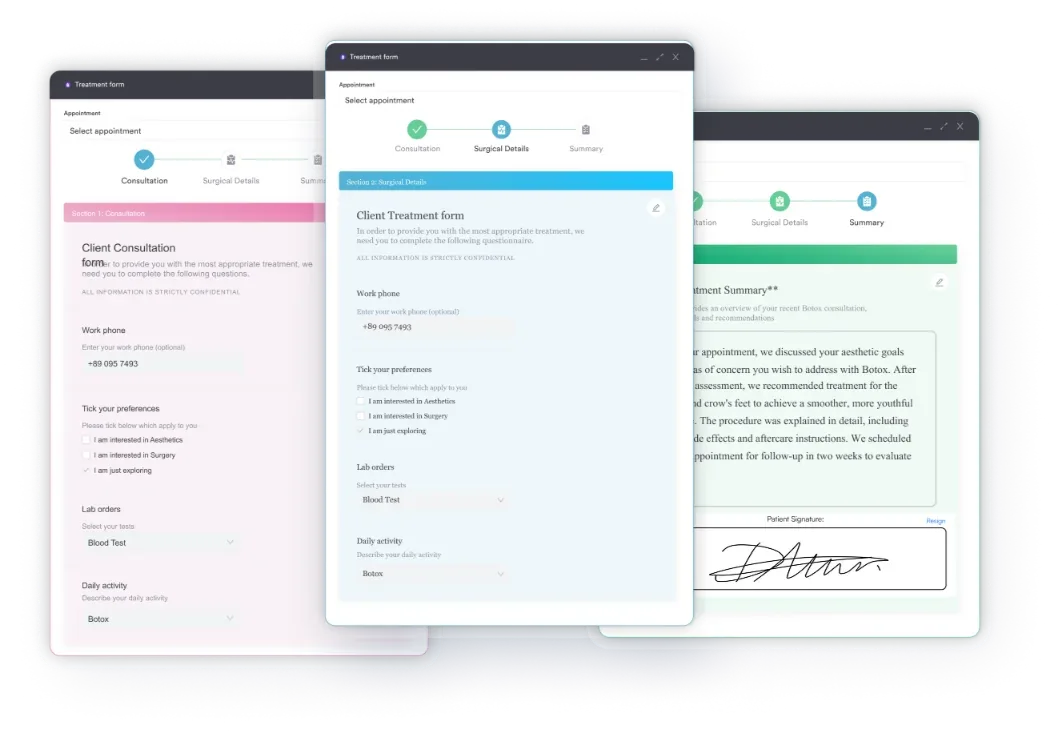
That stored record is what makes progress measurable. Compare a couple’s boundary ratings at intake with their ratings three months later. It also gives you the documentation an insurer asks for when authorizing further sessions.
The boundaries you agreed on get written up once, instead of typed again after hours.

Pabau’s digital forms and secure client portal send the marriage boundaries worksheet to clients in one click. Completed responses store automatically in the client record, next to your session notes.

Boundaries only change behavior once both partners say them out loud and write them down. The worksheet earns its place by leaving a record you can hold a couple to three sessions later.
One trade-off is worth remembering. Couples who fill it in during a calm week often ignore it in a bad one. Revisit it on a schedule instead of only after a fight.
Download the template and use it in your next couples session. Book a demo to see how Pabau sends worksheets, collects responses, and files them with your notes.

Working with clients who hear voices? Auditory hallucinations worksheet helps clients rate distress, identify coping strategies, and log support contacts.
Need to document informed consent for therapy? Group Therapy Informed Consent It lists what to include: confidentiality limits, group rules, and boundaries.
Need a structured way to chart sessions? DCHART narrative template helps clinicians record patient assessments systematically instead of relying on free-text notes.
Want a lighter exercise between sessions? Gratitude jar worksheet gives couples a shared practice that builds goodwill outside the therapy room.
Need a validated way to measure progress? CORE-OM scores client wellbeing at intake and again later, so you can show change over time.
Healthy boundaries are clear, consistent limits that both partners agree on and respect. They protect each person’s physical safety, emotional wellbeing, and autonomy while keeping intimacy intact. Examples include respecting time alone, keeping phone privacy, talking openly about money, and keeping individual friendships.
State the boundary positively and specifically. Say “I need alone time on weekends” rather than “you’re always smothering me.” Explain why the limit matters to you emotionally. Then listen to your partner’s boundary without defending yourself. Reflective listening shows respect even when you do not agree yet.
Yes. It works well in premarital counseling because it surfaces expectations before habits harden. Couples who discuss boundaries early report smoother transitions into married life and fewer repeat arguments.
Revisit them at least once a year, and after any major life change. Moving, a new baby, a job change, or an illness all shift what each partner needs. Quarterly check-ins work better while a couple is still in therapy.
Address it in the next session, with the worksheet in front of you. Ask the partner who crossed the line whether they misunderstood the boundary or chose to ignore it. Unintentional mistakes need clarification. Repeated deliberate violations may point to a control problem, and warrant more frequent sessions.
Pabau’s digital forms send the worksheet to clients electronically and collect their completed responses. Everything is stored in the secure client record, next to your session notes. You can see who has finished the form, review answers before the session, and compare boundary agreements across months.