Reflection questions: 14 examples and a free template
Reflection questions are open-ended prompts that guide a person through structur...

8
Last Updated: Oct 16, 2026

Ikigai is a Japanese term meaning reason for being, and the worksheet maps it across four circles.
The circles cover what you love, what you do well, what the world needs, and what pays.
The four-circle diagram is a Western adaptation, so a client with an empty income circle has not failed the exercise.
Therapists and coaches hand it over at intake, then revisit it to set goals and track progress.
Practice management software like Pabau keeps each completed worksheet in the client record and automates the follow-up.
A printable template with a blank four-circle Venn diagram and reflection prompts for each circle. There is space to record the overlaps you find and the one action you want to take next.
Download templateAn ikigai worksheet turns one vague question about purpose into four specific ones you can answer in writing. It uses a Japanese framework built around what you love, what you do well, what the world needs, and what pays.
The exercise suits anyone weighing a career change or a loss of direction. Therapists.
This guide explains what ikigai means, what belongs in each circle, and how to work through the sheet in five steps. It also covers where the exercise fits in a therapy or coaching pathway, and what to do when a client gets stuck.
Ikigai (生き甲斐) is a Japanese term that translates as reason for being. It names the overlap between what you enjoy, what you do well, what your community needs, and what pays your bills. The worksheet is how that overlap gets onto paper.
The concept reached a wider audience through longevity research. The Blue Zones research documented Okinawa in Japan as a region with exceptional lifespans, where residents described a strong sense of ikigai. Purpose alone does not extend a lifespan. Researchers suggest that people who can name theirs keep healthier habits and stronger social ties.
Most printables leave out one detail. The four-circle Venn diagram is a Western adaptation rather than a traditional Japanese model. It spread online from about 2014 and added the earning circle. Japanese writing on ikigai is smaller in scope, covering a morning ritual, a hobby, or a person you care for.
That distinction matters when you run the exercise with a client. An empty earning circle does not mean the sheet failed, so wellness practitioners can treat income as one input rather than the target. A retired client still has an ikigai.
The sheet’s core is a Venn diagram with four overlapping circles. Each one covers a different dimension of a working life.
Where all four circles overlap is your ikigai. The partial overlaps carry their own names. Passion sits where love meets talent, and mission sits where love meets what the world needs. Profession sits where talent meets income, and vocation sits where a need meets income.
The sheet works as a reflection exercise rather than a form to fill in fast. Set aside 20 to 30 minutes somewhere quiet, and answer each prompt honestly before moving on.
Filing completed forms in patient management software keeps documentation consistent across your whole team.
In a session, the sheet earns its place by pointing a client at a direction instead of a symptom list. It also gives you something concrete to reopen at the next appointment.
Timing: Hand it over early, during intake or the first goal-setting conversation. Clients working through burnout, low mood, or a life transition benefit most from that early clarity. A coaching intake form can carry the four questions alongside your standard ones.
Group sessions: The exercise runs well in a workshop or class, not only one to one. Hearing how other people read the same four circles tends to loosen a stuck answer. Give everyone 10 minutes of silence first, then open the discussion.
Review cadence: Book the review before the client leaves. A month is long enough for something to shift and short enough that the sheet is still fresh. Ask which circle changed, rather than asking how the week went.
Structured reflection: Four narrow questions are easier to answer than one broad question about purpose. Writing the answers down also makes them harder to wave away later. Clients who cannot name anything they love often warm up with a lighter prompt.
Shows what is missing: Most clients come out strong on one or two circles and thin on the rest. The sheet makes that imbalance visible. You see the client with passion and talent but no income, or the one earning well with no sense of contribution.
Sharper goals: Once a client can see the overlap, a vague aim like being happier turns into a specific action. Wellbeing goals then have something measurable behind them, which makes progress easier to review.
Faster focus: One worksheet conversation often surfaces the source of a client’s dissatisfaction. You get a direction for the work from the first session rather than the fifth. Follow-through still rests on the usual compliance basics, such as clear next steps and a booked review. Adding a self-control worksheet extends that follow-through by helping clients track specific triggers between sessions.
Better retention: Clients who can see a pathway forward come back for the next appointment. Purpose work also gives them a reason to return that belongs to them rather than to you.
Most practices run this exercise on paper. The finished sheet goes home with the client, and the next session starts from memory. Practice management software like Pabau keeps it with the rest of the record instead.
Build the four questions into your digital forms, so answers arrive before the first appointment. Each response saves to the record. That gives you a dated baseline to compare the next version against.
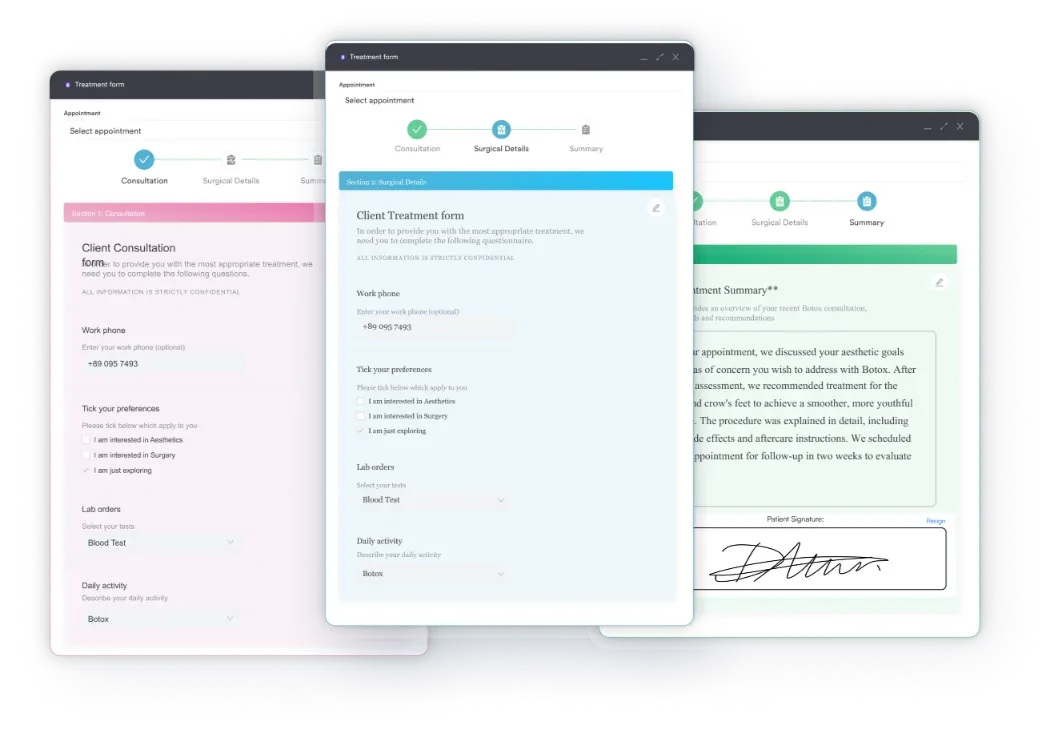
Then automate the follow-up. Scheduled SMS check-ins ask what moved this week, which keeps the goals from the sheet in view between appointments.

None of this sits behind a higher tier. Every Pabau subscription includes the forms, the portal, and the automations, so the workflow is available from your first week.

Pabau sends the worksheet with your intake forms and files each answer in the client record. Automated check-ins then keep clients working on the goals they set with you.

The worksheet pays off in the second conversation. A client who fills it in today will have changed at least one answer by next month. That movement is the material you work with.
Keep the ambition small. One action per circle, reviewed at the next appointment, beats a perfect diagram nobody opens again. Print the PDF, run it with one client this week, and see which circle stays empty.
That empty circle is usually the conversation worth having. Book a demo to see how Pabau stores each completed worksheet and chases the follow-up for you.

Need a calmer opening for a group session? Metta meditation script gives you a read-aloud script that settles a room before reflective work starts.
Want a measure to sit alongside purpose work? CORE-OM questionnaire tracks wellbeing over time, so you can show change rather than describe it.
Clients struggling to name what they feel? Gottman Feelings Wheel gives them the vocabulary before they attempt the passion circle.
Suspect a client is escaping rather than exploring? Maladaptive daydreaming test screens for the pattern with the MDS-16 scale and a scoring guide.
Working with couples on shared direction? Marriage boundaries worksheet covers the agreements a couple needs before they plan anything together.
The worksheet is a printable template with a blank four-circle Venn diagram and reflection prompts. Each circle has space for what you love, what you do well, what the world needs, and what pays. There is also room to note the overlaps you find.
Most people finish a first pass in 20 to 30 minutes. The value comes from returning to it. Many therapists and coaches ask clients to spend five to 10 minutes a week reviewing progress, which turns the sheet into an ongoing practice.
It works in both settings. In a group, people hear how others read the four circles, which often loosens a stuck answer. One to one, the same sheet becomes a personal roadmap for goal-setting and review.
Our template downloads as a PDF you can print or fill in with any annotation tool. Some practitioners rebuild it in a slide deck or a notes app for clients who prefer typing. Storing the finished sheet in your client portal keeps it available for the next session.
The Blue Zones work documented regions with unusual longevity, including Okinawa in Japan, where residents described a strong sense of ikigai. Purpose alone does not extend a lifespan. Researchers suggest that people who can name theirs keep healthier habits and stronger social ties.
Yes, many therapists and coaches run it during intake or goal-setting. It suits clients facing burnout, a career change, or a loss of direction. Treat it as a structured conversation starter rather than a scored clinical measure.