Journal prompts for mental health
Journal prompts for mental health are guided questions that help people process ...

2
Last Updated: Oct 13, 2026

A CBT for sleep worksheet is a structured therapeutic tool clinicians use to guide patients through evidence-based cognitive and behavioral techniques for treating insomnia.
The worksheet covers five core CBT-I components: sleep diary tracking, stimulus control, sleep restriction, cognitive restructuring, and sleep hygiene, all critical for addressing underlying sleep disturbance patterns.
Sleep restriction therapy and stimulus control work by reconditioning the bed association and improving sleep efficiency, but both require careful monitoring in specific populations (bipolar disorder, epilepsy).
Pabau’s digital patient portal and automated follow-up workflows help clinicians distribute worksheets, track patient progress, and schedule behavioral therapy sessions without manual coordination overhead.
A ready-to-use worksheet covering sleep diary templates, stimulus control instructions, sleep restriction guidelines, and cognitive restructuring prompts. It also includes sleep hygiene checklists for treating insomnia in therapy and counseling practices.
Download templateInsomnia is one of the most common complaints patients bring to therapy, and talk therapy alone rarely resolves it. Cognitive behavioral therapy for insomnia (CBT-I) is the recommended first-line treatment. A structured worksheet, however, is what turns the protocol into something a patient can actually follow between sessions.
This guide covers what to include in a CBT for sleep worksheet and how to sequence it across therapy sessions. It also explains how practice management software like Pabau helps you distribute it and track completion. This way, it fits into a busy caseload.
A CBT for sleep worksheet is a structured therapeutic tool. It helps clinicians guide patients step by step through cognitive behavioral therapy for insomnia (CBT-I). It’s a practical fit for mental health practices that want to standardize how they deliver CBT-I. This is because the interventions are recommended by the American Academy of Sleep Medicine (AASM). As a result, abstract therapeutic concepts become concrete patient actions and self-monitoring tasks.
Insomnia is one of the most common sleep disorders, affecting 10-15% of adults long-term and up to 30% episodically. It’s frequently documented using ICD-10 code F51.05 when it co-occurs with an active psychiatric condition.
Unlike medication-based approaches that address symptoms, CBT-I is recommended as the first-line treatment for insomnia. It targets the underlying behavioral and cognitive patterns that maintain poor sleep, and it produces improvements that outlast therapy itself.
Using the worksheet across therapy sessions follows a structured workflow that clinicians adjust based on each patient’s insomnia profile.
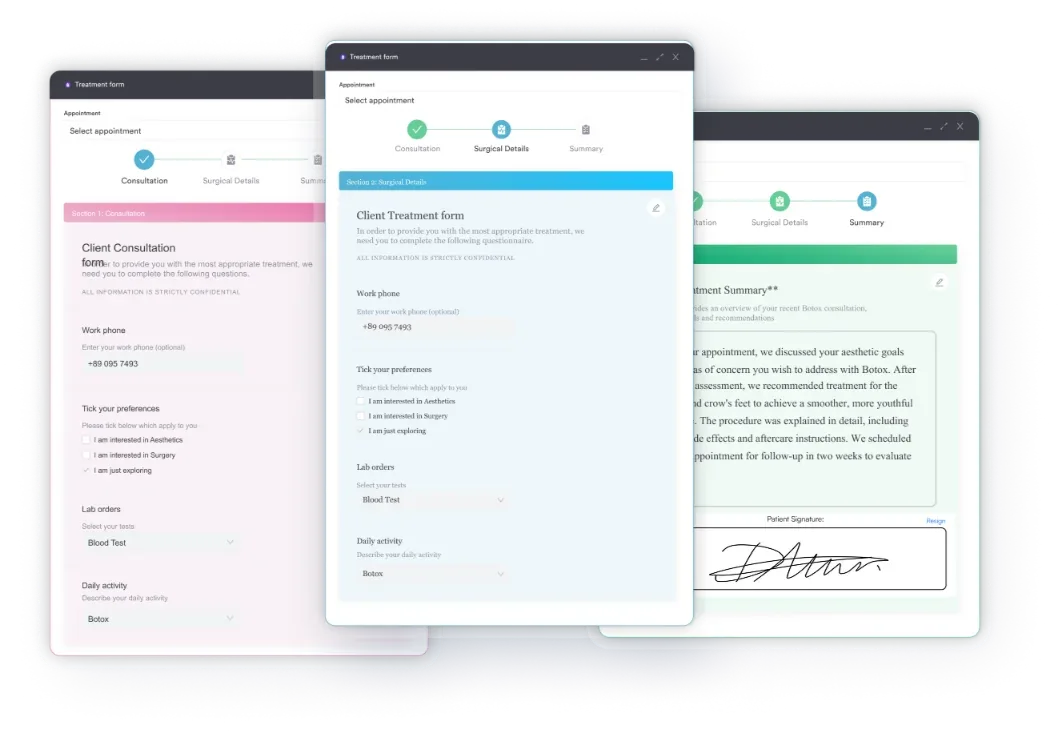
Pabau’s secure client portal lets clinicians share the worksheet digitally and collect completed forms before sessions. It also tracks patient progress across multiple weeks without manual email coordination.
Therapists and counselors treat adult and adolescent insomnia across outpatient mental health practices, private therapy offices, and community health centers. They find the worksheet valuable for structuring CBT-I delivery and maintaining session-to-session accountability. A written action plan brings this same kind of structure to other behavioral health programs. Because the format is concrete, it also reduces cognitive load for both clinician and patient.
Psychiatrists and primary care physicians often manage medication-resistant insomnia. They use the worksheet to document behavioral interventions alongside drug treatment. This shows insurers that evidence-based non-medication strategies have been tried. As a result, it strengthens clinical notes and supports insurance approvals for complex cases.
Sleep medicine specialists and sleep clinics use the worksheet in their CBT-I programs. It’s a scalable tool for structured, multiweek protocols. In addition, large sleep centers often train group facilitators to run group CBT-I with a standardized worksheet.
Occupational therapists and behavioral health coaches often treat patients with chronic health conditions. Examples include chronic pain, cancer survivorship. These patients frequently also have insomnia. So, clinicians use CBT-I worksheets to address sleep as part of a patient’s recovery.
Standardizes treatment delivery. The worksheet ensures every patient receives the same core CBT-I components in the same sequence. This reduces variation between clinicians and improves consistency of outcomes. It’s especially important for group-based or clinic-wide insomnia programs.
Improves patient adherence to behavioral assignments. Writing down sleep restriction times, stimulus control rules, and weekly sleep diary data gives patients something concrete to work from between sessions. The worksheet becomes a tangible accountability tool and reference guide, rather than instructions a patient has to remember from a verbal handoff.
Enables objective progress tracking. Sleep efficiency calculations and sleep quality ratings from the diary provide quantifiable data clinicians use to adjust intervention intensity. Pairing the diary with a validated instrument like the Pittsburgh Sleep Quality Index (PSQI) adds a standardized baseline-to-outcome comparison. A patient whose sleep efficiency rises from 65% to 82% sees concrete proof the approach is working, reinforcing motivation.
Supports clinical documentation and insurance authorization. The worksheet becomes part of the patient’s clinical record. It shows that CBT-I delivery meets payer requirements for medically necessary mental health treatment. This, in turn, strengthens reimbursement claims and audit defense.
Reduces session preparation time. Rather than designing custom sleep assignments for each patient, clinicians distribute the pre-built worksheet. This frees up session time for deeper clinical discussion and cognitive work, instead of repeating psychoeducation.
Screen for contraindications before starting sleep restriction therapy, since the technique works by inducing mild sleep deprivation. In bipolar disorder, that sleep loss can trigger mood destabilization or hypomania. In seizure disorders, it can lower the seizure threshold. Clear it with the patient’s psychiatrist or neurologist first, and add a checkbox for these safety screens to the worksheet.
Effective CBT-I worksheets integrate five behavioral and cognitive elements, each addressing a distinct mechanism of insomnia.
The sleep diary is the foundation of CBT-I. Patients record daily bedtime, sleep onset latency, and the number and duration of wake episodes. They also log final wake time and total sleep duration. From these raw data, clinicians calculate sleep efficiency and identify patterns. For example, sleep onset often takes longer on high-stress days, and sleep is more fragmented on evenings after caffeine.
The worksheet typically includes a one-week template that patients carry and complete each morning. It’s similar in format to a standalone sleep log. Patients then sync this data back to the clinician weekly. Sharing this data with patients is also one of the simplest ways to improve patient engagement in a CBT-I program.
This behavioral module reestablishes the bed as a sleep-only cue. Patients follow a simple set of rules. First, use the bed only for sleep and intimate activity. Next, leave the bedroom for a quiet activity if awake for more than 15 minutes. Also, keep a consistent wake time, even on weekends, and avoid naps. The worksheet provides a checklist patients tick daily, reinforcing compliance and making rule-breaking visible during review.
Sleep restriction deliberately reduces time in bed to match actual sleep time, boosting sleep efficiency and consolidating sleep architecture. The worksheet includes a step-by-step calculation and a week-by-week table clinicians populate with adjusted bedtime/wake-time windows.
For example, a patient might sleep five hours but spend eight hours in bed. In that case, the worksheet prescribes restricting time in bed to 5.5 hours at first. Clinicians then slowly expand this by 30 minutes weekly as efficiency rises above 85%.
Sleep-related anxious thoughts, such as performance anxiety and catastrophic predictions, keep insomnia going. When anxiety is the main driver rather than a symptom, some clinicians track it separately. They use an anxiety nursing diagnosis worksheet alongside CBT-I.
The sleep worksheet itself includes a three-column thought record. The columns are the sleep-worry thought, the evidence for and against it, and a realistic alternative. Clinicians guide patients through this exercise using evidence from their own sleep diary. Because patients use this record consistently, they tend to comply better with the rest of the CBT-I protocol.
When sleep worry needs closer work, a five-column catastrophizing worksheet adds likelihood and coping columns to the same thought-record format. Its prompts ask patients to weigh how likely the feared outcome is, then name what they could do if it happened.
The hygiene section reviews behaviors patients can change. Examples include limiting caffeine after 2 PM and avoiding screens one hour before bed. Other examples are keeping a cool (65-68°F) dark bedroom and timing exercise well. The worksheet lists each recommendation with a weekly compliance checkbox, helping patients identify which habits correlate with better sleep.
Cognitive behavioral therapy for insomnia is the gold-standard first-line treatment for chronic insomnia disorder across all major clinical guidelines. The VA and the Department of Defense, in partnership with Stanford University School of Medicine, developed the CBT-i Coach app. In addition, a DoD-funded CBTI-M Therapist Manual is also freely available for clinicians.
Peer-reviewed meta-analyses show that CBT-I produces sustained sleep improvements equivalent to prescription sedatives. However, it comes without tolerance, rebound insomnia, or cognitive side effects.
Structured worksheets support how CBT-I is delivered. A manualized, worksheet-guided protocol keeps treatment consistent across clinicians of different experience levels, so each patient moves through the same core components in the same order. It also supports measurement-based care by tracking sleep efficiency and symptom scores week to week, which mental health outcomes reporting increasingly expects.
Standalone PDF worksheets work, but adding them to your practice management system multiplies clinical value. Psychology practice management software with built-in digital capture forms lets you push the worksheet straight to patients. It also collects completed diaries before each session and flags missing weeks on its own. This eliminates paper shuffling, so missing entries don’t derail treatment.
Use the automated workflow system to schedule reminder messages three days before each session, such as “Your sleep diary is due by Wednesday.” Automating these touchpoints cuts down on missed diaries and forgotten assignments. Clinicians then spend session time interpreting diary trends and advancing cognitive work, instead of chasing patients who forgot to track their sleep.
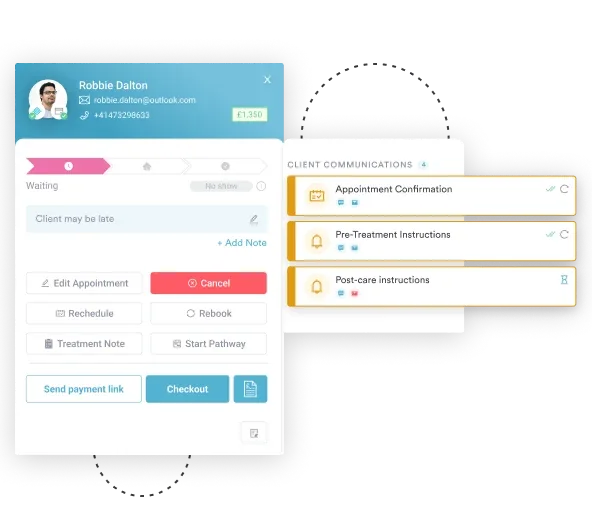

Distribute worksheets, track patient progress, and automate behavioral assignment reminders, all within one secure system.

Most practices adopt the worksheet slowly. Start with the sleep diary in session 1, then add stimulus control by session 2. Introduce sleep restriction only once baseline sleep patterns are clear, typically by session 3.
Rushing all five components into one session overwhelms patients and erodes adherence. Stagger the components instead, and use the worksheet as the pacing roadmap. This is the same way a change plan worksheet paces other behavioral interventions.
Patients often resist sleep restriction at first: the idea of reducing time in bed feels counterintuitive. Reframe it as “consolidation therapy.” Explain that matching time in bed to actual sleep teaches the brain a simple lesson. Bed equals sleep, not wakefulness. Cite their own sleep diary data showing current poor efficiency. Once they experience even one week of improved sleep, motivation climbs dramatically.
Sleep diaries contain sensitive health information (exact wake times, mood ratings, personal stressors). Always collect and store completed worksheets securely. As a result, diaries are never exposed via unencrypted email or unshredded paper.
If using printed worksheets, shred completed diaries after data entry and once retention windows expire. Check your jurisdiction’s clinical record retention rules first. If using digital systems, use role-based access controls so only the treating clinician can view a specific patient’s worksheet. Billing staff and the admin team should not have visibility.
A CBT for sleep worksheet transforms insomnia treatment from talk therapy into a structured, measurable, evidence-based protocol. The sleep diary creates accountability. Stimulus control and sleep restriction rebuild healthy sleep-wake patterns, and cognitive restructuring addresses performance anxiety. Together, these components address the full range of factors that keep chronic insomnia going. And they do it without medication side effects or the risk of tolerance.
Free worksheets are available, but success hinges on how you deliver, track, and refine them session to session. Adding worksheets to a patient care management system helps with adherence, keeps the clinical record complete, and gives you week-to-week data to adjust treatment. Want to see how Pabau’s digital forms and client portal simplify worksheet distribution and progress tracking for your insomnia program? Book a demo.

Need to screen for underlying anxiety? Taylor Manifest Anxiety Scale measures trait anxiety with a 50-item true/false scale and four score bands.
Screening for a specific phobia too? Thalassophobia test template screens for thalassophobia, a specific phobia of deep water affecting adults.
Want to challenge unhelpful thoughts too? Thought journal logs the situation, automatic thought, emotion rating, and a balanced reframe.
A CBT for sleep worksheet is used to guide patients through evidence-based cognitive and behavioral interventions for insomnia. These interventions include sleep diary tracking, stimulus control, sleep restriction, cognitive restructuring, and sleep hygiene changes. It standardizes treatment delivery and creates weekly accountability measures.
Patients should complete the sleep diary daily, ideally each morning, recording the previous night’s sleep data. Clinicians review the completed week (7 entries) at the start of each therapy session. They then calculate sleep efficiency and identify patterns that guide intervention adjustments.
Sleep restriction is generally safe for chronic insomnia. However, it is contraindicated, or needs caution, in bipolar disorder (mood risk) and uncontrolled seizure disorders (seizure threshold risk). Always screen for these conditions and coordinate with the patient’s psychiatrist or neurologist before initiating sleep restriction.
Most CBT-I protocols using structured worksheets last 8-12 weeks (one session per week). Sleep improvements typically emerge within 2-4 weeks, with full treatment response and consolidation by week 6-8. Longer protocols may apply to comorbid insomnia or treatment-resistant cases.
Yes, digital worksheets in secure patient portals often work better than paper versions. This is because they let clinicians review data before sessions, send automated reminders, and reduce paperwork. Digital systems also ensure HIPAA/GDPR compliance for sensitive sleep and mood data.
For chronic insomnia, CBT-I produces sleep improvements comparable to prescription sleep medication in the short term, and the gains tend to last longer once therapy ends. It also avoids the tolerance, rebound insomnia, and next-day grogginess linked to long-term sedative use, which is why clinical guidelines recommend it as the first-line treatment.