Mental health self-care checklist
A mental health self-care checklist is a structured daily tool for tracking the ...

5
Last Updated: Oct 20, 2026

The core values exercise worksheet asks you to rank 10 listed values, describe your top three, and name one action for each.
The 10 printed values are authenticity, compassion, integrity, innovation, collaboration, growth, respect, excellence, sustainability, and empathy.
Rank the listed values in order of importance, starting with the one you would defend under pressure.
A practice team can complete the same sheet together, then agree on the three values that guide how the practice runs.
Written values only change anything when they show up in hiring, scheduling, and daily patient care.
A printable worksheet with a name field and 10 values to rank in order of importance. It then gives you space to describe your top three values and to write one action for each of them.
Download templateA core values exercise turns a vague sense of what matters into a short written list you can act on. This worksheet keeps that simple. You rank 10 values, describe your top three, and commit to one action for each of them.
It suits a therapist running values clarification with a client. It also fits coaching practices and practice owners who want the team pulling in one direction. Below, we walk through each part of the sheet, then show how to run it with a group.
The download is a five-page printable form. It holds four things, and nothing else:
There is no master list of dozens of values to browse, and no page of reflection questions. The sheet is deliberately short, which is why it works in a 20-minute team meeting. A patient whose value is missing from those 10 can name their own on write-in values cards and rate each one.
One thing to watch. The printed instruction asks you to rank the values from 1 to 5, but 10 values are listed. Rank all 10 in order of importance instead, with 1 as the value you would protect first.
Core values are the principles you fall back on when a decision has no obvious right answer. In a busy practice, that happens several times a day.
Plenty of clinicians start out with strong values and lose sight of them under administrative load. That drift is one of the quieter routes into therapist burnout.
Research on career fit ties time spent away from meaningful work to higher burnout rates. A short exercise like this one is a cheap way to check that fit.
Read all 10 values before you write anything. Then find the one you would defend under pressure, and mark it as 1. Work down from there until every value has a number.
Ranking is harder than choosing, and that is the point. When two values feel equal, ask yourself a simple question: if I could only keep one of these, which would it be?
Rank the practice you have today, not the one you would like to have. A clinician whose top values are excellence and growth will run a very different day to one led by compassion and presence. Neither ranking is wrong.
Most people finish this page in about 10 minutes. Take longer if the top three keep swapping places.
If your current platform cannot handle digital worksheets, compare Carepatron alternatives before committing.
The next section gives you three values and description pairs. Copy your top three values across, then write what each one means in your own words.
Skip the dictionary. A description earns its place when it names something you do, or refuse to do, on a working day. If the words will not come, a character strengths assessment gives you language to borrow.
Here is what that looks like for compassion. Instead of a definition, a clinician wrote: Compassion means I hear what my patient is afraid of before I reach for a treatment plan. It means arriving as a person, not only as a clinician.
For clinical work, describe how the value shows up in three places. Look at the consultation room.
The last section is three action lines, one per value. Each one asks for a single behavior that puts the value into your week. This is the section that turns a ranking into behavior.
Keep the action small enough to repeat and specific enough to notice when you skip it:
Write a review date in your calendar for six weeks out. If the action has quietly stopped, either the action was too big or the value was aspirational.
The same worksheet works as a team session. Give everyone their own copy and protect the quiet time at the start, otherwise the loudest voice sets the ranking for the room.
The whole session runs to about 90 minutes for a team of eight. Book it as its own meeting. Squeezing it into a lunch break with clinical interruptions wastes the exercise.
Teams that co-create their values stick with them. Values handed down from an owner rarely survive the first busy week. If you are also setting ground rules for group work with clients, running this exercise first models the openness you are asking of them.
The sheet stops at the action lines. These extra prompts are worth answering afterward, either alone or in a follow-up meeting:
If the squeezed value sits outside what you control, work through a circle of influence worksheet before you change anything. It separates what you can move from what you can only respond to.
Revisit the ranking once a quarter, or after any significant change to the practice. Values shift as careers move, and a two-year-old list stops describing anyone.
For owners and managers, the ranking only matters once it reaches operational decisions. That means who you hire, what you protect in the schedule. If the values and the schedule disagree, the schedule is what your team believes.
Values clarification has a long history. It was developed in the 1960s by Louis Raths, Merrill Harmin, and Sidney Simon as an educational method. Several therapeutic approaches later built on it, including acceptance and commitment therapy, which made values work central to treatment.
For clinicians, the worksheet doubles as a session tool. When a client is stuck between options, ranking values gives the conversation something concrete to work with. That also applies during crisis intervention, where a client may need to reconnect with a reason to act.
Keep the client’s completed sheet with their record so you can revisit it later. Progress is easier to see when you compare two rankings six months apart. Most mental health practices already keep forms on file, so the sheet fits an existing habit.
In most practices, the values session goes well and then the paperwork disappears. The sheets end up in a drawer, the agreed actions live in someone’s notebook, and nothing changes by the following month.
Practice management software like Pabau keeps the worksheet in circulation. You can rebuild it as a digital form, send it to every staff member or client, and keep the completed copy on their record. Nobody chases printouts, and the results are still there at the quarterly review.
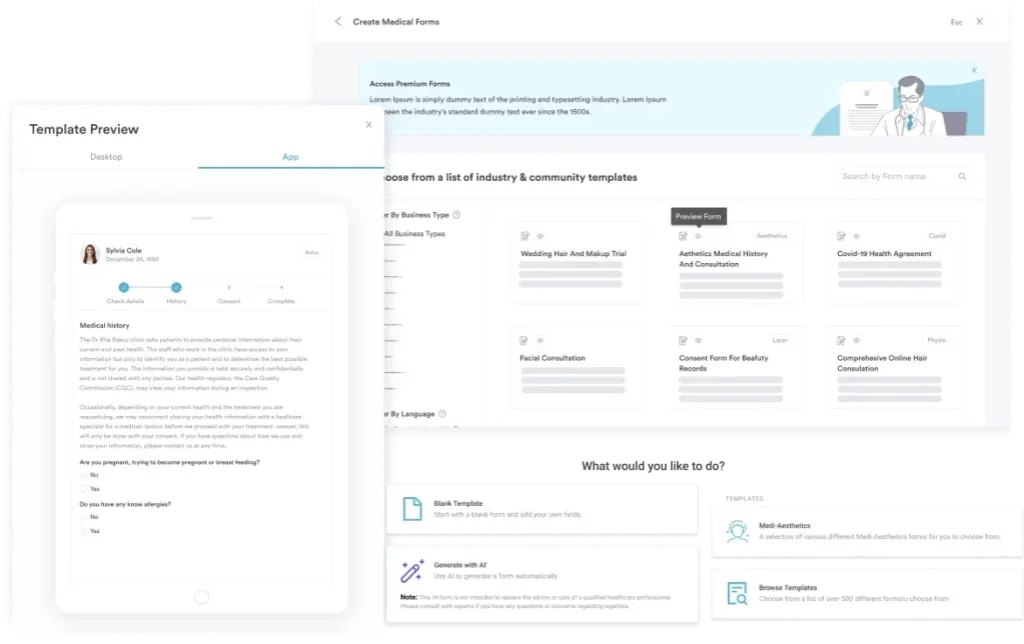
The same tools carry the values into patient-facing work. Intake forms and the client portal decide how a patient’s first contact with you feels, and both are yours to word. Every Pabau subscription includes the full set, so no part of this sits behind a higher plan.

Pabau’s digital forms send the core values worksheet to staff or clients, then store each completed copy on the record. Your agreed values stay visible where the work happens.

The worth of this exercise sits on the last page. Ranking 10 printed values takes 10 minutes and feels satisfying. Naming three actions you will be held to is the part that changes a working week.
So treat the ranking as a draft. Run it, write the actions, then check in six weeks whether the actions survived contact with a full schedule. Whatever survived is what your practice values.
Download the worksheet above, and give your team the quiet 20 minutes it needs. Book a demo to see how Pabau turns forms like this one into something your practice completes, stores, and revisits without chasing paper.

Client struggling when values collide with pressure? Coping skills worksheet gives them practical strategies to use between sessions.
Client avoiding the value they say matters most? Defense mechanisms worksheet helps them name the patterns that get in the way.
Running values work with coaching clients? Coaching evaluation form captures what the sessions changed and what to adjust.
Working with two people whose values differ? Couples therapy worksheet structures the conversation around what each partner needs.
Closing out a course of therapy? Therapy termination letter gives you four samples and the details to include.
Core values are the beliefs and principles that guide your decisions and define who you are. Naming them clarifies your priorities and reduces the effort of hard choices. In healthcare, clear values support better clinical decisions and lower burnout.
This worksheet asks you to describe your top three. Three to five is the usual range in therapeutic and organizational settings. Brené Brown’s Dare to Lead argues for two. Fewer values are easier to act on, which is the whole point.
The sheet lists 10 values to rank: authenticity, compassion, integrity, innovation, collaboration, growth, respect, excellence, sustainability, and empathy. You rank all 10, then carry your top three into the description and action sections.
Yes. The 10 printed values are a starting point, not a limit. Write your own value in the margin, or enter it on one of the values lines in the top-three section.
Personal values guide your private life, such as family, faith, or creativity. Professional values guide your work, such as excellence, integrity, or impact. In practice they overlap heavily, and this worksheet can be used for either.
Yes, and it works well. Everyone ranks the values privately first, then the group looks for the values that keep appearing. From there you agree on three values for the practice. Allow 60 to 90 minutes.
A persistent conflict is information worth acting on. You have three options: raise the mismatch with leadership, change how you work within the current constraints, or reconsider whether the role fits you. Long-running values conflict is a major driver of burnout.
Once a year is enough for most people, plus any time you change role or the practice changes direction. Your ranking moves as your career moves, so an old sheet stops describing you.