Fair fighting rules worksheet
A fair fighting rules worksheet is a therapy handout that sets out ground rules ...

3
Last Updated: Oct 21, 2026

Anxiety is NANDA-I code 00146, defined as vague discomfort or dread with autonomic response; NANDA-I added a related diagnosis, Excessive Anxiety, in its 13th edition (2024-2026).
Anxiety occurs more frequently in females (2:1 ratio); defining characteristics include restlessness, worry, and sleep disturbance that nurses assess during patient interviews.
NANDA nursing interventions focus on therapeutic communication, relaxation techniques, and environmental modification – not medication management, which is the provider’s scope.
Practice management software like Pabau helps nurses structure anxiety assessments, standardize diagnostic statements, and link patient symptoms to evidence-based care plans.
A structured care plan template for assessing anxiety symptoms, identifying related factors, documenting defining characteristics, and planning evidence-based nursing interventions aligned with NANDA-I standards.
Download templateAn anxiety nursing diagnosis is a clinical judgment describing a patient’s response to a perceived threat. NANDA-I (code 00146) defines anxiety as a vague, uneasy feeling of discomfort or dread accompanied by an autonomic response. A complete diagnosis pairs the label with related factors and defining characteristics.
This guide covers the complete framework for assessing anxiety, documenting findings using NANDA-I standards, and delivering care that fits both nursing scope and patient-centered practice. It also includes a downloadable template to simplify the anxiety nursing diagnosis process in your clinical setting.
An anxiety nursing diagnosis is a clinical judgment. It describes a patient’s response to a perceived threat, marked by worry, physical tension, and autonomic symptoms. NANDA-I defines anxiety as “a vague, uneasy feeling of discomfort or dread accompanied by an autonomic response.” In short, it is a feeling of unease caused by anticipation of danger.
Anxiety here is the patient’s emotional and physical response, not the medical condition itself (such as generalized anxiety disorder in DSM-5). Mental health practice settings use structured care plan tools to document that difference accurately.
NANDA-I code 00146 has been the standard diagnostic label since the 1980s. In its 13th edition (2024-2026), NANDA-I added a related diagnosis, “Excessive Anxiety,” to better distinguish between normal anxiety (adaptive) and pathological anxiety (maladaptive) that requires nursing intervention. Anxiety (00146) remains the established diagnosis, and you may see either label referenced in clinical literature.
The nursing diagnosis framework uses a three-part diagnostic statement: Diagnostic Label + Related To + As Evidenced By. For example: “Anxiety related to unfamiliar hospital environment as evidenced by trembling, elevated heart rate, and verbalized worry.”
This structure ensures nurses document the problem (anxiety), the cause or contributing factors (the stressor), and the observable signs and symptoms (patient presentation). That precision matters for team communication and clinical accountability.
Anxiety differs from fear in one key way: the source of anxiety is often vague or internal, such as worry about an uncertain future. Fear, on the other hand, is typically a response to a specific, clear threat. This difference matters for clinical decision-making and guides the interventions you choose.
The template is structured in five practical steps that mirror the ADPIE nursing process (Assessment, Diagnosis, Planning, Implementation, Evaluation). Follow them in order during your patient encounter.
Each example below follows the three-part format and pairs the label with related factors and defining characteristics you can pull straight from the bedside. Adapt the wording to your patient’s presentation.
Swap in the patient’s own words and measured findings so each statement reflects the individual rather than a generic label. That specificity is what separates a defensible diagnosis from a vague chart entry.
Storing this resource in an EMR designed for behavioral health keeps client progress visible across sessions.
Mental health nurses, psychiatric CNS/NP teams, and registered nurses in all care settings use this template. It helps them standardize anxiety assessment and documentation.
Related NANDA-I templates cover adjacent presentations you may also chart, including the anxiety nursing care plan.
Standardized language across your team. When all nurses document anxiety using the same NANDA-I framework, patients receive consistent care. Handoffs between shifts and units become more efficient because the diagnostic statement and care plan are immediately clear to incoming staff.
Improved clinical accuracy and diagnostic confidence. When you document defining characteristics and related factors, you avoid vague entries such as “patient anxious.” This creates an objective foundation for your diagnosis, which strengthens your clinical judgment and lowers the risk of misdiagnosis or missed chances for timely care.
Evidence-based intervention selection. The template links NANDA diagnoses to NIC interventions and NOC (Nursing Outcomes Classification) outcomes, which keeps your care plan grounded in research. Accrediting bodies such as The Joint Commission require this alignment, and it supports your professional accountability. Pairing it with a psychiatric review of systems gives a fuller picture of mental status.
Audit and compliance readiness. Regulatory inspectors and state nursing boards expect documentation to reflect the ADPIE process and NANDA-I standards. A structured template makes it easy to show that your assessments, diagnoses, and interventions meet professional and regulatory expectations.
Patient safety and outcome tracking. When anxiety is formally documented with baseline severity, interventions, and expected outcomes, you have clear metrics to check whether the patient is improving. Clear baselines also help you spot when anxiety escalates to crisis levels, such as risk of self-harm or inability to consent to treatment, prompting a quick referral to mental health specialists or psychiatric hold protocols.

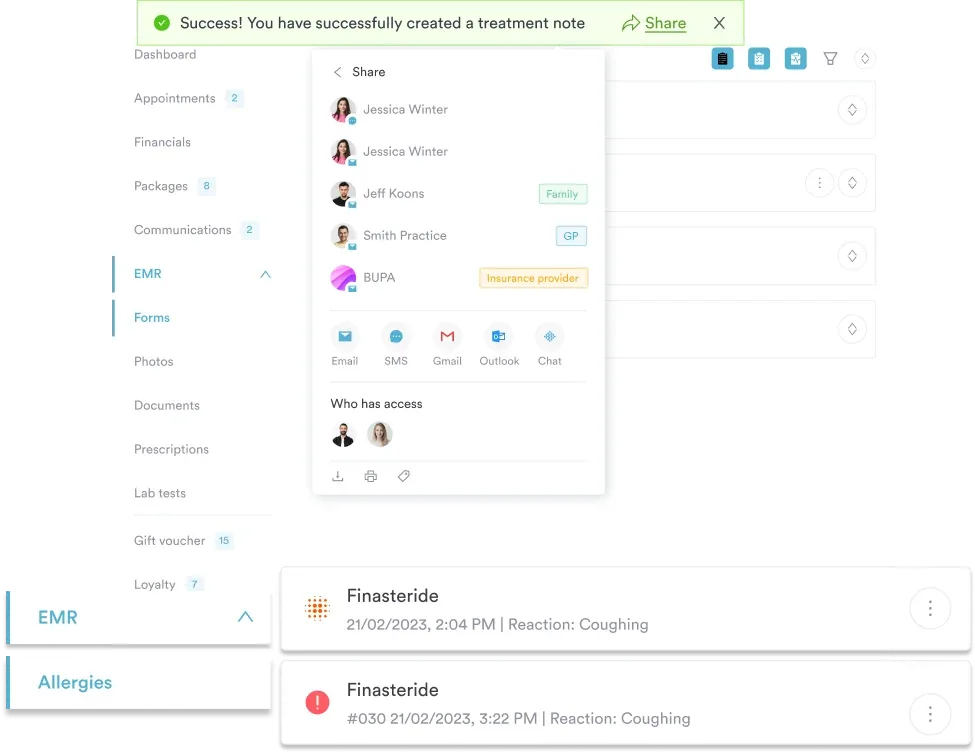
Pabau’s clinical record tools help teams organize anxiety assessments, link symptoms to care plans, and track patient progress – keeping mental health documentation compliant and efficient.

Anxiety and fear are related but clinically distinct NANDA-I nursing diagnoses. Understanding the difference matters for accurate assessment and for choosing the right intervention.
Fear (NANDA-I code 00148) is a response to a specific, clear threat. A patient preparing for surgery fears the anesthesia or the outcome of the procedure. Here, the threat is concrete and external. Fear is often shorter-lived once the threat is removed or the outcome becomes certain.
Anxiety involves a vague sense of unease, often with an unclear or internal source. A patient may feel anxious about their future health, their ability to recover, or changes to their lifestyle. Often, the exact source of the worry is hard to name.
Anxiety persists even when immediate threats are removed, because it stems from anticipation, uncertainty, or internal conflict rather than a concrete external event.
Clinical implications: Fear-based interventions focus on providing information about the known threat—what the surgery involves, typical outcomes, and post-op care steps. This helps the patient feel more in control. Anxiety-focused interventions, on the other hand, emphasize relaxation, coping strategies, and therapeutic presence. These help the patient manage uncertainty and calm the body’s stress response.
Some patients experience both: fear of a specific procedure and anxiety about their overall health.
In its 13th edition (2024-2026), NANDA International added a related diagnosis: “Excessive Anxiety.” This addition reflects a growing recognition that not all anxiety is pathological. Normal, adaptive anxiety helps people prepare for challenges and maintain safety. Nursing interventions are needed only when anxiety becomes excessive, intrusive, or interferes with daily functioning or medical treatment.
Why the addition matters: The “Excessive Anxiety” diagnosis more precisely captures when nursing intervention is warranted. It signals that nurses are addressing anxiety that goes beyond what the situation calls for, or that the patient cannot manage independently, rather than any anxiety the patient experiences.
This distinction aligns better with contemporary mental health practice and reduces the risk of over-medicating or over-treating normal stress responses.
Using both labels: Anxiety (00146) remains the established NANDA-I diagnosis, and the one referenced in most published care plans and academic sources such as StatPearls. Excessive Anxiety is newer and more specific, reserved for presentations that go beyond what the situation warrants.
Check which label your facility’s documentation standards call for, and note in your care plan which diagnosis you are applying.
Use a structured assessment framework during your patient interview. Ask: ‘On a scale of 0-10, how anxious are you right now?’ Observe: trembling, facial tension, speech rate, eye contact. Document the patient’s exact words about their worry. This combination of subjective (what the patient reports) + objective (what you observe) evidence creates a rock-solid diagnostic foundation that supports your care plan and measures your intervention effectiveness over time.
Anxiety is one of nursing’s core diagnoses. Writing an accurate anxiety nursing diagnosis means using NANDA-I standards, finding specific related factors, and noting defining characteristics. Together, these steps ensure your patients receive evidence-based care that addresses the real source of their distress. The downloadable template speeds up this process and keeps your documentation aligned with current regulatory and professional standards. Notes held in therapy practice management software put earlier sessions side by side, so a slow change becomes visible.
Start using the template at your next patient encounter. Over time, practicing the five-step assessment and diagnostic process builds faster clinical judgment and more consistent handoffs between shifts. Book a demo and see how Pabau helps teams organize and track anxiety care plans across shifts and settings.

Noticing strong feelings surface during a session? Countertransference in therapy covers the types and signs of countertransference and how to manage them in session.
Running a mental health practice across multiple locations? EHR for multi-franchise practices covers what to look for so shared histories and compliance hold up across locations.
Working with couples stuck in reactive conflict? Fair fighting rules gives couples a psychoeducation framework to replace reactive conflict with regulated, solution-focused communication.
Anxiety is NANDA-I code 00146, defined as “a vague, uneasy feeling of discomfort or dread accompanied by an autonomic response.” In its 13th edition (2024-2026), NANDA-I added a related diagnosis, “Excessive Anxiety,” to distinguish pathological anxiety from normal stress responses. A complete anxiety nursing diagnosis includes the label, related factors (cause), and defining characteristics (signs and symptoms).
Defining characteristics are the observable or reported signs and symptoms that support the anxiety diagnosis: trembling, restlessness, verbalized worry, sleep disturbance, difficulty concentrating, tachycardia, diaphoresis, facial tension, and elevated blood pressure. Document both what you observe (objective) and what the patient reports (subjective) to strengthen your diagnosis.
Fear is a response to a specific, identifiable threat (e.g., fear of anesthesia). Anxiety is a vague sense of apprehension with an unclear source (e.g., worry about the future). Fear typically responds to information and reassurance about the known threat. Anxiety responds to relaxation techniques, coping strategies, and therapeutic presence. A patient may have both diagnoses simultaneously.
Use the three-part format: Diagnostic Label + Related To + As Evidenced By. Example: “Anxiety related to anticipation of surgery and fear of anesthesia as evidenced by verbalized worry, inability to sleep, and elevated vital signs.” Be specific about the cause (related factors) and use direct patient quotes or precise observations (defining characteristics) to support your diagnosis.
Evidence-based interventions include therapeutic communication (active listening, reassurance), relaxation techniques (deep breathing, progressive muscle relaxation, guided imagery), environmental modifications (quiet room, familiar objects), patient education about anxiety and coping, and collaboration with mental health specialists if anxiety is severe or unresponsive to nursing interventions. Medication management is the provider’s scope; nurses implement non-pharmacological interventions and monitor effectiveness.
Yes. Anxiety is a recognized NANDA-I nursing diagnosis (code 00146), distinct from the medical diagnosis of an anxiety disorder. It describes the patient’s response to a perceived threat and directs nurse-led interventions such as therapeutic communication, relaxation techniques, and environmental modification.