Tanja Lepcheska
Anxiety tracker template: free printable PDF for clinicians
What is an anxiety tracker and how is it different from journaling? An anxiety t...

2
Last Updated: Oct 27, 2026
Free PDF 3 pages, print-ready Clinician-reviewed
Complicated grief is prolonged, intense distress that lasts months or years after a death. It affects an estimated 7% to 10% of bereaved adults. Normal grief softens with time, while complicated grief keeps interfering with daily functioning, sleep, appetite, and emotional regulation. The mental health EHR systems practices use daily have made screening easier, but the measure itself has barely changed since 1995.
The Inventory of Complicated Grief (ICG) is a validated 19-item self-report measure. It helps therapists, grief counselors, and psychiatrists judge when a patient’s grief has crossed from normal bereavement into prolonged grief disorder (PGD). That condition is now formally recognized in the DSM-5-TR (code F43.81) and in ICD-11 (code 6B42).
This guide covers what the ICG measures and the exact wording of all 19 items. It then explains how to score and interpret the total.
A ready-to-use copy of the 19-item self-report assessment, with the exact item wording and the 0-4 response options next to each one. It also carries the straight-sum scoring instructions and the 25-point cutoff clinicians use to flag prolonged grief disorder.
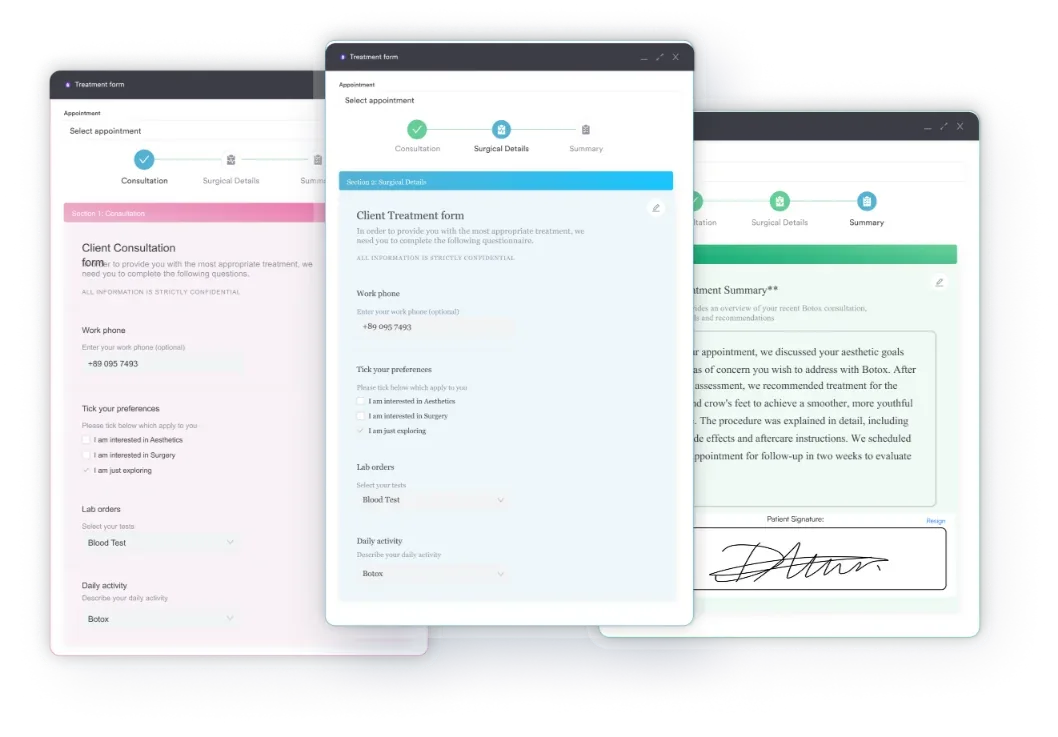
Start from scratch, or upload this PDF or any form you already use, and Pabau's AI Form rebuilds it with tick boxes, text fields and a signature. Attach it to the treatment once, and every patient gets it on time.
AI Form rebuilds the consent, history and aftercare forms you already use. You review each one, then publish.
Patients complete forms on their phone before they arrive, so the front desk stops retyping paper.
Every signed form is versioned and attached to the treatment record, ready when you need it.
Set how long a consent stays valid. Returning patients skip forms they have already signed.
Supports HIPAA and GDPR compliance AES-256 encryption 4.8 on G2 4.7 on Capterra Trusted by 4,000+ practices worldwide

The Inventory of Complicated Grief is a validated 19-item self-report measure developed by Prigerson and colleagues in 1995.
Each item is rated 0 (never) to 4 (always), and the total is a straight sum ranging from 0 to 76.
No ICG item is reverse-scored, so a raw response of 4 always contributes 4 points to the total.
The measure has one validated cutoff, and a total of 25 or above signals clinically significant grief.
Pabau’s digital intake forms let practices send the ICG before the session, score it automatically, and flag high totals.
The ICG is a 19-item self-report questionnaire developed by Prigerson and colleagues in 1995 to measure the severity of prolonged grief symptoms. Each item is rated on a five-point scale from 0 (never) to 4 (always).
The total is a straight sum of all 19 raw responses, so scores run from 0 to 76. A total of 25 or above indicates clinically significant complicated grief that warrants further evaluation and possible therapy.
The measure was designed for research. It is now a routine screening tool in psychology practice management settings, community mental health centers, grief counseling services, and palliative care teams. Clinicians usually read its items as two clusters. Separation distress covers yearning, longing, and difficulty accepting the death. Traumatic distress covers disbelief, avoidance, mistrust, and intrusive experiences tied to the loss.
Psychometric studies report strong internal consistency for the ICG (Cronbach’s alpha = 0.94) along with good discriminant validity. It separates complicated grief from major depressive disorder and from post-traumatic stress disorder. Both of those can co-occur with prolonged grief, but each is a clinically distinct condition.
Normal grief is a natural, adaptive response to loss. Bereaved people feel sadness, longing, intrusive memories, and difficulty concentrating, and those symptoms gradually lessen over weeks and months. By 6 to 12 months, most bereaved adults have resumed daily functioning. Sadness may still return on anniversaries or when something recalls the person who died.
Complicated grief stays intense beyond 12 months and interferes with work, relationships, and self-care. The DSM-5-TR defines prolonged grief disorder as yearning plus cognitive, emotional, or behavioral difficulty persisting at least 12 months after the death. The threshold is 6 months for children and adolescents. The World Health Organization’s ICD-11 classification aligns with that definition and treats PGD as a distinct condition.
The ICG quantifies where a patient sits on that spectrum, but the number is only half the assessment. Ask the qualitative questions alongside it. Can the patient work, hold relationships together, and look after themselves? Are they still ruminating about the death, or have they begun to integrate the loss? Do they have moments of meaning and pleasure, or does yearning fill every day?
Context matters just as much. A high score at six months post-loss does not establish PGD. Recency of the death, concurrent stressors, culture, and attachment style all shape the answers. That is why the ICG screens rather than diagnoses, and why clinical judgment stays central.
Bereaved partners and adult children sometimes attend together, and the ICG still measures one respondent at a time. Give each of them their own copy, then run a self-care worksheet with whoever has been carrying the practical load.
Each of the 19 ICG items is a statement about the respondent’s experience since the death. Every item uses the same five-point scale: 0 (never), 1 (rarely), 2 (sometimes), 3 (often), and 4 (always). The list below follows the wording and order of the downloadable template above.
Read as a set, the items split between separation distress and traumatic distress. Longing, emptiness, and being drawn to reminders belong to the first group. Mistrust, somatic symptoms, and hearing or seeing the person who died belong to the second. Nothing in the list asks about recovery or acceptance, which is why no response ever needs flipping at the scoring stage.
Wording matters more than clinicians expect. Paraphrased or shortened items break comparability with the validated measure and with the patient’s own earlier scores. Use the template wording exactly, whether you hand over paper, read the items aloud, or send a digital form. Most patients finish in 5 to 10 minutes.
Practices running virtual sessions through a telehealth platform can share and review worksheets on screen.
Scoring the ICG means adding the responses to all 19 items together. Each answer counts as the patient marked it, from 0 for never to 4 for always. No item is reverse-scored, so nothing is recoded before you add the numbers up. Totals run from 0 to 76, and one validated cutoff turns that total into a clinical decision.
The cutoff of 25 comes from the original Prigerson et al. (1995) validation study and has been replicated across several populations and languages. Totals at or above it show strong sensitivity and specificity for prolonged grief disorder. A high total earns the patient a full diagnostic evaluation. It does not hand you a diagnosis.
Two scoring myths are worth naming, because both circulate in secondhand summaries of the measure. The first claims that a positive-sounding item is reverse-scored. The published 19-item ICG contains no such item and no reverse-scored responses at all, so straight summation is always correct.
The second myth invents severity tiers at 30 or 35 points, often with a suicide-risk figure attached to the top one. The validated measure carries a single cutoff at 25. Above it, severity and referral urgency are matters of clinical judgment rather than of a published band.
Administering the ICG is simple. Embedding it into routine intake and follow-up takes planning. Below are five operational steps for putting the measure into your practice.
Therapists, grief counselors, and psychiatrists use the ICG most, usually as a standard intake measure. It suits any setting where bereaved people seek mental health support. Psychologists in private practice, community mental health centers, and university counseling services build it into their assessment batteries.
Hospice and palliative care teams use it to find bereaved relatives at risk of prolonged grief, so support can start before symptoms entrench. Primary care physicians and nurse practitioners reach for it when screening for depression or anxiety, because complicated grief often presents as a mood disorder.
Occupational therapists and social workers use it to weigh the grief component in trauma and domestic abuse presentations. Substance use counselors pair it with a CAGE-AID questionnaire to map grief-related relapse triggers, since unprocessed bereavement is a common risk factor.
The measure also suits research, medical education. At 19 items and under 10 minutes, it fits schedules that cannot absorb a longer battery.
Standardized assessment and objectivity: The ICG gives you a number instead of an impression. That objectivity sharpens assessment and makes progress over time measurable rather than remembered.
Early identification of at-risk patients: Screening every bereaved patient at intake surfaces the people heading toward prolonged grief before symptoms harden. Intervening 3 to 6 months after the death works better than starting treatment years later.
Care matched to need: A patient scoring 20 may do well with supportive counseling. A total of 25 or above calls for escalation, with the intensity of care set by clinical judgment. The score guides that triage, so your scarcest appointments go to the patients who need them.
Secure, compliant documentation: That lowers the risk of a breach and of a regulatory finding at audit.
Outcome monitoring: Repeating the ICG after 8 to 12 weeks of therapy gives you objective evidence of response. A drop of 5 points or more suggests the plan is working, while a flat or rising total says change the approach.
Any total at or above 25 should prompt a suicide-risk screen as part of the wider clinical assessment. Risk often climbs around anniversaries, and when the bereaved person uses alcohol or drugs to numb the pain. Automated alerts in your patient management system keep these cases visible during busy weeks.
Most practices still run the ICG on paper. Someone adds up 19 numbers by hand, then files the total in a session note. Arithmetic slips happen, and a score of 32 can sit unread until the next appointment.
Practice management software like Pabau sends the ICG as a digital intake form before the appointment. The patient answers on their phone, the responses save straight into the clinical record, and the total is calculated for you. Straight summation with no reversed items is exactly the kind of arithmetic software should own.
From there you can act on the number rather than hunt for it. A total of 25 or above can raise a task for the treating clinician, and repeat scores line up in the same record. That gives you a documented before-and-after for grief-focused therapy without a separate spreadsheet.

Pabau’s digital forms score the ICG automatically and flag every total at or above the cutoff. A high score never gets lost in a session note, and your team sees the number and the trend in one place.

The ICG earns its place in an intake pack because it turns a clinical impression into a number you can act on. Nineteen items, one five-point scale, and a single total from 0 to 76 are all it asks of the patient.
Two details decide whether that number is worth anything. Use the validated item wording rather than a paraphrase, and add the raw responses up without recoding any of them. Secondhand summaries that introduce a reverse-scored item quietly shift every total the practice records.
Remember that 25 is a screening threshold, not a diagnosis, and that no published tier sits above it. A high total tells you to look harder at duration, impairment, and risk before you plan care. Book a demo to see how Pabau scores the ICG automatically and flags patients who need specialist grief care.

Sorting grief from depression at intake? Depression self-assessment walks through PHQ-9 scoring, so you can see which symptoms belong to a mood disorder.
Is sleep the loudest symptom your patient reports? Insomnia test template adds ISI scoring when bereavement has wrecked a patient’s nights.
Need to document the wider clinical picture? Mental status exam template structures the observations that sit alongside a high grief score in the record.
Working with avoidance in grief therapy? Defense mechanisms worksheet gives patients a way to name the coping patterns that keep the loss at arm’s length.
Closing out a course of grief-focused therapy? Therapy termination letter covers what to include when you discharge a patient whose scores have settled.
The ICG is a 19-item self-report measure developed by Prigerson et al. (1995). It assesses the severity of prolonged grief symptoms in bereaved people. Items are rated from 0 (never) to 4 (always). A total of 25 or above indicates clinically significant complicated grief, which warrants therapy or a specialist referral.
Add the responses to all 19 items together. No item is reverse-scored, so nothing is recoded, and totals range from 0 to 76. A total below 25 suggests normal grief, while 25 or above signals clinically significant complicated grief. No validated severity tiers sit above that cutoff, so read the total alongside time since the death, concurrent stressors, and coping resources.
No. Every one of the 19 items is worded in the direction of distress, so a higher response always means more grief symptoms. Score each answer exactly as the patient marked it, from 0 to 4, and add the 19 numbers together. Any instruction to reverse an item is a misreading of the measure.
The original ICG contains 19 items. The revised version (ICG-R) is longer and was developed to align more closely with diagnostic criteria for prolonged grief disorder. Both are validated, but the 19-item ICG remains the more common choice in routine practice because it is quicker to complete. Research studies that need finer symptom detail tend to prefer the ICG-R.
Screen anyone presenting with depression, anxiety, trauma, or substance use for a recent bereavement. One question does it: has someone important to you died in the past 24 months? If the answer is yes, administer the full ICG. Grief specialists include it in every intake, and palliative care teams use it with bereaved relatives around the time of the death.
Yes. It has excellent internal consistency (Cronbach’s alpha = 0.94) and good discriminant validity, separating complicated grief from depression and PTSD. Sensitivity and specificity data support the cutoff of 25 for identifying prolonged grief disorder, and the measure has been validated in several languages and cultures.
For totals of 25 or above, grief-focused cognitive behavioral therapy and complicated grief treatment (a manualized 16-session protocol) are first-line options. Set the intensity of care by clinical judgment, referring to a specialist grief therapist or psychiatrist where impairment or suicide risk is high. Supportive counseling, social connection, and meaning-making activities help alongside structured therapy.