GLP-1 diet plan
A GLP-1 diet plan is a structured eating framework for patients taking semagluti...

2
Last Updated: Oct 13, 2026

A breathing exercises handout is a clinical tool that teaches patients evidence-based breathing techniques for stress, anxiety, and COPD management.
Five techniques (diaphragmatic breathing, box breathing, 4-7-8, pursed-lip, and alternate-nostril breathing) address different patient needs and wellness goals.
Regular practice (3-4 times daily for 5-10 minutes) yields the strongest outcomes for emotional regulation and respiratory health.
Pabau’s digital forms and patient portal enable clinicians to distribute the handout, track patient compliance, and integrate breathing exercises into automated care workflows.
A comprehensive, ready-to-print breathing exercises handout covering diaphragmatic breathing, box breathing, 4-7-8 technique, pursed-lip breathing, and alternate-nostril breathing for stress, anxiety, COPD, and general wellness.
Download templateA breathing exercises handout is one of the most practical tools a clinician can distribute to patients managing stress, anxiety, or chronic respiratory conditions. When paired with practice management software like Pabau, the handout becomes part of a structured patient care workflow rather than a one-off worksheet.
Most patients never learn intentional breathing techniques. They breathe shallowly throughout the day, activating their sympathetic nervous system (fight-or-flight mode) instead of the calm parasympathetic branch. A simple, evidence-based handout gives them the instructions they need to practice at home. Consistent practice lowers stress hormones, improves sleep, and reduces anxiety symptoms without medication.
A breathing exercises handout is a one-to-three-page clinical resource that teaches patients specific breathing techniques with step-by-step instructions. It is designed for immediate use in clinical settings and for patients to take home and practice independently.
Unlike generic wellness content, a clinician-grade handout includes the physiological rationale for each technique, clear safety guidance (especially for COPD or anxiety-sensitive populations), and realistic expectations about practice frequency. The best handouts include visual cues to aid patient understanding regardless of reading level, such as hand-placement diagrams, breath-count illustrations, or simple icons.
From a compliance perspective, distributing a branded handout signals professionalism and shows patients you have designed their care pathway. Practices using digital intake forms can embed links to downloadable breathing handouts, ensuring every patient receives the resource at the point of care entry.
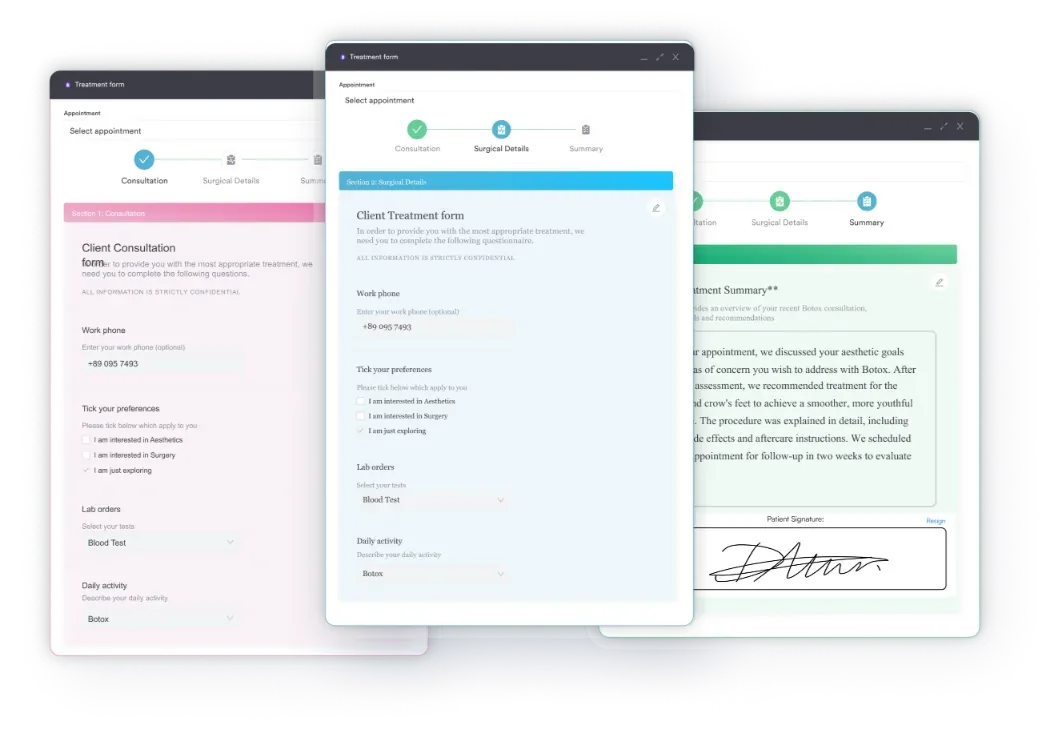
This handout workflow has five operational steps.
Between those visits, a wellness planner gives the patient a daily progress box for noting which technique they practiced. Its four write-in areas cover physical health, mental health, nutrition, and exercise.
A breathing exercises handout is relevant across multiple specialties and patient populations.
Mental health clinicians distribute breathing handouts to patients with anxiety, panic disorder, insomnia, and PTSD. Diaphragmatic breathing and box breathing are foundational grounding techniques taught in trauma-informed therapy and dialectical behavior therapy (DBT).
Respiratory specialists and nurses recommend pursed-lip breathing and diaphragmatic breathing to patients with COPD or asthma. These techniques improve oxygenation efficiency and reduce breathlessness during activity.
Physical therapists and sports medicine clinicians use breathing handouts to teach patients recovery breathing after injury, stress management during rehabilitation, and pre-event mental preparation for athletes.
Pediatric and family medicine clinicians adapt breathing handouts for children and adolescents, using child-friendly language (“smell the flowers, blow out the candles”) and shorter practice windows of two to three minutes at first.
If your current platform limits exercise tracking, these Jane App alternatives compare charting, scheduling, and billing options.
A structured handout offers four core benefits: clinical credibility, workflow integration, patient empowerment, and documentation clarity.
Clinical credibility and safety. A handout co-branded with your practice signals that breathing exercises are evidence-based clinical interventions, not wellness fads. Including cautions (“Do not perform the 4-7-8 technique more than four times initially”) protects against adverse outcomes and demonstrates duty of care.
Improved patient compliance. Patients retain more when verbal instructions are backed by something they can take home. Written guidance improves understanding and recall compared with a verbal explanation alone, so the technique is more likely to be practiced correctly.
Time efficiency in appointments. Instead of spending 10 minutes describing five breathing techniques in session, you reference the handout, demonstrate one, and move to other clinical priorities. The patient learns the full breadth at home on their own schedule.
Measurable outcomes and documentation. Handout-based interventions are easier to audit and document. You can track which patients received which techniques, measure symptomatic improvement, and present this data to payers or auditors as evidence of structured care delivery.
A comprehensive handout covers five evidence-backed techniques. Each one addresses a different physiological need and patient preference.
The foundation technique. The patient places one hand on the chest, one on the belly, and inhales slowly through the nose so the belly hand moves more than the chest hand. This activates the parasympathetic nervous system and is recommended for anxiety and insomnia by the National Center for Complementary and Integrative Health (NCCIH). Start with 5 to 10 minutes, three to four times a day.
Equal counts for inhale (4), hold (4), exhale (4), and hold (4). Visualizing a square reinforces the rhythm. Box breathing is widely used by military personnel, first responders, and athletes for acute stress control and focus. It has no contraindications and suits all populations.
Popularized by Dr. Andrew Weil of the University of Arizona’s Andrew Weil Center for Integrative Medicine. Inhale for 4 counts, hold for 7, then exhale for 8. The extended exhale activates the vagus nerve and calms the nervous system. Limit practice to four cycles at first, as the technique can feel intense while the nervous system recalibrates.
Inhale through the nose, then exhale through pursed lips as if blowing out a candle. This prolongs the exhale, reducing airway collapse and improving oxygenation. The American Lung Association recommends it for COPD management and dyspnea relief.
Close the right nostril with the thumb, inhale through the left, then switch. This yogic technique balances the autonomic nervous system and reduces anxiety. Some patients find it awkward at first, so offer it as an option for those interested in meditation-linked practices.
Document patient breathing-exercise adoption in your clinical notes as a specific intervention-not just ‘discussed stress management.’ Example: ‘Patient educated on diaphragmatic breathing; provided handout; instructed to practice 5 min, 3x/day; will reassess in 2 weeks for symptom improvement.’ This language improves billing accuracy for psychotherapy codes and demonstrates clinical intent to auditors. Use AI-powered documentation tools to auto-generate these notes from your dictation, saving time while maintaining compliance standards.
Breathing exercises handouts are adapted based on clinical context and patient population. Addiction-recovery programs teach breathing as a craving-interruption tool. Corporate wellness programs frame breathing as a productivity and resilience practice.
The strength of a well-designed handout is its flexibility. A single core document can be tailored with a few simple edits, without a complete redesign:
Practices distributing patient engagement content through integrated workflows see higher adoption. When patients receive a breathing handout automatically upon diagnosis, with follow-up education sent by email one week later and a reminder text at two weeks, engagement and compliance improve compared to ad-hoc distribution.
For therapy and counseling practices, a breathing exercises handout is foundational emotional regulation content. Breathing is the only autonomic nervous system function patients can consciously control-making it the entry point for somatic therapy, mindfulness, and trauma recovery work.
Integrate breathing handouts into your patient care management workflow by embedding them in your intake packet, reviewing them in session, and using follow-up assessments to track practice adherence. Patients who master one breathing technique gain confidence to explore others, creating a foundation for deeper emotional work.

Distribute breathing exercises handouts, track patient compliance, and measure outcomes within your practice management system.

A breathing exercises handout is a simple yet evidence-backed clinical tool that transforms how your practice delivers emotional regulation and stress-management education. Rather than relying on patient memory or scattered self-help websites, a structured handout-integrated into your digital workflow-ensures every patient has the same high-quality resource and the accountability framework needed to succeed.
The five techniques in a comprehensive handout (diaphragmatic, box, 4-7-8, pursed-lip, and alternate-nostril breathing) address anxiety, insomnia, COPD, focus, and general wellness. Paired with Pabau Scribe, our AI scribe, you can document breathing-exercise adoption and track outcomes over time, turning a simple worksheet into measurable clinical data. Book a demo to see how Pabau automates handout distribution and patient follow-up.

Helping clients clarify what matters most? personal values worksheet lists more than 100 values by life domain, with prompts to rank a client’s top five.
Need a quick depression screening tool? PHQ-2 Template is a two-question screening form for depressed mood and loss of interest, scored on a 4-point scale.
Want a faith-based reflection tool for clients? prayer journal template gives clients structured fields for gratitude, reflection, prayer requests, and a closing prayer.
A breathing exercises handout is a clinical resource providing patients with step-by-step instructions for evidence-based breathing techniques like diaphragmatic breathing, box breathing, and 4-7-8 breathing. It is designed for use in clinical settings and for patients to practice independently at home.
Initial practice should be 3-4 times per day for 5-10 minutes per session. As the patient becomes comfortable, they can reduce frequency or extend duration based on their goals. Consistency matters more than duration-even 2-3 minutes daily yields benefits.
Diaphragmatic breathing and box breathing are the most effective for anxiety. Diaphragmatic breathing activates the parasympathetic nervous system directly; box breathing provides a predictable rhythm that interrupts anxious thoughts. Start with whichever feels most natural to the patient.
Yes, but limit initial practice to four cycles per session. Some patients experience mild dizziness or tingling as the nervous system recalibrates. Advise patients to stop if they feel lightheaded and resume when comfortable.
Yes. Pursed-lip breathing and diaphragmatic breathing improve oxygenation efficiency and reduce dyspnea during activity. The American Lung Association recommends these techniques as part of COPD management. Always advise medical supervision for respiratory conditions.
Distribute the handout via your patient portal, ask compliance questions at follow-up appointments, and document adoption in clinical notes. Automated SMS or email reminders (sent 1-2 weeks post-distribution) significantly improve practice adherence.