Journal prompts for mental health
Journal prompts for mental health are guided questions that help people process ...

2
Last Updated: Oct 13, 2026

An anger meter worksheet is a psychoeducational tool that helps clients assess anger intensity on a numbered scale (typically 1-10) and recognize physical warning signs at each level.
The worksheet maps specific anger triggers to corresponding intensity levels, enabling clients to identify early intervention points and apply targeted coping strategies before anger escalates.
Regular completion within therapy sessions (CBT, DBT, or general counseling) builds emotional awareness, supports treatment planning, and tracks progress in anger management across sessions.
Practice management software like Pabau lets you administer, store, and track worksheets within secure client records, so you can monitor emotional regulation patterns over time.
A structured assessment tool for therapists and counselors. Covers anger intensity scaling (1-10), physical warning signs, emotional triggers, and space for personalized coping action plans.
Download templateAn anger meter worksheet is a therapeutic tool that turns a vague feeling into a number. Instead of a client saying “I was really angry,” they can place their anger at level 7 out of 10, describe the tightness in their chest, and name the trigger that set it off.
It’s also called an anger thermometer. Either way, it gives therapists and clients a shared scale for tracking anger, spotting early warning signs, and rehearsing coping steps before anger escalates.
An anger meter worksheet is a psychoeducational assessment instrument designed to help clients systematically evaluate their anger intensity and emotional responses. The tool typically uses a numbered scale (most commonly 1-10, though 5-point scales are also standard) where 1 represents a calm or neutral state and 10 represents the most intense anger imaginable. SAMHSA’s Anger Management for Substance Use Disorder workbook established the anger meter as a core component of structured emotion regulation protocols.
The worksheet serves three clinical functions: it helps clients recognize anger escalation patterns, identify the physical sensations that accompany each anger level, and create personalized intervention strategies. A client might note that at level 3, they experience mild tension in their shoulders and notice an urge to withdraw from conversation. At level 7, they recognize jaw clenching, rapid breathing, and impulses toward raised voice. By mapping these stages, therapists and clients develop early-warning detection systems.
Unlike standalone rage or aggression questionnaires used in clinical assessment, the anger meter worksheet functions as a skill-building tool aligned with American Psychological Association (APA) anger management frameworks including Cognitive Behavioral Therapy (CBT) and Dialectical Behavior Therapy (DBT). It is psychoeducational rather than diagnostic. Clinicians use it to deepen client self-awareness, not to diagnose anger disorders.
Here’s how to work through an anger meter worksheet in five steps that fit into individual or group sessions:
The point is to build a shared reference for emotional states that both clinician and client can use to guide the work, not to get the rating perfect in the moment.
The anger meter worksheet spans mental health, education, and organizational settings where emotional regulation is clinically or operationally relevant.
Resources like this pair well with telehealth software, letting remote clients complete them during virtual sessions.
The worksheet delivers measurable clinical and operational advantages:
Builds emotional awareness. Clients often describe anger in binary terms (“I was fine, then I exploded”). The anger meter reframes emotion as a continuum with identifiable steps. This granularity allows early intervention before escalation becomes unmanageable.
Reduces clinician guesswork. A therapist no longer relies on client recall or narrative description alone. The completed worksheet provides objective tracking data, reducing session time spent on history-taking and enabling faster focus on skill-building or obstacle resolution.
Supports treatment planning and documentation. Therapists can reference specific anger episodes with precise scale placement, physical sensations, and identified coping responses. This creates audit-ready clinical documentation aligned with evidence-based practice standards.
Empowers clients. The worksheet shifts responsibility toward the client. Instead of waiting for the therapist to diagnose a problem, clients become active diagnosticians of their own emotional states. This agency strengthens treatment engagement and follow-through.
Track anger meter completions across a series of sessions to spot patterns. If a client consistently hits level 7-8 on Tuesday mornings before work, their treatment focus should include Monday-evening preparation or workplace boundary-setting, not just in-session coping rehearsal.
Anger meter worksheets for children and adults differ significantly in scale design, language complexity, and physical sensation vocabulary.
Child versions (ages 5-12) typically use a 5-point scale with visual anchors: thermometer graphics, color coding (green for calm, yellow for rising, red for peak anger), or animal metaphors (sleeping cat, alert cat, angry cat). Physical sensations are described in concrete body terms like “hot face,” “tight fists,” or “shaky hands.”
Coping strategies emphasize immediate, low-demand tools such as deep breathing, stepping away, or talking to a trusted adult. Reading and writing demands are minimal.
Adolescent and adult versions use a 10-point scale, complex emotional vocabulary, and nuanced physical sensations (e.g., “jaw tension,” “thoughts racing,” “urge to withdraw”). Coping strategies encompass both immediate regulation (breathing, movement) and longer-term processing (journaling, problem-solving, assertive communication). Written reflection is expected.
Both versions serve the same core function but match developmental and cognitive capacity. Therapists often adapt a single worksheet to a client’s literacy and developmental stage rather than using rigid age-based versions.
An AI scribe like Pabau Scribe, our AI scribe, can generate session notes that reference anger meter data without manually transcribing each client’s scale, so you spend less time on documentation and more with the client.
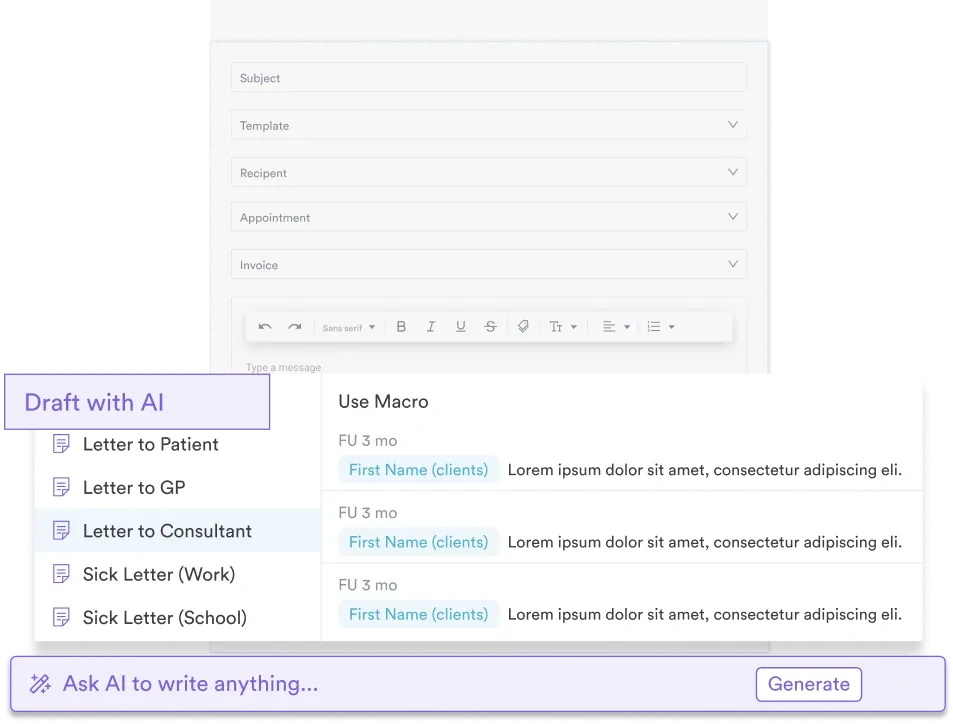

Store completed worksheets securely, track emotional patterns across sessions, and generate clinical documentation, all in one platform.

Both CBT and DBT explicitly integrate anger meters into their treatment protocols, though with different emphases.
In CBT. Therapists help clients test whether their anger intensity predictions match reality, and whether specific coping responses actually reduce escalation.
A client might predict they’ll reach level 8 after a colleague’s criticism, then find on the worksheet that they peaked at level 5 and recovered within minutes using a strategy they built in session. That feedback loop drives cognitive change: “My anger is more manageable than I thought.”
In DBT, the anger meter sits within the distress-tolerance skills module. Clients learn to survive moments of high anger (level 8-10) using crisis survival skills, while building emotion-regulation skills that reduce how often and how intensely anger episodes hit.
The worksheet doubles as a progress-tracking tool across the full DBT program, often completed by group members in parallel to demonstrate shared learning.
Both frameworks treat the anger meter as a skill-building instrument, not a static assessment. Completion happens repeatedly, patterns are analyzed collaboratively, and interventions are refined based on what the data reveals.
Storing and tracking completed anger meter worksheets in practice management systems ensures continuity of care, reduces clinician administrative burden, and creates audit-ready documentation.
A few best practices for integration:
If your practice uses digital forms, clients can complete the worksheet in the patient portal, and each entry is timestamped and linked to the session note automatically. That removes manual transcription and cuts documentation time.
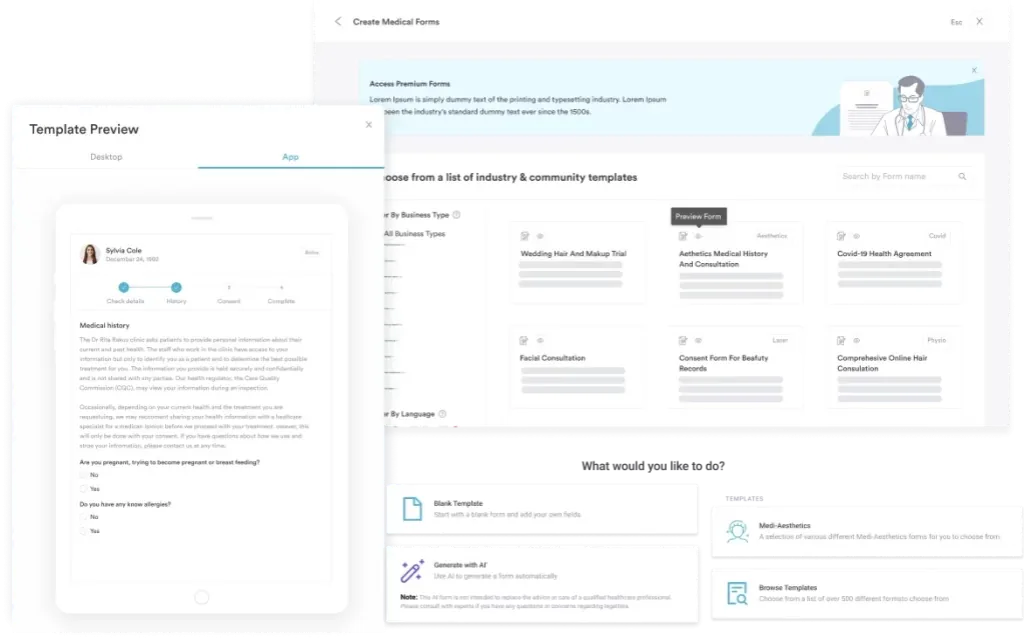
Therapists who track anger meter data across a course of sessions often see measurable progress: lower peak anger, longer intervals between escalations, and more effective coping at mid-range levels. That quantifiable progress strengthens client motivation and helps justify continued treatment to insurance providers.
The anger meter worksheet turns emotion regulation into something you can measure and track. Whether you work in individual therapy, group DBT, school counseling, or substance use treatment, it gives you and your client a shared language for anger intensity, triggers, and coping responses.
Regular completion builds client self-awareness, supports evidence-based treatment planning, and creates documentation that holds up to review. Download the template above, adapt it to your client population, and start tracking patterns today.

Want to measure a client’s sense of belonging? Social Connectedness Scale scores 20 statements on a 6-point scale to measure how integrated a client feels.
Assessing a client’s broader social environment? Social Network Index scores social role participation, network connections, and overall social integration for clinical use.
Running group sessions alongside individual anger work? Group therapy informed consent explains what to include, from confidentiality limits to group rules and boundaries.
An anger meter worksheet is a psychoeducational tool that helps clients identify and track their anger intensity on a numerical scale (typically 1-10), recognize physical warning signs at each level, and develop targeted coping strategies. It is used in therapy, counseling, and educational settings to build emotional awareness and support anger management skill-building.
Therapists guide clients through five steps: establish the scale baseline, map physical sensations at each level, identify triggers, develop coping strategies, and track completion over time. The worksheet becomes a reference tool for discussing anger patterns and refining treatment approaches.
A 5-point scale (often used with children) offers simplicity and is less cognitively demanding. A 10-point scale (typically for adolescents and adults) provides finer-grained measurement and allows clients to identify subtle anger escalations. Therapists choose based on client age, literacy, and clinical need.
Yes. Group members can complete worksheets independently to build individual awareness, then share (at their discretion) to normalize anger experiences and learn from peers’ coping strategies. Anger meters are standard in DBT group skills modules.
Use secure practice management systems with encrypted client portals and audit trails. Digital forms integrated with your EMR ensure HIPAA compliance, automatic timestamping, and easy retrieval for progress analysis or clinical documentation.
Yes. Anger meter and anger thermometer are two names for the same tool. Some versions are drawn as a thermometer or gauge, which is common in worksheets for children, but both rate anger on a numbered scale and map warning signs and coping steps to each level.