Journal prompts for mental health
Journal prompts for mental health are guided questions that help people process ...

2
Last Updated: Oct 13, 2026

An anger triggers diary PTSD worksheet helps clients identify and track anger-inducing situations, thoughts, and physical responses as part of trauma recovery.
Anger dysregulation is a recognized PTSD symptom under DSM-5 Criterion E (alterations in arousal and reactivity), making structured tracking clinically essential.
The worksheet supports evidence-based therapies including Cognitive Processing Therapy (CPT), Prolonged Exposure (PE), and EMDR by documenting triggers between sessions.
With practice management software like Pabau, you can collect, store, and review completed worksheets inside each client’s record.
A structured worksheet for clients to identify, track, and reflect on anger patterns, including trigger identification, warning signs, emotional responses, coping strategies, and session-to-session pattern recognition.
Download templateAn anger triggers diary PTSD worksheet is a clinician-designed tool that helps clients with post-traumatic stress disorder systematically identify and understand anger-related symptoms. Anger in PTSD often feels sudden and overwhelming, but structured tracking reveals patterns, triggers, and personal early warning signs that clients can learn to recognize and manage.
The anger triggers diary PTSD worksheet, sometimes called an anger diary or anger journal. It pairs education with self-monitoring. Clients record the triggering situation, the thoughts and beliefs present, their physical and emotional response, what they did, and what happened afterward.
Under DSM-5 diagnostic criteria, anger dysregulation is a core PTSD symptom falling under Criterion E (alterations in arousal and reactivity). Clinicians often pair the diary with an anger scale questionnaire to help clients notice patterns and build better emotional regulation over time.
Mental health practitioners including psychologists, therapists, counselors, and psychiatrists use this worksheet across multiple client populations. The framework applies broadly to PTSD presentations, though specific populations benefit most:
The worksheet follows a five-step clinical workflow that you introduce during session and assign as structured clinical documentation homework between appointments.
Structured anger tracking produces measurable clinical and operational benefits for both client and practitioner.
In PTSD, anger and irritability are core symptoms of the disorder. The DSM-5 lists them under Criterion E (alterations in arousal and reactivity), recognizing that unprocessed trauma leaves the nervous system in a state of heightened threat detection.
When a PTSD client encounters a trigger (sight, sound, smell, or thought related to the trauma), their amygdala fires before their prefrontal cortex can contextualize the threat. The result: anger floods the body, often with no apparent external cause. The anger triggers diary builds the understanding that supports lasting change.
The worksheet operationalizes this insight: each entry becomes a moment of curiosity rather than shame. “What was the trigger?” leads to “What thought followed?” which leads to “What did my body do?” This sequence helps clients pause between a trigger and their reaction, instead of responding on autopilot.
That pause is easier to rehearse outside an anger episode, while the body is settled. A worksheet on choosing a proactive response gives that rehearsal a structure, asking the reader to catch reactive phrases and rewrite them as choices.
Successful implementation depends on fitting the worksheet into your clinical workflow. Practice management software like Pabau.
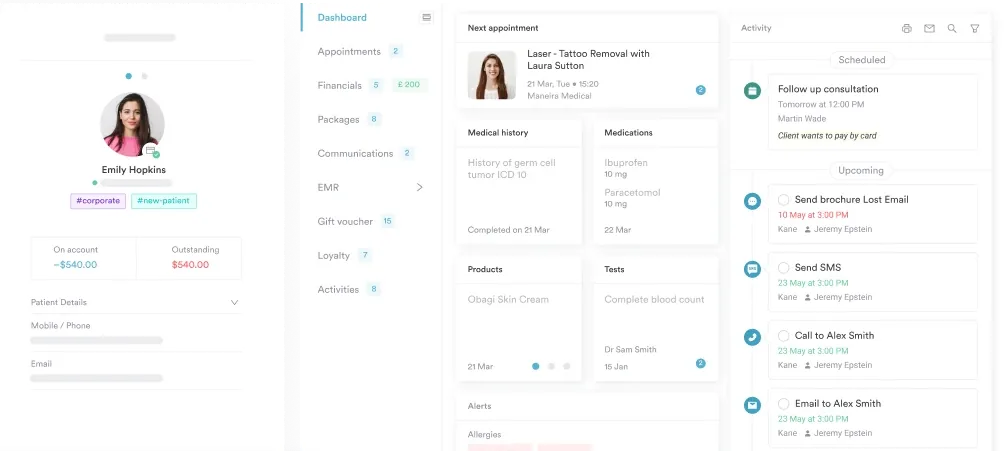
Print and paper worksheets work equally well if your clients prefer analog tracking. The key is consistency: assign it, review it weekly, and explicitly link the insights back to your active treatment interventions. Pairing the diary with a broader intake tool such as a family genogram can help map relational triggers alongside anger patterns. Without that link back to treatment, the worksheet risks becoming busywork rather than a therapeutic tool.
Consider creating a simple rubric: “This week, aim to complete three to four entries. If anger feels too overwhelming to write about, a voice memo or simple check mark counts.” Lowering the barrier to completion increases follow-through in a population already managing significant emotional load.
The anger triggers diary works best when paired with active coping skills. As clients identify their personal warning signs (e.g., jaw clenching, racing thoughts, heat in the chest), teach them concrete techniques to use in that window before anger escalates.
The anger triggers diary PTSD worksheet turns anger from a source of shame into usable clinical information. By helping clients track triggers, thoughts, physical responses, and outcomes, you build a foundation for progress in trauma recovery. Whether you print it, send it digitally.
Want to see how digital forms and client records can streamline worksheet collection, review, and outcome tracking in your practice? Book a demo of Pabau’s clinical documentation tools.
Refusal often signals avoidance or shame. Reframe: “I know anger feels painful to examine. This worksheet helps you understand it rather than be controlled by it.” Start with verbal tracking in session, then transition to written. Never force it — meet the client where they are.
Yes. The structure — trigger, thought, response, outcome — applies to anger dysregulation in any context (depression, anxiety, relationship conflict). However, it is most evidence-based for trauma-related anger as part of a broader trauma treatment protocol.
Most clients use it throughout a course of active trauma-focused therapy, often 8 to 12 weeks. As clients internalize trigger recognition and coping skills, they often phase out written tracking. Some continue longer for relapse prevention.
Minimally. The core structure is evidence-backed. Minor adjustments (e.g., adding a “substances used” column for clients with concurrent substance use disorder — the AA Step 2 worksheet can complement tracking for these clients — or simplifying language for lower literacy) are appropriate. Keep the five core components: trigger, thought, physical response, action, outcome.
In CPT, the anger diary feeds directly into clinical assessment worksheets like thought records and impact statements. In PE, it documents in-vivo homework outcomes and emotional activation patterns. In EMDR, it identifies resources and barriers for processing. Use it as the between-session homework in all three protocols.
Many clients become more aware of their anger patterns within the first few weeks of consistent tracking. When the worksheet is reviewed weekly and paired with active treatment, clients often see reduced anger-related avoidance over time. PTSD symptom severity, including PCL-5 scores, tends to improve alongside better anger regulation, though the pace varies by client.