GLP-1 diet plan
A GLP-1 diet plan is a structured eating framework for patients taking semagluti...

Last Updated: Oct 13, 2026

A schizophrenia care plan has to cover positive symptoms, negative symptoms, and the functional problems that follow both.
Two labels still taught in nursing school, disturbed thought process and disturbed sensory perception, left the NANDA-I taxonomy after the 2018-2020 edition.
Current NANDA-I diagnoses for this population include risk for violence, impaired social interaction, bathing self-care deficit, and ineffective coping.
Interventions center on therapeutic communication, reality orientation, medication monitoring, safety, and psychoeducation for the patient and family.
Practice management software like Pabau keeps the assessment, the care plan, and medication records in one patient file.
A ready-to-use care plan covering the nursing assessment, current NANDA-I diagnoses with their codes, and measurable goals. Every intervention comes with the rationale behind it, plus the antipsychotic monitoring schedule and a discharge checklist.
Download templateA schizophrenia nursing care plan is a clinical document that organizes nursing interventions around one patient’s symptoms, functional deficits, and safety risks. It maps NANDA-approved nursing diagnoses to measurable goals, concrete interventions, and the rationale behind each one. That structure is what keeps care consistent from shift to shift.
The National Institute of Mental Health puts international prevalence of schizophrenia at 0.33% to 0.75% among people not living in institutions.
US estimates run from 0.25% to 0.64%. The condition disrupts thought, perception, emotion, and behavior, so the plan has to handle acute symptoms and long-term recovery at the same time.
It is the working document that turns a psychiatric assessment into daily nursing action. The plan covers five stages: assessment, diagnosis, goal-setting, intervention, and evaluation. Written properly, it converts DSM-5-TR criteria into steps that prevent deterioration, reduce relapse, and support recovery.
The plan earns its keep during acute psychosis and whenever a patient poses a safety risk. Hallucinations, delusions, and disorganized speech shift hour to hour, and so does the risk of self-harm or aggression. Knowing the stages of psychosis helps you time interventions rather than react to them.
Effective use follows a five-step workflow that mirrors the nursing process:
This workflow turns a static form into a living clinical record. Many teams now hold care plans inside mental health practice software so every update is visible to the nurse coming on next.
Two of the six labels below are no longer in the NANDA-I taxonomy. Both were dropped from the 11th edition, published for 2018-2020, and neither appears on the 2021-2023 list. Nursing programs and older care plans still use them, so mark them as legacy wording rather than passing them off as current codes.
Negative symptoms draw less attention than hallucinations, and they are the ones most often missed. An adolescent psychosis screen asks about withdrawal and lost motivation alongside the voices a family would report first.
Assessment feeds everything else. Record mental status, affect and mood, danger to self or others, medication side effects, and functional status at work, school, and home. Keep the wording behavioral and objective, so the next clinician reads an observation rather than an impression.
A psychiatric review of systems keeps that sweep consistent between clinicians. In US practices, the initial diagnostic interview is billed under 90791. The assessment note therefore has to stand up to review as well as guide care.
Interventions run across therapeutic communication, reality orientation, medication education, and psychoeducation. Therapeutic communication means open questions, active listening, and validating the feeling without agreeing with the delusion. Reality orientation corrects a misperception gently, never as a confrontation.
Normalizing hallucinations works better than arguing with them. Telling a patient that many people hear voices, and that there are ways to manage them, lowers fear and resistance to treatment.
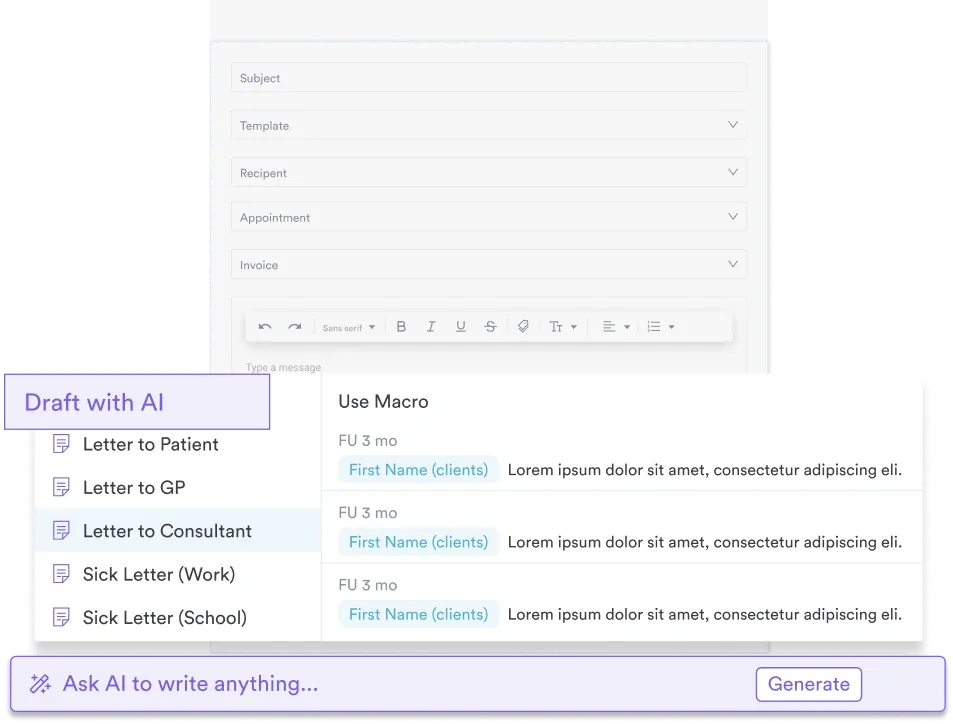
Medication management sits at the center of the plan. First- and second-generation antipsychotics reduce positive symptoms, and nurses watch for tardive dyskinesia, extrapyramidal effects, metabolic change, and adherence problems. AI clinical documentation tools capture that detail while the conversation is still fresh.
Safety protocols cover de-escalation, a calm environment with hazards removed, frequent observation, and as-needed medication where it is appropriate. Suicide screening uses a validated tool. A positive screen triggers one-to-one observation and psychiatrist notification.
Antipsychotics are the first-line pharmacological treatment for schizophrenia. The American Psychiatric Association recommends individualized selection and close monitoring.
Record baseline vital signs and baseline metabolic screening, including glucose and a lipid panel, before the first dose wherever that is possible.
First-generation antipsychotics carry the higher risk of extrapyramidal symptoms such as tremor, rigidity, and akathisia. Second-generation drugs carry metabolic risk instead: weight gain, diabetes, and raised lipids. The plan names the checkpoints for both:
Document what the patient says about side effects, not only what you measure. Adjustments go through the psychiatrist. Coding and documentation for an unspecified presentation sit under F20.9.
Recovery depends on engagement that outlasts the admission. Psychoeducation belongs in the care plan, and it covers five things:
Discharge planning starts at admission, not on the last morning. Before discharge, confirm that prescriptions are filled, follow-up psychiatry is booked, the community mental health referral is complete, and family support is agreed.
Written instructions go home with the patient, and you check that the patient and family can repeat them back. A discharge planning checklist keeps that handover consistent when the unit is busy.
On most units the care plan lives in one place and the evidence behind it lives somewhere else. The assessment is in a paper chart and medication monitoring is on a spreadsheet. The family’s contact notes are on a sticky note at the desk. Handover then depends on whoever remembers.
Practice management software like Pabau keeps all of it in one patient record. Assessment forms, the care plan, treatment notes, and medication reviews attach to the same electronic health record. Digital intake forms feed screening results straight into it.
Automated workflows handle the recurring checkpoints. Weekly extrapyramidal checks and quarterly metabolic labs arrive as tasks against the patient instead of sitting in someone’s memory. Psychiatry practices and inpatient teams use the same records for audit and regulatory review.
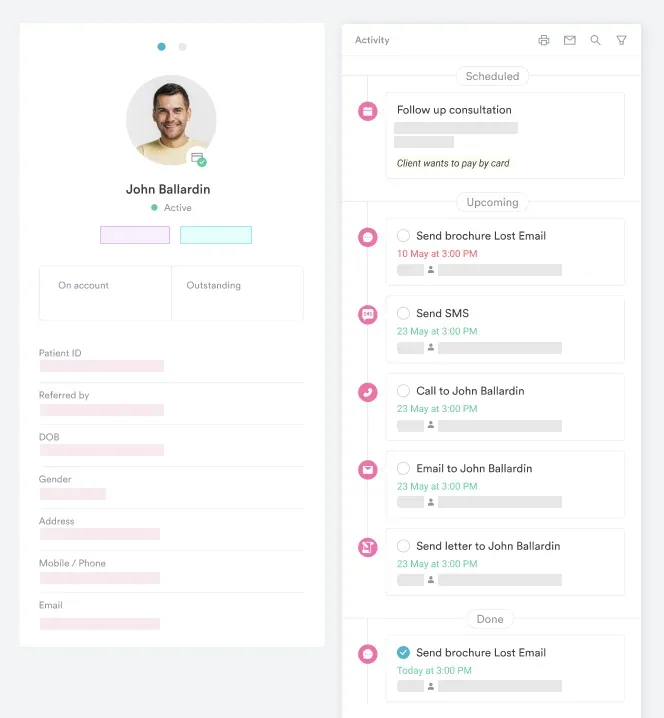

Pabau stores psychiatric assessments, care plans, and medication reviews against the same patient file. Your team picks up a plan mid-shift without hunting for the paperwork behind it.

Two things decide whether a schizophrenia care plan holds up in review. The diagnosis labels have to match the current NANDA-I taxonomy. The interventions have to be specific enough for the next nurse to repeat them exactly.
Copying a template unchanged is the failure mode worth avoiding. The template supplies the structure. Your assessment supplies the related factors, the goals, and the timeline that make the plan belong to this patient.
Most of that work is won or lost in the documentation. Book a demo to see how Pabau keeps psychiatric assessments, care plans, and medication monitoring in one record.

Screening for ADHD with a visual test? ADHD visual test covers visual attention screening, processing speed evaluation, and sustained focus tasks for ADHD diagnosis.
Documenting mental status? Mental status exam template gives you the domains in a fixed order, so nothing gets skipped.
Diagnosing a stress-related adjustment disorder? adjustment disorder DSM-5 criteria translates the DSM-5 framework into a structured checklist for evaluating all five diagnostic criteria.
Managing comorbid anxiety? Anxiety nursing care plan covers the interventions that sit alongside antipsychotic treatment.
Assessing a client’s attachment style? adult attachment scale is an 18-item tool measuring comfort with closeness, reliance on others, and fear of rejection.
Current NANDA-I diagnoses for schizophrenia include risk for violence, impaired social interaction, bathing self-care deficit, and ineffective coping. Each one maps to symptoms you documented and drives specific interventions. Disturbed thought process and disturbed sensory perception are still taught, but NANDA-I retired both after the 2018-2020 edition.
The core five are therapeutic communication, reality orientation, medication monitoring, safety measures, and psychoeducation. Therapeutic communication means active listening and a non-judgmental tone. Safety measures cover de-escalation and environmental controls. Tailor each intervention to the symptoms in front of you and the goals you set with the patient.
Start with baseline vital signs and metabolic labs, including glucose and lipids. Check weekly for extrapyramidal symptoms such as tremor, rigidity, and akathisia during the first four weeks. Review metabolic changes monthly and labs quarterly. The care plan names which parameters to track and how often.
Positive symptoms are excesses or distortions: hallucinations, delusions, disorganized speech, and disorganized behavior. Negative symptoms are deficits, including flat affect, avolition, poverty of speech, and social withdrawal. Care plans address both. Positive symptoms often respond to antipsychotics, while negative symptoms need behavioral support and psychoeducation.
Validate the emotion without confirming the hallucination, for example by saying you understand this is frightening. Identify triggers, teach grounding techniques such as naming five things the patient can see, and use reality testing. Structured distraction helps when it is safe. Never argue with or mock the hallucination.