Piercing consent form
A piercing consent form is a signed record that a client understood a piercing&#...

2
Last Updated: Oct 2, 2026

An ADHD handout for parents is an educational resource that explains attention-deficit/hyperactivity disorder, its three presentation types (inattentive, hyperactive-impulsive, combined), and how families can support children at home.
ADHD affects approximately 11.4% of US children aged 3-17 according to CDC data, making it one of the most common neurodevelopmental disorders, and many parents benefit from structured, evidence-based guidance.
A handout works best when you walk parents through it in the session, not just hand it over. That’s when it answers questions and builds treatment buy-in.
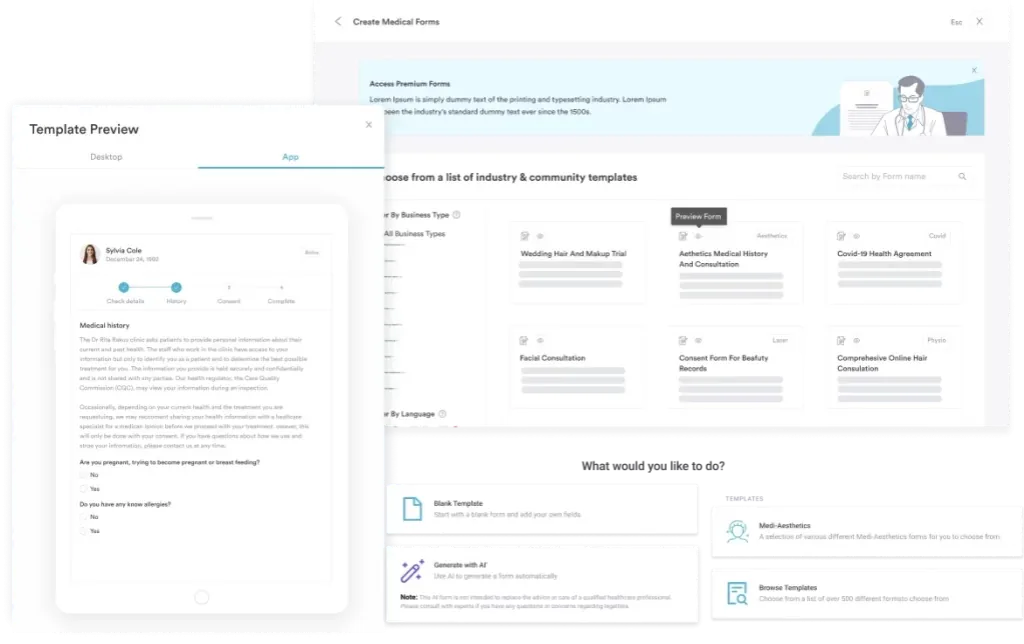
Digital forms and patient portals in Pabau, our practice management software, let you customize, distribute, and track when parents complete your ADHD handout, ensuring the resource reaches and engages families.
A comprehensive educational resource covering ADHD symptoms, the three presentation types per DSM-5, evidence-based parenting strategies, treatment options, and how to create a supportive home environment. Use this template directly with families or customize it for your clinical practice.
Download templateMost ADHD resources online are written for parents to find on their own. This one is built for your practice to hand out. It’s a ready-to-use ADHD handout for parents you can walk a family through in the session, then send home through your patient portal so the information sticks.
An ADHD parent handout only works if parents understand it, so this guide pairs the downloadable template with a short playbook for using it: what to cover on ADHD for parents, how to explain the three presentations, the home strategies worth including, and how to distribute and track it without adding admin.
An ADHD handout for parents is an educational document that practices use to explain Attention-Deficit/Hyperactivity Disorder (ADHD) in plain language. It helps families understand the condition, recognize its three distinct presentations, learn evidence-based management strategies, and know when to seek professional support.
Sometimes called an ADHD fact sheet or an ADHD guide for parents, it prioritizes psychoeducation over diagnosis: building parental understanding so families become partners in treatment rather than passive recipients of a diagnosis.
ADHD is one of the most common neurodevelopmental disorders in children. According to the CDC, approximately 11.4% of US children aged 3-17 have been diagnosed with ADHD, yet many parents remain uncertain about symptoms, treatment options, or how their role at home influences outcomes.
A structured handout answers those questions early, which reduces parental anxiety and improves treatment adherence. The American Academy of Pediatrics (AAP) emphasizes parent education, and parents who understand ADHD as a neurodevelopmental condition rather than a behavioral problem tend to follow through more consistently with both behavioral and pharmacological interventions.
Distributing an ADHD handout for parents through psychology practice software means fewer calls asking basic “what is ADHD?” questions and more appointment time freed up for clinical work. The handout serves as both a clinical tool and a marketing asset, positioning your practice as knowledgeable and family-centered.
Simply handing a parent a document and saying “read this” misses the handout’s therapeutic potential. The most effective handouts follow a structured workflow that integrates the resource into your clinical session and follow-up care.
Structured education is a practical way to strengthen parental compliance with treatment recommendations, and the handout is a simple vehicle to start that conversation.
Mental health practices, pediatric psychology practices, psychiatry offices, and therapy practices all benefit from a ready-made ADHD parent handout. Consider this resource essential if your practice regularly diagnoses or treats children with ADHD (ages 4-18).
Improves informed consent and treatment buy-in. Parents who understand ADHD as a neurodevelopmental condition, not a character flaw or parenting failure, are more likely to follow through with both behavioral strategies and medication. The American Academy of Pediatrics recommends behavior therapy as a first-line treatment for young children with ADHD and encourages parent education at every age.
Reduces appointment time spent on basic definitions. Once parents have read the handout, your appointment time shifts from “What is ADHD?” to “How do we manage it together?” This is a measurable efficiency gain, especially in high-volume practices.
Supports HIPAA-compliant distribution. Your portal setup can also log when families access the handout, giving you confirmation that they received the material.
Strengthens practice credibility and retention. Practices that provide structured educational resources are perceived as more professional and family-centered. Parents appreciate having a take-home reference, and they’re more likely to recommend your practice to other families facing ADHD diagnosis.
Integrates with your workflow. Attach the ADHD handout to your assessment template or auto-send it after an ADHD screening appointment. Automation ensures no family is missed.
Managing educational resources manually, from printing and signing to filing and tracking who received what, consumes hours each month. Book a Pabau demo to see how digital forms and document management let you customize, distribute, and track your ADHD handout for parents automatically. Automating resource distribution saves meaningful admin time and keeps parents more engaged.
One of the most critical pieces of an ADHD handout for parents is explaining that there are three types of ADHD per the DSM-5. Many parents think ADHD means “hyperactive and out of control,” but that represents only one presentation.
Walking families through these distinctions helps them recognize the signs of ADHD in kids who don’t fit that stereotype, see their own child reflected in the diagnosis, and feel less shame.
A strong handout explains these distinctions in child-specific language, then helps parents identify which presentation their child shows. That kind of patient engagement starts with families seeing themselves in the material, not just being told a diagnosis.
The strategies section is where the handout earns its keep. Parents leave an assessment wanting to know what to do differently on Monday morning, so give them specific, ADHD-informed techniques rather than general parenting advice.
Framing these as ADHD parenting skills, not fixes for a “difficult” child, keeps parents motivated when progress is gradual, and gives you a shared vocabulary to return to at every follow-up.
Modern ADHD handouts move away from purely deficit-focused language (“what’s wrong with your child”) and toward neurodiversity-affirming framing (“your child’s brain works differently”). This shift is more than a change in wording. It changes how parents relate to their child’s diagnosis.
Families who adopt a neurodiversity-affirming lens often describe less burnout and a stronger relationship with their child.
Your handout should acknowledge ADHD strengths (creativity, persistence, enthusiasm, the ability to hyperfocus on preferred activities) alongside challenges like emotional dysregulation and time management. Tracking parent satisfaction with treatment approaches helps you refine your handout content and delivery over time.
ADHD rarely travels alone. According to CHADD (Children and Adults with ADHD), more than two-thirds of children with ADHD, about 67%, have at least one coexisting condition.
Common co-occurring conditions include anxiety (up to 30%), oppositional defiant disorder (ODD, about 40%), and a specific learning disorder (up to 50%). ADHD and autism also frequently overlap.
Your handout should include a section on these coexisting conditions without implying causation. A parent might ask: “Does ADHD cause my child to be anxious?” The answer is nuanced. ADHD and anxiety often occur together, but they’re separate conditions requiring separate interventions.

Screening a student’s social and emotional strengths? Devereux Student Strengths Assessment lists all eight competency scales with administration guidance, scoring tables, and interpretation notes.
Looking for additional ADHD assessment frameworks? The Vanderbilt ADHD Rating Scale guide provides step-by-step scoring so you can standardize your screening process.
Need a form for a substance use evaluation? Drug and alcohol evaluation form combines AUDIT, DAST-10, and DSM-5 scoring with what a court or payer expects in the report.
An ADHD handout for parents is one of the simplest, highest-impact tools a mental health or pediatric practice can deploy. It educates families, reduces appointment time spent on basic definitions, and positions parents as active partners in treatment rather than passive recipients of a diagnosis.
The template above is ready to customize and distribute right away. Send it through your patient portal so families receive it securely, and track engagement automatically.
A comprehensive ADHD handout for parents should include a definition of ADHD, the three DSM-5 presentation types, common symptoms in different contexts (home, school, social), evidence-based parenting strategies (behavior charts, consistent routines, positive reinforcement), treatment options (behavioral therapy, medication, school-based accommodations), what co-occurring conditions to watch for, and resources for further support.
Customize by adding your practice name and contact information, adjusting language to match your client population, emphasizing the treatment approaches your practice specializes in (e.g., behavior therapy, coaching, medication management), and tailoring the examples to reflect the age groups you serve (elementary school children vs. adolescents present differently).
Distribute after an initial assessment or diagnosis discussion, during the psychoeducation phase before starting treatment. Walk parents through it in session if possible so you can answer questions and reinforce key points. Send a digital copy via your patient portal afterward so they have a reference at home.
Emailing an educational handout (without personalized medical information) to an unencrypted address does not violate HIPAA. However, using your patient portal or encrypted email is more secure and confirms delivery. Avoid including the child’s name or diagnosis details in the filename or metadata.
Review annually to ensure clinical content reflects current AAP and CDC guidelines. Update examples, resources, and web links as they change. Solicit feedback from parents during appointments and adjust language or content based on frequently asked questions that arise.
Trusted, free options include the CDC, CHADD, and the American Academy of Pediatrics’ HealthyChildren.org. Share these alongside your own template as a downloadable PDF families can save and revisit. It also helps to explain that ADHD is usually managed with behavior strategies and, in some cases, medication. Some families prefer to start with support at home and school before considering it.