Piercing consent form
A piercing consent form is a signed record that a client understood a piercing&#...

4
Last Updated: Oct 2, 2026

An ADHD rating scale (sometimes marketed as an ADHD spectrum test) is a screening tool that measures symptoms of inattention, hyperactivity, and impulsivity across three DSM-5 presentations.
No single scale diagnoses ADHD; clinical evaluation requires multi-method assessment including symptom history, functional impact, and formal neuropsychological testing.
The template covers both child and adult populations, tracks symptom severity, and includes ICD-10 coding (F90.0, F90.1, F90.2, F90.9) for billing and documentation.
Practice management software like Pabau securely stores completed assessments, streamlines multi-rater data collection, and integrates results with client records for continuity of care.
A standardized screening instrument measuring ADHD symptoms across inattention, hyperactivity-impulsivity, and combined presentations. Includes scoring guidance, interpretation notes, and ICD-10 code references for clinical use.
Download templateVanderbilt, Conners, and the ASRS are the rating scales most clinicians reach for first when screening for ADHD. Each one locks you into a single age group, a single rater, or a fixed paper form.
This ADHD rating scale template pulls the same DSM-5 symptom domains into one customizable form. Hand it to a patient, a parent, or a teacher, then fold it straight into a digital intake workflow.
It’s grounded in DSM-5 diagnostic criteria and built for mental health, primary care, and educational settings where ADHD screening is part of standard intake.
Whatever you call it — a rating scale, a spectrum test, or a screening checklist — the job is the same: score inattention, hyperactivity, and impulsivity consistently enough that two different clinicians reach the same read on a patient.
An ADHD rating scale is a screening instrument that systematically scores attention, hyperactivity, and impulse-control symptoms across a range of severity. Unlike a formal diagnosis, which requires neuropsychological assessment, a rating scale flags whether ADHD may be present and whether further evaluation is warranted.
The framework reflects three presentations recognized by the DSM-5: inattentive type (difficulty sustaining focus, organization, and follow-through), hyperactive-impulsive type (restlessness, interrupting, difficulty waiting), and combined type (significant symptoms across both domains).
Severity is scored on a spectrum rather than a binary present/absent classification. That’s why the same kind of instrument sometimes gets marketed as an “ADHD spectrum test”: traits vary in intensity and functional impact from one patient to the next.
The National Institute of Mental Health recognizes ADHD as one of the most common neurodevelopmental disorders, and structured forms in clinical practice improve documentation consistency and reduce the risk of missed diagnostic clues. Rating scales operationalize this principle by anchoring questions to observable behaviors rather than subjective impressions.
The template follows a five-step clinical workflow designed for efficient administration in outpatient settings.
The template is designed for both self-report (patient completes independently) and clinician-administered formats (practitioner reads items and scores based on patient response). Multi-rater versions can include parent or teacher input using identical items to triangulate symptom presence across settings.
Most clinicians already know at least one branded rating scale by name. Here’s how four of the most common ones compare, and where a flexible, customizable template like this one fits alongside them.
Each of these does one job well, but a practice that sees both children and adults ends up juggling several paper forms with different scoring keys.
This template pulls the same core domains — inattention, hyperactivity-impulsivity, and functional impairment — into one structure that works across both populations. Front-desk staff hand out one form instead of four, and every patient gets scored the same way regardless of which named scale a referring provider originally used.
Platforms differ widely in how they handle clinical worksheets; comparing Carepatron competitors shows the gaps quickly.
This template serves mental health professionals, primary care providers, educational psychologists, occupational therapists, and clinical social workers conducting ADHD evaluations. Psychiatrists and psychologists use it as a starting point before detailed neuropsychological assessment. School counselors and educational diagnosticians use it to document ADHD screening referrals within IEP processes. A dedicated ADHD clinic benefits from an intake and documentation system built around that same evaluation workflow.
The template works equally well for child assessment (ages 6+) and adult ADHD evaluation, which is increasingly recognized in women and in people diagnosed later in life.
Standardized data collection: Using an evidence-based template ensures all clinicians in a practice assess ADHD symptoms using the same criteria, improving diagnostic consistency and reducing bias.
Multi-domain coverage: The template covers all symptom domains recognized by the CDC’s ADHD clinical guidance, including inattention, hyperactivity, impulsivity, and emotional dysregulation in some variants. This breadth reduces the risk of missing presentations, especially in underdiagnosed populations.
Informed clinical decision-making: Severity scoring clarifies whether referral for neuropsychological testing, medication consultation, or behavioral intervention is indicated, reducing reliance on subjective judgment alone.
Patient engagement:
ICD-10 code assignment for ADHD follows the same three-presentation structure as the DSM-5 criteria, plus a fourth code for cases that don’t fit a clean presentation:
These codes apply once a diagnosis is confirmed, not at the screening stage. The rating scale result supports the clinical picture that justifies the code, but the code itself belongs in the chart alongside the formal diagnostic write-up.
Recording the presentation-specific code, rather than defaulting to F90.9, matters for claims accuracy, since payers increasingly expect documentation that matches the specific code billed.
An ADHD rating scale is a screening tool, not a diagnostic instrument. No single instrument, whether a behavioral rating scale, a continuous performance test, or a self-report questionnaire, can diagnose ADHD on its own.
Diagnosis requires integrating symptom history, functional impact, developmental history, ruling out medical or psychiatric mimics, and often formal neuropsychological testing that includes objective measures of attention and impulse control.
The screening template identifies patients who warrant further evaluation. A positive screen (high severity ratings) raises the pre-test probability of ADHD and justifies referral for comprehensive assessment. A negative or borderline screen may suggest ADHD isn’t the primary concern, or that symptoms are mild enough to address with behavioral strategies first.
This distinction matters for informed consent: patients should understand that completing the screening tool provides useful clinical information but doesn’t replace formal diagnostic evaluation.
ADHD looks different depending on age, gender, and environment. Children often present with obvious hyperactivity and classroom disruption. Adults, particularly women, may show mostly inattention and executive dysfunction (disorganization, time blindness, difficulty starting tasks) without much motor restlessness, which is a common reason for late or missed diagnosis.
The ADHD rating scale for adults in this template uses the same domain structure as the child version but recalibrates the functional-impact questions. A child’s hyperactivity shows up as fidgeting or leaving their seat, while an adult’s shows up as mental restlessness, difficulty relaxing, or constantly needing to be doing something.
Scoring both age groups against the same domains keeps comparisons meaningful when a patient is reassessed years later.
ADHD frequently co-occurs with anxiety, depression, autism spectrum disorder, learning disabilities, and sensory processing differences. The template includes prompts to flag potential co-occurring presentations so clinicians can pursue targeted assessment if indicated. This prevents misattribution of symptoms (e.g., mistaking anxiety-driven avoidance for ADHD-related task initiation difficulty) and informs treatment planning.
When autism is the flagged concern, assessment moves to a dedicated instrument. The Childhood Autism Rating Scale covers 15 behavioral domains in children, each rated 1 to 4 by a trained clinician.
Healthcare providers working across multiple conditions find that structured templates reduce cognitive load and decrease the chance that co-occurring presentations are overlooked during time-pressured appointments.

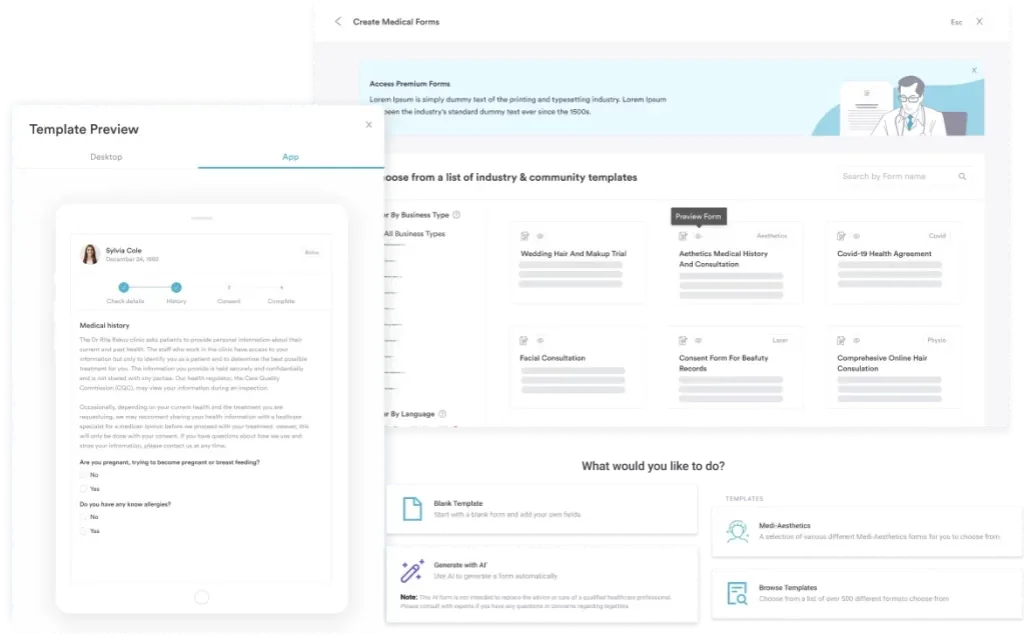
Store completed assessments securely, track multi-rater data, and integrate results into client records-all within one platform.

Scoring means summing item responses within each symptom domain, then checking totals against severity thresholds. Most rating scales use a 0-3 frequency rating (never, sometimes, often, very often) that produces raw scores mapped to clinical cutoffs.
Inattention severity: Scores of 6-11 suggest mild inattentive symptoms; 12-18 indicate moderate impairment; 19+ suggest severe inattention warranting urgent referral for comprehensive evaluation and potential intervention.
Hyperactivity-impulsivity severity: Use the same cutoff structure. Combined elevated scores across both domains point toward combined-presentation ADHD and suggest particularly high functional impairment.
Interpretation considerations: Interpret raw scores alongside functional impact. A patient with moderate inattention scores but no academic or occupational consequences may have milder functional ADHD than someone with identical scores plus significant workplace errors or failed relationships. Context determines whether scores signal a mental health condition requiring intervention.
Patients should understand their scores, what they mean clinically, and what the next steps are. Clear interpretation reduces defensiveness and increases engagement with referrals or treatment recommendations.
ADHD assessments contain sensitive mental health information subject to HIPAA and similar privacy regulations. The template must be stored securely. When assessments are administered digitally or stored in electronic systems, ensure the platform is BAA-compliant and audit logs document who accessed the data and when.
Document the presentation-specific ICD-10 code (see above) in the patient’s clinical record alongside the assessment results, severity rating, and whether the diagnosis was confirmed or deferred pending further evaluation. This documentation supports billing accuracy and provides a clear clinical trail for continuity of care.
An ADHD rating scale template standardizes symptom screening across your clinical team and gives you a structured referral point for patients who need comprehensive evaluation. This free template covers all three DSM-5 presentations, includes severity scoring, and maps to ICD-10 codes for documentation, whether your team calls it a rating scale, a spectrum test, or a screening checklist.
Download the template today and add it to your intake workflow. If you want to digitize assessments and store results alongside client records, book a demo to see how Pabau’s digital forms and client management features handle ADHD screening from first contact through diagnosis confirmation and ongoing care planning.

Assessing a client’s sensory processing patterns? Five senses worksheet covers sensory processing across sight, hearing, touch, smell, and taste, with space for clinician notes.
Need a fast read on a client’s social world? Friendship questionnaire rates 17 statements covering emotional openness, boundaries, shared activities, and handling conflict.
Want a more inclusive intake process? Gender identity quiz gives clinicians a structured way to ask about identity during intake, with a free downloadable template.
An ADHD spectrum test, also called an ADHD rating scale, measures symptom severity across three domains: inattention (difficulty focusing, organizing, following through), hyperactivity-impulsivity (restlessness, interrupting, impatience), and combined presentation. Scores indicate symptom frequency and severity to guide whether further diagnostic evaluation is needed.
No. A screening tool identifies potential ADHD and indicates need for further evaluation, but diagnosis requires comprehensive assessment including symptom history, functional impact, developmental factors, medical rule-outs, and often formal neuropsychological testing. Screening is the first step, not the final diagnosis.
Yes. The template includes age-calibrated items and functional domain questions applicable to both pediatric and adult assessment. Items and interpretation may be adjusted to reflect developmental stage (e.g., school-based functioning for children, occupational/relationship impacts for adults).
ICD-10 codes for ADHD include F90.0 (predominantly inattentive type), F90.1 (predominantly hyperactive-impulsive type), F90.2 (combined presentation), and F90.9 (unspecified). These codes are used for documentation and billing when ADHD diagnosis is confirmed following formal assessment.
Yes. Sharing results with clear explanation of what scores mean clinically, which domains show concern, and what next steps are recommended builds patient understanding and engagement. Avoid unexplained jargon; explain severity ratings in terms of functional impact and recommended interventions.
This page has a free, downloadable ADHD rating scale template covering all three DSM-5 presentations, scoring guidance, and ICD-10 codes. If you need a specific validated instrument instead, like the Vanderbilt scale for children or the ASRS for adults, those are available directly from their publishers, but this template works as a single customizable form across both populations.