

CCSD code G5100: Bypass of duodenum billing guide
CCSD code G5100 bills a bypass that leaves the duodenum in place CCSD code G5100...

Last Updated: Oct 16, 2026
S9542 is the HCPCS Level II code for home injectable therapy, not otherwise classified, including administrative services, professional pharmacy services, care coordination, and all necessary supplies and equipment (drugs and nursing visits coded separately), per diem.
Let Pabau's smart automation suggest the right codes, reduce claim denials, and keep your practice compliant—effortlessly.
Automate repetitive tasks and focus on what matters most—your patients.
Reduce coding errors and ensure compliance with the latest regulations.
Clean claims, fewer denials, and faster reimbursements.
Powerful insights and reporting to help your practice thrive.
HIPAA compliant SOC 2 certified GDPR-compliant Trusted by 4,000+ clinics worldwide

HCPCS code S9542 covers home injectable therapy not otherwise classified, including administrative services, pharmacy services, care coordination, and supplies, billed per diem.
Use S9542 only when no more specific per diem S-code applies – it is a true NOC fallback, not a default billing choice.
S9542 is not a Medicare-payable code; coverage depends entirely on commercial payer contracts and individual state Medicaid programs.
Pabau’s claims management software helps home infusion providers track per diem billing cycles, apply modifiers correctly, and reduce claim denials.
HCPCS code S9542 describes home injectable therapy that cannot be billed under a more specific per diem S-code. The official code descriptor is:
S9542: Home injectable therapy, not otherwise classified, including administrative services, professional pharmacy services, care coordination, and all necessary supplies and equipment (drugs and nursing visits coded separately), per diem.
S9542 sits within the HCPCS Level II S-code range (S9490-S9810), which CMS classifies as temporary codes for commercial payers. S-codes are maintained by commercial insurers and managed care organizations, not by CMS for Medicare fee schedule purposes.
The “not otherwise classified” (NOC) designation is the defining feature. It signals that S9542 is a residual code – used only when no named injectable therapy code in the S9490-S9810 range accurately describes the service being rendered.
Per diem billing means one unit of S9542 covers all eligible services rendered on a single calendar day. Providers bill one unit per day of active therapy – not per infusion episode, per bag, or per nursing visit. Days when no service is rendered are not billed.
The per diem bundle includes administrative coordination, professional pharmacy oversight, care management, and necessary supplies. Drugs themselves and nursing visits are explicitly excluded from the per diem and must be billed separately using appropriate drug codes (typically J-codes or NDC numbers) and nursing visit codes.
The same per diem logic underlies other home infusion S-codes.
Understanding the S9542 bundle prevents both undercoding (missing billable components) and overbundling (rolling in separately billable services). The table below summarizes what is and isn’t included in the per diem.
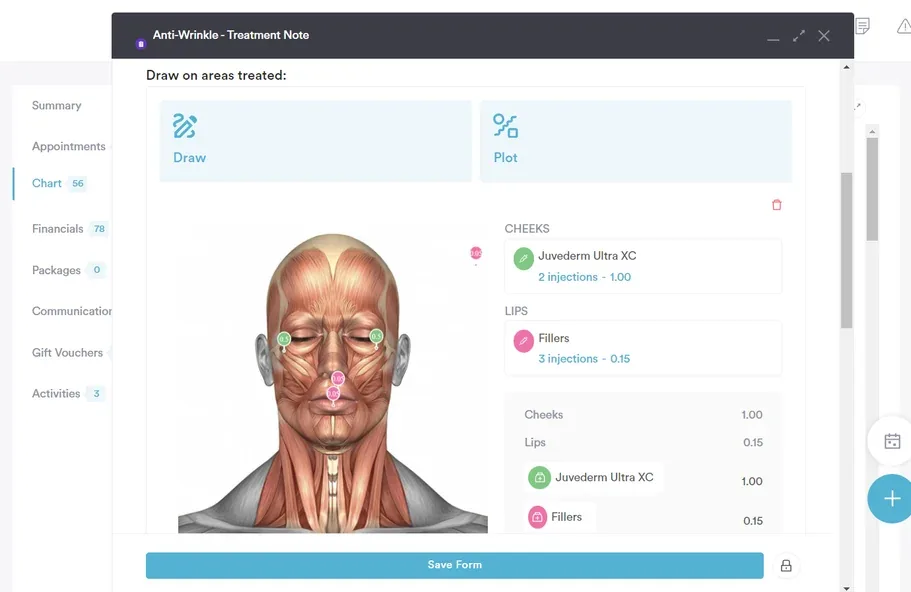
Practices managing complex home infusion patients benefit from structured digital intake and treatment documentation that captures service components at the point of care – making it straightforward to separate per diem bundled services from separately billable line items at claim submission.
The most expensive S9542 billing mistake is using this NOC code when a specific per diem code already exists for the therapy. According to the NHIA National Coding Standard for Home Infusion Claims, S9542 should only be used for miscellaneous injectable therapies not otherwise described by more specific per diem S-codes.
Before reaching for HCPCS code S9542, billing staff should systematically check whether the administered injectable therapy has its own named code. Growth hormone injections, for example, are reported under S9558, not S9542.
Route matters too: subcutaneous or intramuscular chemotherapy administration uses an entirely different code family.
Providers running home IV and injectable therapy programs should maintain an internal crosswalk mapping each therapy protocol to the correct S-code. When the protocol doesn’t match any named code, S9542 is the appropriate fallback.
Before billing S9542, run through every code in the S9490-S9810 range. If no specific injectable therapy code describes the treatment, document that rationale in the patient record – this protects the claim if a payer audits the NOC designation.
Our primer on practice management software explains how systems keep unusual code sets like these organized.
Clean S9542 claims rest on three foundations: correct unit counting, complete line-item separation, and adequate supporting documentation. Missing any one of these is the primary cause of denial patterns in home infusion billing.
Bill one unit of S9542 per calendar day the patient receives active home injectable therapy. If therapy runs for 14 days, submit 14 units – either as daily claims or as a span billing claim depending on payer requirements. Always confirm whether the payer requires daily claim submission or accepts span billing before submitting.
Per diem counting differs from surgical billing, where one fee covers a set follow-up window. CPT code 42830, for example, carries a 90-day Medicare global period that absorbs routine post-operative visits.
Related per diem drug administration codes.
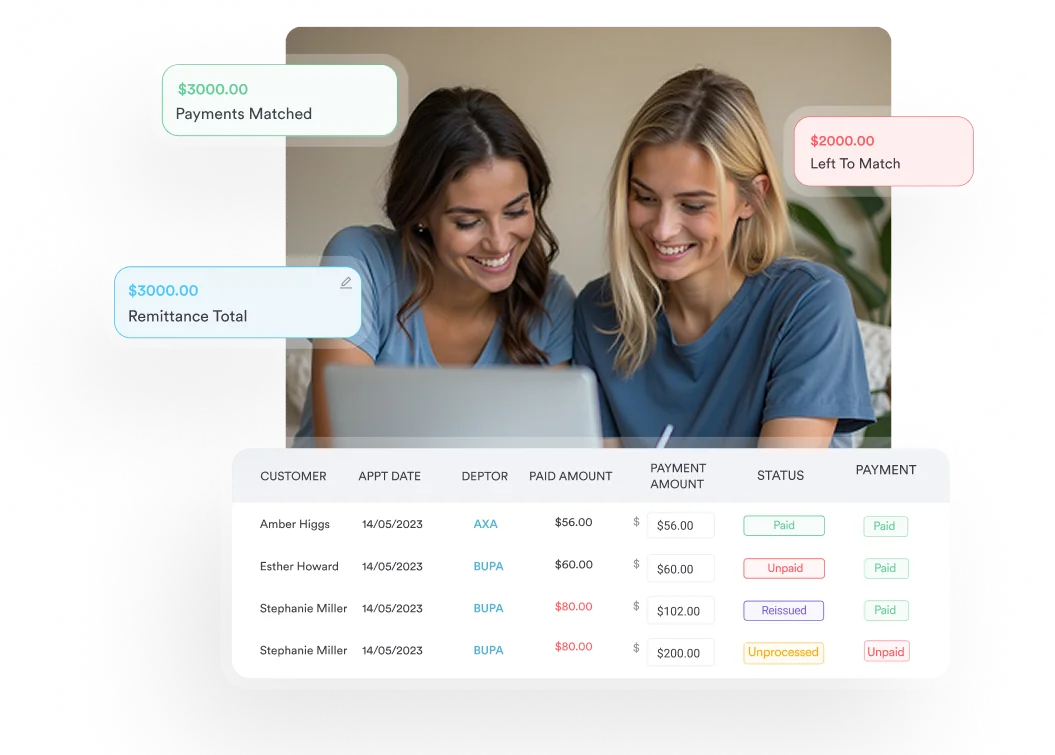
Using Pabau’s claims management software, home infusion providers can track per diem therapy cycles against patient records, reducing the risk of over- or under-billing for multi-day courses.
Every S9542 claim needs documentation that supports both the medical necessity of home injectable therapy and the NOC designation. Minimum documentation includes:
Payers differ on how much of this documentation must be submitted with the initial claim versus held on file for audit. Providers managing home infusion therapy best practices should establish a documentation checklist that maps directly to payer-specific requirements, rather than using a generic template.
Structured visit-level templates.
The S9542 descriptor is explicit: drugs and nursing visits are coded separately. Drug costs are typically reported using the appropriate J-code or NDC number on a separate claim line, with units reflecting actual dosage dispensed – for example.
Skilled nursing visits are billed using the appropriate home visit codes. Related home-based per diem services. Rolling these costs into the per diem is a bundling error that creates both claim denial risk and compliance exposure.
Providers can reduce this risk by using prescription management tools that generate separate dispensing records for each drug component, keeping them audit-ready and clearly separated from per diem administrative services.
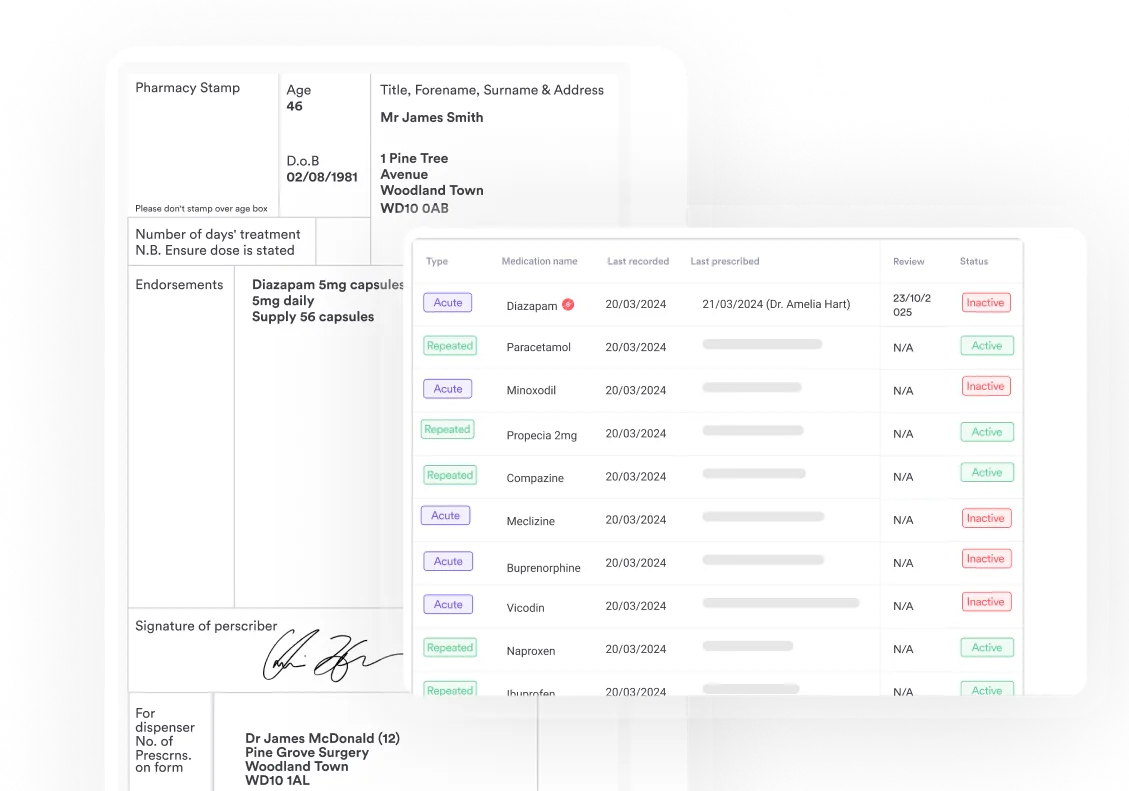

Pabau’s claims management tools help home infusion and injectable therapy providers track per diem cycles, separate drug and nursing costs, and submit cleaner claims with less manual effort.

Modifier usage for S9542 follows the NHIA coding standard framework, which defines three modifiers relevant to home infusion per diem codes. Applying the wrong modifier – or omitting a required one – is a common reason payers adjust or deny S9542 claims.
When a patient receives multiple concurrent home infusion therapies on the same day, each therapy is billed separately using its appropriate per diem S-code. The primary (highest-reimbursed) therapy is billed without a concurrent modifier.
The second therapy gets -SH appended, and any third or subsequent therapies get -SJ. Payers typically reimburse concurrent therapies at reduced rates – confirm the specific rate schedule with each payer before assuming full per diem reimbursement for all concurrent lines.
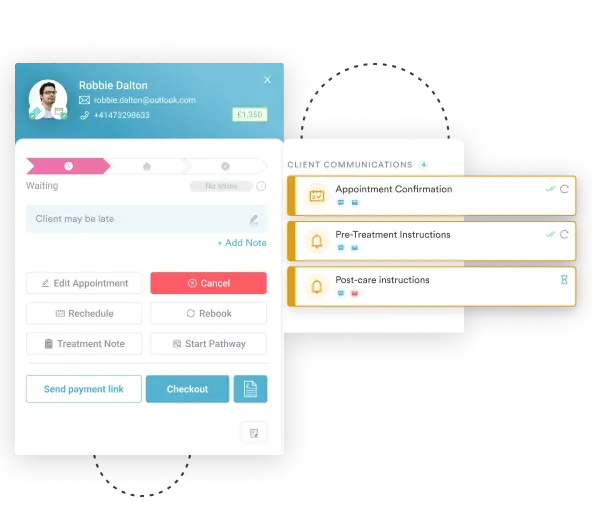
Providers managing concurrent therapy patients can use automated billing workflows to flag multi-therapy days and prompt the billing team to apply concurrent modifiers correctly, reducing the manual review burden during high-volume periods.
Confirm concurrent therapy modifier rates with each payer contract before assuming full reimbursement. Many commercial payers pay the second concurrent therapy at 50-75% of the primary per diem rate, and the third and beyond at 25-50%. Surprises here create cash flow shortfalls that compound over long therapy courses.
Payer acceptance of S9542 is the most variable element of this code’s billing lifecycle. Coverage rules differ significantly across Medicare, Medicaid, and commercial plans – and assuming uniform coverage is a reliable path to denials.
HCPCS code S9542 is not a Medicare-payable code. S-codes are classified as commercial payer temporary codes and do not appear on the Medicare Physician Fee Schedule.
CGS Medicare’s published list of bundled and non-payable HCPCS codes includes S9542 along with the full home therapy S-code range. Providers billing Medicare for home injectable therapy should use the appropriate Medicare-covered codes rather than S9542.
Medicaid coverage of S9542 varies by state. Some state programs accept S-codes for home infusion therapy billing; others use state-specific or alternative code sets.
MassHealth, for example, lists S9542 in its DME and home health coverage guidelines, indicating acceptance in that state program. Providers operating across multiple states – particularly those managing mobile IV and injectable therapy operations – need payer-specific coverage matrices rather than a single billing approach.
Commercial payer acceptance of HCPCS code S9542 is the strongest and most consistent. UnitedHealthcare includes S9542 in its home health and home infusion coverage policies. Blue Cross Blue Shield of Texas recognizes S9542 in its clinical payment and coding policy CPCP019 for infusion services.
Coverage, prior authorization requirements, and reimbursement rates still vary by plan – providers should verify each payer contract and obtain prior authorization before initiating therapy when required.
Using the compliance management tools built into practice management platforms helps billing teams maintain payer-specific coverage rules and prior authorization checklists without relying on institutional memory. This is especially important for providers managing diverse injectable therapy caseloads where each patient may have different payer requirements.
S9542 claims are most commonly denied for four reasons:
Providers reviewing home infusion intake documentation and claim submission workflows often find denial patterns cluster around a small number of recurring coding errors – fixing the root cause in the workflow eliminates entire categories of denials rather than addressing each one individually. The same root-cause approach applies broadly.
HCPCS code S9542 requires deliberate use in home infusion billing. It is a residual code for injectable therapies that genuinely don’t fit any named per diem S-code, not a default billing choice.
Used correctly, with complete documentation, accurate modifier application, and verified payer coverage, S9542 supports clean claims and predictable reimbursement for complex home therapy cases.
Pabau’s claims management software helps home infusion and injectable therapy providers build structured billing workflows that reduce per diem coding errors, track modifier requirements, and keep documentation audit-ready. To see how Pabau handles home infusion billing workflows.

Billing anesthesia for a burr hole procedure? Burr hole anesthesia billing guide explains the intracranial burr hole descriptor coders use for anesthesia claims.
Billing anesthesia for a skull fracture repair? Cranioplasty anesthesia billing guide covers anesthesia billing for cranioplasty and elevation of a depressed skull fracture.
Billing anesthesia for a shunt procedure? CSF shunt anesthesia billing guide covers base units, modifiers, and ICD-10 pairings for shunt placement anesthesia claims.
HCPCS code S9542 covers home injectable therapy not otherwise classified, billed per diem. The per diem bundle includes administrative services, professional pharmacy services, care coordination, and all necessary supplies and equipment. Drugs and nursing visits are explicitly excluded from the per diem rate and must be billed separately using appropriate J-codes and visit codes.
S9542 should only be used when no more specific per diem S-code in the S9490-S9810 range accurately describes the injectable therapy being administered. If a named code exists for the therapy – such as S9558 for growth hormone – that specific code must be used instead. Using S9542 as a default rather than a true fallback is a common audit trigger.
No. S9542 is not a Medicare-payable code. S-codes are designated as temporary commercial payer codes and are not included on the Medicare Physician Fee Schedule. Providers billing Medicare for home injectable therapy services should use Medicare-covered alternatives rather than S9542.
Three modifiers apply to S9542 per the NHIA coding standard: -SS (service rendered in the provider’s infusion suite rather than the patient’s home), -SH (second concurrent home infusion therapy on the same day), and -SJ (third or additional concurrent home infusion therapy on the same day). Payer-specific rules govern which modifiers are required and how they affect reimbursement rates.
Both are NOC per diem codes for home therapy not otherwise classified, but they differ by route of administration. S9379 is the NOC code for home infusion therapy delivered via IV line, implanted pump, or IV push when no more specific code applies. S9542 is the NOC code for home injectable therapy delivered via subcutaneous or intramuscular (SubQ/IM) injection when no more specific code applies. Providers should select the code that matches the actual route of administration.
Commercial payers are the primary users of S-codes. UnitedHealthcare and Blue Cross Blue Shield of Texas both recognize S9542 in their home infusion coverage policies. Medicaid acceptance varies by state – some state programs include S9542; others use alternative codes. Medicare does not accept S9542. Always verify coverage with the specific payer and plan before submitting claims.



