

HCPCS code E0198: Water pressure pad billing guide
HCPCS code E0198 is a water pad for a standard mattress HCPCS code E0198 is the ...

Last Updated: Oct 13, 2026
J9267 is the HCPCS Level II code for injection, paclitaxel, 1 mg.
Paclitaxel claims fail for a small set of repeatable reasons. Units get taken from the vial size instead of the dose. The NDC is left off the claim. J9264 goes on the form when J9267 was the drug in the bag.
Let Pabau's smart automation suggest the right codes, reduce claim denials, and keep your practice compliant—effortlessly.
Automate repetitive tasks and focus on what matters most—your patients.
Reduce coding errors and ensure compliance with the latest regulations.
Clean claims, fewer denials, and faster reimbursements.
Powerful insights and reporting to help your practice thrive.
HIPAA compliant SOC 2 certified GDPR-compliant Trusted by 4,000+ clinics worldwide

HCPCS Code J9267 covers conventional paclitaxel (Taxol) and is billed at 1 mg per unit.
Units match the dose in milligrams, so a 175 mg infusion is billed as 175 units.
J9264 covers protein-bound paclitaxel (Abraxane) and is never a substitute for J9267.
CMS retired J9258 and J9259, so every protein-bound paclitaxel product now bills under J9264.
Conventional paclitaxel ships in multi-dose vials, so the JW and JZ wastage modifiers do not apply.
Practice management software like Pabau ties the dose, NDC, and diagnosis to the claim before it goes out.
HCPCS Code J9267 is a Level II code published by the Centers for Medicare and Medicaid Services (CMS). It reports an injection of paclitaxel at a billing unit of 1 mg. The official descriptor is: Injection, paclitaxel, 1 mg.
The code sits in the J9000-J9999 range reserved for chemotherapy drugs. It covers conventional, solvent-based paclitaxel only. Protein-bound paclitaxel has its own code, J9264.
Taxol was the original brand name for the solvent-based formulation, so the Taxol J code and J9267 are the same thing. CMS reviews and updates HCPCS Level II codes every year.
Conventional paclitaxel is medically necessary for the four oncology indications the FDA has approved. Each one maps to ICD-10-CM diagnosis codes that CMS accepts as evidence of medical necessity. A claim without a covered diagnosis code is denied, even when the drug was correctly administered.
Coverage criteria vary by Medicare Administrative Contractor (MAC) jurisdiction. Check that the patient’s indication and line of therapy match the Local Coverage Determination (LCD) in effect for your region before you submit. Strong clinical documentation at the point of care makes that check quick. Common claim denial codes repeat by specialty, so the pattern is worth reading before reworking. A paper claim is scanned before it is read, so alignment and legibility affect whether it processes. Common claim denial codes repeat by specialty, so the pattern is worth reading before reworking. A paper claim is scanned before it is read, so alignment and legibility affect whether it processes.
J9267 covers conventional, solvent-based paclitaxel and J9264 covers the protein-bound form. Confusing the two is the most common error in paclitaxel billing. The drugs are chemically distinct, and neither one can stand in for the other at the chair or on a claim.
Billing J9264 when J9267 was administered triggers an automatic denial. It can also read as upcoding if the swap raises the payment. Verify the drug name, the NDC, and the physician order before you pick the code.
J9267 is billed at 1 mg per unit, so the number of units on the claim equals the total dose in milligrams.
Formula: Units = Total dose administered (mg) / 1 mg per unit
Bill the dose administered, not the vial size. If 175 mg is drawn from a 300 mg vial and infused, bill 175 units. Rounding up to the vial size is one of the fastest ways to attract a post-payment review.
Record the dose in milligrams in the administration note at the same moment it goes on the claim. A mismatch between the medical record and the claimed units is a top reason J9267 claims get flagged in post-payment review.
The JW and JZ modifiers do not belong on most conventional paclitaxel claims. CMS limits both modifiers to single-dose containers and single-use packages, and paclitaxel injection is supplied in multi-dose vials.
JW reports the discarded amount from a single-dose container. JZ attests that nothing was discarded. Neither has a role when one vial can legitimately serve more than one patient. In that situation Medicare pays only for the milligrams that reach the patient.
The distinction matters in practices that bill both formulations. Abraxane comes in a single-dose vial, so J9264 claims do need JZ when nothing is discarded, and JW when some is. Carrying that same habit over to J9267 puts an unsupported modifier on the claim.
Check the package insert for the product your pharmacy stocks. Vial presentation decides whether the modifiers belong on the claim, not the drug name.
Medicare pays HCPCS Code J9267 under the Average Sales Price (ASP) methodology. Physician offices and other non-facility settings are paid at ASP plus 6%. Hospital outpatient departments are paid under the Outpatient Prospective Payment System (OPPS).
CMS updates ASP pricing every quarter. Each quarter’s rate reflects the weighted average sales price manufacturers reported for the prior quarter, plus the add-on. To find the current payment amount, open the CMS ASP pricing files and look up J9267. A rate from last quarter is never safe to reuse.
The 6% add-on is meant to cover acquisition and handling. What a practice pays for the drug depends on its agreement with a group purchasing organization (GPO) or specialty distributor.
Buy below ASP and the spread becomes margin. Buy above it and the practice absorbs a loss on every infusion. Model your own acquisition cost against the current ASP before committing to a buy-and-bill arrangement for paclitaxel.
Every J9267 claim needs at least one ICD-10-CM diagnosis code that establishes medical necessity. The LCDs published by each MAC list which codes are covered for paclitaxel. The table below shows commonly accepted codes, and you should verify them against your MAC’s current LCD before billing.
A diagnosis code outside the covered list draws a medical necessity denial. That denial is hard to appeal unless the clinical picture clearly falls inside a covered indication. Capturing the diagnosis at order entry, rather than at billing, prevents most of them.
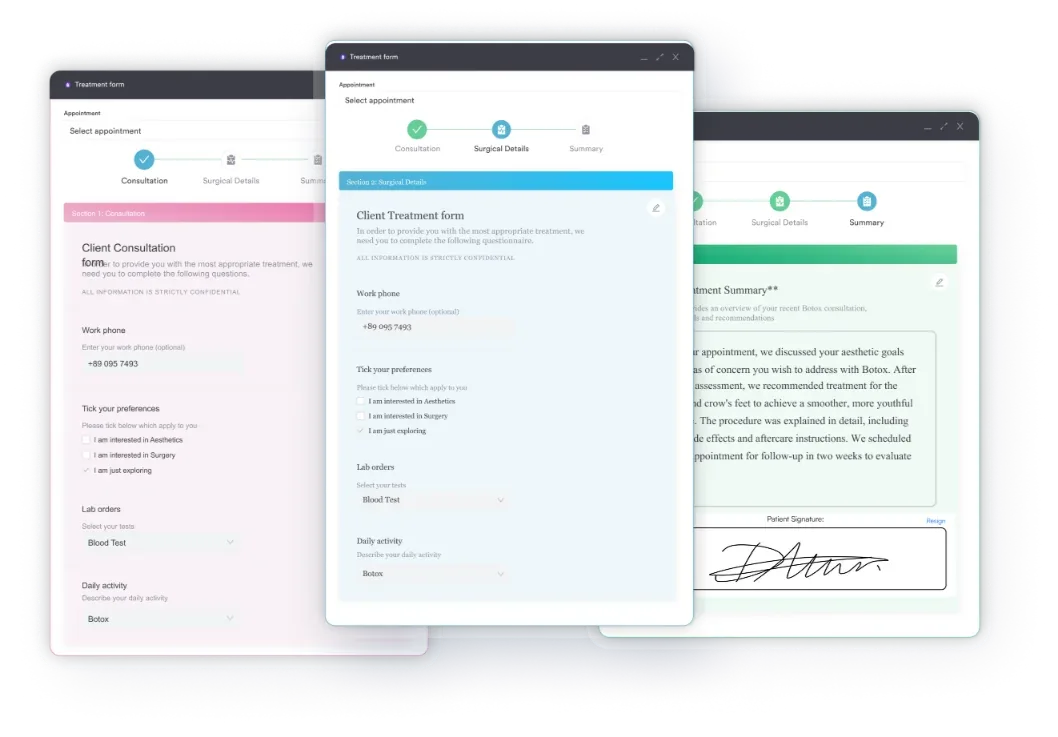
Practice management software like Pabau can capture that context much earlier. Its digital intake forms record the diagnosis at the point of consent, so the coder is not reconstructing it from the chart weeks later.
CMS expects a defined set of documentation elements behind every J9267 claim. Missing one element is enough to lose the claim, either at adjudication or at recoupment. The checklist below reflects Medicare Claims Processing Manual guidance and LCD requirements.
CMS revises the Level II code set every January, so run an HCPCS code lookup on the CMS site before you submit. That check is what catches a retired J-code still sitting in your charge master.
A missing NDC is a common cause of administrative denials on J9267. The number has to appear in the claim field format your clearinghouse and payer expect. HIPAA-compliant documentation workflows that attach the NDC and dose at drug preparation stop it slipping through.
Smaller oncology groups feel this most, because one person often owns both the chart and the claim. An EMR for small practices that carries the administration note straight into the claim removes that handoff.
Prior authorization: Medicare Part B generally does not require prior authorization for paclitaxel. Commercial payers and Medicaid managed care plans almost always do. Verify requirements with each payer and each plan year, since they change annually.
A commercial prior authorization request usually asks for four things:
Gathering all four before the first infusion is booked saves a rescheduled chair. A payer that wants the clinical reasoning in writing will usually accept a medical necessity letter from the ordering physician.
Under buy-and-bill, the practice purchases paclitaxel directly, administers it in-office, and bills the payer with J9267 to recover the drug cost plus the ASP add-on.
The J code for paclitaxel depends on which formulation the pharmacy stocked. J9267 covers the conventional, solvent-based product, and J9264 covers protein-bound Abraxane. Purchasing decides the code long before the claim is built.
The core billing sequence runs like this:
Inventory is the operational risk here. Prepared paclitaxel has a limited shelf life, and a mistimed order ties up cash in a drug that expires unused. The economics only hold when purchasing, administration, and claims stay connected.
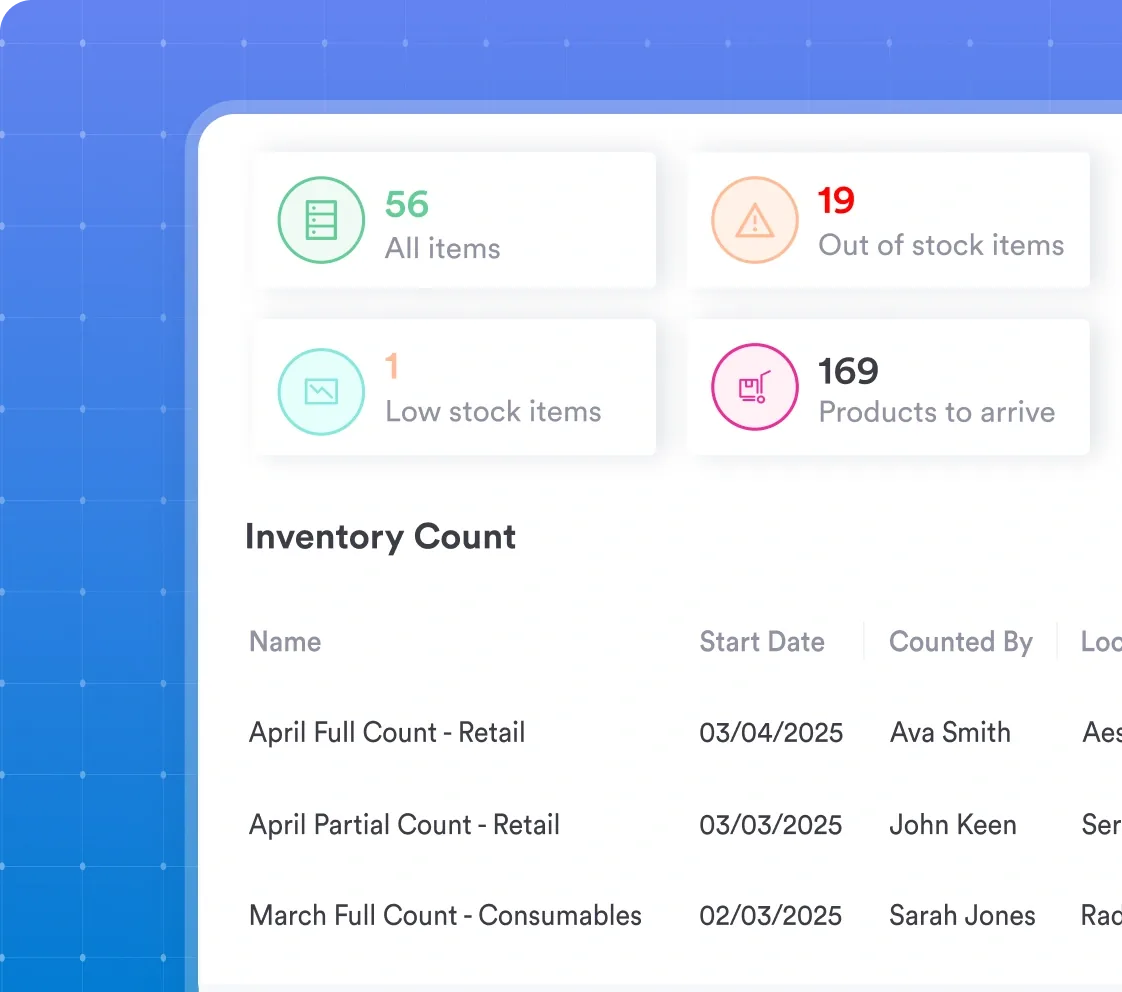
Many oncology groups run their chemotherapy suite on dedicated infusion center software for that reason. Pabau’s inventory management software tracks vial usage against the treatment note and keeps the records an auditor will ask for.
Paclitaxel billing runs on four live codes. J9267 or J9264 reports the drug, and 96413 and 96415 report the infusion time. Two product-specific codes, J9258 and J9259, have been retired and will now be rejected.
The table below puts the whole paclitaxel family side by side, including the two codes that no longer bill.
Both retired codes existed for one reason. The FDA had not yet rated those two products as equivalent to Abraxane, so CMS gave each its own code. Once the ratings changed, CMS folded them back into J9264.
Teva’s code went first, on October 1, 2024. American Regent’s followed on January 1, 2025. If either line is still sitting in your charge master, the claims built from it will deny on submission.
J9267 also travels with the administration codes for the infusion itself. The table below covers the pairings that come up most in paclitaxel billing. The AAPC HCPCS lookup is a widely used reference for the full code set.
Supportive care drugs given on the same day carry their own codes, including J1442 and including J1442 and J0780. Filgrastim and prochlorperazine are billed separately from the chemotherapy drug and from the administration codes.
Paclitaxel suppresses the bone marrow, so a same-day antifungal billed under J1450 or a red cell transfusion billed under P9021 is not unusual. Each carries its own units and its own medical necessity documentation.
Never bill J9267 without an administration code. A drug code submitted on its own will be denied. The administration code is what accounts for the clinical encounter and the monitoring work during the infusion.
These are the denial patterns oncology billing teams hit most often. Each one has a check that prevents it, and every check happens before the claim leaves the building.
A pre-submission review catches most of these before the claim goes out. Automated workflows can run those checks in the background while the chart is still open.
In many oncology practices that verification happens after the fact. The chart is closed and the patient has gone home. A coder is then emailing the infusion nurse to confirm what went into the bag, and how much of it was used.
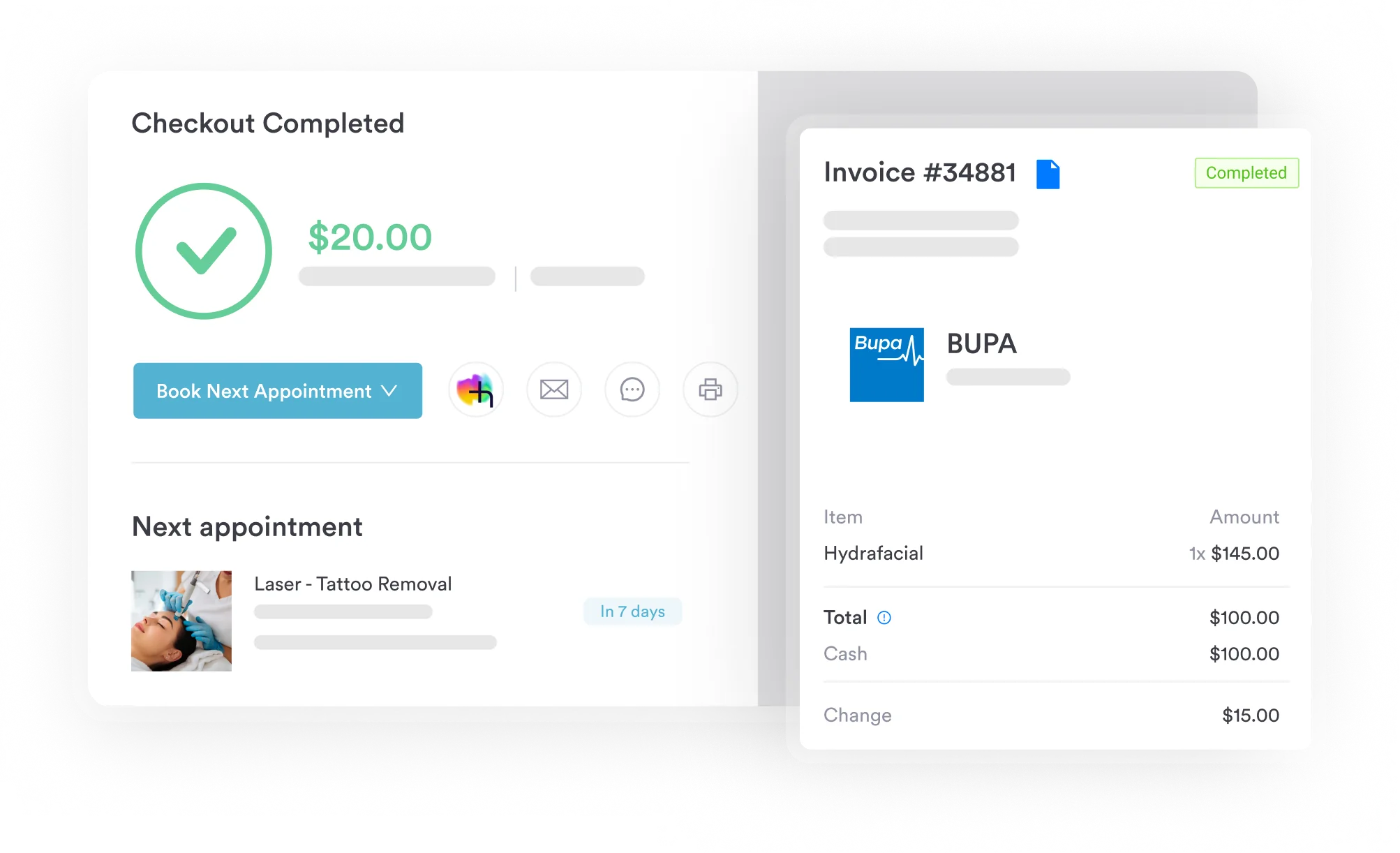
Pabau’s claims management software moves that verification to the point of preparation. The order, the dose in milligrams, the NDC from the vial label, and the covered diagnosis all attach to one record.
That record is what turns each denial cause above into a check the claim has to clear first:
Teams get fewer round trips between clinical and billing staff, and fewer claims parked while someone hunts for a number. Scheduling, records, inventory, and claims sit in one system, which is the broader case for practice management software in an infusion practice.
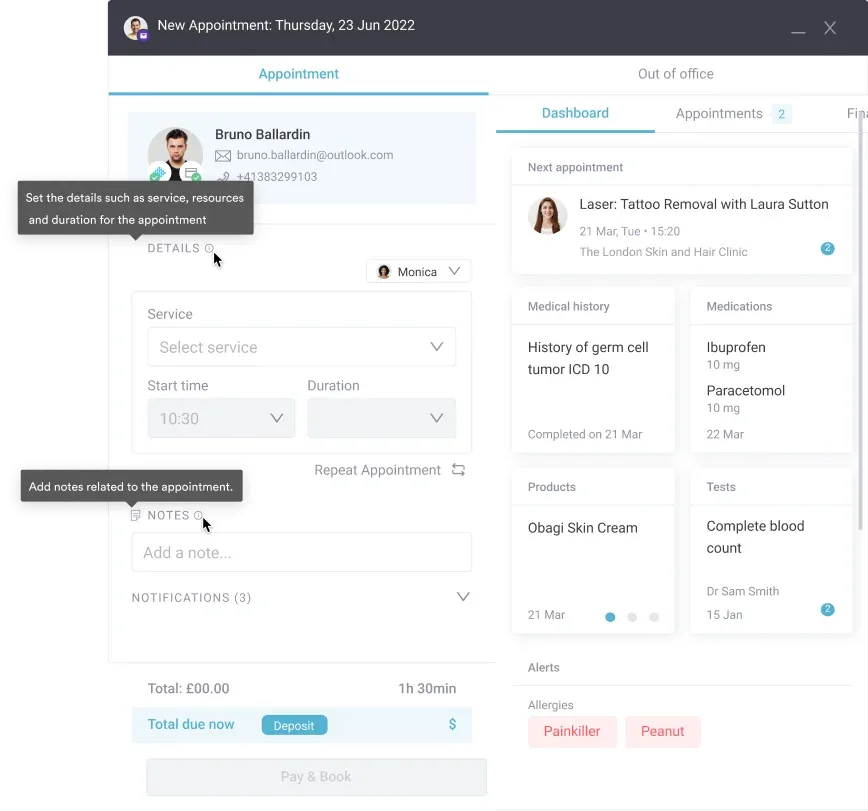

Pabau attaches the drug units, the NDC, and the covered diagnosis to the record at the point of administration. Your billing team submits from complete information instead of chasing it.

Paclitaxel billing rewards a habit more than a rulebook. Practices that confirm the drug, dose, NDC, and diagnosis while the vial is still in hand rarely see a J9267 denial. Practices that confirm at billing time see them every month.
The code set moves too. Two protein-bound codes disappeared three months apart, so a charge master nobody reviews will eventually bill something that no longer exists.
The trade-off worth remembering sits on the money side. Buy-and-bill only pays when your acquisition cost stays below ASP, and that margin shifts every quarter. Re-check it as often as you re-check the rate.
Get the workflow right and the coding takes care of itself. Book a demo to see how Pabau keeps drug units, NDCs, and diagnosis codes attached to the claim from the moment of administration.

Billing another Part B injectable by the unit? J0895 walks through the same dose-to-units math for a different infused drug.
Want a contrast with a different unit size? J1250 is another Part B injectable, billed per 250 mg rather than per milligram.
Coding a severe corrosion injury? Corrosion TBSA coding guide explains why this code takes no seventh character, unlike most codes in the injury chapter.
Coding a drug poisoning case? ANS drug poisoning coding guide covers the seventh character D used for a subsequent encounter during recovery from self-harm poisoning.
Billing the equipment as well as the drug? K0455 covers how an external infusion pump is coded and documented.
HCPCS Code J9267 is the billing code for an injection of conventional paclitaxel (Taxol), reported per 1 mg administered. Oncology practices use it to claim reimbursement from Medicare Part B and commercial payers. It covers paclitaxel infusions given for breast cancer, non-small cell lung cancer, ovarian cancer, and AIDS-related Kaposi sarcoma.
No. J9267 is a HCPCS Level II code, not a CPT code, and the two code sets do different jobs. CPT codes report procedures and services, so the infusion time is billed with 96413 and 96415. The drug itself is always reported with the HCPCS J code.
175 units. J9267 is billed per 1 mg, so the number of units equals the total dose administered in milligrams. A 135 mg infusion is 135 units. Always bill the dose administered rather than the vial size.
J9267 covers conventional, solvent-based paclitaxel (Taxol). J9264 covers protein-bound paclitaxel, sold as Abraxane. The two drugs are not clinically interchangeable and must never be billed with each other’s codes. Using the wrong one is a billing error and can trigger a payer audit.
J9264. Abraxane is protein-bound paclitaxel, and J9264 reports it at 1 mg per unit. Conventional paclitaxel uses J9267 instead. Since January 2025, every protein-bound paclitaxel product bills under J9264, including the versions that once had product-specific codes.
Usually not. CMS restricts the JW and JZ modifiers to single-dose containers and single-use packages. Conventional paclitaxel is supplied in multi-dose vials, so discarded amounts are not separately payable. Check the package insert for the product your pharmacy stocks before adding either modifier.
Yes. Medicare Part B covers physician-administered paclitaxel billed under J9267 when a covered ICD-10-CM diagnosis code is present and the LCD requirements are met. Coverage criteria vary by MAC jurisdiction. Medicare generally does not require prior authorization, though commercial payers typically do.
Medicare Part B generally does not require prior authorization for J9267. Commercial insurers and Medicaid managed care plans usually do require it before paclitaxel is administered. Verify with each payer individually, since requirements vary by plan and change annually.



