



HCPCS code E0198: Water pressure pad billing guide
HCPCS code E0198 is a water pad for a standard mattress HCPCS code E0198 is the ...

Last Updated: Oct 13, 2026

CPT Code 97014 reports unattended electrical stimulation therapy applied to one or more areas – it is a service-based (untimed) code, not subject to the 8-minute rule.
97014 is invalid on the Medicare fee schedule – bill G0283 (HCPCS Level II) for all Medicare patients to avoid automatic claim denial.
CPT 97014 and CPT 97032 describe different services: 97014 is unattended, 97032 requires continuous therapist attendance and is billed in 15-minute increments.
Pabau’s claims management software helps physical therapy and chiropractic practices configure 97014 vs G0283 routing and track payer-specific billing rules to reduce denials.
CPT Code 97014 is the AMA code for “electrical stimulation (unattended)” – application of a modality to one or more areas – within the Supervised Physical Medicine and Rehabilitation Modalities range. It is untimed, billed as one unit per session, and invalid for Medicare: bill HCPCS code G0283 instead to prevent automatic claim denial.
Clinically, practitioners use this code for pain management, muscle re-education, reduction of muscle spasm, and functional restoration. Common delivery devices include interferential current (IFC) units, transcutaneous electrical nerve stimulation (TENS) machines, and neuromuscular electrical stimulation (NMES) devices set up and left running without the therapist in attendance. The code covers one or more treatment areas per session, so a bilateral knee application still reports as a single unit of 97014.
The CPT Code 97014 description comes down to four billing traits that decide how the code behaves on a claim:
This is the most critical billing distinction for any practice billing to Medicare. According to CMS Medicare Coverage Database Article A53064 and CMS Transmittal AB-03-093, CPT Code 97014 is explicitly listed as an invalid code on the Medicare fee schedule and must not be reported on the claim form. Medicare has treated 97014 as invalid since 2003, and the same rule extends to Medicare Advantage plans, which follow traditional Medicare billing requirements.
The replacement is HCPCS Level II code G0283: “Electrical stimulation (unattended), to one or more areas for indication(s) other than wound care, as part of a therapy plan of care.” G0283 is clinically identical to 97014 but falls under the HCPCS coding system maintained by CMS, separate from the AMA’s CPT system.
The practical rule is straightforward: check the patient’s primary payer at scheduling. If the payer is Medicare Part B, bill G0283. For all commercial and private-pay patients, bill CPT Code 97014 unless the individual payer’s policy states otherwise.
Set up a payer rule in your billing software that automatically flags 97014 claims where the payer is Medicare and prompts substitution to G0283 before submission. This single workflow change eliminates the most common denial reason for electrical stimulation claims.
Physical therapy practices frequently need to choose between 97014 and 97032. The distinction hinges entirely on therapist attendance during the procedure, not on the equipment used.
Billing 97014 when a therapist was actually in constant attendance constitutes upcoding or inaccurate coding depending on context. Conversely, billing 97032 when the patient was left alone inflates the claim and creates audit risk. Document the level of attendance explicitly in the treatment note for every session. For chiropractic practices, both codes apply, but the same Medicare G0283 rule applies – 97014 is invalid for Medicare regardless of the provider type.
Family practices bill these codes constantly, so GP clinic software that automates the routine ones saves real time.

Pabau’s claims management tools help physical therapy and chiropractic practices configure payer-specific code rules, flag 97014 vs G0283 mismatches before submission, and track denial patterns across your billing pipeline.

Commercial payer rules for CPT Code 97014 vary significantly. Medicare’s blanket denial is well-documented, but several major commercial payers have their own restrictions that practices need to verify before submitting claims. Always check the current payer policy document directly, as policies update annually.
For practices serving patients under mandatory physiotherapy compliance frameworks, tracking payer-specific policy versions is part of the documentation audit trail. A policy that accepted 97014 in January may restrict it by April following a plan update.
Documentation must establish medical necessity and accurately describe the service provided. Inadequate notes are the second most common reason for CPT Code 97014 denials after the Medicare code substitution error.
Each treatment note for 97014 must include:
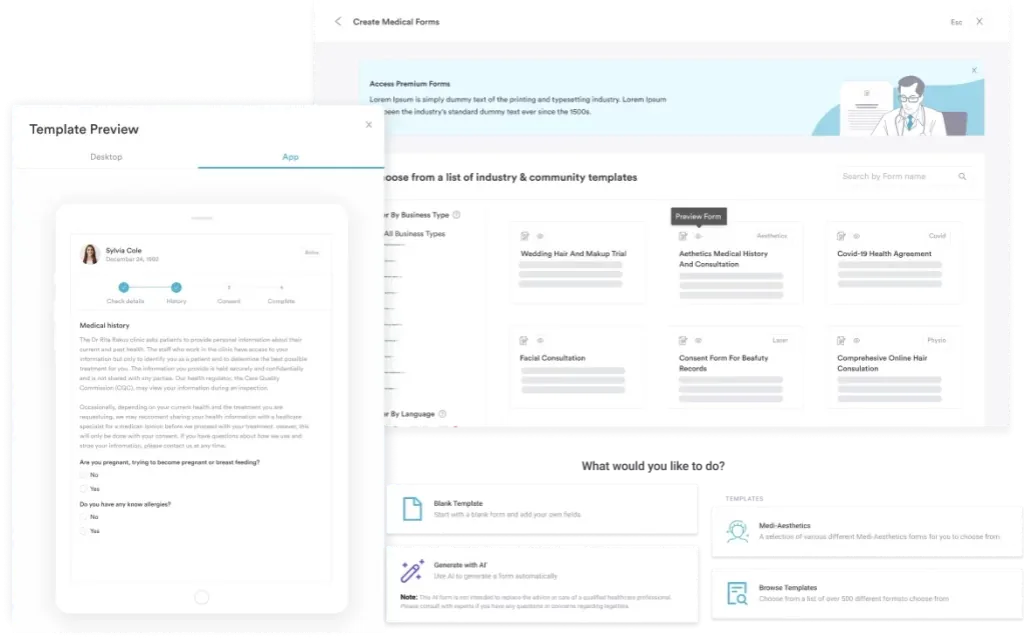
Practices using digital clinical documentation forms can standardize these note elements across all therapists, reducing variability that leads to incomplete documentation on audit. Building a CPT 97014 note template with required fields as mandatory entries prevents the most common documentation gaps.
Review your 97014 documentation against the AAPC audit checklist annually. Practices that document unattended status, treatment areas, and ICD-10 diagnosis in every note reduce audit risk and improve first-pass claim approval rates. Apply this discipline consistently across all physical medicine modality codes, not just 97014.
CPT Code 97014 is generally billed without modifiers for commercial payers. However, several modifier scenarios arise in specific clinical or administrative contexts.
NCCI edits pair some physical medicine modality codes together, potentially triggering automatic edits if billed on the same date of service without proper justification. Practices managing multi-modality treatment plans for physiotherapy clinics should run a pre-submission NCCI edit check on every claim that includes 97014 alongside 97010, 97012, or 97032.
Iontophoresis billed under CPT code 97033 belongs on that same screening list. NCCI bundles 97014 into 97033, so same-day billing for one body area needs a modifier and distinct documentation.
Reimbursement for CPT Code 97014 varies by payer, geographic locality, and Medicare Administrative Contractor (MAC) jurisdiction. Fee schedule amounts change annually, so always reference the current year’s data for billing decisions.
For Medicare, G0283 is the applicable code. The Medicare Physician Fee Schedule (MPFS) sets the national non-facility rate for G0283 annually. Use the CMS Physician Fee Schedule lookup tool to find the current rate for your MAC jurisdiction. Facility rates (for hospital outpatient departments) differ from non-facility rates and are generally lower for this code — a modest modality fee that sits at the opposite end of the scale from high-RVU inpatient surgical codes billed in the facility setting. For detailed RVU values and work/PE/MP component breakdowns, the FastRVU 2026 RVU lookup tool provides current Medicare reimbursement data by locality. Most claim errors are structural rather than clinical, which is why scrubbing rules catch them.
For commercial payers, reimbursement for CPT Code 97014 typically follows contracted rates tied to a percentage of the Medicare fee schedule or a proprietary fee schedule. Physical therapy and physiotherapy clinic management workflows that track payer-specific reimbursement per code help identify where 97014 claims underperform relative to expected rates. That data also surfaces which payers have silently reduced their allowed amounts without a formal policy announcement.
The five most common denial reasons for CPT Code 97014 claims are consistent across payer types. Addressing each one systematically eliminates the majority of rejections before they occur.
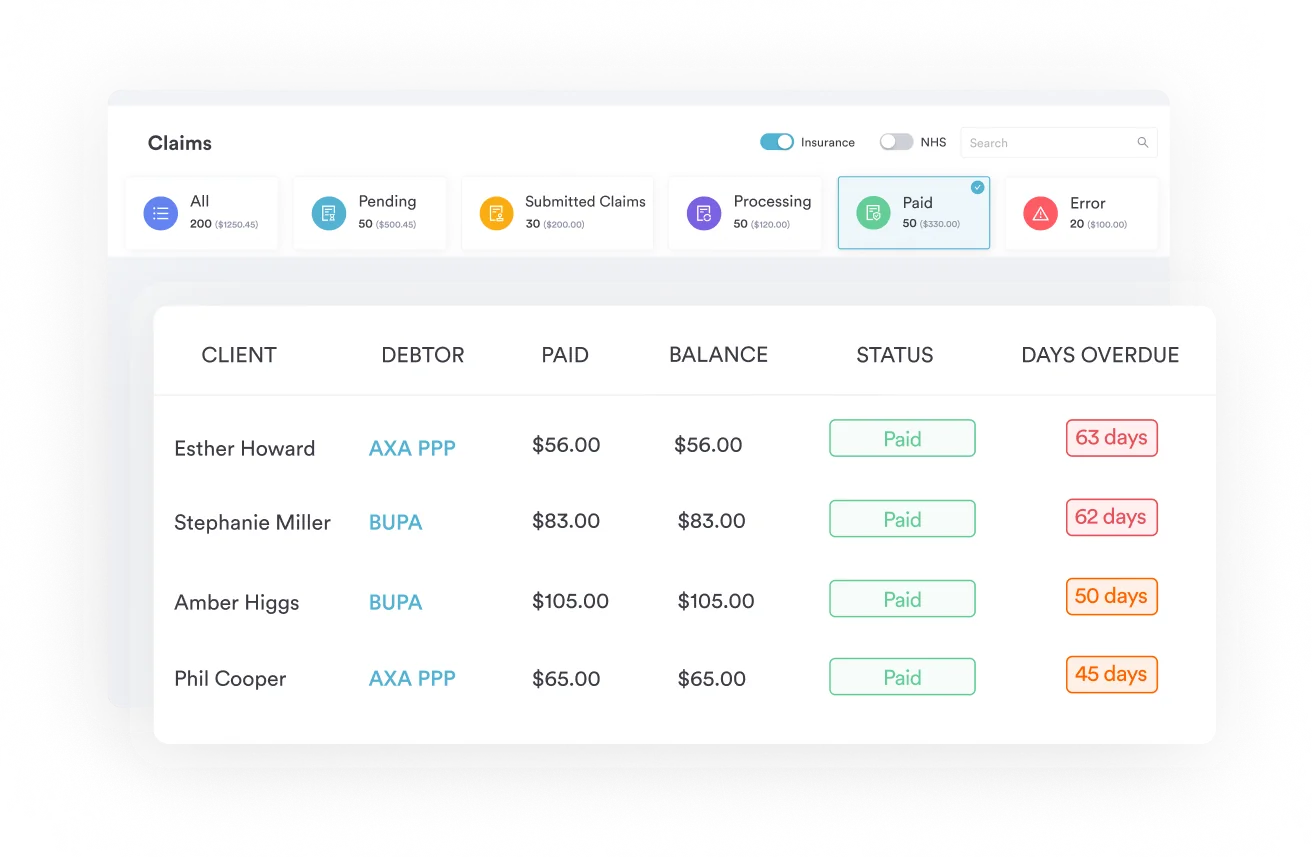
Practices billing electrical stimulation across multiple payers benefit from claims management software that applies payer-specific rules at the point of claim creation. Configuring a hard stop that substitutes G0283 for 97014 when the payer is Medicare eliminates the most frequent denial without requiring manual intervention by billing staff on every claim. For practices managing physical therapy clinic compliance, automated claim validation is part of the broader compliance infrastructure.
Medical necessity for electrical stimulation must be supported by a diagnosis that justifies the modality. The ICD-10-CM codes most frequently paired with CPT Code 97014 and G0283 include:
Always verify ICD-10 code validity for the current fiscal year against the AAPC Codify lookup tool or the official CMS ICD-10 tables. Using a retired or invalid code creates a separate denial pathway unrelated to the 97014 vs G0283 question. For occupational therapy practices billing electrical stimulation for functional restoration, the ASHA guidance notes that 97014 is not appropriate for dysphagia treatment if the SLP must be present, since the “unattended” descriptor would not apply.
Physical therapy and chiropractic practices billing CPT Code 97014 across mixed Medicare and commercial payer populations face a consistent operational challenge: ensuring the right code reaches each payer automatically, without relying on staff to manually check payer type on every claim.
Pabau’s claims management software supports configurable payer rules that can route 97014 vs G0283 substitutions based on primary payer at claim creation. Combined with the platform’s digital documentation tools, practices can build standardized 97014 treatment note templates with required fields – diagnosis codes, unattended status, treatment areas – that reduce incomplete documentation before it reaches the claim stage. For practices scheduling patients across multiple payer types, having payer information captured at booking feeds directly into billing workflows.
Multi-location physical therapy and chiropractic groups using Pabau can apply these billing rules consistently across every location from a single configuration, rather than managing payer rule updates clinic by clinic. See how Pabau handles physical therapy billing workflows by booking a demo.
CPT Code 97014 is a straightforward untimed service code for unattended electrical stimulation – but the billing rules surrounding it are anything but simple. The Medicare substitution to G0283, the attended vs unattended distinction from 97032, and payer-specific commercial policies each create denial pathways that cost practices real revenue when managed manually.
The practices with the lowest denial rates on electrical stimulation claims share one characteristic: automated payer routing built into their billing workflow. Pabau’s claims management tools and configurable documentation templates help physical therapy and chiropractic practices get CPT 97014 and G0283 submissions right the first time. Review your current electrical stimulation denial rate, then explore what a modern practice management platform can do to reduce it.

Billing diabetic testing supplies too? Lancet device billing guide covers HCPCS Code A4258 for a spring-powered lancet device, billed separately from lancets and test strips.
Billing lancets separately too? Lancets billing guide covers HCPCS code A4259 for lancets billed per box of 100 for home blood glucose testing.
Billing for an ophthalmology procedure too? lacrimal duct implant billing guide covers documentation requirements for this temporary, absorbable dry eye supply code.
CPT Code 97014 is the American Medical Association (AMA) procedural code for unattended electrical stimulation therapy applied to one or more body areas. It is an untimed, service-based code billed as one unit per session regardless of treatment duration, used in physical therapy and chiropractic practices for pain management, muscle re-education, and functional restoration.
No. CPT Code 97014 is explicitly listed as an invalid code on the Medicare fee schedule under CMS Transmittal AB-03-093 and CMS Coverage Database Article A53064. For all Medicare patients, bill HCPCS code G0283 instead. Submitting 97014 to Medicare results in automatic denial.
Both codes describe unattended electrical stimulation to one or more areas, but they come from different coding systems. CPT 97014 is an AMA code used for commercial and private-pay payers. G0283 is a CMS HCPCS Level II code that replaces 97014 specifically for Medicare billing. Clinically, the service is identical – only the payer determines which code to use.
CPT 97014 is unattended: the therapist sets up electrical stimulation and leaves. CPT 97032 is attended: the therapist remains present throughout and manually manages the stimulation. 97032 is billed in 15-minute timed increments and is subject to the Medicare 8-minute rule. 97014 is billed as one unit per session with no time tracking required.
Generally no, not for commercial payers. When billed to Medicare as G0283, the KX modifier is required to confirm medical necessity and therapy cap exception status. The GP modifier is also required on G0283 claims for physical therapists billing under a physical therapy plan of care. Modifier 59 may be needed when 97014 is billed alongside other modalities on the same date, per NCCI edit requirements.
Commonly paired ICD-10-CM codes include M54.50 (low back pain), M25.5xx (joint pain with laterality), G89.29 (chronic pain), and S-category musculoskeletal injury codes. Always verify current ICD-10 validity for the treatment date and confirm the diagnosis justifies unattended electrical stimulation as medically necessary in the plan of care.
Reimbursement varies by payer, geographic locality, and contract terms. For Medicare, look up the current non-facility rate for G0283 using the CMS Physician Fee Schedule search tool. Commercial rates typically reflect a contracted percentage of the Medicare fee schedule. Use the FastRVU RVU lookup for current Medicare RVU values and locality-adjusted payment amounts.
In physical therapy, this code reports unattended electrical stimulation that the therapist sets up and leaves running, usually a TENS or interferential unit applied for pain relief, muscle re-education, or spasm reduction. For Medicare patients, physical therapists bill G0283 instead and attach the GP modifier to show the service falls under a physical therapy plan of care.
No. It is an untimed, service-based code billed as one unit per session regardless of how long the stimulation runs, so it is not subject to the Medicare 8-minute rule. Attended electrical stimulation under CPT 97032 is billed in 15-minute timed increments instead.



