CPT Code 62284: Injection procedure for myelography
CPT Code 62284: official descriptor and procedure overview The American Medical ...

Last Updated: Oct 19, 2026
G2023 is the HCPCS Level II code for specimen collection for severe acute respiratory syndrome coronavirus 2 (sars-cov-2) (coronavirus disease [covid-19]), any specimen source. CMS terminated it with effect from 11 May 2023, so it is no longer valid for claims after that date.
HCPCS Code G2023 was a Level II G-code used by independent laboratories to bill Medicare and Medicaid for COVID-19 specimen collection from homebound and non-hospital inpatient patients during the federal Public Health Emergency. It was deleted effective May 12, 2023, when the PHE ended.
Claims submitted for any date of service on or after that date are not payable under Medicare or most state Medicaid programs. For independent laboratories that regularly collected COVID-19 specimens from homebound patients, this change required an immediate shift in billing practice with no single direct replacement.
Let Pabau's smart automation suggest the right codes, reduce claim denials, and keep your practice compliant—effortlessly.
Automate repetitive tasks and focus on what matters most—your patients.
Reduce coding errors and ensure compliance with the latest regulations.
Clean claims, fewer denials, and faster reimbursements.
Powerful insights and reporting to help your practice thrive.
HIPAA compliant SOC 2 certified GDPR-compliant Trusted by 4,000+ clinics worldwide

HCPCS Code G2023 covered COVID-19 specimen collection for SARS-CoV-2, from any specimen source, billed by independent labs serving homebound or non-hospital inpatient patients.
G2023 was deleted effective May 12, 2023, when the COVID-19 Public Health Emergency ended. Claims for dates of service on or after that date are not payable.
G2024 was the companion code for non-homebound patients; C9803 applied in hospital outpatient settings. No single universal replacement exists post-PHE.
Pabau’s claims management software helps labs and clinical practices track code status, document correctly, and avoid billing deleted or retired codes.
HCPCS Code G2023 was a Level II HCPCS code added by the Centers for Medicare and Medicaid Services (CMS) in the Level II quarterly update file in May 2020. According to CMS’s HCPCS program, Level II codes are used to report services and supplies not covered by CPT, including laboratory specimen collection procedures created specifically in response to the COVID-19 pandemic.
The official full descriptor reads:
The phrase “any specimen source” in the descriptor is significant. G2023 covered collection of nasal swabs, throat swabs, saliva samples, and other body fluids used to test for SARS-CoV-2. The code covered the physical act of collecting the specimen, regardless of which collection method was used or which specimen type was obtained.
Labs also had to maintain the patient authorization and data-security practices that sound medical billing processes require alongside this code. The CMS specimen collection fee and associated travel allowance were paid to independent laboratories collecting specimens for COVID-19 clinical diagnostic laboratory testing from beneficiaries who were homebound or non-hospital inpatients.
CMS restricted G2023 to a specific category of providers. Billing it as a general physician or hospital code was a common error during the pandemic.
State Medicaid programs sometimes applied different eligibility rules than Medicare. Some allowed physician billing of G2023 under specific circumstances during the PHE. Coders working in states like New York, Texas, or Washington needed to review individual payer policies rather than relying solely on federal Medicare guidance.
Billing G2023 correctly required meeting several concurrent conditions, and missing any one created claim denial risk. Strong home visit billing documentation workflows.
G2023 was designed for specimen collection from patients who were homebound or non-hospital inpatients. This is the most operationally important rule. A homebound patient, under Medicare’s definition, is one who normally cannot leave home without considerable effort due to illness, injury, or disability.
Documentation in the patient record needed to support the homebound or non-hospital inpatient status, and vague notes were not sufficient.
When an independent laboratory technician traveled to a homebound patient to collect the specimen, labs could also bill a travel allowance alongside G2023. The travel allowance reimbursed the cost of the trip to the patient’s location.
Travel allowance billing has its own complex rules and was subject to CMS-specific conditions. Labs needed to document the travel distance and confirm the patient met homebound criteria before billing both the collection code and the travel allowance on the same claim.
G2023 claims required an appropriate ICD-10-CM diagnosis code to establish medical necessity. The most commonly used codes were:
UnitedHealthcare guidance confirmed that cost sharing was waived for COVID-19-specific specimen collection when billed with G2023 or CPT 99001 alongside the appropriate ICD-10 code, provided the claim was not accompanied by a separate evaluation and management charge.
Payer policies varied, so verifying individual payer bulletins was necessary. Good preventive medicine visit documentation practices supported the audit trail needed to substantiate these claims.
Under the Families First Coronavirus Response Act and the CARES Act, most payers waived patient cost sharing for COVID-19 specimen collection during the PHE. This applied to G2023 claims in most Medicare and commercial settings, though the specific conditions varied by payer and coverage year.
Document homebound status with specificity. Phrases like ‘patient unable to leave residence without considerable effort due to respiratory illness’ carry more weight in audits than general notes. Audit risk for retroactive G2023 claims has increased since the PHE ended, because CMS is reviewing claims submitted during the emergency period.
An EHR suited to primary care templates wellness visits and screenings, which is where most G-codes are earned.
G2023 was deleted effective May 12, 2023. That date corresponds to the official end of the federal COVID-19 Public Health Emergency, which terminated on May 11, 2023. New York State Medicaid guidance explicitly confirms G2023 was active from May 22, 2020 through May 11, 2023, and that the code is no longer payable for dates of service on or after May 12, 2023.
Multiple payer bulletins and state Medicaid programs confirmed this date independently. APS Medical Billing’s post-PHE update confirmed that CPT/HCPCS codes U0003, U0004, U0005, G2023, and G2024 are all no longer payable for dates of service on or after May 12, 2023.
This means:
Labs and billing departments reviewing open accounts receivable from the PHE period should confirm that all G2023 claims carry dates of service no later than May 11, 2023. A disciplined revenue cycle management process and integrated EHR tools help labs reconcile claim dates against service records accurately.

Pabau’s claims management tools help labs and clinical practices track code status, link the right diagnosis codes, and maintain the documentation needed to survive post-PHE audits. See how it works for your billing workflow.

G2023 and G2024 were introduced together in the May 2020 HCPCS Level II quarterly update. They cover the same procedure but apply to different patient populations.
G2024 carried the full descriptor: “Specimen collection for severe acute respiratory syndrome coronavirus 2 (SARS-CoV-2) (coronavirus disease [COVID-19]), from an individual in a SNF or by a laboratory on behalf of a HHA, any specimen source.”
In practice, G2024 applied to skilled nursing facility and home health agency settings, while G2023 addressed the homebound patient scenario where a technician traveled to the patient.
Both codes were deleted on the same date and for the same reason. Neither applies to any date of service after May 11, 2023. You can look up their historical descriptors using the AAPC Codify HCPCS lookup tool, which maintains records of deleted codes.
Hospital outpatient departments operated under a different coding framework than independent laboratories during the PHE. HCPCS code C9803 was the relevant code for hospital outpatient COVID-19 specimen collection in many contexts, rather than G2023.
Washington Apple Health (Medicaid) clinical policy documentation explicitly referenced both C9803 and G2023 for specimen collection, confirming that the applicable code depended on the provider type and billing context. CMS assigned a different status indicator to G2023 for hospital outpatient prospective payment system purposes, meaning hospitals could not routinely substitute G2023 for C9803 in outpatient settings.
For billing teams reviewing historical hospital outpatient COVID-19 claims, verifying which code was used and whether it matched the setting is an important part of retroactive audit preparation. Reliable clinical documentation software keeps the records needed for these reviews preserved and accessible.
If your facility billed G2023 in a hospital outpatient context during the PHE, flag those claims for review. G2023 carried different outpatient billing rules than C9803. Substituting one for the other without meeting the applicable requirements creates audit exposure even years after the claims were submitted.
There is no single direct replacement for G2023. The correct approach depends on the clinical scenario and payer.
When the PHE ended, Medicare’s special COVID-19 billing accommodations largely reverted to pre-pandemic rules. For specimen collection billing after May 11, 2023, consider the following:
The travel allowance has its own code in the P-series. A flat, prorated trip charge to a homebound or nursing home bound patient is billed as HCPCS code P9604.
Urine collection by catheter carries its own fee code for the same homebound and non-hospital inpatient population. A catheterized collection made on a multiple-patient trip is billed as P9615.
The PGM Billing HCPCS lookup tool can help billing teams verify current code status before submitting claims.
G2023 was part of a broader set of COVID-19-specific codes created during the pandemic. Understanding how they relate matters for retroactive claim review and audit response.
The CMS HCPCS program page maintains the authoritative list of active and deleted HCPCS Level II codes.
Labs and practices managing ongoing audits benefit from keeping detailed itemized billing records and digital forms for clinical documentation that capture the full specimen collection record, including patient status, collection date, specimen type, and ordering provider. This documentation supports claim defense long after the service date.
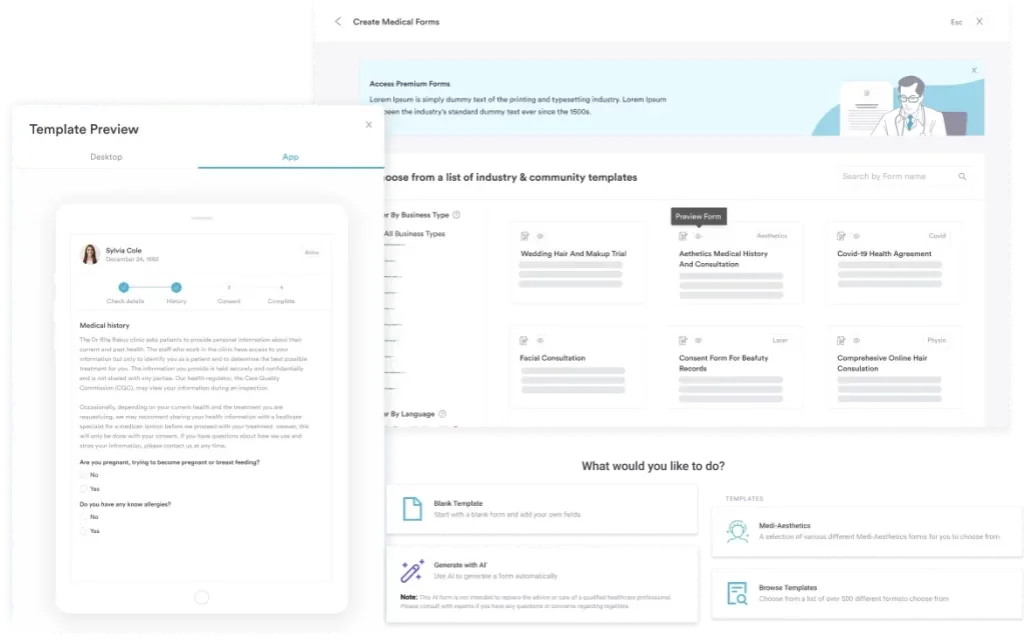
Labs and practices that billed G2023 during the PHE face ongoing administrative work: retroactive claim review, audit responses, and transitioning COVID-19 billing workflows to current standard codes. A cloud-based EHR reduces the claim denial and audit risk that comes from billing deleted codes by mistake or failing to document patient eligibility correctly. Structured denial management keeps these claim errors from recurring by tracking causes, appeals, and prevention steps across the billing team.
Pabau’s claims management software helps practices track claim status, link the correct diagnosis codes to each procedure, and maintain the structured documentation needed to defend claims in audit situations. As a single medical billing system, it lets labs manage specimen collection records, patient data, and billing submissions together, without the fragmentation that increases audit risk.
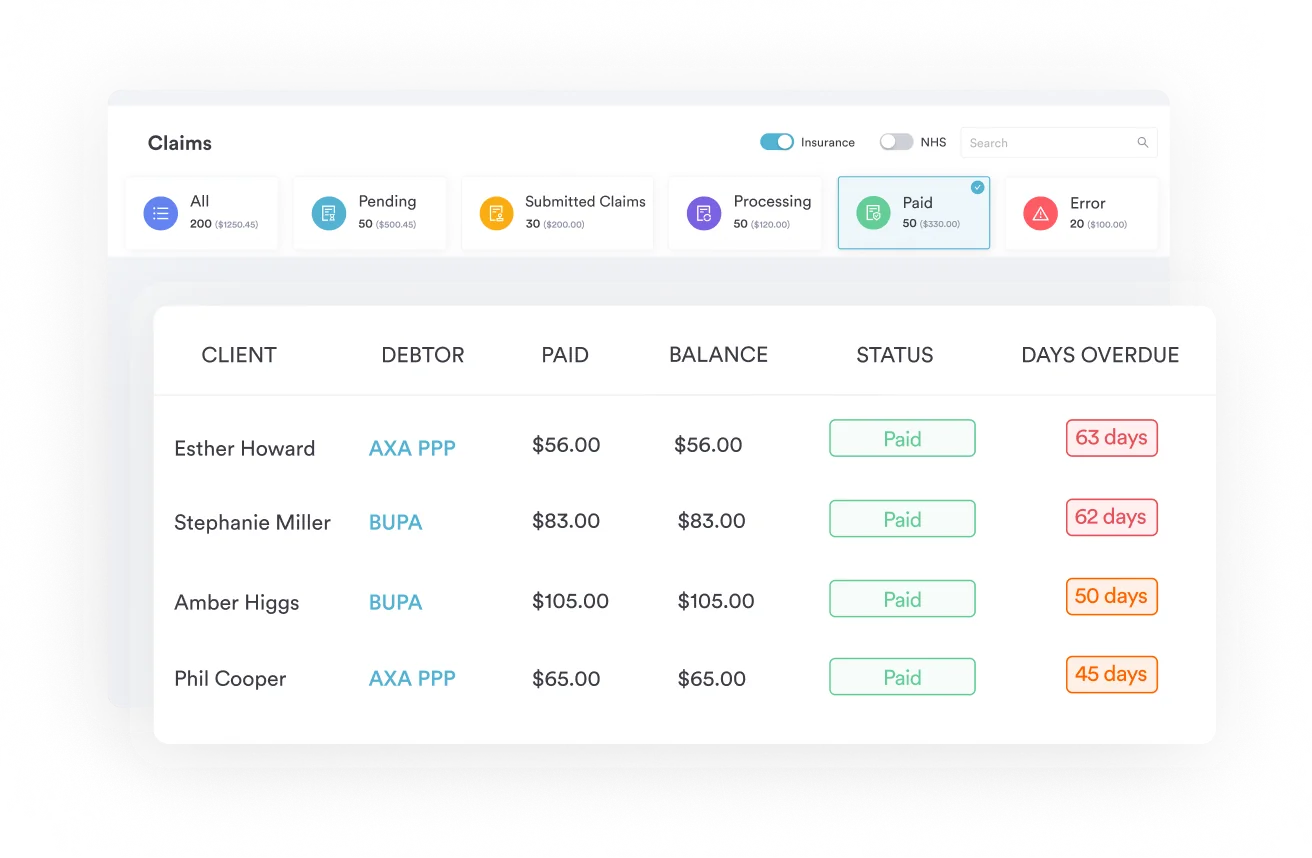
For practices transitioning from COVID-19 PHE billing to standard clinical coding, Pabau’s structured record-keeping and workflow tools help teams adapt without losing the audit trail. See how Pabau handles lab billing workflows by booking a demo.
HCPCS Code G2023 reimbursed independent laboratories for collecting COVID-19 specimens from homebound and non-hospital inpatient patients during the federal Public Health Emergency. Its deletion on May 12, 2023 was universal across Medicare and most state Medicaid programs.
For billing teams, verify that no G2023 claims carry a date of service on or after May 12, 2023, and that retroactive audit requests are supported by documentation establishing patient homebound status, specimen type, and collection date.
Post-PHE specimen collection billing returns to standard CPT and HCPCS frameworks — there is no single replacement code. Standard coding references and Pabau’s claims management tools can help manage this transition.

Documenting an advance care planning visit? Advance care planning visit template gives a free template for consent, goals-of-care, and proxy documentation at that visit.
Need an assignment of benefits form? Assignment of benefits form template gives a free printable template covering patient details, insurance, and payment authorization.
Looking for CPT code reference guides for related procedures? Level 5 ED visit billing guide on Pabau provides detailed billing context for common procedure codes.
HCPCS Code G2023 is a deleted Level II HCPCS code that was used by independent clinical diagnostic laboratories to bill Medicare and Medicaid for COVID-19 (SARS-CoV-2) specimen collection from any specimen source, including nasal swabs, throat swabs, and saliva samples. It was specifically designed for laboratories collecting specimens from homebound patients or non-hospital inpatients during the COVID-19 Public Health Emergency.
No. HCPCS Code G2023 was deleted effective May 12, 2023, when the federal COVID-19 Public Health Emergency ended. It is not payable for any date of service on or after May 12, 2023. Claims with service dates through May 11, 2023 may still be payable if all applicable billing requirements are met.
Both codes covered COVID-19 specimen collection by independent laboratories, but they applied to different patient settings. G2023 was for homebound patients and non-hospital inpatients, where a laboratory technician traveled to the patient. G2024 was used in SNF and HHA contexts or for patients who could attend a collection site. Both were deleted on May 12, 2023.
There is no single direct replacement. Post-PHE, COVID-19 PCR testing is billed under CPT 87635 at standard clinical lab rates. Routine specimen handling uses CPT 99000 or 99001. For homebound patient specimen collection outside the COVID-19 context, labs should consult current CMS guidance on specimen collection fees rather than applying any single replacement code.
G2023 was primarily for independent clinical diagnostic laboratories, not physicians. Physicians collecting COVID-19 specimens during an office visit generally billed CPT 99000 for specimen handling. Some state Medicaid programs applied different eligibility rules during the PHE, so billing teams should verify the specific policies that applied in their state rather than assuming federal Medicare rules applied universally.
G2023 covered specimen collection from any specimen source, as stated in the official code descriptor. This included nasal swabs, throat swabs, nasopharyngeal swabs, saliva samples, and other body fluids used to test for SARS-CoV-2. The code covered the act of collection regardless of the specimen type or collection method used.