CCSD code G5100: Bypass of duodenum billing guide
CCSD code G5100 bills a bypass that leaves the duodenum in place CCSD code G5100...

Last Updated: Oct 16, 2026
G0127 is the HCPCS Level II code for trimming of dystrophic nails, any number.
The service itself takes minutes. The coverage rules behind it are what cost practices money. Medicare excludes routine foot care by default, so payment turns on what the exam note records.
Class findings, the matching Q modifier, and the order of the diagnosis codes all have to line up. Miss one and the claim denies, even though the care was appropriate.
Let Pabau's smart automation suggest the right codes, reduce claim denials, and keep your practice compliant—effortlessly.
Automate repetitive tasks and focus on what matters most—your patients.
Reduce coding errors and ensure compliance with the latest regulations.
Clean claims, fewer denials, and faster reimbursements.
Powerful insights and reporting to help your practice thrive.
HIPAA compliant SOC 2 certified GDPR-compliant Trusted by 4,000+ clinics worldwide

HCPCS code G0127 covers trimming of dystrophic nails, any number, and Medicare is the only payer that recognizes it
Class findings are physical exam findings, not diagnoses. Class A is nontraumatic foot amputation, and Class B covers absent pedal pulses and advanced trophic changes
Modifier Q7 means one Class A finding, Q8 means two Class B findings, and Q9 means one Class B plus two Class C findings. All three are covered
Put a Group 1 nail diagnosis such as B35.1 or L60.3 in the primary position, with the at-risk systemic condition behind it
Never report L60.8, L84, or L98.7 with G0127, and keep covered visits at least 60 days apart
G0127 describes the trimming of dystrophic nails, any number. “Dystrophic” means the nail has turned structurally abnormal because of an underlying condition. Think thickened, discolored, brittle, or deformed nail plates that need clinical attention rather than cosmetic care.
G-codes are HCPCS Level II codes that CMS maintains itself, separate from the AMA’s CPT set. Coverage comes from the Medicare Benefit Policy Manual, Pub 100-02, Chapter 15, Section 290. Each MAC then publishes its own routine foot care billing article. Noridian publishes A57954, last revised on November 6, 2025. Missing a provider identifier or a diagnosis code sends a reimbursement claim straight back, so a reimbursement receipt lists both. Missing a provider identifier or a diagnosis code sends a reimbursement claim straight back, so a reimbursement receipt lists both.
Private insurers do not recognize G0127, so non-Medicare nail trimming goes out on a CPT code instead. Practices that see both payer types run two rule sets for what looks like the same clinical service.
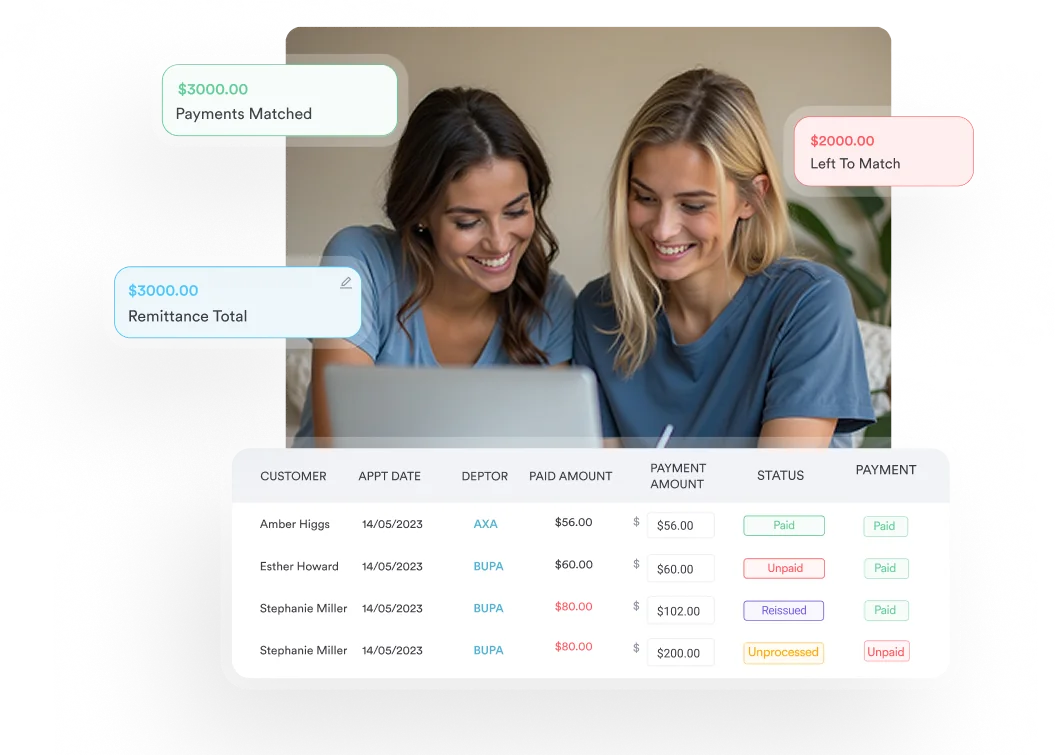
Medicare excludes routine foot care as a general rule. Section 290 sets out the exceptions, and class findings are the main one.
Class findings are physical findings the practitioner records during the foot exam. They are not diagnoses, and mixing the two is what produces a mismatched modifier.
CMS sorts the findings into three tiers, named Class A, Class B, and Class C findings. Class A carries the most weight.
Whichever combination the exam produces decides which Q modifier goes on the claim. Diabetes, arteriosclerosis obliterans, and Buerger’s disease sit in a separate part of the coverage test, covered further down.
Class A contains a single finding. Nontraumatic amputation of the foot, or of an integral skeletal portion of the foot, is the whole tier. One Class A finding supports the presumption of coverage on its own, and the claim carries modifier Q7.
Class B findings are vascular signs in the foot. Two of them support the presumption of coverage, and the claim carries modifier Q8.
CMS lists five trophic changes. They are decreased or absent hair growth, nail thickening, pigmentary discoloration, thin shiny skin texture, and rubor or redness. Recording two of them does not produce a Class B finding.
Class C findings never support coverage on their own. They count only alongside a Class B finding. One Class B finding plus two Class C findings supports coverage, reported with modifier Q9.
Section 290 separately lists systemic conditions severe enough that nail care by a nonprofessional would put the patient at risk. These are the at-risk diagnoses sitting behind the exam findings. None of them is a class finding, and treating one as a class finding is how modifiers end up mismatched.
Diabetes is far and away the most common one. The same patient is often booked for diabetes self-management training under G0108 on a separate day, which keeps both services clean on the claim.
The coverage test has one more element. The patient must be under the active care of an MD or DO for the systemic condition. That physician must have seen the patient within the 6 months before the foot care service. The claim needs the physician’s name and the approximate date last seen.
This is the decision point that comes up most often in a podiatry practice. Both codes describe nail trimming. They part company on nail condition, payer, and what the exam note has to prove.
Q9 is not a way to flag a patient who qualifies for nothing. All three Q modifiers describe covered care. When the exam produces no qualifying combination and no at-risk diagnosis applies, the service is excluded routine foot care.
In that case, bill 11719, issue an Advance Beneficiary Notice (ABN), and treat the visit as self-pay. The ABN has to be signed before the service, not after the denial arrives.
G0127 rarely turns up alone on a podiatry claim. Knowing the neighboring codes prevents unbundling edits and keeps the right service on the right line.
Billing G0127 with 11720 or 11721 for the same nails on the same date invites an unbundling edit. If the nail plate was debrided rather than trimmed, use the debridement code and say so in the note.
G0247 carries a dependency that catches people out. It only pays on the same date as G0245 or G0246, the two LOPS foot exam codes. It is also specific to a diabetic patient with diabetic sensory neuropathy. So it is not a general-purpose routine foot care code you can reach for on any visit.
The same patient population also drives therapeutic footwear claims under A5500, which runs on its own certification rules.

Provider eligibility here is narrow. Medicare limits routine foot care payment to a defined set of provider types. A claim from anyone else denies systematically, however good the documentation is.
Place of service matters too. G0127 is normally billed in an office, place of service 11. Facility settings pay a lower rate, so the same trimming earns less in a hospital outpatient department.
Documentation failures drive most G0127 denials and audit findings. Section 290 and the MAC billing article are specific about what belongs in the record. The requirements also reach past the encounter note, back to the physician managing the systemic condition.
Every one of these elements has to be in the chart:
A standing diabetic foot exam form handles most of this, because it asks for each finding by name instead of leaving it to free text. Chasing the treating physician’s details is the slower half of the job.
Many practices keep a signed consent to release form on file for exactly that reason. With one in place, the managing physician’s office can confirm a last visit date in a phone call rather than a week of messages.
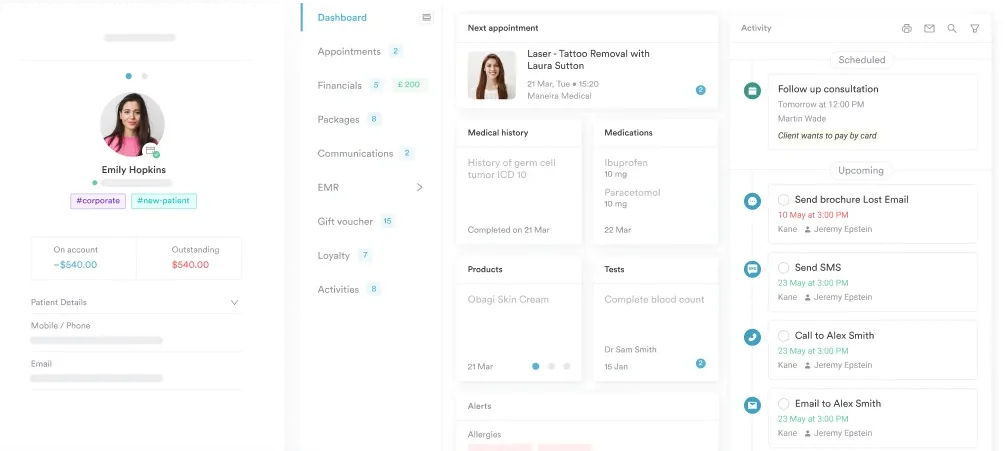
When coverage rests on class findings, every G0127 claim carries one of three Q modifiers. The modifier tells the MAC which combination the exam produced.
All three describe a covered service. No Q modifier exists for a patient who qualifies under none of the combinations.
Append the modifier directly to G0127 in box 24D of the CMS-1500. Only one Q modifier belongs on that line item. When a Class A finding is present, report Q7 rather than a lower-tier combination.
The Q modifiers are not needed on every routine foot care claim. Noridian’s article A57954 requires no class findings modifier where the covering diagnosis is documented neuropathy without vascular impairment. The same holds for its Group 4 diagnoses, which involve neither neurological nor vascular impairment.
Contractor edits differ, so confirm the rule with your own MAC before leaving the modifier off.
The diagnosis codes on a G0127 claim do two different jobs, and swapping them is a reliable way to lose the payment. Article A57954 sorts them into groups.
Group 1 describes the nail and belongs in the primary position. Groups 2 through 4 are the at-risk systemic conditions, and they sit behind a Group 1 code.
Three codes must never appear on a G0127 claim. Since June 19, 2022, CMS has stated that G0127 is billed for dystrophic nails only, and that L60.8, L84, and L98.7 are inappropriate with it. Corns and callosities under L84 are denied, so a callus visit cannot be made billable by attaching it to nail trimming.
The group a secondary code falls into also changes the modifier rule.
E11.40 sits in Group 2, where documented neuropathy without vascular impairment needs no class findings modifier. E11.51 sits in Group 3, where vascular impairment means the Q modifier is required. Two diabetes codes on the same patient can therefore produce two different claim builds.
ICD-10 codes update every October 1. Check each code’s status in the CDC ICD-10-CM tool for the current fiscal year before it goes on a claim.
It helps to walk the whole path once, because every handoff is a place where information drops out. Most of it happens inside whatever podiatry software the practice already runs.
Run these seven questions over the claim before it goes out. Each one maps to a denial reason MACs use.
Medicare pays G0127 through the Medicare Physician Fee Schedule, which CMS updates every year. The 2026 non-facility national rate works out at roughly $23 to $24. That figure comes from a non-facility total RVU near 0.71 against a 2026 conversion factor of about $33.40, before any geographic adjustment.
Facility rates run lower than non-facility rates, and most office-based podiatry claims use the non-facility figure. Geographic payment localities then apply a Geographic Practice Cost Index (GPCI) adjustment on top. That can move the effective payment above or below the national number, depending on the region.
Verify the current rate in the CMS MPFS lookup tool before you set expectations with clinical or billing staff. Rates published on third-party sites often lag a year behind, or skip the locality adjustment entirely.
Run a G0127 fee schedule query in the CMS MPFS tool each January, filtered to your own MAC locality. The GPCI adjustment can pay a high-cost urban practice 15 to 20% above the national rate. Rural localities often land below it. Build the check into your annual billing calendar so the number never surprises you mid-year.
G0127 denials follow a predictable pattern, which is the good news. A short list of errors accounts for most of them, and every one can be caught before the claim leaves the building.
Pre-submission scrubbing catches most of these at the source. Automated workflows can hold a claim until the note carries every required element, which turns a denial into a five-minute fix.
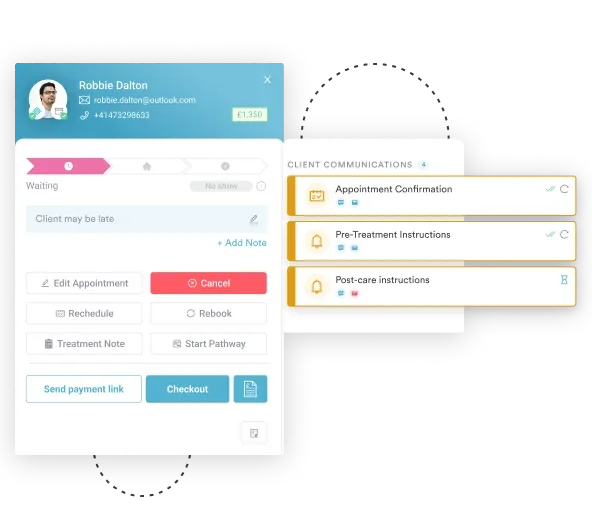
Three things break a G0127 claim. The exam note is incomplete, a physician detail is missing, or the claim goes out with a blank required field. Each of those happens at a handoff between people, usually between the treatment room and the billing desk.
Practice management software like Pabau puts those handoffs in one system. Digital forms can be built as a foot care template that asks for each class finding by name.
The note is then finished before the patient stands up. The findings, diagnosis codes, and managing physician’s details then live in the client record as separate fields rather than free text.
At submission, Pabau’s claims management checks that each claim carries the fields the payer requires, so nothing goes out half-filled. It will not choose the modifier for you. That judgment stays with the coder, working from what the exam note says.
Groups running Medicare foot care across several sites hit the same problem at scale. Multi-location tools apply one documentation standard to every provider and every site. A podiatrist joining the group inherits the workflow instead of inventing their own version of it.

Pabau captures class findings, diagnosis codes, and the managing physician’s details in one client record. Claims are then checked for the fields the payer requires before they leave your practice.

G0127 is a small payment attached to a demanding paper trail. The clinical work takes minutes. The money turns on whether the note names the findings, the modifier matches them, and the nail code leads the claim.
Fixing that at the appeal stage is slow and rarely worth the staff hours. Capturing the same details during the visit, while the patient is still in the chair, costs nothing extra. So this is a workflow decision more than a coding one.
If Medicare foot care is a meaningful share of your revenue, look at where the exam note and the claim form meet. Book a demo to see how Pabau captures class findings and physician details in one record, so G0127 claims leave complete.

Fitting therapeutic footwear for the same diabetic patients? A5500 sets out the certification and documentation Medicare wants behind a diabetic shoe claim.
Another Medicare screening G-code on the schedule? G0123 follows the same pattern of frequency limits and coverage conditions.
Billing refraction exams as well? Refraction billing guide covers why Medicare and commercial payers apply different coverage rules to refraction claims.
Coding a cardiac closure procedure? Interatrial defect closure coding guide covers how the code bundles right heart catheterization and contrast injections for ASD and PFO closures.
Seeing patients who fall outside Medicare coverage? Self-pay patients walks through pricing, consent, and collecting payment at the point of care.
Yes, when the visit is separately identifiable and documented as such. Append modifier 25 to the evaluation and management code. Routine foot care on its own does not support a separate visit charge.
No. The descriptor reads any number, so one unit covers every nail trimmed that day. Do not add RT, LT, or a second unit for the other foot.
Generally yes, because Advantage plans must cover what Original Medicare covers. Prior authorization, network, and documentation rules still vary, so check the plan’s own foot care policy first.
Only when a signed Advance Beneficiary Notice was collected before the service. Modifier GA tells the MAC that notice is on file. Without one, the practice absorbs the write-off.
Once every 60 days for most patients, counted from the last date of service. Some MACs pay for more frequent care when the record explains why the shorter interval was needed.
Trimming cuts the nail back to a safe length. Debridement removes diseased nail plate, usually with a burr or blade, to reduce thickness. Debridement is coded 11720 or 11721 instead.