

CCSD code G5100: Bypass of duodenum billing guide
CCSD code G5100 bills a bypass that leaves the duodenum in place CCSD code G5100...

Last Updated: Oct 16, 2026
J9041 is the HCPCS Level II code for injection, bortezomib, 0.1 mg.
Let Pabau's smart automation suggest the right codes, reduce claim denials, and keep your practice compliant—effortlessly.
Automate repetitive tasks and focus on what matters most—your patients.
Reduce coding errors and ensure compliance with the latest regulations.
Clean claims, fewer denials, and faster reimbursements.
Powerful insights and reporting to help your practice thrive.
HIPAA compliant SOC 2 certified GDPR-compliant Trusted by 4,000+ clinics worldwide

HCPCS code J9041 describes Injection, bortezomib (Velcade), 0.1 mg, billed per 0.1 mg unit administered.
J9041 is reserved for brand-name Velcade only. J9044 was deleted effective 12/31/2022; non-Velcade bortezomib now requires the manufacturer-specific code matching the NDC (J9046, J9048, J9049, or J9051).
CMS designates J9041 as a single-dose container code, requiring JW or JZ modifier attachment on every claim since JZ reporting became mandatory July 1, 2023.
Pabau’s claims management software helps oncology billing teams track drug units, apply modifiers, and reduce claim denials.
HCPCS code J9041 describes “Injection, bortezomib (Velcade), 0.1 mg,” a chemotherapy drug code maintained by CMS under the HCPCS Level II code set.
Bortezomib, marketed under the brand name Velcade by Janssen, received FDA approval in 2003. It is classified as a proteasome inhibitor (major drug class: 26S proteasome) and is administered by intravenous or subcutaneous injection, not orally. The code is active for 2026 and applies exclusively to the Velcade brand formulation.
Understanding why a drug is prescribed matters for documentation and medical necessity. Bortezomib is FDA-approved for two primary indications: multiple myeloma and mantle cell lymphoma. Accurate ICD-10-CM diagnosis coding linked to one of these approved indications is essential for claim acceptance.
Pabau’s patient intake software helps oncology teams capture structured clinical documentation at the point of care, making it easier to pull the right diagnosis codes before a claim is submitted. Thorough medical forms and documentation practices reduce the risk of medical necessity denials for high-cost drugs like bortezomib.
Payer coverage decisions for J9041 are often guided by local coverage determinations (LCDs) within the CMS Medicare Coverage Database. Coders should verify the applicable LCD for their jurisdiction before submitting claims for off-label or less common indications.
Most billing errors on J9041 stem from miscalculating units. The code is billed per 0.1 mg of bortezomib administered. A dose of 1.0 mg is therefore billed as 10 units; a dose of 2.5 mg is billed as 25 units. Bill only for the actual amount administered to the patient, not the full vial contents if there is waste.
This distinction between administered dose and vial contents is where the JW and JZ modifier requirements become critical (covered in the next section). Accurate unit calculation is also why many oncology practices integrate their infusion documentation directly with their practice management software to prevent rounding errors from manual entry.
J9041 covers the drug cost only. The administration of bortezomib requires a separate CPT code reported on the same claim:
Check NCCI (National Correct Coding Initiative) edits before pairing administration codes to ensure no bundling conflicts apply to your specific claim scenario.
Calculate bortezomib billing units before documentation closes. Confirm the administered dose in milligrams from the infusion record, divide by 0.1, and enter that number as the unit count on the claim. Retroactive corrections after claim submission add denial risk and administrative time your team does not need.
An EMR built for IV therapy records the infusion, the units administered, and the J-code in one entry.
CMS has designated J9041 as a single-dose container code, which carries a compliance obligation. JZ reporting was voluntary starting January 1, 2023, and became mandatory July 1, 2023. Since that date, CMS policy requires that one of two modifiers be appended to every J9041 claim:
Failure to append one of these modifiers can result in claim rejection or audit exposure. The CMS JW/JZ Modifier Policy documentation provides the official code-level designation. Billing teams using patient management software that supports chemotherapy drug tracking can set up modifier prompts to reduce the risk of forgetting this requirement at claim submission.
A patient receives a 2.0 mg dose of Velcade. The vial contains 3.5 mg. The administered dose (20 units) is billed as J9041 x 20 with modifier JW.
The wasted 1.5 mg (15 units) is reported separately as J9041 x 15, also with modifier JW, to reflect the discarded amount. If the full vial were administered with no waste, modifier JZ would replace JW on the single line item.

Pabau’s claims management tools help oncology and infusion practices track administered drug units, apply required modifiers, and submit cleaner claims. See how it works for high-cost drug billing workflows.

The existence of multiple bortezomib codes is a common source of claim errors, especially since J9044 — formerly the catch-all code for non-Velcade bortezomib — was deleted effective December 31, 2022.
Each active code maps to a specific manufacturer’s product and carries explicit CMS guidance on when it applies. These codes are not therapeutically equivalent per CMS, which means you cannot freely substitute one for another.
J9044 (Injection, bortezomib NOS) was deleted effective December 31, 2022. For dates of service on or after January 1, 2023, non-Velcade bortezomib must be billed with the manufacturer-specific code matching the product’s NDC: J9046 (Dr. Reddy’s), J9048 (Fresenius Kabi), J9049 (Hospira), or J9051 (Maia, added October 1, 2023).
Using J9041 — or the deleted J9044 — for a non-Velcade product is a coding error that can trigger claim denial or audit findings.
Review your pharmacy’s NDC (National Drug Code) on every bortezomib claim. The NDC identifies the specific manufacturer’s product, which determines whether J9041 (Velcade) or one of the manufacturer-specific codes — J9046, J9048, J9049, or J9051 — is correct. J9044 was deleted effective 12/31/2022 and should not appear on any claim with a date of service in 2023 or later. A mismatched NDC and J code is one of the most common audit triggers for chemotherapy drug claims.
Medicare Part B reimburses physician-administered drugs under the buy-and-bill model of medical billing at Average Sales Price (ASP) plus 6%. Because ASP rates are updated quarterly by CMS, any specific dollar figure cited here would be outdated within weeks.
Practices should query the current ASP rate directly from the CMS Physician Fee Schedule lookup tool or use a current HCPCS code reference via AAPC Codify for the most recent quarterly figures.
The ASP + 6% model applies when bortezomib is purchased and administered in a physician’s office or outpatient infusion center (the buy-and-bill model). If a specialty pharmacy dispenses the drug and bills separately, reimbursement follows the pharmacy’s contracted rate under Part D or a commercial plan benefit, which differs from Part B payment rules.
Oncology practices face a choice on high-cost injectables: purchase the drug inventory directly (buy-and-bill) or refer patients to a specialty pharmacy. Each approach affects billing codes, reimbursement pathways, and cash flow differently.
Prior authorization (PA) requirements for J9041 vary significantly by payer and plan type. Medicare fee-for-service generally does not require PA for chemotherapy drugs covered under Part B, but Medicare Advantage plans frequently impose their own PA requirements. Commercial payers and Medicaid managed care organizations typically require PA for high-cost oncology drugs.
Effective practice management software features that support prior authorization tracking can materially reduce treatment delays for oncology patients. A denied PA that delays a chemotherapy cycle affects both patient care and reimbursement timelines. Practices should build a PA workflow that initiates authorization requests before the scheduled administration date, not the day of infusion.
Keep this documentation in the patient’s chart and ensure it is retrievable for HIPAA-compliant medical office documentation standards. Payers conducting retrospective audits on high-cost drug claims will request the original PA approval.
Other high-cost oncology and hematology injectables follow similar PA and modifier rules. See our guides to HCPCS code J9145 for daratumumab (Darzalex) and HCPCS code J2329 for ublituximab-xiiy (Briumvi) if your practice bills multiple monoclonal antibody or proteasome inhibitor therapies.
Chemotherapy drug billing differs from standard office visit billing in several ways that generic practice management tools are not built to handle. High per-unit drug costs amplify the financial impact of any modifier error, unit miscalculation, or code mismatch. A system that surfaces these risk points before submission is worth far more than one that processes clean claims passively.
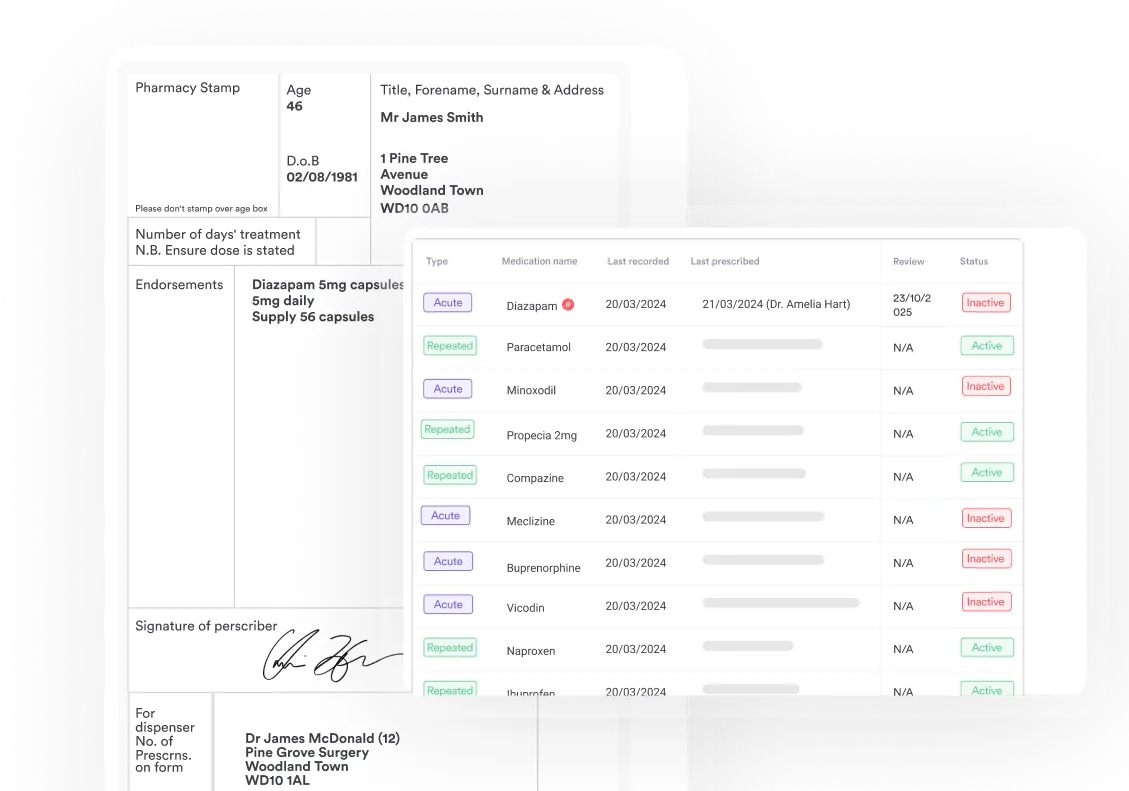
Pabau’s prescription management software supports structured drug documentation that feeds directly into billing workflows. For oncology and infusion practices, this means administered dose data is captured at the clinical level and available to billing staff without re-entry. Manual transcription between infusion records and billing forms is one of the most preventable sources of unit errors on J9041 claims.
The broader category of medical practice management software increasingly supports oncology-specific workflows, including modifier prompts, NDC capture, and prior authorization tracking. When evaluating a system for an infusion or hematology/oncology practice, look specifically for these capabilities rather than relying on general-purpose billing features.
Strong revenue cycle management ties these clinical and billing steps together so denials get caught and corrected quickly.
Bortezomib claims are high-value and high-scrutiny. HCPCS code J9041 applies specifically to Velcade; every other bortezomib product requires the manufacturer-specific code matching its NDC (J9046, J9048, J9049, or J9051), since J9044 was deleted at the end of 2022.
JW or JZ modifier attachment is mandatory per CMS policy. Dose-based unit calculation, NDC matching, and prior authorization documentation are the three most common failure points on these claims.
Pabau’s claims management tools help oncology billing teams structure their drug billing workflows, from administered dose capture through modifier attachment and claim submission. To see how Pabau supports infusion and oncology billing, book a demo with our team.

Coding a displaced femur condyle fracture? ICD-10 code S72.431C covers a displaced fracture of the medial condyle of the right femur at the initial encounter.
Coding a displaced lower femur fracture? ICD-10 code S72.442C covers a displaced left femur epiphysis fracture at the initial encounter.
Need the full picture of femur fracture codes? Femur fracture ICD-10 codes map the S72 family by fracture site, side, and encounter type.
HCPCS code J9041 is the billing code for Injection, bortezomib (Velcade), 0.1 mg, used to report the administration of brand-name Velcade in physician offices and outpatient infusion settings. It applies specifically to Medicare Part B and most commercial payer claims for bortezomib chemotherapy given intravenously or subcutaneously for multiple myeloma or mantle cell lymphoma.
J9041 is reserved exclusively for brand-name Velcade (bortezomib manufactured by Janssen). J9044 (bortezomib NOS) was deleted effective December 31, 2022. For dates of service on or after January 1, 2023, non-Velcade bortezomib must be billed with the manufacturer-specific code matching the product’s NDC: J9046 (Dr. Reddy’s), J9048 (Fresenius Kabi), J9049 (Hospira), or J9051 (Maia). Using J9041 or the deleted J9044 for a non-Velcade product is a coding error.
CMS requires either the JW modifier (drug wastage occurred) or the JZ modifier (no drug wastage) on every J9041 claim, because the code is designated as a single-dose container. The JW modifier is used when some vial contents were discarded; JZ when the full vial was administered with no waste. Claims submitted without one of these modifiers may be rejected.
Prior authorization requirements for J9041 vary by payer. Traditional Medicare fee-for-service generally does not require PA for Part B chemotherapy drugs, but Medicare Advantage plans, commercial insurers, and Medicaid managed care plans commonly impose PA requirements for high-cost oncology drugs. Verify each payer’s specific requirements before scheduling administration.
Divide the total milligrams administered by 0.1 to get the unit count. A 2.5 mg dose is billed as 25 units of J9041. Bill only for the dose actually administered, not the full vial if waste occurred; the wasted portion is reported separately with the JW modifier per CMS policy.
The most common ICD-10-CM codes paired with J9041 are C90.00, C90.01, and C90.02 (multiple myeloma, various stages) and C83.10 through C83.19 (mantle cell lymphoma by site). The supporting diagnosis must reflect an FDA-approved indication for bortezomib; off-label use requires additional documentation and payer approval.



