CPT code 93503: Swan-Ganz catheter billing and modifiers
CPT code 93503: Official descriptor and procedure overview In the AMA CPT code s...

Last Updated: Oct 23, 2026
J0775 is the HCPCS Level II code for injection, collagenase, clostridium histolyticum, 0.01 mg.
The guide reflects 2026 CMS guidance and current commercial payer policies from UnitedHealthcare, Cigna, and Moda Health. Verify specific reimbursement rates for your MAC jurisdiction before submitting claims.
Let Pabau's smart automation suggest the right codes, reduce claim denials, and keep your practice compliant—effortlessly.
Automate repetitive tasks and focus on what matters most—your patients.
Reduce coding errors and ensure compliance with the latest regulations.
Clean claims, fewer denials, and faster reimbursements.
Powerful insights and reporting to help your practice thrive.
HIPAA compliant SOC 2 certified GDPR-compliant Trusted by 4,000+ clinics worldwide

HCPCS code J0775 describes the injection of collagenase clostridium histolyticum (Xiaflex) at 0.01 mg per billable unit
Each 0.01 mg equals one unit of service. A standard 0.58 mg Dupuytren’s dose equals 58 units, and a 0.9 mg Peyronie’s dose equals 90 units
Only two ICD-10-CM codes support J0775 claims: M72.0 (Dupuytren’s contracture) and N48.6 (Peyronie’s disease)
Prior authorization is required by most commercial payers. JW and JZ modifiers are mandatory when reporting drug waste or confirming no waste
HCPCS code J0775 is maintained by CMS under the Drugs Administered Other Than Oral Method category (J0120-J7175). Its official descriptor is:
Injection, collagenase, clostridium histolyticum, 0.01 mg
Xiaflex is a biologic enzyme that breaks down the collagen-dense cords in Dupuytren’s contracture and the plaques of Peyronie’s disease.
Because it’s administered in the office or an ambulatory surgery center rather than a pharmacy, it follows the claims management buy-and-bill model. The practice purchases the drug directly and submits J0775 to recover the acquisition cost plus applicable add-on reimbursement from Medicare or the commercial payer.
The FDA has approved Xiaflex for exactly two indications. Claims submitted with any other diagnosis code will be denied as non-covered or investigational. Coders should confirm the treating physician’s documented diagnosis maps to one of these two ICD-10-CM codes before submission.
Dupuytren’s contracture (M72.0) is the more commonly billed indication. Hand surgeons and orthopedic practices treating finger cord contractures use this code on the vast majority of J0775 claims. For urologists and men’s health providers treating Peyronie’s disease, N48.6 is the required companion code.
Practices specializing in these conditions can benefit from dedicated workflows in a plastic surgery practice software or a purpose-built men’s health clinic software platform that tracks diagnosis codes against drug administration records.
Off-label use of Xiaflex (for example, frozen shoulder or plantar fibromatosis) is not supported by J0775 under Medicare or most commercial plans. Document the indication precisely in the procedure note, including cord or plaque location, to support the diagnosis code on the claim.
The most common billing error for J0775 is incorrect unit reporting. Each 0.01 mg of collagenase equals one billable unit. The number of units on the claim must match the dose administered, not the vial size.
A 0.58 mg dose drawn from a 0.9 mg vial leaves 0.32 mg (32 units) of residual drug. That waste must be accounted for using the JW or JZ modifier.
Bill 58 units administered under the primary claim line and 32 units of waste on a separate line with modifier JW. Billing 90 units without a JW line when only 58 mg was administered overstates the dose and triggers medical review.
Track each Xiaflex vial from receipt to administration using dedicated drug lot records. Document the administered dose and residual volume in the procedure note before closing the encounter. This creates the audit trail needed to defend your JW modifier units if a payer requests records.
An EMR built for IV therapy records the infusion, the units administered, and the J-code in one entry.
CMS updated its JW and JZ modifier policy in 2023 to make waste reporting mandatory for single-dose vials on all claims subject to the policy. J0775 falls within this requirement. Practices that skip the modifier risk both claim denials and post-payment audits.
Both modifiers are documented in the CMS JW/JZ Modifier Policy. Verify the current requirements with your MAC, as enforcement timelines and claims editing rules vary by jurisdiction. Robust patient data security tools that maintain immutable drug administration logs help practices respond quickly when auditors request supporting documentation for modifier claims.
Medicare Part B reimburses J0775 under the buy-and-bill model at 106% of the Average Sales Price (ASP). The ASP is recalculated quarterly by CMS based on manufacturer-reported sales data. The dollar rate per unit fluctuates each quarter, so practices must verify the current ASP rate before forecasting drug margins.
For a state workers’ compensation benchmark, Oregon’s Workers’ Compensation Division published a maximum payment of $99.83 per unit for J0775 effective April 1, 2025. This state-specific rate illustrates the wide variation possible between payer types. Medicare ASP rates, commercial contracted rates, and state workers’ comp schedules are all different figures. Never apply one payer’s rate to another payer’s claims.
In ambulatory surgery center (ASC) settings, J0775 is separately payable as an ancillary drug (per CMS’s quarterly ASC Addendum BB) when billed alongside an approved ASC surgical procedure on the same claim. ASC reimbursement is packaged differently from the physician office rate, so confirm ASC-specific drug payment rules with your MAC before billing collagenase injections in that setting.
Most commercial payers require prior authorization for Xiaflex before the first injection cycle. Authorization requirements vary significantly by plan, and failing to obtain approval before administering the drug typically means the practice absorbs the full drug cost. The framework below reflects documented policies from major payers as of 2026.
Always verify current authorization requirements directly with the patient’s plan before scheduling the injection. Payer policies change annually, and coverage criteria for Xiaflex can include step-edit requirements, like prior conservative treatment, that differ from one plan to the next.
Sound HIPAA compliance for medical offices means keeping a dated copy of the payer’s authorization confirmation in the patient record alongside the drug administration documentation.

Pabau helps hand surgery, orthopedic, and urology practices manage drug administration records, prior authorization tracking, and claim submission in one integrated platform. See how practices reduce billing errors and recover drug costs more reliably.

J0775 covers the drug only. The physician’s work of the injection procedure is billed separately using CPT codes. Coders must bill both the drug code and the procedure code on the same claim to capture full reimbursement. Review our medical billing guide for broader guidance on pairing drug and procedure codes correctly. Self-pay patients submitting to their own insurer need the code and the charge on one patient receipt template.
The National Correct Coding Initiative (NCCI) edits govern which CPT codes can be billed together with J0775. Before submitting, check for CCI column 1/column 2 pairs and Medically Unlikely Edits (MUEs) that may restrict units. Practices using automated billing workflows can build pre-submission edit checks directly into their claim scrubbing process.
A complete J0775 claim requires several documentation elements beyond the code itself. Missing any one of them is the fastest path to denial or a post-payment audit.
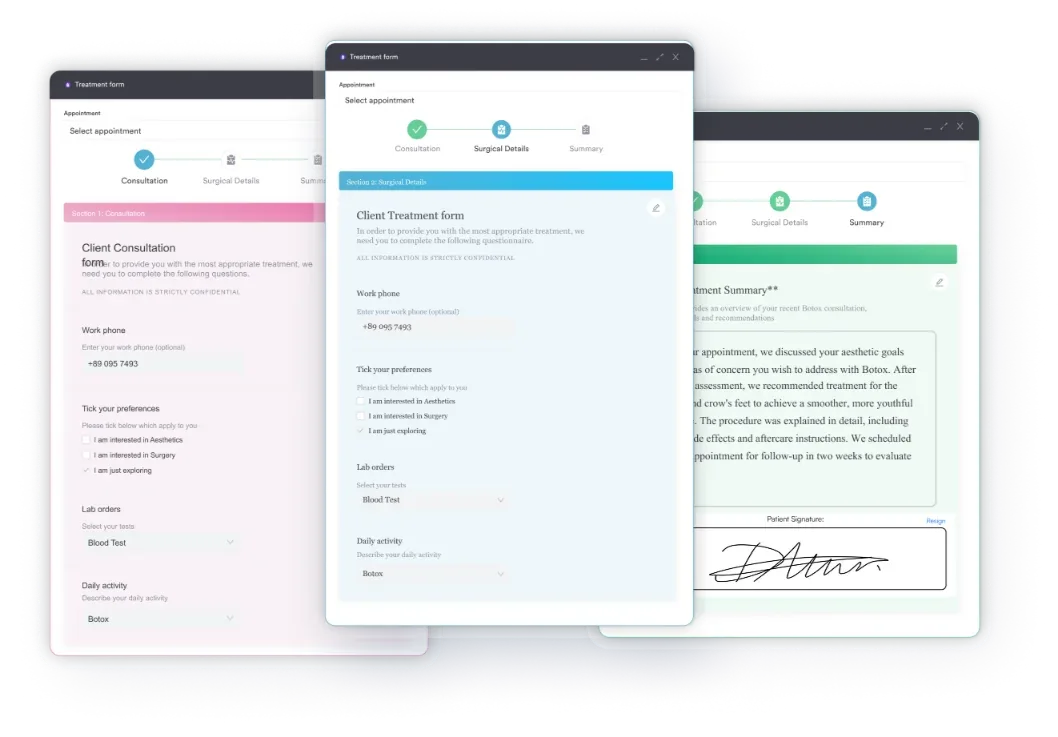
Standardizing intake and treatment documentation through digital forms reduces transcription errors between the clinical record and the billing system. When the administered dose and NDC are captured at the point of care and flow automatically into the billing workflow, unit errors and missing NDC fields become far less common.
Structured digital templates.
Build a J0775 charge capture checklist that travels with every Xiaflex vial from the fridge to the procedure room. Include: dose drawn, dose administered, lot number, NDC, residual waste volume, and the modifier to apply. Coders reviewing the note should see all five elements before submitting the claim.
Even well-documented claims for high-cost injectables like J0775 or J9312 get denied. Knowing the most common reasons helps billers respond quickly and prevent the same error from recurring.
Practices that implement structured time-saving features during charge capture significantly reduce first-pass denial rates on high-cost drug codes. When drug lot numbers, NDCs, and administered doses are locked into the clinical record at the moment of administration, billers spend far less time chasing documentation before deadlines.
Before submitting any J0775 claim, verify the code against authoritative sources. Code descriptions, coverage policies, and fee schedules update annually (and ASP rates update quarterly). Rely on primary sources, not assumptions carried over from a prior year.
Pabau’s prescription management software gives practices a centralized record of drug purchases, administered doses, and NDC data that feeds directly into billing documentation. For practices performing regular Xiaflex injection cycles, having this data structured and searchable reduces the administrative burden on both clinical and billing staff.
HCPCS code J0775 is a high-stakes billing code: The drug cost is significant, the documentation requirements are specific, and payer scrutiny on collagenase claims is consistent.
Getting unit calculations right, applying JW or JZ modifiers correctly, and securing prior authorization before the first injection are the three levers that most directly affect clean claim rates and cash flow for Dupuytren’s and Peyronie’s practices.
Pabau’s integrated practice management platform connects drug administration records to billing workflows so the data billers need is captured at the point of care, not reconstructed from memory after the fact. To see how practices use Pabau to reduce drug claim errors and shorten reimbursement cycles, book a demo.

Billing another high-cost HCPCS drug code? Our guide to HCPCS A9502 covers the same unit-conversion and modifier logic for radiopharmaceutical claims.
Managing other biologic injectables? HCPCS J1745 follows the same buy-and-bill and JW/JZ modifier rules as Xiaflex.
Coding troponin elevation without coronary disease? ICD-10 code I5A It covers troponin elevation caused by sepsis, renal failure, or chemotherapy rather than coronary disease.
HCPCS code J0775 is the drug billing code for injection of collagenase clostridium histolyticum (Xiaflex) at 0.01 mg per unit of service. It is maintained by CMS under the Drugs Administered Other Than Oral Method category and is used by hand surgeons, orthopedic practices, and urologists billing for Xiaflex injections under Medicare Part B and commercial insurance.
Each 0.01 mg of collagenase equals one billable unit. A standard 0.58 mg dose for Dupuytren’s contracture = 58 units. Verify the administered dose in the procedure note and calculate units accordingly. Do not default to the full vial size (90 units) unless the entire vial was administered.
Only two ICD-10-CM codes are covered for J0775: M72.0 (Palmar fascial fibromatosis, Dupuytren’s contracture) and N48.6 (Induration penis plastica, Peyronie’s disease). Claims submitted with any other diagnosis code will be denied as non-covered or investigational by Medicare and most commercial payers.
Medicare Part B generally does not require prior authorization for J0775, relying instead on LCD-based coverage criteria. Most commercial payers, including UnitedHealthcare, Cigna, Moda Health, and AmeriHealth Caritas DC, do require prior authorization before the first Xiaflex injection. Verify requirements with the patient’s specific plan before administering the drug.
Use modifier JW on a separate claim line for any Xiaflex drug drawn from the vial but not administered (waste). Use modifier JZ when the entire vial contents are administered with zero waste. Both modifiers became mandatory under CMS policy updates in 2023. Omitting them on applicable claims can result in denials or audits.
Yes. J0775 is separately payable as an ancillary drug under CMS’s quarterly ASC Addendum BB when billed alongside an approved ASC surgical procedure on the same claim. Confirm with your MAC how collagenase is reimbursed in your specific ASC before billing. The related procedure codes, CPT 20527 and CPT 26341, should also be verified against ASC-specific payment rules.