CPT code 93503: Swan-Ganz catheter billing and modifiers
CPT code 93503: Official descriptor and procedure overview In the AMA CPT code s...

Last Updated: Oct 23, 2026
J1745 is the HCPCS Level II code for injection, infliximab, excludes biosimilar, 10 mg.
Let Pabau's smart automation suggest the right codes, reduce claim denials, and keep your practice compliant—effortlessly.
Automate repetitive tasks and focus on what matters most—your patients.
Reduce coding errors and ensure compliance with the latest regulations.
Clean claims, fewer denials, and faster reimbursements.
Powerful insights and reporting to help your practice thrive.
HIPAA compliant SOC 2 certified GDPR-compliant Trusted by 4,000+ clinics worldwide

HCPCS Code J1745 describes injection, infliximab, excludes biosimilar, 10 mg – the code for Remicade (Janssen) administered by infusion.
Bill in 10 mg increments: a 200 mg dose requires 20 units (J1745 x 20). Vials are 100 mg each, so wastage must be tracked and reported.
The JW modifier captures discarded drug from single-dose vials, the JZ modifier attests that zero drug was wasted, and the EJ modifier applies to subsequent claims in a defined course of infliximab therapy.
Biosimilar products (Inflectra, Renflexis, Avsola) are billed under separate Q-codes, not J1745. Mixing them up triggers claim denials and compliance flags.
HCPCS Code J1745 describes the injection of infliximab, excluding biosimilar, in 10 mg increments. According to the CMS HCPCS Level II program, J1745 falls under the drug administration category for medications given other than by oral method. The code’s full descriptor reads: “Injection, infliximab, excludes biosimilar, 10 mg.” Some payer systems list it as procedure code J1745.
Infliximab is a chimeric monoclonal antibody that blocks tumor necrosis factor-alpha (TNF-alpha), a cytokine involved in systemic inflammatory conditions. Remicade, marketed by Janssen (Johnson & Johnson), is the branded reference product that providers bill under J1745.
Overall, the FDA has approved infliximab for six conditions: rheumatoid arthritis (RA), Crohn’s disease, ulcerative colitis, ankylosing spondylitis, psoriatic arthritis, and plaque psoriasis. Rheumatology, gastroenterology, and infusion clinic providers are the most common billers. Many of those same billers also give IV tocilizumab, which bills under J3262 in 1 mg units.
Remicade is supplied as 100 mg of lyophilized infliximab per 20 mL vial. Because manufacturers dispense the drug in 100 mg containers but you bill it in 10 mg units, you need accurate unit calculation for clean claims.
For example, other HCPCS J-codes for injectable drugs, such as J1815, follow this same per-unit billing structure, though the unit size and mg-per-unit conversion differ by product.
The most common J1745 billing error is submitting the wrong unit count. Because J1745 is defined per 10 mg, the number of units billed must equal the total milligrams administered divided by 10. Enter that unit count in Item 24G of the CMS-1500 claim form, or its electronic equivalent, rounded up to whole units.
Standard dosing example: A patient with rheumatoid arthritis receives 200 mg of infliximab. The correct claim is J1745 x 20 (20 x 10 mg = 200 mg). The American College of Rheumatology coding resources and The Rheumatologist coding corner both confirm this as the standard calculation approach.
Infliximab is weight-based for most indications. For RA, CMS guidance specifies a standard dose of 3 mg/kg IV at weeks 0, 2, and 6, then every 8 weeks.
Providers must document the patient’s weight and the dose calculation in the clinical record because payers routinely cross-reference administered milligrams against body weight when reviewing claims. Good patient record documentation that captures weight at each visit protects against post-payment audits.
In practice, a few modifiers matter most for J1745 claims, and getting them right is the difference between clean reimbursement and a denial or audit flag. Modifier 25 also comes into play when an unrelated evaluation and management (E/M) service happens on the same day as the infusion.
CMS has identified Remicade (J1745) as a HCPCS code with single-dose containers. So when you open a vial but do not give the full contents, you must not pool, reuse, or quietly absorb the unused portion into overhead.
Instead, you bill the discarded amount on a separate claim line using J1745 with the JW modifier, and you document the wastage in milligrams in the medical record.
Example: A patient receives 360 mg of infliximab. The provider opens 4 vials (400 mg total). The correct billing is: J1745 x 36 for the administered dose, plus J1745 x 4 with the JW modifier for the 40 mg discarded.
The JW line must match exactly the underdosing amount documented in the infusion note. Submitting a JW line without matching documentation is a common audit trigger under the CMS Targeted Probe and Educate (TPE) program.
Palmetto GBA (Medicare Administrative Contractor, Jurisdiction M) conducted a pre-payment TPE review for J1745 covering April through June 2024. Inadequate wastage documentation was among the top findings. Other high-cost infused biologics.
Practices relying on automated billing workflows that link infusion records directly to claim generation reduce the risk of JW line omissions or mismatches.
The JZ modifier is the counterpart to JW. Since July 1, 2023, CMS has required the JZ modifier on J1745 claims billed from single-dose vials when no drug is discarded. It attests that the full vial contents reached the patient and nothing was wasted.
A claim from a single-dose container should carry either JW with a matching wastage line, or JZ, but never neither. Payers increasingly edit for the presence of one of the two, so leaving both off is a common denial trigger.
The EJ modifier flags that a drug claim is for a subsequent infusion within a defined course of therapy. For infliximab, a course of therapy means the full induction and maintenance sequence. Add EJ to J1745 on every claim after the initial infusion.
However, the first claim in the series does not carry EJ. As confirmed by The Rheumatologist coding corner, EJ applies to infliximab alongside other defined-course drugs such as erythropoietin and sodium hyaluronate.
Document each infusion visit with the patient’s weight, the ordered dose in mg/kg, the calculated milligram total, vials opened, vials used, and any discarded amount. This single infusion note provides everything needed to validate both the J1745 unit count and any JW modifier claim without additional chart requests during a payer audit.
Injectable stock is expensive, and medical spa inventory software keeps vial counts honest against what was billed.
HCPCS Code J1745 is explicitly restricted to the reference product infliximab (Remicade). Biosimilar versions of infliximab have their own separate codes, and billing a biosimilar product under J1745 is a coding error that most payers will flag on claim edit review. Using the wrong code can result in a denial, a refund demand, or a compliance finding.
Q5109 (Ixifi) was deleted effective December 31, 2025. It is not a valid code for 2026 dates of service and should not be billed going forward.
Payer preferred-product policies are shifting. According to a Point32Health provider bulletin, Remicade (J1745) became a non-preferred product for Harvard Pilgrim Health Care Commercial, Tufts Health Plan Commercial, and Tufts Health Direct members effective January 1, 2026. Avsola (Q5121) and Inflectra (Q5103) became the preferred options instead.
As a result, providers administering Remicade to members of plans with similar policies may face denials or need prior authorization. Always verify preferred status before the infusion date.
Biosimilar interchangeability designations from the FDA may also affect dispensing. As of the current code year, automatic substitution rights vary by biosimilar product and state law.
Do not assume a biosimilar can be substituted for Remicade without checking the FDA interchangeability status and your state pharmacy law. The inventory management system your practice uses should track each product’s HCPCS code separately so the right code always maps to the right drug in the dispensing record.
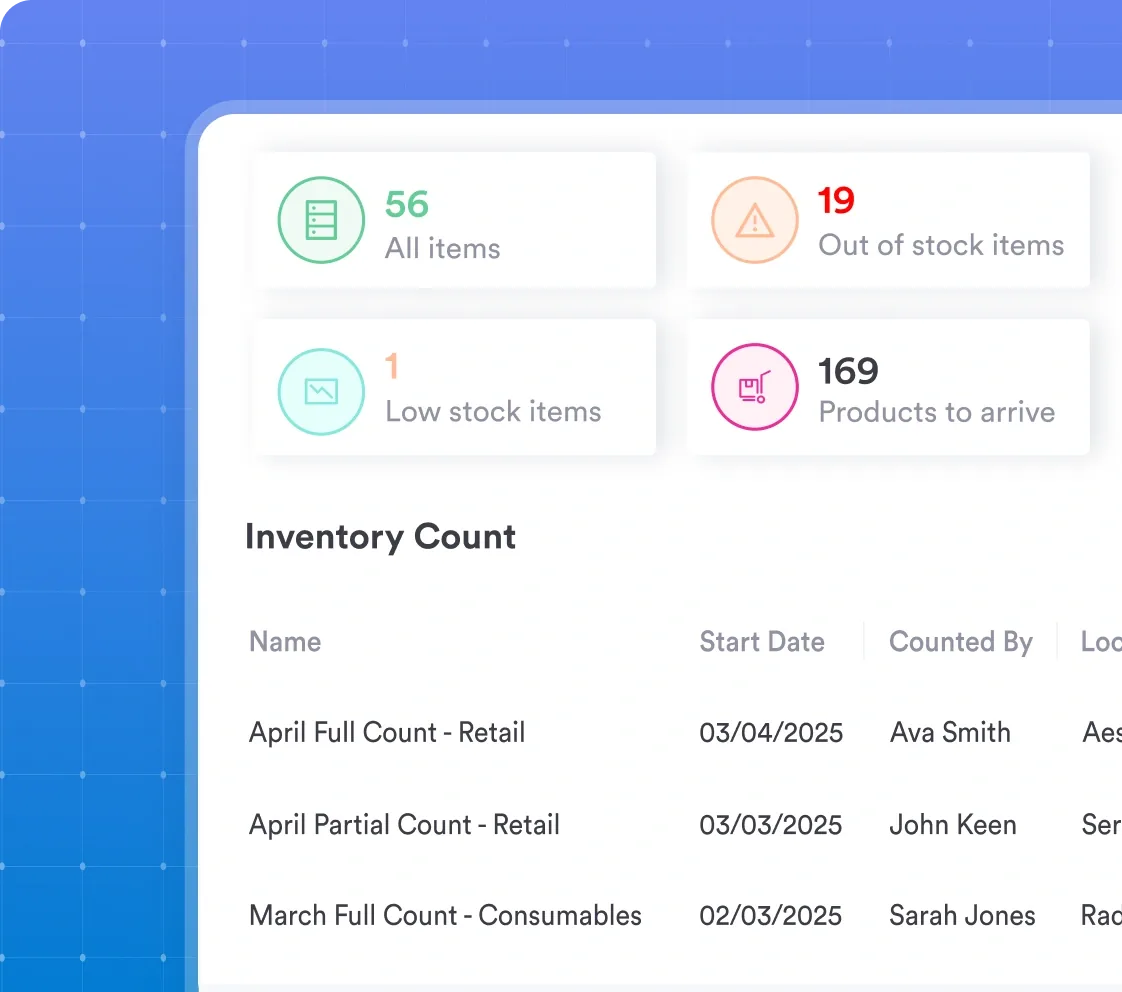

Pabau’s claims management tools link administered drug quantities directly to billing, so unit counts and modifier requirements are captured at the point of care, not reconstructed from memory at month end.

Medicare covers infliximab infusions for approved indications when clinical criteria and documentation requirements are met. Reimbursement follows the ASP (Average Sales Price) method for Part B drugs, with payment typically at ASP plus 6%.
Because ASP changes quarterly, the Medicare payment rate for J1745 shifts across the year. Use the CMS fee schedule tool to confirm the current payment amount for your MAC jurisdiction before projecting infusion revenue.
By contrast, hospital outpatient departments bill under OPPS (Outpatient Prospective Payment System), which calculates reimbursement differently from physician office billing under the Medicare Physician Fee Schedule.
Office-based infusion practices billing routine administration under CPT 96365, free-standing infusion centers.
Most commercial payers require prior authorization for J1745. Common documentation requirements include:
Prior authorization requirements vary by payer and plan year, so check the specific payer policy for each patient at each authorization renewal. Many commercial plans also apply step therapy, requiring a preferred biosimilar before they approve Remicade under J1745.
Some state Medicaid programs impose extra restrictions. Louisiana Medicaid, for instance, applies per-diagnosis and per-age-band unit caps on J1745 for provider types outside home infusion therapy and specialty pharmacy.
Home infusion therapy and specialty pharmacy providers are exempt from those unit caps, according to a Louisiana Department of Health Medicaid bulletin. Providers in states with similar Medicaid restrictions should verify billing eligibility before administering the drug under a Medicaid benefit.
Many state Medicaid programs and some commercial payers require providers to report the National Drug Code (NDC) alongside J1745 on the claim. NDC reporting captures the specific product lot administered. When your practice administers Remicade, you must enter the NDC for that specific vial lot in the appropriate claim field.
Practices without a system that captures NDC at the point of dispensing often piece this information together from packing slips after the fact, which introduces errors.
Run an annual crosswalk of your J1745 claims against payer preferred-product lists. A single commercial plan switching Remicade from preferred to non-preferred mid-year can convert a previously clean claim stream into a denial queue. Update your prior authorization workflows and inventory ordering at the start of each benefit year.
Claim denials for J1745 frequently trace back to missing documentation rather than coding errors. Both CMS and commercial payers expect the infusion record to support every element on the claim. The Palmetto GBA TPE review findings for J1745 underscore how often inadequate documentation drives denials during targeted audits.
Each infusion encounter record should contain all of the following:
In short, digital documentation systems that capture all of these fields in a structured infusion template make audit defense straightforward.
Most J1745 claim denials fall into five patterns. Recognizing them before submission is far less expensive than appealing a denial or responding to a TPE request. Medically Unlikely Edits (MUEs) also cap the units payable for J1745 on a single date of service, so payers automatically deny a unit count above the MUE limit.
As a result, structured billing workflows and compliance management tools that flag missing modifier conditions or authorization expiry before claim submission address all five error patterns in one place. Proactive claim scrubbing also catches errors that manual review misses, especially in high-volume infusion practices billing multiple infused products such as J2323 and J7120 alongside J1745. Australian practices bill the equivalent service through MBS item numbers, which carry their own descriptors and eligibility rules.
For broader infusion practice operational context. Practices managing complex biologics billing alongside other infused therapies also benefit from reviewing how EMR for IV therapy handles multi-drug infusion records.
Ultimately, accurate J1745 billing requires three things to align: the correct unit count derived from administered milligrams, the right modifiers applied in the right sequence, and documentation that substantiates every element of the claim. For practices administering Remicade regularly, claim errors and audit exposure compound quickly when any one of those elements is handled inconsistently.
Pabau’s claims management and digital documentation tools help infusion practices capture administered quantities, wastage, and modifier requirements at the point of care, so claims leave the practice clean. To see how Pabau handles infusion billing workflows, book a demo.

Coding Dupuytren’s contracture on a claim? Dupuytren’s contracture coding guide covers the billable code for palmar fascial fibromatosis and the documentation mistakes that most often trigger denials.
Coding knuckle pads for a claim? knuckle pads billing reference is the billable code for these benign fibrous plaques over the finger joints, needing no laterality subcode.
Coding necrotizing fasciitis on a claim? necrotizing fasciitis coding guide is the billable code for this fast-spreading infection and requires the causative organism code whenever documentation supports it.
HCPCS Code J1745 is used to bill for the injection of infliximab, excluding biosimilar products, in 10 mg increments. It specifically covers Remicade (Janssen), the reference brand of infliximab, administered by intravenous infusion for approved conditions including rheumatoid arthritis, Crohn’s disease, ulcerative colitis, ankylosing spondylitis, psoriatic arthritis, and plaque psoriasis.
A 200 mg dose is billed as 20 units of J1745 (J1745 x 20), because each unit represents 10 mg. Divide the total milligrams administered by 10 to calculate the correct unit count for any infliximab dose.
J1745 covers only Remicade, the reference product. Q5103 covers Inflectra (infliximab-dyyb, Pfizer) and Q5104 covers Renflexis (infliximab-abda, Samsung Bioepis/Organon). These are distinct biosimilar products with their own HCPCS codes. Billing a biosimilar under J1745, or vice versa, is a coding error that triggers denials and NDC mismatches.
The JW modifier is added to J1745 when drug is discarded from a single-dose vial after the patient’s dose has been administered. Bill the administered units on one claim line and the discarded amount on a separate J1745 line with JW, and document the exact wasted quantity in the infusion record.
The EJ modifier applies to every J1745 claim after the initial infusion in a defined course of therapy. It is not used on the first claim. Add EJ to all subsequent infliximab infusion drug claims to indicate the service is part of an ongoing treatment course.
Yes. Medicare Part B covers Remicade for FDA-approved indications when clinical criteria are met and documentation supports medical necessity. Reimbursement follows ASP plus 6% methodology and changes quarterly. Verify the current payment rate through the CMS Physician Fee Schedule look-up tool for your MAC jurisdiction before billing.
J1745 corresponds to Remicade, the reference (originator) version of infliximab manufactured by Janssen. Biosimilar versions such as Inflectra, Renflexis, and Avsola are clinically similar but are billed under their own Q-codes rather than under this code.