CPT code 93503: Swan-Ganz catheter billing and modifiers
CPT code 93503: Official descriptor and procedure overview In the AMA CPT code s...

Last Updated: Oct 23, 2026
J3490 is the HCPCS Level II code for unclassified drugs.
The Centers for Medicare and Medicaid Services (CMS) classifies J3490 under "Drugs Administered Other Than Oral Method" within the Healthcare Common Procedure Coding System (HCPCS) Level II. Its official descriptor is simply "Unclassified drugs."
For practices running IV therapy or infusion services, this code appears often, since the FDA approves new agents faster than CMS assigns dedicated J-codes.
Let Pabau's smart automation suggest the right codes, reduce claim denials, and keep your practice compliant—effortlessly.
Automate repetitive tasks and focus on what matters most—your patients.
Reduce coding errors and ensure compliance with the latest regulations.
Clean claims, fewer denials, and faster reimbursements.
Powerful insights and reporting to help your practice thrive.
HIPAA compliant SOC 2 certified GDPR-compliant Trusted by 4,000+ clinics worldwide

HCPCS Code J3490 covers injectable drugs with no specific HCPCS J-code, used across physician office, outpatient, and infusion settings
Every J3490 claim requires the drug name, dosage, NDC number, NDC units, and unit qualifier in item 24 of the CMS-1500 form
Using C9399 instead of J3490 in non-hospital outpatient settings is a billing error that can trigger overpayment recovery
Pabau’s claims management software helps practices attach NDC data and supporting documentation directly to J3490 claim lines
J3490 is the correct code when all three of these conditions are true: a clinician administers the drug by injection or infusion, the drug has no specific HCPCS J-code, and the billing setting is a physician office or non-hospital outpatient environment.
Common clinical scenarios for J3490 include newly approved injectable agents awaiting CMS code assignment, compounded injectable medications, and drugs used off-label that fall outside existing code descriptors. A deleted code can also leave a drug without a specific J-code. HCPCS code J0760, for injectable colchicine, ended in 2017 with no replacement, so payer policy decides whether J3490 applies.
Newer weight-loss injectables such as semaglutide (marketed as Wegovy) can also fall here when no specific J-code is active for the formulation or setting billed.
Most payers, though, exclude self-injected GLP-1 products like Wegovy from the medical benefit under Self-Administered Drug (SAD) rules. Billers apply the same logic to A4211. This scenario applies only to physician-administered routes of the drug.
NC Medicaid, for example, covers famotidine injection (Pepcid) under J3490 in the Physician Administered Drug Program (PADP), with coverage effective January 1, 2020. Similarly, NC Medicaid bills rezafungin for injection (Rezzayo) under J3490 effective July 31, 2023.
Understanding the code’s boundaries is as important as knowing when to use it. Review the table below for a quick reference on appropriate and inappropriate J3490 use cases.
Selecting the wrong NOC (not otherwise classified) code is one of the most frequent billing errors for injectable drugs. Each code serves a distinct setting or drug category, and payers audit the distinctions closely.
The CMS Article A55913 makes the C9399 boundary explicit: that code is reserved for new FDA-approved drugs or biologicals approved on or after January 1, 2004, for which CMS has not assigned a specific HCPCS code, and it applies in hospital outpatient (OPPS) settings only.
Using C9399 outside of OPPS is a billing error and may result in overpayment recovery. C9399 sits within the same “C” HCPCS series CMS uses for hospital outpatient items.
A quick decision rule: if the drug is a biologic, check J3590 first. If the drug is antineoplastic, J9999 is the right code.
If the setting is a hospital outpatient department and the drug is FDA-approved after January 2004 without a specific code, use C9399. Everything else injectable without a specific J-code in a non-hospital setting points to HCPCS Code J3490.
Rituximab already carries its own code, J9312. Billing either drug under J3490 instead of its assigned code would be incorrect.
Check the AAPC Codify database before submitting any J3490 claim. Search the drug name first to confirm no specific J-code exists. A newly assigned J-code that billing staff missed is one of the most common reasons J3490 claims trigger medical record requests or denials. For EMR workflows supporting infusion practices, building this lookup step into your billing protocol saves rework downstream.
Incomplete documentation is the single largest driver of J3490 denials. Because the code has no inherent drug description, the claim itself must supply everything a payer needs to evaluate medical necessity and price the drug accurately.
Per CMS Article A54880, which governs NOC drug documentation requirements, every J3490 claim must include the following on the claim line and in supporting records. This is also consistent with HIPAA compliance requirements for medical offices regarding accurate claims submission.
For compounded drugs, the American Academy of Ophthalmology’s coding guidance is specific: list each component drug and its dosage in the descriptor field, and list all NDCs for each drug administered in item 24 of the CMS-1500.
A compounded injection with three components therefore requires three NDC entries on the claim. This approach applies to any specialty using compounded injectables, not just ophthalmology.
The NDC code for J3490 must appear in the correct format. CMS requires the 11-digit format (5-4-2 segments, e.g., 12345-6789-01), not the 10-digit format printed on many drug packages. If a package shows a 10-digit NDC, billers must add a leading zero to the correct segment to reach 11 digits.
On the CMS-1500, the NDC goes in the shaded area of item 24A through 24G on the relevant claim line. The format is: qualifier “N4” followed by the 11-digit NDC, then a space, then the unit qualifier and quantity.
Blue Cross Blue Shield of Texas explicitly checks NDC numbers and NDC units submitted with unlisted drug codes to validate J3490 claims, a policy that reflects broader commercial payer practice. On electronic claims, billers report the same NDC data in the 837P or 837I format rather than on the paper CMS-1500.
State Medicaid programs each have their own NDC submission rules. North Carolina Medicaid examples verify that J3490 is a viable billing vehicle for specific drugs under state PADP programs, but you shouldn’t assume NC rules apply in other states.
Confirm individual state Medicaid billing requirements directly with the relevant state agency. Documentation requirements for unclassified drug codes follow a similar logic to other procedure codes that require detailed claim support.
In software for weight loss clinics, each injection links to the patient’s dose schedule and progress record.

Pabau’s claims management software lets billing teams document drug name, NDC, dosage, and route directly against each appointment record, so J3490 claims go out complete the first time.

J3490 does not have a fixed Medicare fee schedule rate. Because the code is a placeholder for any unclassified drug, the payer determines reimbursement on a claim-by-claim basis after reviewing the submitted drug details.
Medicare Part B typically reimburses physician-administered drugs at the Average Sales Price (ASP) plus a percentage, but that formula applies to drugs with specific J-codes. For J3490, the reimbursement process is manual review, which is why complete documentation is essential.
Commercial payers handle J3490 differently. Some reimburse at invoice cost plus a handling fee. Others apply an internal formulary price for the named drug.
Blue Cross Blue Shield and similar large commercial payers use the submitted NDC to cross-reference their own drug databases before setting payment. Incomplete NDC data almost always results in either denial or a request for additional information that delays payment.
The CMS Physician Fee Schedule lookup does not return a pre-set allowable for J3490 specifically, which reflects the code’s unclassified nature. Practices should request prior authorization for high-cost drugs billed under J3490 whenever payer policy requires it, and obtain written documentation of the authorization before administering the drug.
For claims management software users, tracking J3490 reimbursement outcomes by drug name is worth building into reporting. Over time, this data reveals which drugs under J3490 consistently reimburse at expected rates and which regularly trigger reviews.
Practices that track these patterns through their revenue cycle management and billing workflows tend to catch systematic underpayments earlier.
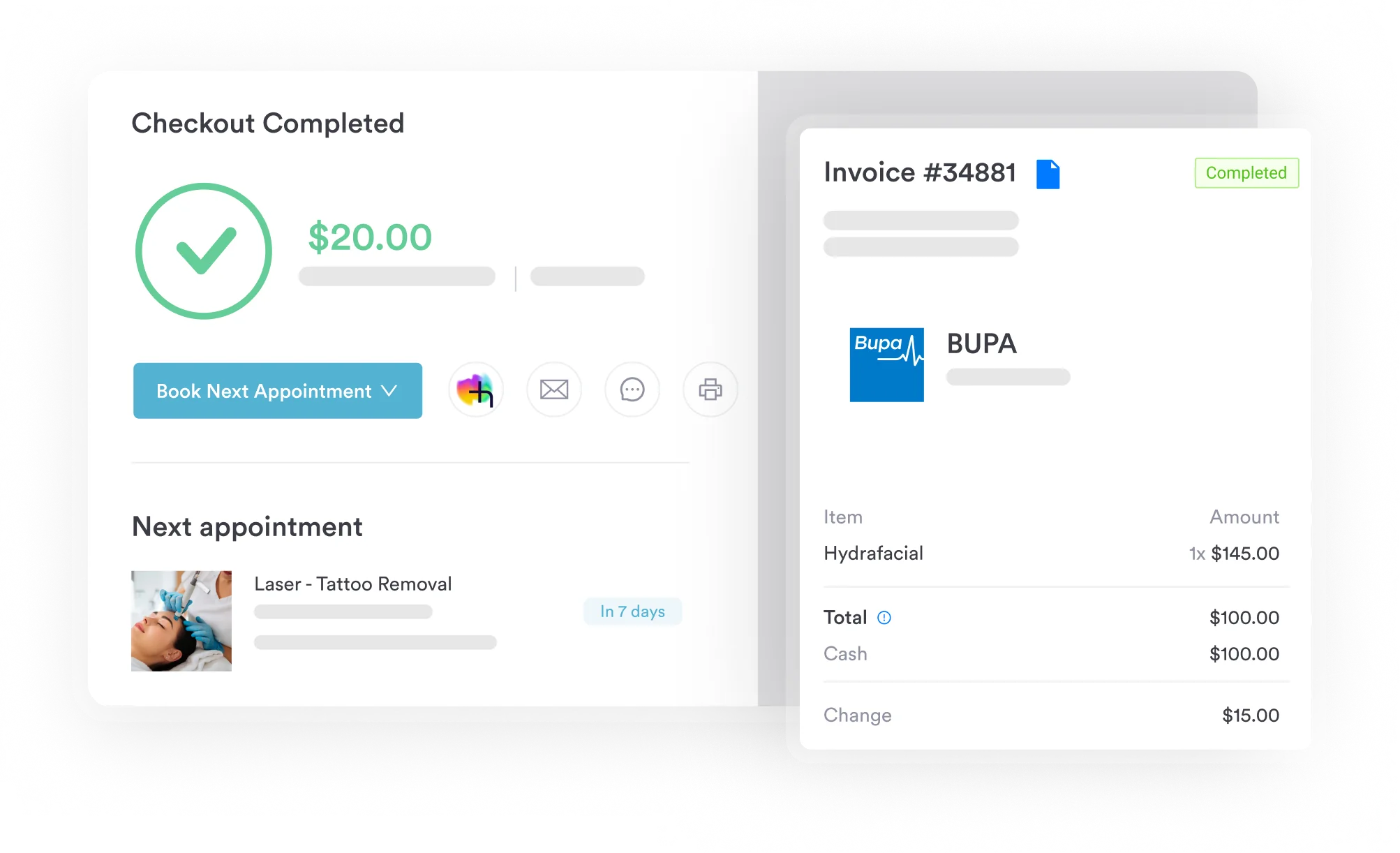
Request a fee schedule or prior authorization confirmation in writing before administering any high-cost drug that will be billed under HCPCS Code J3490. For high-cost injectable procedures such as IVF CPT codes, an unanticipated denial creates both a cash flow problem and a patient billing dispute. Document the payer’s verbal or written rate confirmation in the patient record at the time of service.
J3490 claims fail for predictable reasons. Billers who understand the patterns can build checks into their workflow before claims leave the practice.
For practices managing prescription management workflows alongside injectable drug billing, linking the prescribing record directly to the claim line reduces the risk of descriptor field errors.
When the administering clinician documents the drug, dosage, and route at the point of care, that information flows into the claim without a manual re-entry step. This also makes it easier to confirm that the diagnosis code and the drug administered match on the claim.

No two payers process J3490 identically. The code’s unclassified nature means each payer maintains its own internal review process for evaluating the drug name and dosage submitted on the claim.
First Coast Service Options (FCSO) and other Medicare Administrative Contractors (MACs) confirm that J3490 and J9999 are both unlisted codes for injection services. MACs apply Local Coverage Determinations (LCDs) and National Coverage Determinations (NCDs) to evaluate whether the submitted drug meets medical necessity standards.
Medicare does not cover every drug billed under J3490, even when the drug is FDA-approved. Practices should check the HCPCS code lookup tool and the CMS Medicare Coverage Database for LCD applicability before submitting.
State Medicaid programs use J3490 within their PADP programs for specific approved drugs. Coverage and reimbursement amounts vary widely by state.
The NC Medicaid examples in this article (famotidine injection and rezafungin) show how state programs issue drug-specific billing bulletins that define J3490 coverage for particular agents. Billers must review their state’s current Medicaid bulletins rather than relying on another state’s rules.
For drugs purchased under a 340B agreement, many state programs require the UD modifier on the J3490 claim line to flag the discounted acquisition cost.
BCBSTX verifies NDC numbers and units submitted with J3490 as part of its standard claims adjudication. Many commercial payers require prior authorization for drugs billed under unclassified codes.
Some require a Letter of Medical Necessity (LMN) documenting why a classified drug was not used. Review the specific payer’s provider policy bulletin for J3490 or unlisted drug codes before the first claim submission.
For practices distinguishing physician-administered drug billing from unclassified biologics such as J3590 across multiple payers, maintaining a payer-specific reference sheet for J3490 requirements cuts down on rework.
Practices that also manage related billing areas, such as specialty injectable drug procedures, often find that the same payer authorization workflows apply across multiple unclassified code categories.
HCPCS Code J3490 is a necessary tool for billing injectable drugs that lack specific HCPCS codes, but it demands more documentation rigor than standard J-codes. The NDC, unit qualifier, drug descriptor, and medical necessity link all have to be present and correct before the claim leaves the practice.
Pabau’s claims management software helps billing teams build J3490 documentation requirements into the point-of-care workflow. Pabau captures drug name, dosage, route, and NDC at the clinical record level, and they flow directly into the claim, reducing the manual re-entry that drives most J3490 errors. To see how Pabau handles injectable drug billing documentation, book a demo.

Handling emergency visits alongside injectable billing? CPT code 99284 covers documentation for level 4 emergency department visits.
Billing durable medical equipment too? HCPCS code A7032 walks through nasal mask cushion replacement billing.
Need a reference for therapy billing? CPT code 97124 details massage therapy documentation and reimbursement rules.
HCPCS Code J3490 is used to bill for injectable drugs that do not have a specific HCPCS J-code assigned to them. It applies in physician office and non-hospital outpatient settings for any route of injection (intravenous, intramuscular, subcutaneous) when no more specific code exists.
The NDC for J3490 is specific to the drug being administered. There is no single NDC assigned to J3490 itself. Billers must enter the 11-digit NDC of the actual drug administered in item 24 of the CMS-1500, along with the unit qualifier (UN, ML, GR, or F2) and quantity.
J3490 covers unclassified drugs broadly, while J3590 is specifically for unclassified biologics. If the drug being administered is a biologic agent (such as a biosimilar or monoclonal antibody) without a specific J-code, J3590 is the correct code, not J3490.
Yes. Compounded injectable drugs without specific HCPCS codes are billed under J3490. Each component drug’s name, dosage, and NDC must be listed in the descriptor field and item 24 of the CMS-1500. Multi-component compounds require a separate NDC entry for each ingredient.
J9999 is the correct code for unclassified antineoplastic drugs. If the injectable being billed is a chemotherapy or antineoplastic agent without a specific J-code, use J9999 rather than J3490. Using J3490 for antineoplastic drugs is a coding error flagged by MAC contractors and the OIG.
J3490 is a HCPCS Level II code, not a CPT code, even though it is often searched as one. Its official descriptor is “Unclassified drugs,” and it is used to bill injectable drugs that have no specific J-code assigned.
No. J3490 has no single drug name because it covers any unclassified injectable. The biller supplies the exact medication, dosage, and 11-digit NDC on the claim so the payer knows what was administered.
Yes. You can bill J3490, but it has no set fee schedule amount. Payers price each claim manually after reviewing the submitted drug name, NDC, and supporting documentation.