HCPCS code E0198: Water pressure pad billing guide
HCPCS code E0198 is a water pad for a standard mattress HCPCS code E0198 is the ...

Last Updated: Oct 13, 2026
A7033 is the HCPCS Level II code for pillow for use on nasal cannula type interface, replacement only, pair.
Medicare pays for up to two pairs a month once the patient's CPAP or BiPAP therapy is documented and compliant. Denials rarely come from the code itself. They come from the unit, the refill date, or a supply file assembled after delivery instead of before it.
Let Pabau's smart automation suggest the right codes, reduce claim denials, and keep your practice compliant—effortlessly.
Automate repetitive tasks and focus on what matters most—your patients.
Reduce coding errors and ensure compliance with the latest regulations.
Clean claims, fewer denials, and faster reimbursements.
Powerful insights and reporting to help your practice thrive.
HIPAA compliant SOC 2 certified GDPR-compliant Trusted by 4,000+ clinics worldwide

HCPCS Code A7033 covers replacement nasal pillows for a nasal cannula type interface, and one unit is a pair.
Medicare allows up to two pairs a month for a CPAP or BiPAP user with documented obstructive sleep apnea.
Billing a unit per single pillow instead of per pair is the most common reason A7033 claims are denied.
Three items must be dated before the delivery date: the signed order, the practitioner note, and the refill request.
Practice management software like Pabau tracks each patient’s replacement cadence and keeps the A7033 paper trail on one claim record.
The official descriptor for A7033 reads: pillow for use on nasal cannula type interface, replacement only, pair. The code is active, sits in the A-series for medical and surgical supplies, and is maintained by the Centers for Medicare and Medicaid Services (CMS).
Run any HCPCS code lookup against two sources of truth, and nothing else. The quarterly CMS HCPCS release carries the current descriptor and status. The PDAC Product Classification List tells you which specific mask products a manufacturer has cleared to bill under A7033.
A7033 covers only the pillow inserts that seal at the nostril openings. The mask frame, the headgear, and the tubing each bill under their own code. The nasal mask cushion, which sits over the nose, has a separate code entirely.
Use A7033 when you dispense replacement pillow inserts to a patient whose mask is a nasal pillow style. The device behind it can be any positive airway pressure machine. The code captures the pillow supply only, never the frame, the headgear, or the tubing.
Billers looking for a BiPAP HCPCS code often land on this one by mistake. There is no separate interface code by device type. The machine bills under E0470 or E0471, plain CPAP bills under E0601, and the pillows bill under A7033 whichever machine drives them.
A7033 also doesn’t apply to nasal mask cushions or full face mask cushions. Coding a cushion as a pillow creates a mismatch with the interface on the device order. That mismatch is what an auditor checks first. A patient moved onto an oral appliance under E0486 stops needing PAP supplies at all.
Medicare covers A7033 for a patient with documented obstructive sleep apnea, an active PAP device, and a signed order that predates delivery. CMS sets those conditions in Coverage Article A52467. Tracking PAP therapy compliance documentation is what keeps that coverage in force month to month.
Commercial payers borrow the same framework but not the same numbers. Some run their own frequency schedules, and some require prior authorization on PAP supplies that Medicare pays without it. Check the policy per plan before you dispense, not after the denial.
Good practice management software for medical practices turns supplies used in a visit into billed line items automatically.
Six documents make an A7033 claim defensible, and three of them have to be dated before the delivery date. That split is what decides the outcome of a post-payment review. Strong medical documentation workflows and HIPAA-compliant record keeping are what make the split hold under pressure.
Dated before the pillows leave your shelf:
Two of those three come from someone else’s office, which is where the delay usually sits. The signed order and the practitioner note start with the prescriber. Request both the day the referral lands rather than the day you plan to ship.
The next three are created at delivery or in the months that follow. They prove the supply reached the patient and that therapy is still working.
An auditor rebuilds the timeline from the delivery date, not the claim date. So file every document against the delivery date it belongs to. A medical chart audit then becomes a lookup instead of a hunt through three systems, and suppliers keep those files for at least seven years.
Screen the delivery date before the claim goes out. If the signed order, the practitioner note, or the refill contact carries a later date than the delivery, the claim is not billable yet. Catching that at the point of order costs a phone call. Catching it at recoupment costs the whole payment.
There’s no single national price for A7033. The allowed amount comes from the DMEPOS fee schedule and changes by state, and competitive bidding areas have their own rates. Check your own locality in the CMS DMEPOS fee schedule before you quote a figure to anyone.
A7033 is a low-dollar line, so the margin lives in volume and in clean claims. One recoupment on a frequency error wipes out the payment on several correct pairs. That math is the reason the cadence below is worth tracking properly.
Medicare allows up to two pairs of A7033 nasal pillows per month, and a third pair in the same month denies automatically. That figure is a ceiling, not a schedule. Most patients replace less often, and billing the ceiling every month is itself a review trigger.
The number that governs each claim is the expected end date of the patient’s current supply. Both refill windows hang off it. Contact the patient no sooner than 30 days before that date, and deliver no sooner than 10 days before it.
A cadence a practice can keep current:
The annual review should also catch therapy that has ended. Patients treated at a weight management practice are sometimes retitrated or taken off PAP therapy entirely. Auto-shipping through that change bills supplies for a device nobody is using.
Frequency limits are policy driven and move with LCD updates. Verify the current allowance in Coverage Article A52467 before dispensing. Billing from a schedule you memorized two years ago is how suppliers end up repaying claims that looked fine at the time.
A7033 belongs to a family of PAP interface and accessory codes, and each one runs on its own clock. The filter code A7038 and the heated tubing code A4604 renew on completely different schedules to the pillows. The table below puts the whole family on one axis.
Read that table by unit of service first. A7033 is the only row billed as a pair, which is why quantity errors cluster on this code. Our guide to A7031 covers the full face mask interface in the same detail.
The pairing that trips billers up most is A7033 against A7032. Pillows sit inside the nostrils, cushions seal over the nose. When the chart doesn’t say which, check the mask model on the device order rather than guessing from the patient’s description.
Bill A7033 on an electronic claim with one unit per pair, a supporting sleep apnea diagnosis, and the KX modifier. The delivery date has to fall later than every document in the file.
The seven steps below are the order that catches problems while they are still fixable.
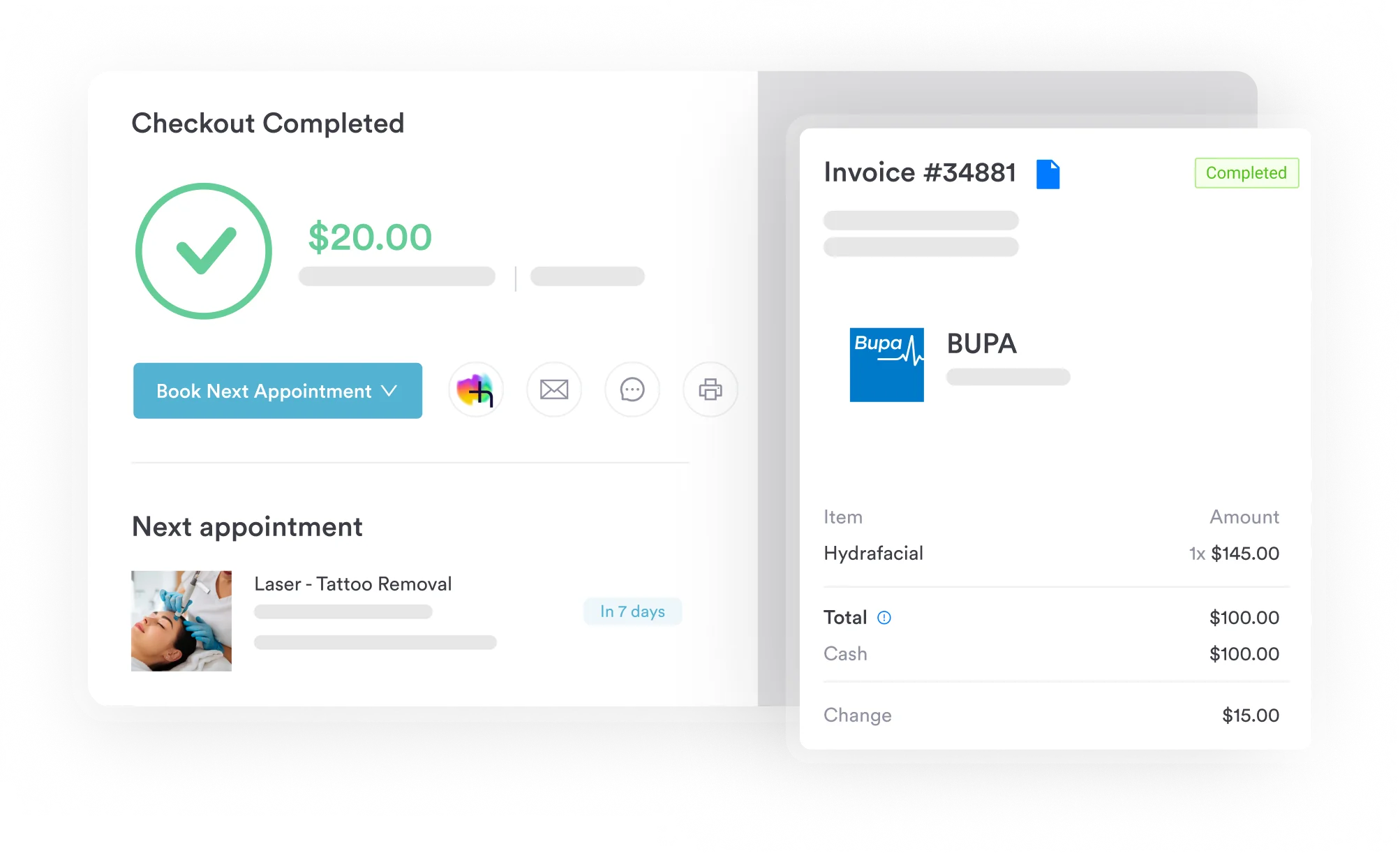
Most A7033 denials trace back to seven recurring errors, and every one of them is visible before submission. Screening for them at the point of order is cheaper than reworking claims later.
Four modifiers carry almost all of the traffic on PAP supply claims. The wrong one turns a payable claim into a write-off, or moves a balance to the patient that you are not allowed to bill.
KX belongs on a compliant claim, and GA belongs on a supply the patient wants outside policy. GZ just means you skipped the notice.
Every A7033 claim needs an ICD-10 code that supports PAP therapy, and G47.33 covers most of them. The diagnosis has to appear in the clinical record and has to be one the applicable PAP policy recognizes. A code the LCD excludes denies on medical necessity, whatever else is in the file.
G47.33 pairs with A7033 on the large majority of claims. Check it against the current PAP policy before submission anyway. The LCD names both the eligible codes and the AHI or RDI thresholds behind them. Coverage policy is revised, and old crosswalks quietly go stale.
Cross-reference the diagnosis code on every A7033 claim against the active LCD, using the CMS Medicare Coverage Database rather than a third-party code site. An excluded diagnosis triggers a medical necessity denial even when the order, the compliance data, and the delivery confirmation are all in place.
Plenty of suppliers run this cadence across three places. Delivery dates sit in a spreadsheet, signed orders sit in a shared drive, and the refill calls live in someone’s memory. It works until an auditor asks for six documents on one date, or until a refill goes out four days early.
Practice management software like Pabau puts the whole trail on the patient record instead. The dispensed pair is logged against the patient with its date and quantity. The signed order and the delivery confirmation attach to the same record. The refill contact becomes a reminder rather than a habit.
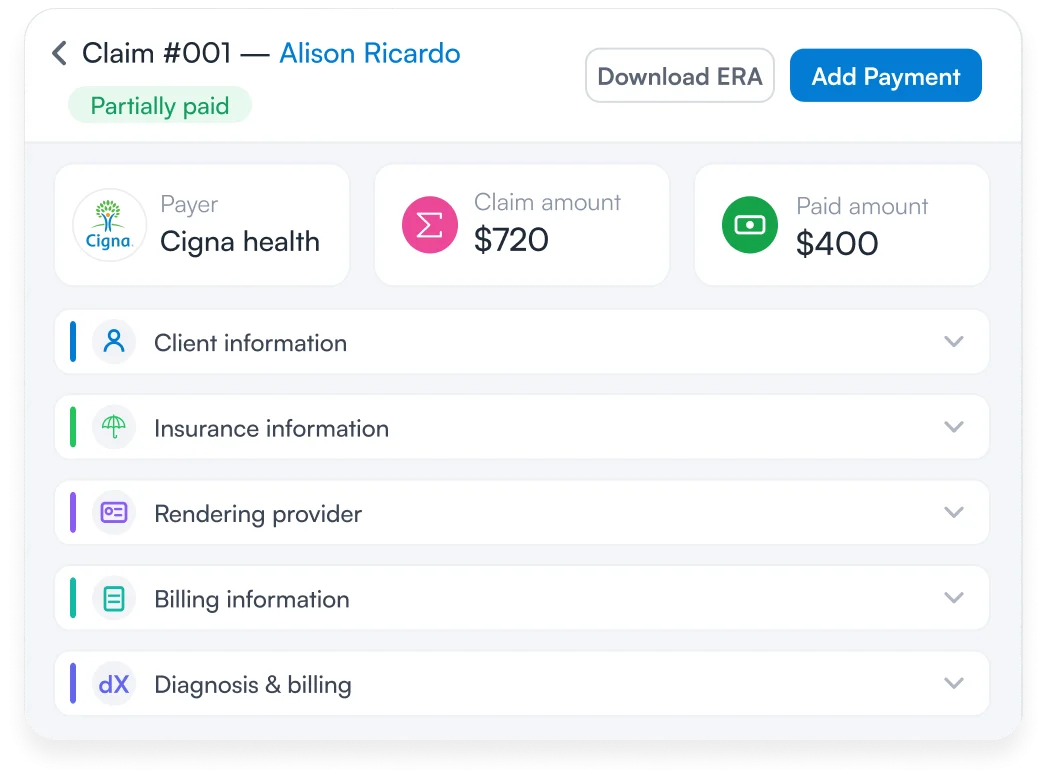
The practical outcome is a shorter list of things to remember. Your team sees the expected end date on the record before they take the refill call. The file an audit would ask for is already assembled. Nothing has to be rebuilt from invoices 12 months later.

Keep every A7033 order, delivery confirmation, and compliance download on the patient record. Refills go out inside the Medicare window, and a records request becomes a lookup.

A7033 is an easy code to select and an easy claim to lose. The coding decision takes seconds, because there is only one nasal pillow code and one unit of service. What decides payment is the calendar around it.
So put your effort into one date per patient: the day the current supply is expected to run out. Work the refill call 30 days ahead of it, ship inside 10 days of it, and date every document against the delivery. Denials on this code mostly disappear.
The trade-off worth remembering sits in that allowance. Two pairs a month is what Medicare permits, not what most patients need. Billing it every month invites the review you were trying to avoid. Book a demo to see how Pabau keeps A7033 replacement dates and claim documentation on one patient record. Front-desk data entry and back-office coding both feed cash collection, so errors compound downstream.

Billing the full face mask interface too? HCPCS Code A7031 covers the sibling code with the tightest replacement limit in the PAP family.
Handling refills on another recurring supply? HCPCS Code A4404 applies the same Medicare refill documentation rules to ostomy supplies.
Billing rented equipment as well as supplies? HCPCS Code E0256 shows how a hospital bed is priced and documented under Part B.
Need the rules on paperwork signed before the service? HCPCS Code G0179 covers physician recertification timing on home health episodes.
HCPCS Code A7033 is used to bill replacement nasal pillows for a nasal cannula type interface, on CPAP and BiPAP therapy. One unit is a pair of pillows. The code sits in the HCPCS Level II A-series, which covers medical and surgical supplies.
A7033 is billed per pair. One unit equals one pair, which is two pillows. Billing two units for two individual pillows is wrong, and it is the most common reason these claims are denied. Bill one unit for every pair dispensed.
Yes. Coverage needs a documented obstructive sleep apnea diagnosis and an active PAP device on file. It also needs documented device compliance and a signed order from the treating practitioner. CMS Coverage Article A52467 and the applicable Local Coverage Determination set those conditions.
Medicare allows up to two pairs of nasal pillows a month under A7033. Two further timing rules apply to each refill. You may contact the patient no sooner than 30 days before the current supply ends, and deliver no sooner than 10 days before it ends. Verify the current allowance in Coverage Article A52467, since frequency limits change.
A7033 covers the pillow inserts that seal inside the nostrils on a nasal pillow mask. A7032 covers the replacement cushion for a nasal mask, which seals over the nose instead. Applying either code to the wrong mask type conflicts with the device order and is a frequent audit trigger.
Yes, when the policy criteria are met and the documentation is on file. A7033 filed without KX denies as not medically necessary, however complete the supply file is. Use GA instead when you expect a denial and hold a signed Advance Beneficiary Notice.
The interface codes are A7030 for a full face mask and A7031 for its interface. A7032 covers a nasal mask cushion and A7033 covers nasal pillows. A7034 covers a nasal interface, A7035 headgear, A7038 disposable filters, and A4604 heated tubing. Each carries its own replacement limit.