CPT code 51797: Intra-abdominal voiding pressure add-on
What CPT code 51797 covers CPT code 51797 is the add-on code for intra-abdominal...

Last Updated: Oct 19, 2026
J1820 is the CCSD code for cholecystectomy with exploration of common bile duct. Surgeons bill it when they remove the gallbladder through an open incision and also open the bile duct to clear stones or check a blockage. UK private medical insurers, including Bupa, AXA Health and Aviva, use it to pay the surgeon and anaesthetist.
The claim turns on one detail in the operative note: the duct incision. Without it, the insurer will expect J1800 instead. A laparoscopic operation takes its own code, J1822. Freedom Health Insurance rates J1820 as Major and pays the surgeon £550 on its July 2026 schedule.
Let Pabau's smart automation suggest the right codes, reduce claim denials, and keep your practice compliant—effortlessly.
Automate repetitive tasks and focus on what matters most—your patients.
Reduce coding errors and ensure compliance with the latest regulations.
Clean claims, fewer denials, and faster reimbursements.
Powerful insights and reporting to help your practice thrive.
HIPAA compliant SOC 2 certified GDPR-compliant Trusted by 4,000+ clinics worldwide

CCSD code J1820 bills an open cholecystectomy in which the surgeon also opens and explores the common bile duct.
The laparoscopic version has its own code, J1822, and removing the gallbladder alone is J1800 (open) or J1830 (laparoscopic).
Pair J1820 with a bile duct diagnosis such as K80.3, K80.4, K80.5 or K83.1, never a gallbladder-only code.
UK private insurers such as Bupa, AXA Health and Aviva expect elective J1820 surgery to be pre-authorised against the code you bill.
Freedom Health Insurance rates J1820 as Major, paying £550 to the surgeon and £357 to the anaesthetist on its July 2026 schedule.
CCSD code J1820 covers cholecystectomy with exploration of the common bile duct. The surgeon removes the gallbladder and also opens the common bile duct, a step called choledochotomy, to examine, clear or treat it.
CCSD stands for Clinical Coding and Schedule Development. The CCSD Group maintains the schedule that UK private medical insurers use to identify procedures and pay specialists. Our CCSD procedure codes guide explains how the schedule fits together.
The difference between J1820 and J1800 comes down to one statement in the operative note. If the note never records that the duct was opened, an insurer reviewing the claim will treat it as J1800.
Surgeons explore the common bile duct when stones or a blockage sit in the duct as well as the gallbladder. Insurers look closely at J1820 because duct exploration adds time and risk to a routine cholecystectomy.
Accepted clinical indications include:
Insurers often ask whether ERCP was tried and, if not, why. One sentence on this in the pre-authorisation request and the operative note heads off the most common clinical query.
Cholecystectomy with exploration of the common bile duct follows a set sequence. Knowing each step helps the surgeon write a note that an insurer reviewer can match to J1820.
J1820 describes the open operation. When the same work is done laparoscopically, the schedule gives it its own code, J1822. For a laparoscopic operation converted to open, record why it was converted and check the insurer’s rule for conversions before you choose the code.
Choosing the wrong code in the J18 range is the most common J1820 error. The table shows each neighbouring code on Freedom Health Insurance’s chapter 11 schedule of fees, updated July 2026.
On this schedule, a cholecystectomy with a cholangiogram alone (J1882) pays the surgeon £200 more than J1820. The fee is no guide to the code, so bill the operation the note describes.
Two facts in the operative note settle which of these codes applies. One is the approach, and the other is what the surgeon did to the duct.
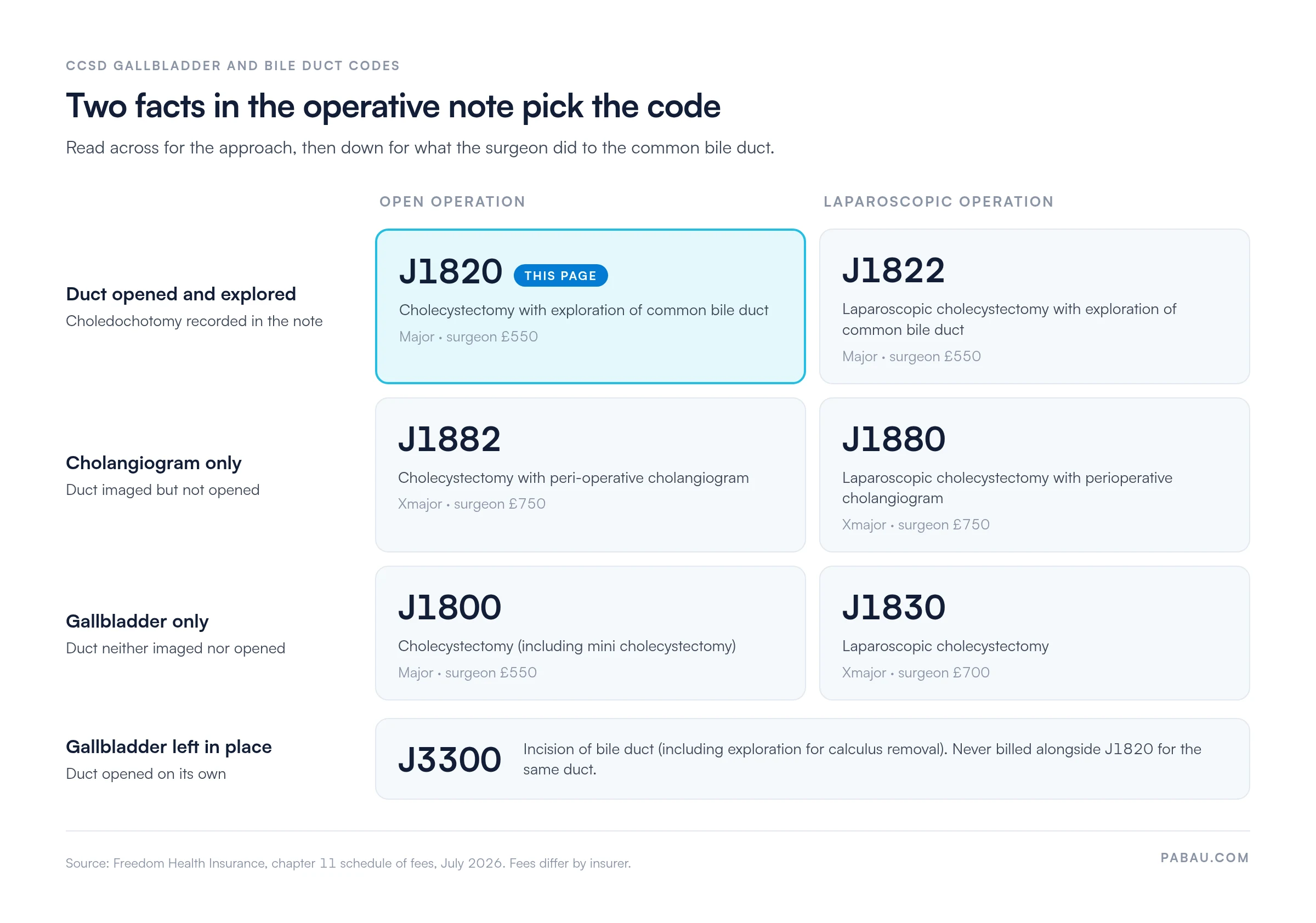
Stone removal through the same choledochotomy is part of J1820. Adding J3300 for the same duct would bill the exploration twice. Fees also differ by insurer, so check the payer’s own schedule, such as Bupa’s code search. Our Bupa CCSD codes guide covers Bupa’s fee categories and submission rules.
A cholangiogram usually drives the decision to open the duct, so treat it as part of J1820. J1880 and J1882 are whole cholecystectomy codes, not add-ons. Adding either to J1820 would bill the gallbladder removal twice.
The chapter 11 schedule lists no separate code for T-tube insertion after duct exploration. Treat placement as part of the closure, and record the choice in the note.
Every J1820 claim needs an ICD-10 diagnosis that justifies duct exploration. A gallbladder-only diagnosis, K80.0 to K80.2, paired with J1820 is a mismatch that insurers query.
UK private claims use the WHO version of ICD-10, which the NHS publishes as its 5th edition. Confirm the code in the WHO ICD-10 browser or the NHS Classifications Browser before you submit.
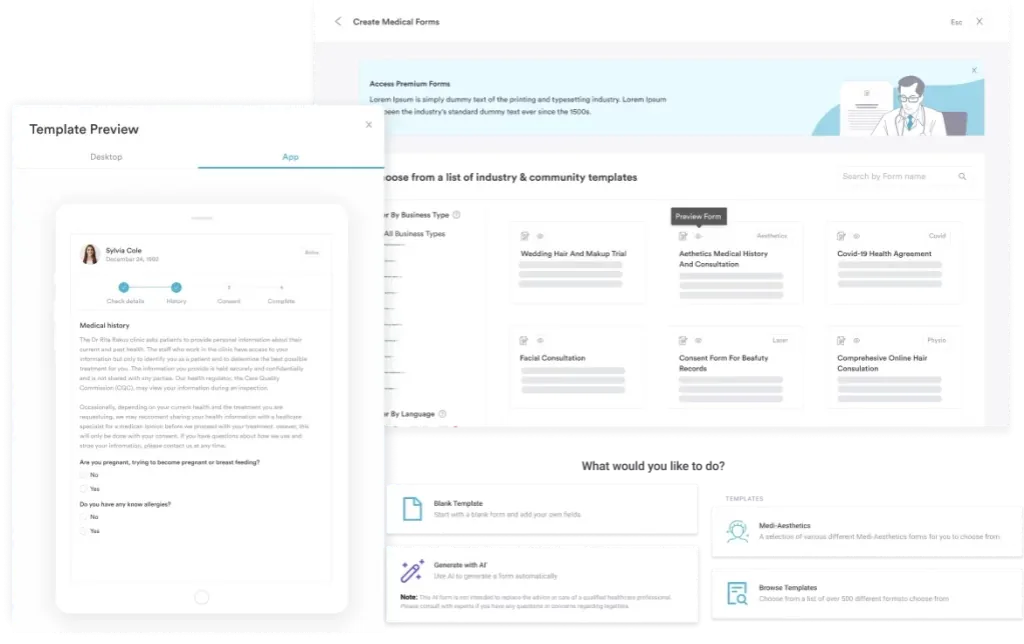
Vague operative notes are the main reason J1820 claims stall at review. The note must confirm each element that separates J1820 from J1800. Structured digital forms with a field for each element stop the usual omissions.
The operative note must include all of the following:
A template that prompts the surgeon for each field before sign-off catches missing detail before the claim reaches the insurer.
UK private medical insurers expect elective surgery to be authorised before admission. The patient usually calls the insurer with the procedure code and the specialist’s details, and the insurer issues an authorisation number.
A J1820 request goes through more smoothly with:
Bupa, AXA Health, Aviva, Vitality and Allianz Care each set their own authorisation rules. Check the insurer’s provider guidance for the patient’s policy, because cover and excess vary by plan.
A cholecystectomy is often authorised as J1830, then becomes J1822 or J1820 when the cholangiogram shows duct stones. Tell the insurer about the change as soon as possible after surgery, and send the operative note with it.
Plan for a code change at booking. When duct stones are suspected, ask the patient to mention possible bile duct exploration when they request authorisation, so the insurer expects J1822 or J1820.
J1820 claims fail for predictable reasons. Knowing the pattern lets a practice fix the cause before submission rather than spend time on reviews.
This guidance is general. For large disputes or a pattern of rejections, take advice from a specialist medical billing adviser.
These examples show how J1820 plays out in common operative situations. They illustrate the coding logic and are not insurer-approved protocols.
Go through this list once the claim is built and before you submit it. Each point lines up with one of the rejection reasons above.
In many surgical practices, the operative note lives in one system and the authorisation number in an email. Someone then retypes the claim, and each re-keyed field is another chance to send J1830 when the note says J1820.
Pabau, the practice software we build for private healthcare teams, keeps those pieces on one patient record. The insurer and policy sit on the record, and the CCSD and ICD-10 codes link on the invoice. With claims management, the claim goes to Healthcode without leaving Pabau.
Each claim then moves through clear stages, from submitted to paid or error. Your billing team sees a J1820 query the day it arrives, with the operative note on the same record.
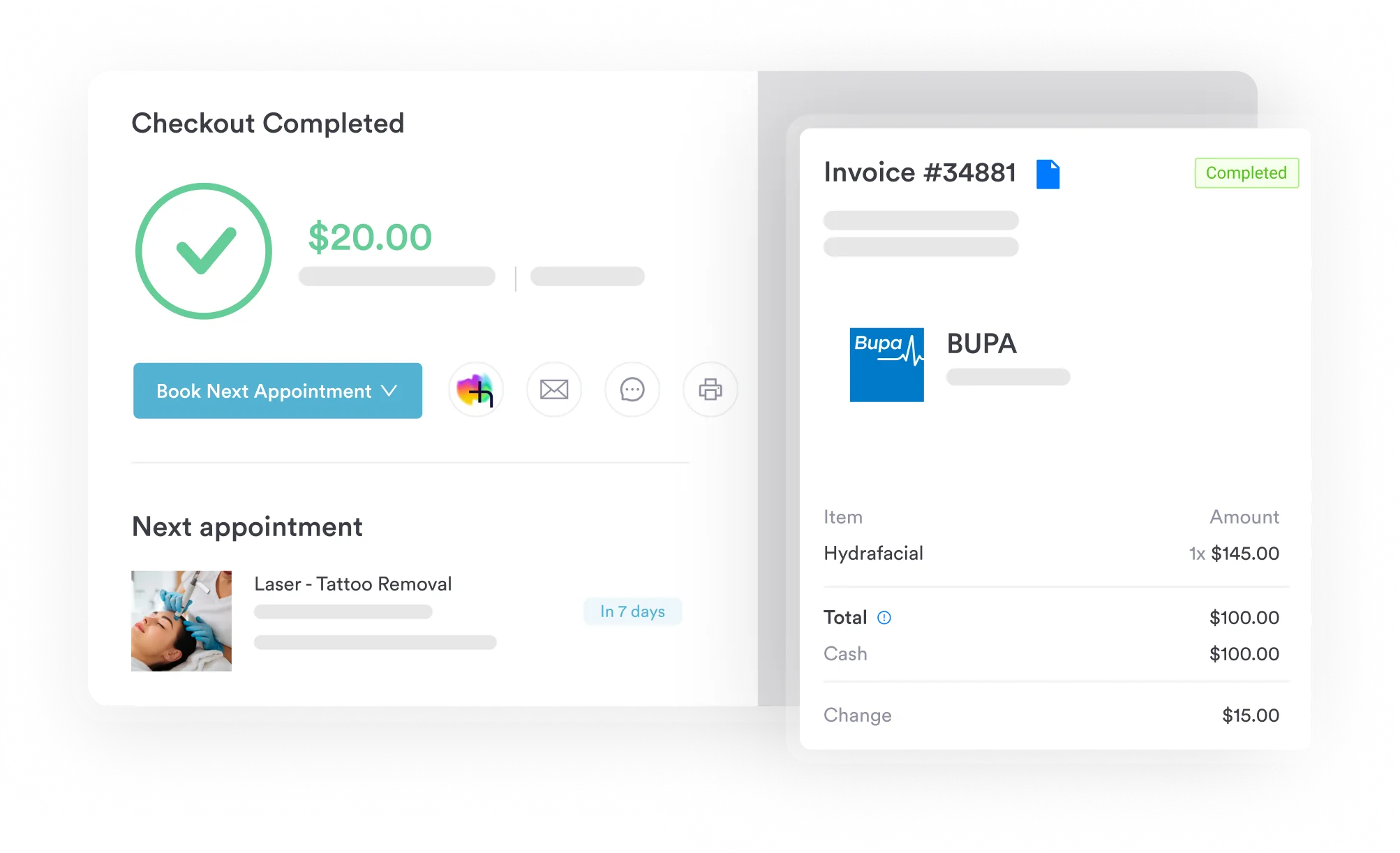

Pabau helps UK private surgical teams capture operative notes, code CCSD procedures and send claims to Healthcode from one place.

J1820 is straightforward to bill once the operative note records the duct incision and the reason for it. Most errors come from the wrong approach code, a gallbladder-only diagnosis, or an authorisation that still says J1830.
Settle two questions before submission: was the operation open or laparoscopic, and was the duct opened? Fixing the code at that stage costs far less than a review with the insurer.
Book a demo to see how Pabau links the operative record, the CCSD code and the Healthcode claim for your surgical billing team.

Checking what Bupa pays? Bupa procedure codes and fee schedule links Bupa procedure codes to their fee schedules.
Coding other abdominal surgery? CCSD code G5100 covers bypass of the duodenum.
Still retyping insurer claims? Claims management software shows how Pabau sends CCSD claims through Healthcode.
J1820 covers an open cholecystectomy in which the surgeon also opens and explores the common bile duct. It applies when the duct is incised to remove stones or assess a blockage. Removing the gallbladder alone is J1800.
No. J1820 is the open operation. A laparoscopic cholecystectomy with bile duct exploration has its own code, J1822. Record the approach clearly, because insurers check the note against the code.
Use a bile duct diagnosis: K80.3, K80.4 or K80.5 for duct stones, or K83.1 for obstruction. A gallbladder-only code such as K80.0 or K80.2 does not justify duct exploration and will be queried.
The chapter 11 schedule lists no separate T-tube code for use with J1820, so treat placement as part of the operation. Record whether a T-tube was placed and why, and ask the insurer before adding any extra line.
ERCP is often the first option for clearing duct stones, so insurers expect a reason for open exploration. Record whether ERCP failed, could not be done, or was unsuitable, in both the authorisation request and the operative note.
J1800 covers cholecystectomy, including mini cholecystectomy, without duct exploration. J1820 adds opening and exploring the common bile duct. If the note does not record the choledochotomy, insurers will pay the claim as J1800.
No. CCSD codes are used for UK private medical insurance claims. NHS hospitals record the operation with OPCS-4 codes and are paid through national tariffs.