HCPCS Code J1110: Dihydroergotamine mesylate injection billing guide
HCPCS Code J1110: Official descriptor and drug overview HCPCS Code J1110 is the ...

Last Updated: Oct 29, 2026
J1880 is the CCSD code for laparoscopic cholecystectomy with perioperative cholangiogram. Surgeons bill it when they remove the gallbladder by keyhole surgery and complete a bile duct X-ray with contrast in the same operation. UK private medical insurers, including Bupa, AXA Health and Aviva, use it to pay the surgeon and anaesthetist.
The claim turns on one line in the operative note: a completed cholangiogram and its findings. Without it, the insurer will expect J1830. If the surgeon also explores the bile duct, J1880 no longer applies. Freedom Health Insurance rates J1880 as Xmajor on its July 2026 schedule.
Let Pabau's smart automation suggest the right codes, reduce claim denials, and keep your practice compliant—effortlessly.
Automate repetitive tasks and focus on what matters most—your patients.
Reduce coding errors and ensure compliance with the latest regulations.
Clean claims, fewer denials, and faster reimbursements.
Powerful insights and reporting to help your practice thrive.
HIPAA compliant SOC 2 certified GDPR-compliant Trusted by 4,000+ clinics worldwide

CCSD code J1880 covers a laparoscopic cholecystectomy with a cholangiogram completed in the same operation, billed as one code.
J1830 is the same keyhole operation without a cholangiogram, and the operative note decides between the two.
The schedule bars J1880 alongside J1800, J1820, J1830, J1881 and J1900, so a bile duct exploration moves the claim to J1822 or J1820.
A conversion to open surgery usually points to J1882 or J1800, but check each insurer’s conversion rule before you submit.
Pabau, our practice management software, keeps the operative note, authorisation and claim on one patient record and submits through Healthcode.
CCSD code J1880 is the CCSD schedule code for laparoscopic cholecystectomy with perioperative cholangiogram. Specifically, the surgeon removes the gallbladder by keyhole surgery and X-rays the bile ducts with contrast during the same operation. The cholangiogram is part of the code, so it never goes on the claim as a separate line.
The Clinical Coding and Schedule Development group maintains the schedule, and UK private medical insurers use it to pay consultants. In addition, our index of CCSD codes for consultants covers the rest of the schedule. These are the reference points coders need most often:
Overall, the split between J1880 and J1830 comes down to one statement in the operative note. If the note never records a completed cholangiogram, an insurer reviewing the claim will treat it as J1830.
Once coders know the operative steps, they can see which ones the note has to record. In fact, the operation runs in two overlapping phases.
Keyhole access and dissection
The perioperative cholangiogram
However, a cholangiogram done before surgery as a separate procedure does not count. J1880 needs the cholangiogram and the cholecystectomy in the same operation, because the code bundles both. Duct imaging done on a separate occasion carries its own code. An endoscopic ultrasound for suspected duct stones, for example, is billed on its own as J6730.
First, UK private insurers expect a WHO ICD-10 diagnosis with every CCSD claim. Then, these diagnoses commonly sit behind a J1880 operation.
For example, a dyspepsia code with normal liver tests and an undilated duct gives the insurer no reason for the imaging. Otherwise, expect a query when the diagnosis does not explain the cholangiogram.
Overall, most J1880 errors come from picking a neighbouring cholecystectomy code. The table shows each one on Freedom Health Insurance’s chapter 11 schedule of fees, updated July 2026, plus the robotic code J1881.
Also, the schedule bars J1800, J1820, J1830, J1881 and J1900 alongside J1880. The first four each describe a whole cholecystectomy, so pairing one with J1880 bills the gallbladder twice. J1900, however, is anastomosis of the gallbladder to another organ.
Furthermore, J1881, the robotic equivalent, joined the schedule in 2024. CCSD bars it with both J1880 and J1830, so a robotic case is billed as J1881 alone. Freedom’s July 2026 schedule does not list it, so confirm the insurer recognises it first.
Consequently, three facts in the operative note settle the code: how the operation finished, whether the cholangiogram was completed, and whether the duct was explored.
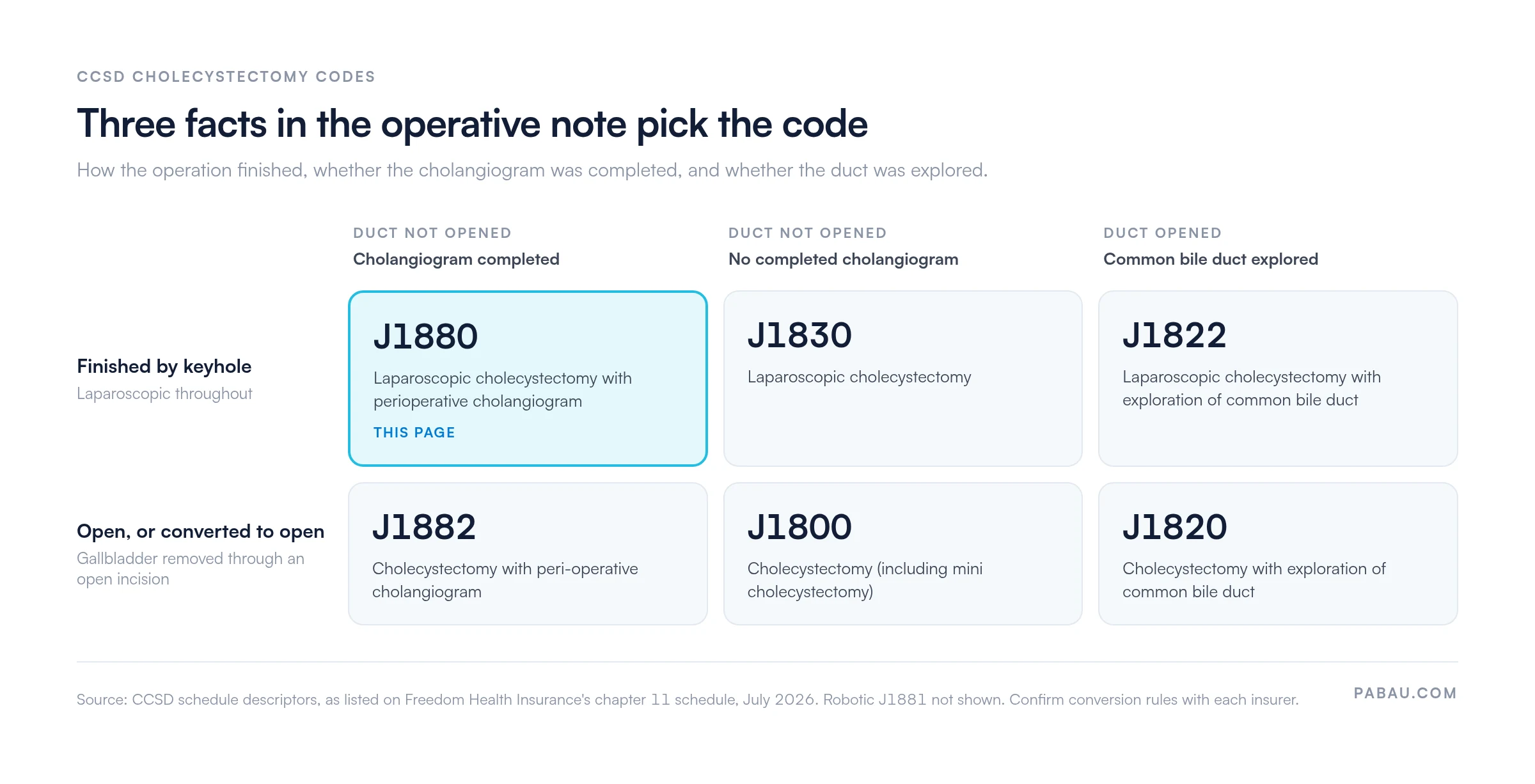
Therefore, bill J1830 when the surgeon tries a cholangiogram but cannot obtain images. The J1880 descriptor describes a cholangiogram that was performed, but the schedule has no code for an attempted one.
Cannulation can fail because the cystic duct is narrow or fragile, or because imaging is not available in theatre. So record what was attempted, how far it got and why it stopped. That record supports J1830 and also explains why the claim differs from an authorisation for J1880.
However, insurers apply their own rules to abandoned procedures. Therefore, confirm the code with the insurer whenever the note describes a part-completed cholangiogram.
Surgeons convert to open surgery when adhesions, bleeding or unclear anatomy make keyhole work unsafe. Once the gallbladder comes out through an open incision, J1880 no longer describes the whole operation. Code the operation as it was completed:
Insurer rules on conversions differ, so ask before you submit rather than defaulting to J1880. In addition, the note must record why the surgeon converted, at what stage, and whether the cholangiogram was already complete.
However, a cholangiogram that shows duct stones changes the code only if the surgeon then explores the duct.
Stones found, duct left alone
J1880 remains the complete code when the surgeon leaves the stones for a later ERCP. Also change the diagnosis to a bile duct stone code such as K80.5. The ERCP is a separate procedure, so it has its own CCSD code, authorisation and claim.
Stones found, duct explored
J1880 no longer applies once the surgeon opens and explores the common bile duct. Instead, bill J1822 for a keyhole exploration or J1820 for an open one. Indeed, each already covers the cholecystectomy, and the schedule bars J1880 alongside J1820.
Therefore, never bill J1880 plus an exploration code for the same operation. Also, ask the insurer how it wants the cholangiogram shown on a J1822 claim.
In fact, vague operative notes are the main reason J1880 claims stall at review. Pabau, the practice software we build for private healthcare teams, has a form builder that turns the checklist below into an operative note template.
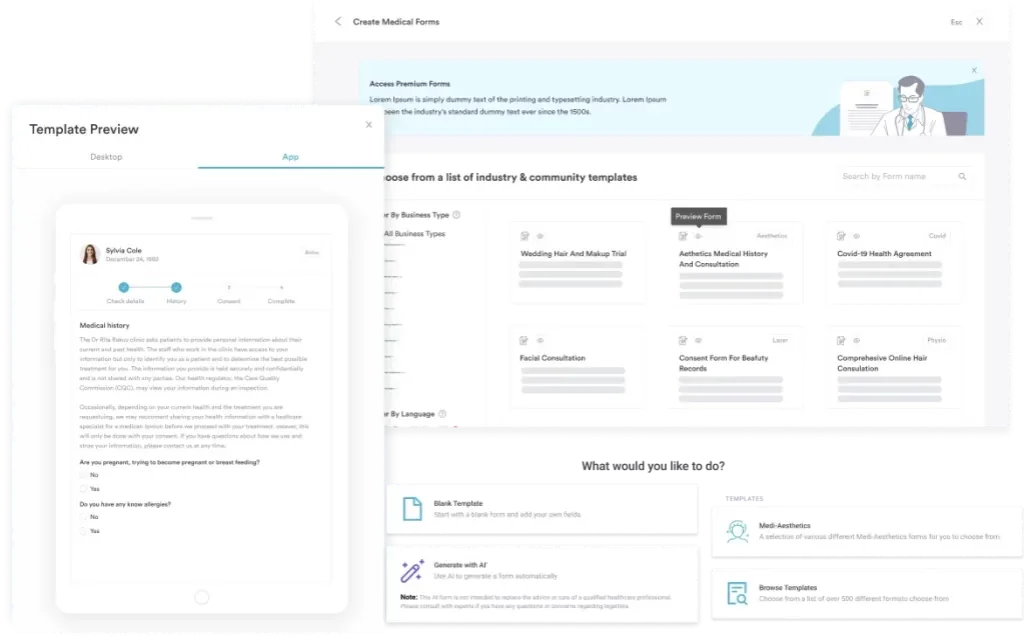
Check your theatre note template before the next list. If it has no field for cholangiogram completion and findings, add one. Notes written from memory after surgery tend to be vague, and insurers flag vague notes for review.
In fact, Bupa, AXA Health, Aviva, Vitality and WPA all accept CCSD codes for surgical claims. Each insurer runs its own authorisation process and also sets its own documentation rules.
For example, Bupa’s code search portal shows whether J1880 needs pre-authorisation. Moreover, our guide to Bupa CCSD codes explains how Bupa handles surgical claims.
Each insurer sets its own fee for J1880, so the figure varies. For example, Freedom Health Insurance pays £750 to the surgeon and £642 to the anaesthetist on its July 2026 schedule. The anaesthetist bills separately, but under their own recognition number.
The cholangiogram is part of J1880, so the surgeon adds no separate imaging code. However, whether the hospital can charge for theatre imaging depends on its own agreement with the insurer.
Indeed, most rejections trace back to the note, the authorisation or a second code. Thus, the table pairs each cause with the fix.
In many surgical practices, the operative note sits in one system, while the authorisation number sits in an email. Someone then retypes the claim, and each re-keyed field is another chance to send J1830 when the note says J1880.
In contrast, Pabau keeps the operative note, the insurer details and the authorisation number on one patient record. Pabau’s claims management software pulls that record data into the claim, then submits it through Healthcode and tracks its status.
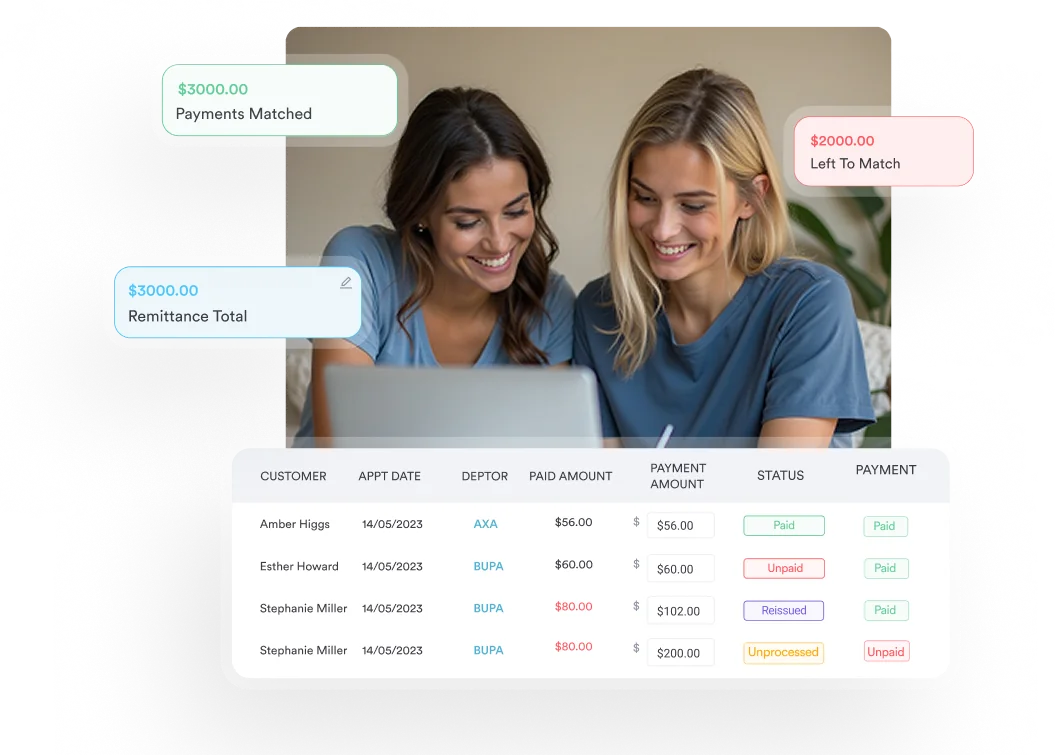
However, your coder still confirms that the note supports J1880. Pabau removes the retyping and shows each claim’s status on the record, so the team spots a rejection early.

Pabau keeps the operative note, authorisation and claim on one patient record, then submits and tracks CCSD claims through Healthcode. Fewer retyped fields means fewer avoidable rejections.

J1880 is simple to bill once the operative note confirms a completed cholangiogram and the duct stayed closed. However, the errors come from what happens around it: an abandoned cholangiogram, a conversion, or a duct exploration that changes the code.
Finally, settle three questions before submission. Was the cholangiogram completed? Was the operation finished by keyhole? Was the duct opened? The answers point to J1880, J1830, J1882, J1822 or J1820, and checking them first costs far less than an insurer review.
Book a demo to see how Pabau keeps operative notes, authorisations and CCSD claims on one record for private surgical practices.

Need to understand how UK private insurers process CCSD surgical claims? Bupa CCSD procedure codes walks through how Bupa recognises and reimburses CCSD surgical codes, including documentation requirements.
Coding an open cholecystectomy where the surgeon explored the duct? CCSD code J1820 covers open gallbladder removal with common bile duct exploration, the code a converted J1880 case often lands on.
Looking up a different procedure on the CCSD schedule? CCSD codes collects our guides to individual CCSD procedure codes used by UK private insurers.
Looking to reduce claim rejections across your private practice? Claims management software shows how Pabau helps surgical teams track submission status and resolve insurer disputes faster.
J1880 covers a laparoscopic cholecystectomy with a perioperative cholangiogram. The surgeon removes the gallbladder by keyhole surgery and completes a bile duct X-ray in the same operation. The cholangiogram is part of the code and is not billed separately.
J1880 includes a completed cholangiogram, and J1830 does not. Both are laparoscopic cholecystectomy codes. Bill J1880 only when the operative note records the cholangiogram and its findings. Without that record, the insurer will expect J1830.
Usually not. The descriptor describes a cholangiogram that was performed, so a failed cannulation with no images points to J1830. Insurers set their own rules for abandoned procedures, so confirm with the insurer and record why the cholangiogram stopped.
No. The CCSD schedule lists J1820 as an unacceptable combination with J1880, along with J1800, J1830, J1881 and J1900. If the surgeon explores the duct, bill J1822 for a laparoscopic exploration or J1820 for an open one instead.