CPT code 93503: Swan-Ganz catheter billing and modifiers
CPT code 93503: Official descriptor and procedure overview In the AMA CPT code s...

Last Updated: Oct 23, 2026

CCSD code 0636G is the UK private healthcare diagnostic (pathology) code for the MAI Complex RNA test, listed in Chapter 34 (Pathology) of the CCSD schedule maintained by the Clinical Coding and Schedule Development (CCSD) Group
Verify the current code narrative and chapter placement via the authenticated CCSD schedule at ccsd.org.uk or the Bupa code search portal before submitting claims
Major UK insurers including Bupa, AXA Health, Allianz Care, Vitality, and Aviva use CCSD codes as the billing standard, but reimbursement rates and recognition terms vary by insurer
Pabau’s claims management software supports structured documentation and audit-ready record-keeping for UK private healthcare billing workflows
CCSD code 0636G is the UK private healthcare diagnostic (pathology) code for the MAI Complex RNA test, listed in Chapter 34 (Pathology) of the CCSD schedule. That schedule is the standard coding system UK private medical insurers use to process claims.
This guide walks UK private healthcare providers through billing 0636G: verifying the code, confirming which insurers recognise it, documenting each claim, and submitting it through Healthcode.
CCSD code 0636G identifies the MAI Complex RNA test and sits in Chapter 34 (Pathology) of the CCSD schedule, the industry-standard coding system for UK private healthcare billing. Chapter 34 falls within the CCSD Diagnostic Test Schedule, not the Schedule of Procedures.
The schedule is maintained by the Clinical Coding and Schedule Development Group and spans 19 chapters. The full current narrative and any coding principles live in the authenticated CCSD schedule at ccsd.org.uk and the Bupa code search portal, so confirm the live wording there before you bill.
The suffix “G” marks a variant within the 0636 code family, distinguishing 0636G from sibling codes such as 0636A through 0636F. For Chapter 34 pathology codes, the final letter identifies the specimen sample type used for the test, rather than complexity or approach.
Chapter placement follows the test type rather than the leading digit, which is why this 0636-series pathology code sits in Chapter 34 rather than an early chapter.
Because the schedule is updated periodically, verify the current description, chapter placement, and any applicable coding principles via the official CCSD schedule before billing. Our Bupa CCSD codes guide gives a structured overview of the code framework that is useful context before running a CCSD code search for a specific code.
The CCSD schedule organises codes into chapters by body system, test type, or procedure type. Each chapter contains sections and sub-sections. Coding principles bulletins, updated periodically by the CCSD Group, clarify how codes within a family should be interpreted and applied. These bulletins are available to CCSD members and are referenced in insurer fee schedule documents.
For codes in the 0636 family, check whether insurer-specific guidance applies. Some insurers publish their own coding principles addenda that qualify or restrict how they apply CCSD codes in practice.
All major UK private health insurers use CCSD codes as the billing standard. Bupa CCSD codes are the most commonly referenced because Bupa’s public code search mirrors the schedule.
Insurer recognition of CCSD code 0636G specifically depends on the code’s chapter classification and whether it falls within each insurer’s benefit schedule. The table below summarises the major insurers and where to verify coverage for specific codes.
Insurer recognition of a code does not guarantee reimbursement at any specific rate. Each insurer sets its own fee schedule independently of the CCSD Group, which explicitly states it does not determine reimbursement or fees.
Providers billing CCSD code 0636G should verify the applicable rate with each relevant insurer before treatment, particularly where pre-authorisation is required. This is standard private practice management due diligence.
Robust documentation is the single most reliable way to prevent claim denials when billing any CCSD code. For CCSD code 0636G, documentation needs to establish clinical necessity, accurately reflect the test performed, and link to the diagnosis through an ICD-10 code.
UK GDPR and ICO guidance on patient data handling also apply to billing records. Clinical notes submitted as part of a claim constitute patient data and must be handled in line with your organisation’s data protection policies. The UK GDPR compliance checklist is a useful reference for private practices reviewing their data-handling obligations.
Before submitting any claim under CCSD code 0636G, cross-reference your clinical note against the code’s narrative in the authenticated CCSD schedule. If your documentation describes a different scope or approach than the code’s narrative, recode to the correct variant. Submitting under the wrong sub-code within the 0636 family is a common and avoidable denial reason.
Our guide to managing a practice covers the operational side that sits behind clean CCSD billing.
The CCSD Group does not set fees. Each UK private health insurer publishes its own fee schedule, and those schedules are updated periodically. The rates below are indicative of the insurer resources available, not verified reimbursement amounts for CCSD code 0636G specifically. Always check the current schedule with the relevant insurer before invoicing.
Insurer fee schedules to consult for CCSD code 0636G reimbursement figures include the Allianz Care UK fee schedule, the Vitality fee finder, and the Healix fee schedule portal. The Bupa fee schedule guide provides additional context on how Bupa structures its fee schedule relative to the CCSD chapter system.
Some insurers, including Freedom Health, apply complexity grading to both procedure and diagnostic codes. A code in the 0636 family may carry a complexity grade that affects the applicable benefit rate.
Where complexity grading is documented in the insurer’s schedule, the clinical note must support the claimed level. Claiming a higher grade than the documentation supports is a denial risk and can trigger audit activity.
Practitioners planning a move from the NHS to private practice often underestimate how much insurer-specific fee schedule variation affects income planning. Build insurer-specific fee lookups into your pre-treatment workflow, not as a retrospective billing step.

Pabau helps UK private healthcare providers manage clinical documentation, insurer claims, and patient records in one place. Structured records reduce claim denials and audit exposure across every CCSD code you bill.

Electronic claim submission via Healthcode is the standard for UK private healthcare invoicing. Healthcode acts as the electronic data interchange (EDI) hub between providers and insurers. Most UK private health insurers, including Bupa, AXA Health, Allianz Care, and Vitality, receive claims through the Healthcode network.
Practices handling multiple insurer relationships benefit from claims management software that tracks submission status, flags outstanding claims, and maintains an audit trail per patient episode. This reduces the administrative burden of chasing individual insurers across different portals.
Practices reviewing time-saving practice features consistently cite structured billing workflows as one of the highest-impact operational improvements.
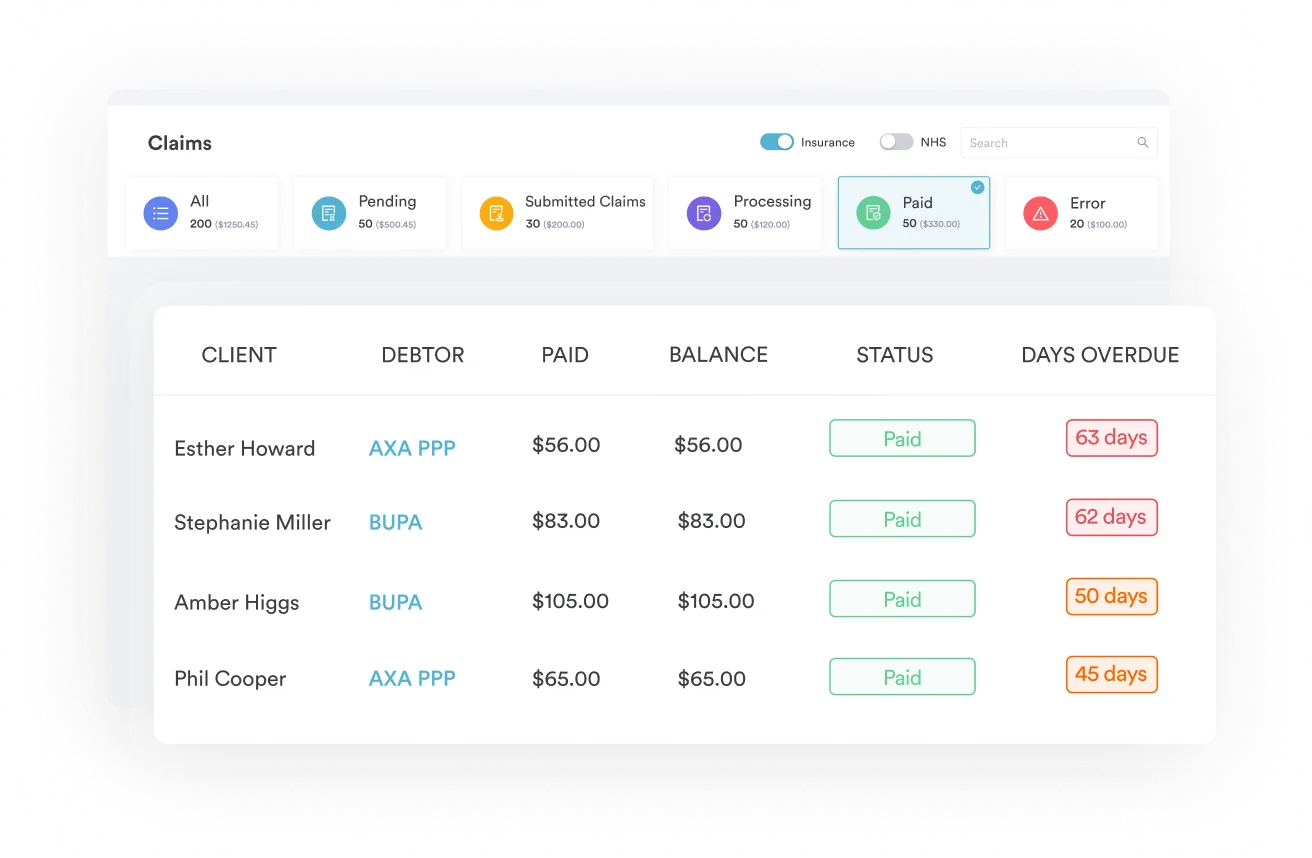
Set a 14-day chase cycle for unpaid CCSD claims. Most UK private health insurers process clean electronic claims within 5 to 10 working days. A claim still outstanding at 14 days is either pending additional information or has been rejected without notification. Proactive chasing halves the average days-to-payment in most private practices.
Claim denials on CCSD codes fall into a predictable set of categories. Understanding these patterns reduces the denial rate across all CCSD codes you bill, including 0636G.
Unbundling is particularly worth attention for any alphanumeric sub-code. If CCSD code 0636G includes ancillary components such as specimen collection, sample processing, or minor consumables, those components may not be separately billable under insurer rules.
The CCSD Technical Guide and insurer-specific coding principles bulletins define what is included in each code’s narrative. Practices with structured skin clinic software workflows can configure billing templates that flag bundled components and prevent accidental duplicate billing at the point of invoice creation.
CCSD code 0636G sits within the 0636 code family. Understanding the sibling codes helps avoid miscoding, particularly for tests that share clinical overlap.
Key cross-coding considerations for the 0636 family include checking whether a different sub-code (0636A through 0636F) more precisely matches the documented test, and whether any secondary codes apply for concurrent tests performed in the same session.
Some insurers apply bundling rules or concurrent-test reductions when multiple codes are billed together, so check the relevant fee schedule before submitting a multi-code invoice.
Several other CCSD codes cover pathology and genetic testing services with similar billing considerations:
Recently published billing and diagnostic code guides worth a look:
For practitioners working across specialties, ICD-10 diagnosis code alignment remains essential regardless of which CCSD code is billed. NHS classification standards provide a useful reference for ICD-10 coding that also applies in private practice contexts.
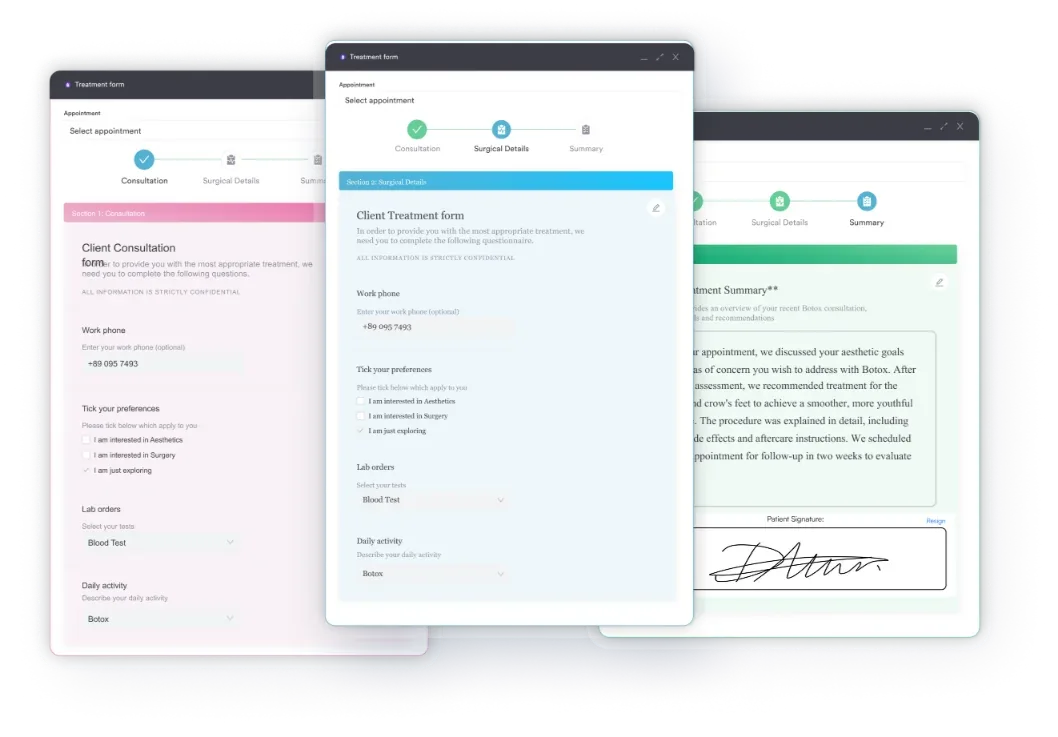
Practices implementing structured digital forms for patient intake can capture structured diagnostic information at consultation that flows directly into billing workflows, reducing the risk of diagnosis-code mismatches at invoice stage.
For GP practices billing private patients alongside NHS commitments.

CCSD code 0636G requires verification via the authenticated CCSD schedule before it can be billed accurately. The code’s narrative, chapter context, and any applicable coding principles are only accessible through a registered CCSD account or the Bupa code search portal.
Billing without that verification risks selecting the wrong sub-code in the 0636 family, which is one of the most common denial triggers in UK private healthcare billing.
Once verified, the workflow is straightforward: confirm pre-authorisation, document clinical necessity against a matching ICD-10 code, submit electronically via Healthcode, and chase at 14 days. Pabau’s claims management software supports this workflow with structured documentation, insurer tracking, and audit-ready records built around the CCSD coding system. To see how it fits your private practice billing setup, book a demo.

Billing a spinal bone growth stimulator? HCPCS code E0748 guide covers billing the non-invasive spinal osteogenesis stimulator under 2026 billing rules.
Billing an insulin infusion pump instead? HCPCS code E0784 guide covers billing the external ambulatory infusion pump for insulin and its common denial causes.
Billing an oxygen concentrator instead? HCPCS code E1390 guide covers billing the single-port oxygen concentrator and the documentation that avoids denials.
CCSD code 0636G is a diagnostic (pathology) code within the CCSD schedule, the standard coding system for UK private healthcare billing. It sits in Chapter 34 (Pathology), part of the CCSD Diagnostic Test Schedule rather than the Schedule of Procedures. The specific clinical narrative for 0636G is only accessible via the authenticated CCSD schedule at ccsd.org.uk or the Bupa code search portal. It forms part of the 0636 code family, with the “G” suffix identifying the specimen sample type used for the test rather than procedure complexity or approach.
All major UK private health insurers use CCSD codes, including Bupa, AXA Health, Allianz Care, Vitality Health, Aviva, Freedom Health, Healix, and The Exeter. Each insurer publishes its own fee schedule based on the CCSD procedural schedule, and reimbursement rates vary. Recognition of a specific CCSD code must be verified with each insurer before billing.
The full narrative for CCSD code 0636G requires authenticated access to the CCSD schedule. Register at ccsd.org.uk to access the full CCSD schedule, or use the Bupa code search portal at codes.bupa.co.uk. Both tools provide the official code description, chapter placement, and applicable coding principles.
CCSD procedural codes describe the procedure or intervention performed. CCSD diagnostic (pathology) codes, such as 0636G in Chapter 34, cover diagnostic tests and investigations instead. ICD-10 diagnosis codes are used alongside both code types on private healthcare invoices to establish clinical necessity. The CCSD FAQs clarify that diagnostic schedule codes are not loaded into procedure code tables alongside procedural codes.
Claims using CCSD codes are submitted electronically via Healthcode, the standard EDI hub for UK private healthcare. Include the CCSD code, matched ICD-10 diagnosis code, date of procedure, practitioner recognition number, insurer membership number, and any pre-authorisation reference. Most UK private insurers process clean electronic claims within 5 to 10 working days.
No. CCSD codes are the standard for UK private healthcare billing, not NHS billing. The NHS classifies procedures with OPCS-4 codes and diagnoses with ICD-10, and it does not process claims through the CCSD schedule. Searches for CCSD codes and the NHS usually come from clinicians who work across both, such as consultants running private practices alongside NHS sessions. In those settings private invoices use CCSD codes while NHS activity uses OPCS-4, with ICD-10 diagnosis coding the common thread.