



CCSD code G5100: Bypass of duodenum billing guide
CCSD code G5100 bills a bypass that leaves the duodenum in place CCSD code G5100...

Last Updated: Oct 16, 2026

CCSD code 0028G is a UK private healthcare diagnostic code that bills for a Single Gene Test of the SRD5A2 gene, used to help diagnose 5-alpha reductase type 2 deficiency.
0028G is a diagnostic service-charge code, not a procedural code: it is billed alongside the relevant consultation or procedure code rather than submitted as a standalone claim.
Major UK insurers including Bupa, AXA Health, Aviva, Allianz Care, Cigna, WPA, and Vitality Health all base their fee schedules on CCSD codes, though acceptance rules and fees vary by insurer and policy.
Claims submitted with incorrect, missing, or insufficiently documented CCSD codes are routinely rejected; accurate clinical and laboratory documentation is required before submission.
Pabau’s claims management software maps CCSD codes directly to invoices and supports electronic claim submission for UK private healthcare providers.
CCSD code 0028G is a diagnostic code from the Clinical Coding and Schedule Development (CCSD) Group’s schedule, used by UK private healthcare providers to bill insurers for a Single Gene Test of the SRD5A2 gene. Getting this code right on an invoice is not a formality. It is the single factor that determines whether a claim is paid, queried, or rejected outright.
Private providers running a UK private practice deal with multiple insurers, each with their own fee schedules, but all of them anchored to the same CCSD coding framework. Understanding what 0028G tests for, which insurers accept it, and what documentation supports it prevents unnecessary claim delays and write-offs.
The SRD5A2 gene provides instructions for making steroid 5-alpha-reductase type 2, the enzyme that converts testosterone into dihydrotestosterone (DHT) in reproductive tissue. Pathogenic variants in this gene cause 5-alpha reductase type 2 deficiency, an autosomal recessive condition that affects genital development in individuals with a 46,XY karyotype.
Presentation ranges from ambiguous genitalia at birth to a predominantly male phenotype that virilizes further at puberty. Clinicians request the SRD5A2 single gene test when a patient presents with a disorder of sex development, ambiguous genitalia, or unexplained under-virilization, and an abnormal testosterone-to-DHT ratio has raised suspicion of the deficiency.
Sequencing the gene’s coding regions gives a molecular diagnosis where hormone testing alone is inconclusive.
This guide covers what CCSD code 0028G tests for, insurer recognition, documentation requirements, common billing errors, and how practice management software can reduce submission friction.
The CCSD Group maintains two schedules for UK private healthcare: a Procedural Schedule for clinical interventions and a Diagnostic Schedule for pathology, laboratory, and molecular tests. CCSD code 0028G sits in the Diagnostic Schedule alongside other molecular and single gene test codes. It is not a surgical or consultant-procedure code, and it should not be billed as one.
Each CCSD code carries a narrative description, a chapter reference, and a set of coding principles that define when the code can legitimately be used. The CCSD Technical Guide (October 2025) sets out the business rules governing code structure, bundling restrictions, and the criteria for code amendment requests. These rules apply to all providers, regardless of which insurer they bill.
Providers leaving the NHS for private practice often find CCSD the sharpest learning curve in their transition. NHS coders work with OPCS-4; private billing teams need to map clinical and laboratory activity, including single gene tests, to CCSD narratives, which do not always translate one-to-one.
CCSD narratives follow a single-code principle: each code is meant to describe the whole clinical or diagnostic activity it covers, not a component part of it. The narrative for 0028G describes one specific analysis, the SRD5A2 single gene test, so it should never be substituted for a different gene’s single gene test code or for a broader genetic panel that happens to include SRD5A2.
Providers should always verify the current narrative against the full schedule via the Bupa Code Search portal or the CCSD schedule directly, since individual code narratives require login access to the CCSD website to view in full.
All major UK private medical insurers use the CCSD schedule as their standard coding framework for both procedures and diagnostic tests. This means CCSD code 0028G is applicable across insurers for billing the SRD5A2 single gene test, though reimbursement rates and specific fee schedule positions vary by insurer and policy year.
| Insurer | Uses CCSD codes | Fee schedule reference | Submission route |
|---|---|---|---|
| Bupa | Yes | Bupa Code Search portal | Healthcode / direct portal |
| AXA Health | Yes | AXA Specialist Forms portal | Healthcode / AXA portal |
| Aviva | Yes | Aviva published fee schedule | Healthcode |
| Allianz Care | Yes | Allianz Care UK fee schedule | Healthcode |
| Cigna | Yes | Cigna UK fee schedule | Healthcode / Cigna portal |
| WPA | Yes | WPA medical fees page | Direct provider portal |
| Vitality Health | Yes | VitalityHealth fee finder | Healthcode |
Fee amounts are not published here because insurers set their own reimbursement levels based on the CCSD code. Always verify the applicable fee directly with the relevant insurer’s portal before invoicing. AXA Health’s Schedule of Procedures and Fees is a useful example of how insurers structure and publish CCSD-based fee tables, even when checking other insurers’ rates.
Providers working with skin clinic software or other specialist practice management platforms should confirm that their system’s procedure code table is updated to reflect the current CCSD schedule year, including new or amended single gene test codes. Outdated code tables are one of the most common causes of claim rejection.
Correct code selection only gets a claim as far as submission. What gets a claim paid is the clinical and laboratory documentation supporting the code. Insurers validate CCSD codes against the clinical record during pre-authorization checks and post-payment audits. Missing, vague, or inconsistent documentation triggers queries and delays reimbursement.
Practices subject to Care Quality Commission (CQC) inspection should note that documentation standards for billing overlap with CQC’s evidence requirements for safe, person-centred care. A CQC inspection checklist helps align documentation processes with both billing and regulatory expectations.
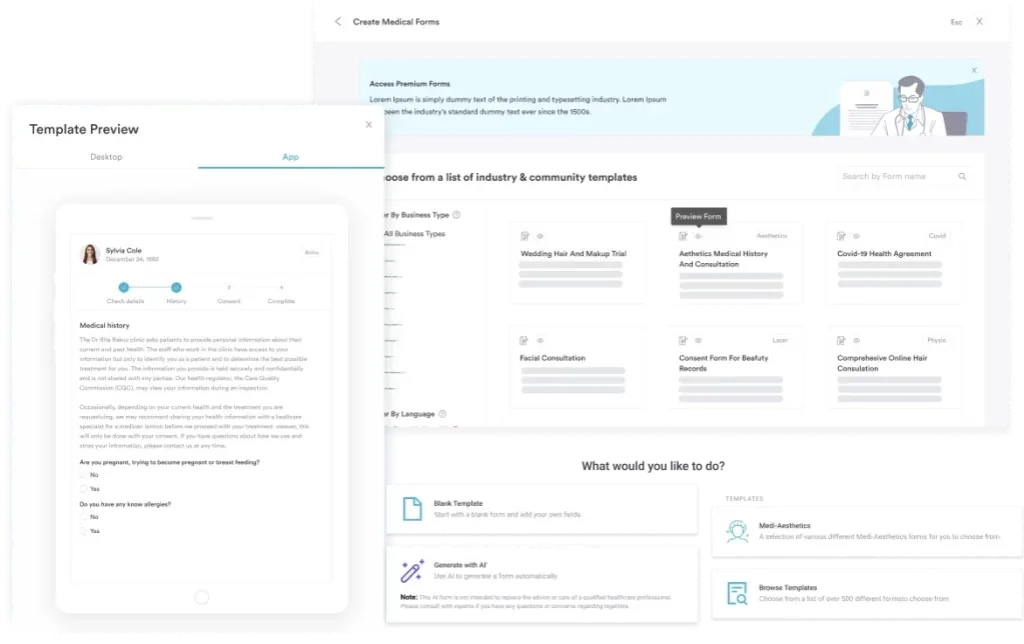
Using digital patient forms that capture clinical detail at point of care reduces the documentation burden at billing stage. When the clinical record is created in structured digital format, extracting the information needed for insurer submission is faster and less prone to transcription error.
Audit your clinical and laboratory records for the three months before submitting a batch of CCSD claims. Check each record against the CCSD test narrative for 0028G to confirm it documents a single gene test for SRD5A2, not a broader genetic panel. Update your documentation templates now rather than after a rejection.
Electronic submission via Healthcode is the primary route for most major UK insurers. Healthcode is the electronic data interchange (EDI) network used across the private medical insurance sector, and it is the submission method expected by Bupa, AXA Health, Aviva, Allianz Care, Cigna, and Vitality Health. WPA operates its own direct portal for some claim types.
The submission process for CCSD code 0028G follows the standard PMI claim workflow:
Good private practice management processes treat claim submission as a scheduled workflow task, not an afterthought. Batching claims weekly and reviewing rejections systematically prevents revenue leakage from routine coding errors.

Pabau maps CCSD codes to invoices automatically, supports Healthcode-compatible claim submission, and keeps your clinical records audit-ready. See how UK private practice teams use Pabau to reduce billing errors and get paid faster.

Claim rejections for CCSD code 0028G typically fall into a small number of predictable categories. Most are avoidable with the right processes in place.
The CCSD schedule is updated annually. Codes can be amended, retired, or split into sub-codes. If your code table has not been updated for the current schedule year, you may be submitting a code that is no longer valid or that now maps to a different narrative. Always cross-reference against the current CCSD schedule before submitting a claim.
CCSD’s Technical Guide contains explicit bundling rules. Some codes cannot be billed alongside certain ancillary codes because they are considered components of the primary activity. Billing 0028G alongside a code deemed bundled into it will result in partial payment or rejection. Review the CCSD coding principles for 0028G and any related codes you intend to submit on the same claim.
Submitting a claim without a valid pre-authorization reference is one of the fastest routes to rejection. Some providers assume pre-authorization is implied by the patient’s policy coverage. It is not. Pre-authorization is test-specific and episode-specific. Obtain it before the sample is taken, not after.
Claims submitted with an incorrect or expired membership number cannot be processed. Collect and verify the patient’s current insurer membership number at each appointment, not just at initial registration. Membership numbers and policy statuses change between episodes of care. This is a basic but frequently overlooked step .
Build a CCSD claim checklist into your pre-appointment workflow. Before each episode, confirm: pre-authorization reference obtained, correct CCSD code verified against the current schedule, patient membership details updated, and documentation template prepared. Running this check takes two minutes and prevents claim delays that can run for weeks.
CCSD billing does not exist in a regulatory vacuum. Private healthcare in the UK operates under a framework shaped by the Competition and Markets Authority (CMA) private healthcare market investigation, which established guidelines on fee transparency and information standards. These guidelines require providers to give patients clear information about the costs and codes associated with their treatment. A paid claim can still be underpaid, and the electronic remittance file is where that shows up.
When invoicing using CCSD code 0028G, the invoice issued to the patient (or insurer) should clearly state the code and its description, so the patient understands what they are being billed for. This aligns with both CMA requirements and general good practice for data protection obligations when handling patient financial records.
The Healix fee schedule provides a further example of how insurers structure CCSD-coded payment frameworks, including specific rules on unbundling and what can and cannot be claimed separately within the same episode of care. Reviewing Healix guidance is a useful secondary reference even when billing a different insurer, since unbundling rules tend to be consistent across the sector.
Providers operating across multiple specialties should also consider compliance requirements for UK clinics beyond the billing context. Clinical governance, patient consent, and record retention requirements all intersect with the billing record when insurers conduct post-payment audits.
Manual CCSD billing processes are slow and error-prone. Pabau’s claims management software is designed for UK private healthcare providers who need to map codes to invoices accurately and submit claims through Healthcode-compatible workflows.
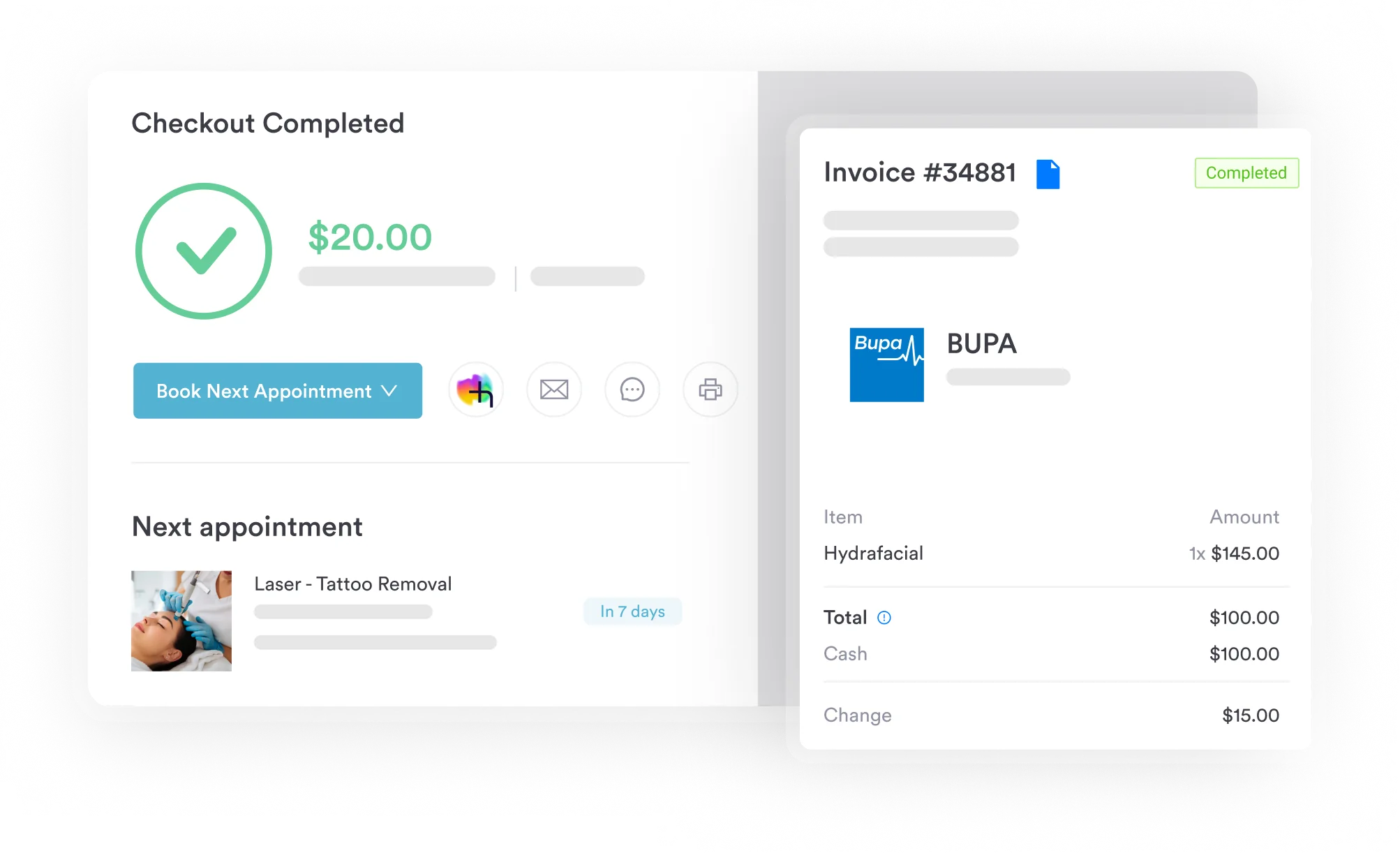
When a clinician requests a test in Pabau, the system can associate the relevant CCSD code with the appointment record and generate a fee note pre-populated with the insurer’s required fields. This reduces the manual re-keying that causes transcription errors in code entry. It also creates a linked audit trail between the clinical record and the invoice.
Pabau’s procedure codes hub includes a complete Bupa CCSD codes guide covering the full schedule of codes recognized by Bupa, with guidance on common billing pitfalls, and extends to US procedure coding for practices that bill across systems. For providers who bill across multiple insurers.
The Diagnostic Schedule includes other single gene and molecular test codes worth knowing if your practice orders genetic testing: CCSD code 0019G covers the EGFR vIII mutation test, CCSD code 0021G covers the Mdm2 gene amplification test, CCSD code 0035G covers CD279 (PD-1) mutation analysis.
CCSD code 0028G is one code in a schedule of thousands, but every code in that schedule represents revenue for UK private practices. Getting 0028G right means confirming the SRD5A2 single gene test narrative, securing pre-authorization, producing documentation that matches the code description, and submitting through the correct electronic channel for each insurer.
Practices that build structured CCSD billing workflows into their day-to-day operations see fewer rejections and faster payment cycles. Pabau helps UK private healthcare teams manage that workflow from clinical record to claim submission. Book a demo to see how it handles CCSD billing in practice.

Coding an intraspinal catheter claim? Intraspinal catheter billing guide explains where the code sits in the HCPCS Level II C-code series.
Billing a cardiac pacing device? Transesophageal pacing catheter guide covers the device code for an electrode catheter that paces the heart from the esophagus.
Billing UK insurers day to day? Best medical billing software in the UK (2026) covers the platforms private practices use to manage CCSD-coded claims end to end.
CCSD code 0028G is billed for a Single Gene Test of the SRD5A2 gene, which encodes steroid 5-alpha-reductase type 2. The test is requested when a clinician suspects 5-alpha reductase deficiency, a cause of disorders of sex development in individuals with a 46,XY karyotype, and it provides a molecular diagnosis alongside hormone testing.
A CCSD code is a standardized code used by UK private medical insurers to identify clinical procedures and diagnostic tests for billing and reimbursement. Every major insurer, including Bupa, AXA Health, Aviva, and Allianz Care, uses the CCSD schedule as the basis for processing claims from independent sector providers.
The CCSD schedule requires registration to access in full via ccsd.org.uk. Bupa’s Code Search portal at codes.bupa.co.uk provides a searchable interface that most providers use as a primary reference. Always verify against the schedule for the current year, since codes are updated annually.
All major UK private medical insurers use CCSD codes, including Bupa, AXA Health, Aviva, Allianz Care, Cigna, WPA, Vitality Health, and Healix. The reimbursement amounts differ between insurers, but the underlying code set is shared.
Incorrect CCSD codes typically result in claim rejection or a query from the insurer requesting clarification. Repeated coding errors may trigger an audit of previously paid claims. The insurer will not automatically substitute a correct code; the provider must resubmit with the accurate CCSD code and supporting documentation.
Most claims to Bupa, AXA Health, and other major insurers are submitted electronically via Healthcode, the UK private healthcare EDI network. The invoice must include the CCSD code, pre-authorization reference, patient membership number, and clinician details. Paper submissions are generally not accepted for standard elective tests and procedures.



