CPT code 93503: Swan-Ganz catheter billing and modifiers
CPT code 93503: Official descriptor and procedure overview In the AMA CPT code s...

Last Updated: Oct 23, 2026

CCSD Code 0048F is the UK private medical insurance code for a potassium blood test – a pathology investigation that measures the level of potassium in a patient’s blood (serum or plasma).
Potassium is one of the most commonly ordered biochemistry tests. It is often requested on its own or as part of a urea and electrolytes (U&E) panel to check kidney function and electrolyte balance.
Every major UK private medical insurer (Bupa, AXA Health, Aviva, Vitality Health, WPA, and Allianz Care) recognises CCSD codes, including 0048F, as the basis for recognising and reimbursing diagnostic tests.
Pabau’s claims management software helps UK private practices submit CCSD-coded invoices electronically and track claim status across multiple insurers from one system.
CCSD Code 0048F is the UK private medical insurance code for a potassium blood test. It covers a routine pathology investigation, billed thousands of times a day across UK private practices, that measures the concentration of potassium in a blood sample.
Practice management software like Pabau helps UK private practices get these claims right the first time. This guide explains what CCSD Code 0048F is, what a potassium test measures, how to document and submit a claim, and the billing errors that most often cause pathology claims to be rejected.
CCSD Code 0048F is the code used to bill a potassium blood test to a UK private medical insurer. Potassium is an electrolyte – a mineral that carries a small electrical charge – and the test measures its concentration in a blood sample.
It is a standard pathology (biochemistry) investigation, not a surgical procedure, so it is billed under the conventions that apply to diagnostic tests rather than the rules that govern operations.
The code sits within the CCSD Schedule, maintained by the Clinical Coding and Schedule Development (CCSD) Group – the single coding standard used across UK private medical insurance (PMI). You can find the CCSD Group and its schedule at ccsd.org.uk.
Every test or procedure billed to a PMI provider must carry a valid CCSD code. The schedule covers a wide range of investigations, from routine bloods like 0048F to interventional procedures billed under entirely different codes.
At the surgical end of that range sits A4010, the code for evacuating an extradural haematoma. That claim turns on the operative note and the reference the insurer issued for the episode.
Clinically, a potassium test checks electrolyte balance and kidney function. It is commonly ordered to monitor patients taking diuretics, ACE inhibitors, or other medicines that affect potassium, and to investigate symptoms such as fatigue or an irregular heartbeat.
It also forms part of the routine workup for high blood pressure, kidney disease, and diabetes. Low potassium levels serious enough to need treatment are coded separately as ICD-10 E87.6, and can present alongside generalized muscle weakness.
Potassium is rarely looked at in isolation. It is usually one line in a urea and electrolytes (U&E) panel, read alongside sodium, urea, and creatinine to build a picture of kidney function and fluid balance.
That matters for billing: when potassium is run as part of a wider profile, it may be covered by the profile’s own CCSD code rather than billed separately. A comparable overlap shows up in US billing.
Charging 0048F on top of a panel that already includes potassium is one of the most common ways a routine pathology claim gets flagged. A standard basic metabolic panel template can help a practice track which components a given test order already covers.
Because the full CCSD Schedule is a login-restricted resource, the exact wording of the descriptor for 0048F should be confirmed through your authenticated CCSD account or your practice management system’s integrated code library.
What does not change is the nature of the test: 0048F identifies the measurement of potassium in a blood sample. The CCSD Technical Guide (October 2025 edition) sets out the coding principles that apply if you ever need to confirm how a test is classified or request an amended code.
Fee reimbursement for CCSD Code 0048F varies by insurer. There is no single national tariff – each insurer publishes its own schedule and updates it periodically.
A potassium test is a low-value, high-volume investigation, so the fee is modest, but the volume means accuracy matters more, not less. The table below shows how the six major UK PMI providers handle CCSD code recognition and where to find their current fee information.
Unlike a surgical procedure, a routine blood test rarely needs its own separate pre-authorisation. What matters is that the outpatient episode the test belongs to is covered, and that the patient’s policy includes outpatient diagnostics.
Always confirm the applicable rate directly in each insurer’s authenticated fee schedule before invoicing. Specific fees are not published here, because schedules update independently and quoting a figure without its effective date risks misleading practitioners.
Insurer fee schedules, such as Allianz Care’s UK Recognition Fee Schedule (last effective December 2024), typically list each CCSD code alongside its recognized fee in a similar format to the other providers in the table above.
Check fee schedule effective dates before each billing cycle. UK PMI insurers update their CCSD-based fee schedules at different points in the year. Submitting a claim that references an outdated fee can create reconciliation disputes even when the code itself is correct – and on a high-volume test like potassium, a small discrepancy repeated across hundreds of claims adds up quickly.
Documentation is where pathology claims quietly fail. Insurers rarely reject a potassium test because the code is wrong – they reject it because the claim is missing the information that shows the test was clinically warranted and correctly attributed.
For a blood test, that documentation looks different from a surgical procedure. There are no operative notes, but there does need to be a clear clinical indication and a clean trail from request to result to invoice.
The minimum documentation for a valid 0048F claim typically includes the clinical reason the test was requested, the patient’s insurer membership or policy number, the requesting clinician’s details, the date the sample was taken, and – where the insurer requires it – the outpatient authorisation reference for the episode.
Where the test was prompted by a GP or specialist referral, the referring practitioner’s details should also appear.
For a diagnostic blood test, the clinical indication is the heart of the documentation. A potassium test ordered to monitor a patient on diuretics, to investigate an arrhythmia, or as part of a kidney-function review is easy to justify. A test with no recorded reason is not.
The indication does not need to be lengthy. A short, specific note tying the test to the patient’s presentation or treatment confirms it was appropriate and heads off a request for further information – the same principle that underpins a standard blood test consent or request template.
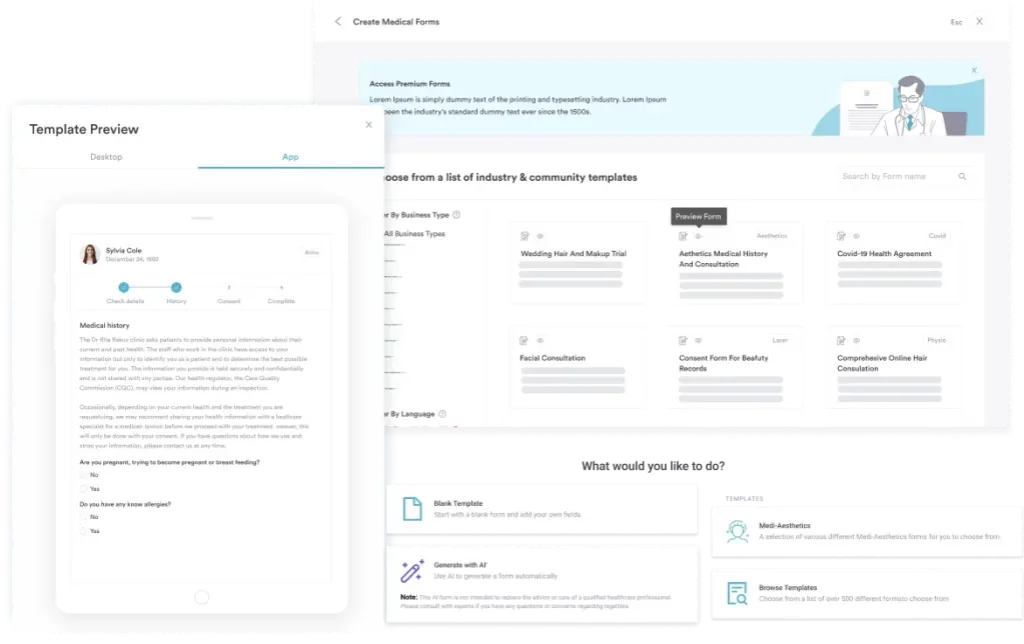
Practices using digital clinical forms can build the clinical indication and requesting details into a standard pathology request template, so nothing is missing when the claim is raised.
Potassium is one of dozens of biochemistry tests billed under their own CCSD code. The same structured-template approach applies to other lab-based requests.
For a routine blood test, “authorisation” usually means confirming that the patient’s outpatient episode and diagnostic entitlement cover the test, not obtaining a separate approval for the potassium measurement itself.
That said, some insurers and some policies do require an authorisation reference for the episode under which diagnostics are claimed, and where one is issued it must appear on the invoice exactly as the insurer provided it.
Recording that reference in the patient’s patient record at the point of approval, rather than retrospectively, is the cleanest way to make sure it is available at billing time.
Practices managing several PMI insurers benefit from a system that attaches the authorisation reference to the appointment and carries it through to the invoice automatically.
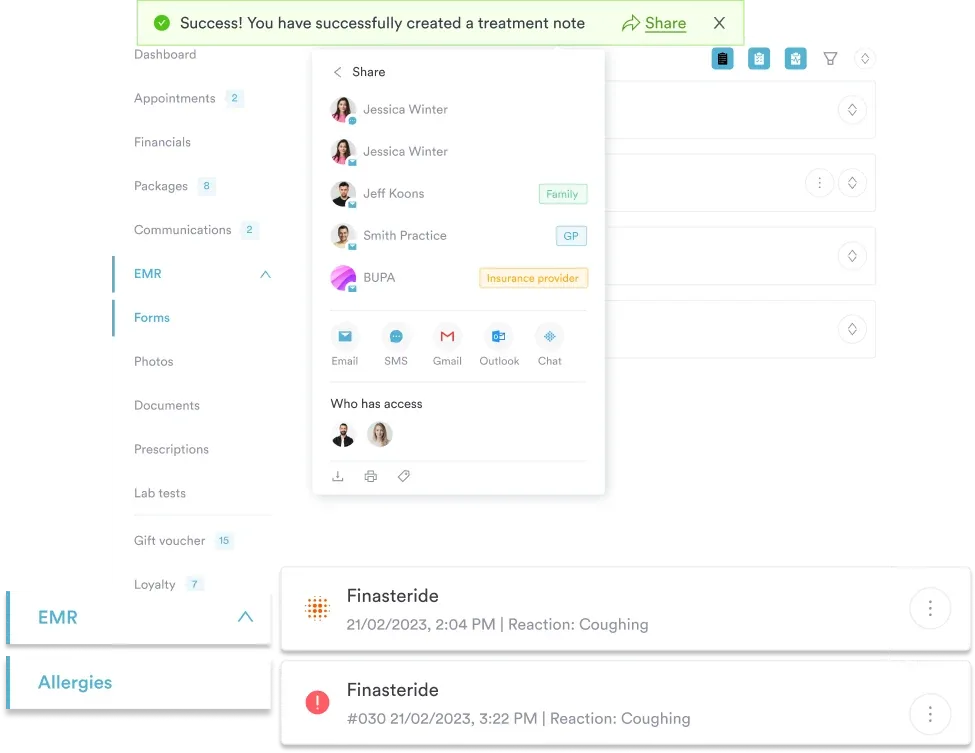
Data protection obligations under UK GDPR apply to all patient documentation supporting a PMI claim, including pathology requests and results. Your UK GDPR compliance checklist should cover retention periods for claim-related records, the lawful basis for sharing documentation with insurers, and how you handle subject access requests that touch on billing records. Missing a provider identifier or a diagnosis code sends a reimbursement claim straight back, so a reimbursement receipt lists both.

Pabau helps UK private practices submit CCSD-coded invoices electronically, track claim status across Bupa, AXA Health, Aviva, Vitality Health, WPA, and Allianz Care, and keep every pathology request, result, and authorisation reference tied to the patient record. See how it works for practices like yours.

Electronic submission is the primary route for UK practitioners, most often through Healthcode, and it is how the majority of CCSD-coded claims reach Bupa, AXA Health, Aviva, Vitality Health, WPA, and Allianz Care. Paper submission is accepted by some insurers but is slower to process and more prone to data-entry errors on the insurer’s side.
Claims management software can automate CCSD-coded submissions across insurers. The workflow differs most for practices moving from NHS to private billing, since NHS tariff conventions do not carry over to PMI claims.
A standard CCSD Code 0048F claim needs the following elements to be present and accurate:
Pathology billing has one wrinkle worth flagging: a potassium test is often part of a wider panel, and it may be the laboratory – not the practice – that bills the insurer directly for the analysis.
Before submitting 0048F, confirm who is raising the pathology claim, and whether the test is already included in a profile code. Billing potassium separately when it is bundled into a panel, or billing it twice because both the lab and the practice submitted, are the two most common causes of duplicate-claim rejections on routine bloods.
Structured claims and billing software should support CCSD code entry natively, flag incomplete mandatory fields before submission, and record the submission timestamp for audit purposes. Manual invoice workflows built in spreadsheets or word processors are the single largest source of field-level errors in UK PMI billing.
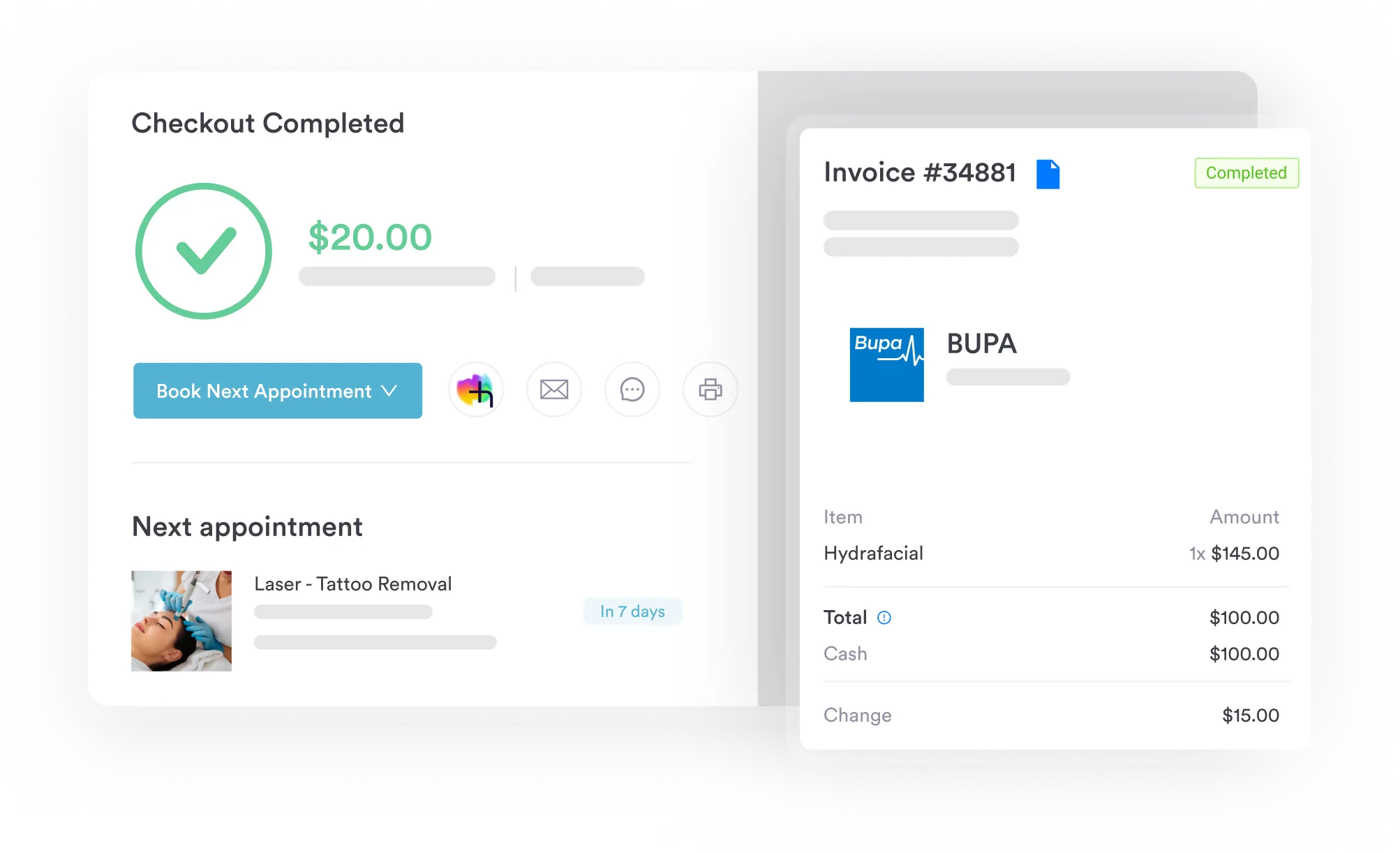
Submit CCSD-coded invoices promptly, ideally within the same weekly billing cycle as the test. Most UK PMI providers do not publish a hard submission deadline, but late submission is one of the grounds an insurer can use to query or decline a claim. A regular billing cycle stops small, easy-to-forget pathology charges from ageing unnecessarily.
The errors that cause CCSD Code 0048F claims to fail are consistent across practices and insurers. Knowing them in advance is more efficient than resolving denials after the fact.
Practices that have recently moved into private referral pathways alongside NHS work hit these errors most often, because private billing conventions differ from NHS tariff billing and are not always covered in initial PMI recognition training.
Potassium testing is a pathology investigation, so the rules that govern operations simply do not apply to it. There is no “bilateral” version of a blood test, no operative note to submit, and no multiple-procedure reduction of the kind used when two operations share a session.
Applying surgical billing logic to a diagnostic code, or expecting the documentation an operation would need, is a common source of confusion for practices new to private pathology. Bill 0048F as the diagnostic test it is.
Potassium is frequently included in a urea and electrolytes profile. Billing 0048F as a separate line when the panel code already covers it is a form of unbundling – charging component parts separately when a comprehensive code exists. Insurers flag this quickly on high-volume codes.
Unbundling works the same way elsewhere in the schedule, with less room for error. A2080 covers ventricular puncture only as a sole procedure, so a second neurosurgery code on the claim gets that line denied.
When an external laboratory processes the sample, it may bill the insurer directly for the analysis. If the practice also submits 0048F for the same test, the insurer receives two claims for one investigation and rejects or claws back one of them.
Agree in advance who bills for pathology – the lab or the practice – and make sure your workflow reflects that split.
Where an authorisation or membership reference is required, it must match exactly what the insurer issued. A transposed digit, an incorrect prefix, or a reference from the wrong episode are the common failure points.
Because these references are often relayed verbally or by email and then retyped by hand, transcription errors are easy to make. Recording the reference directly in the patient record at the point of approval, and carrying it through to the invoice via the practice management system, removes the manual step entirely.
CCSD Code 0048F is a simple code for a simple test, but simple does not mean it looks after itself. On a potassium test, the difference between a clean claim and a denial rarely comes down to the code.
It comes down to whether the test was clearly indicated, billed under the right schedule, not duplicated with the lab, and submitted with the references the insurer asked for.
Pabau helps UK private practices build that structure. From keeping every pathology request, result, and authorisation reference tied to the patient record, to submitting CCSD-coded invoices electronically across all the major PMI providers, Pabau’s claims management tools cut out the manual steps where billing errors creep in.
If your practice bills across several insurers and wants a more reliable CCSD workflow, book a demo to see how it works in practice.

Billing a rechargeable neurostimulator device? Rechargeable neurostimulator billing guide covers the implantable generator code billed only in hospital outpatient and ambulatory surgical center settings.
Billing a cardiac contractility device? Cardiac contractility generator guide covers the implantable generator code CMS maintains under the HCPCS Level II C-code series.
Checking a fee before you invoice? Bupa fee schedule lists the full set of Bupa-recognised codes alongside their current fees.
CCSD Code 0048F is the UK private medical insurance code for a potassium blood test – a pathology investigation that measures the level of potassium (an electrolyte) in a patient’s blood. It is used to check electrolyte balance and kidney function, and is often ordered on its own or as part of a urea and electrolytes (U&E) panel. The code belongs to the CCSD Schedule, maintained by the Clinical Coding and Schedule Development (CCSD) Group, the coding standard used across UK private medical insurance.
All major UK private medical insurers that use the CCSD Schedule – Bupa, AXA Health, Aviva, Vitality Health, WPA, and Allianz Care – recognise valid CCSD codes, including 0048F. Payment is subject to the test being covered under the patient’s policy, the outpatient episode being authorised where required, and the claim not duplicating one submitted by the laboratory.
A routine blood test rarely needs its own separate pre-authorisation. What matters is that the patient’s outpatient episode and diagnostic entitlement cover the test. Some insurers and policies do require an authorisation reference for the episode under which diagnostics are claimed – where one is issued, record it in the patient record and quote it exactly on the invoice. Always confirm the position with each insurer, as it varies by policy.
Potassium is often one component of a urea and electrolytes (U&E) panel, alongside sodium, urea, and creatinine. When it is run as part of a profile, it may be covered by the panel’s own CCSD code rather than billed separately as 0048F. Billing 0048F on top of a panel that already includes potassium is a common cause of rejected pathology claims, so check how the test was ordered before invoicing.
Access the CCSD Schedule through your registered CCSD account at ccsd.org.uk. The Schedule is login-restricted and updated periodically. You can also use Bupa’s code search at codes.bupa.co.uk and each insurer’s provider portal for fee information. For pathology, confirm whether a test is billed individually or as part of a profile before selecting the code.