CCSD Code H0480: Abdominal revision of restorative proctocolectomy
What is CCSD Code H0480? CCSD Code H0480 is the procedure code for abdominal rev...

Last Updated: Oct 15, 2026

CCSD code 0537G sits in the Pathology chapter of the CCSD (Clinical Coding and Schedule Development) schedule, so it identifies a diagnostic laboratory test, not a surgical or investigative procedure.
The code’s four-digit-plus-letter format matches the Pathology chapter’s structure, which is based on NHS National Laboratory Medicine Catalogue (NLMC) codes, not the letter-first format the standard CCSD Procedural Schedule uses for operations.
The trailing letter “G” does not appear in the CCSD Technical Guide’s specimen-abbreviation list, which lines up with other G-suffix Pathology codes on record (0006G, 0022G, 0042G, 0504G) that are molecular or genetic analysis tests rather than specimen-based lab codes.
Bupa, AXA Health, Vitality, and Aviva recognise CCSD codes, but pathology and genetic tests are typically reimbursed only with prior authorisation. Verify the current descriptor for 0537G at ccsd.org.uk before billing.
Practice management software like Pabau lets UK practices attach CCSD codes to the patient record and track every claim in one place, so billing stays consistent whether a code covers an operation or a lab test.
CCSD code 0537G sits in the Pathology chapter of the CCSD (Clinical Coding and Schedule Development) schedule, the code list UK private medical insurers use to process claims. That matters because 0537G’s format, four digits followed by a single trailing letter, does not match the letter-first structure the CCSD Procedural Schedule uses for surgical and investigative procedures.
It matches the Pathology chapter instead, which means 0537G identifies a diagnostic laboratory test rather than an operation.
This guide covers:
CCSD code 0537G is published in the CCSD Group’s official schedule, the standard alphanumeric coding system used across UK private healthcare. The schedule has two parts. The Procedural Schedule covers surgical, investigative, therapeutic, and consultation-related procedures. The Diagnostic schedule covers audiology, cardiac, ophthalmology, respiratory, pathology, and radiology diagnostics.
0537G’s number-then-letter format places it in the Pathology chapter of the Diagnostic schedule, not the Procedural Schedule.
Always verify the current descriptor for 0537G directly in the CCSD Technical Guide (updated October 2025) or your insurer’s code lookup before billing, because pathology descriptors and specimen groupings can change between schedule versions.
The exact wording for 0537G sits behind the CCSD Group’s member login, so this guide describes the code’s type and chapter structure rather than inventing a specific test name it cannot verify.
CCSD codes are used exclusively for UK private practice billing. They are entirely distinct from NHS coding systems such as OPCS-4 and ICD-10, which are used for NHS commissioning and hospital episode statistics. If your practice bills both NHS and private patients, never use CCSD codes on NHS invoices.
The CCSD schedule is anatomically driven. Most Procedural Schedule codes are five characters: a leading letter that identifies the specialty chapter (for example A for brain and cranium procedures, or B for breast procedures), followed by four numbers. That letter-first structure is what most people picture when they think of a CCSD code.
A brain biopsy billed as CCSD A0400 is one such A-chapter entry. The tissue specimen it produces is what a pathology code then tests.
Pathology sits in the Diagnostic schedule instead, alongside audiology, cardiac, and radiology diagnostics. Per the CCSD Technical Guide, pathology codes are based on NHS codes from the National Laboratory Medicine Catalogue (NLMC), and “follow a different structure to other CCSD codes.”
Instead of a leading chapter letter, pathology codes run four numbers first, with a trailing letter last, which is exactly the shape of 0537G.
In most pathology codes, that trailing letter identifies the specimen sample used for the test, not a procedure variant. The Technical Guide lists the abbreviations below:
“G” does not appear on that list. That is consistent with a pattern visible elsewhere in Pabau’s own CCSD code library. G-suffix pathology codes such as 0006G and 0022G are molecular or genetic analysis tests rather than specimen-based lab codes.
The same holds for 0042G and 0504G, two more G-suffix codes that follow the same genetic-testing pattern. That makes molecular or genetic pathology testing the most likely category for 0537G too, though the exact descriptor should always be confirmed against the live schedule rather than assumed from the code’s shape alone.
This distinction matters most for clinicians who move between NHS and private settings after leaving the NHS for private practice. A surgical CCSD code has a reasonably direct OPCS-4 counterpart. A pathology code like 0537G does not, because NHS laboratory tests are commissioned and catalogued through the NLMC rather than coded as operations.
Other codes in the schedule. Always confirm the exact type before billing rather than assuming it from the code alone.
The major UK private medical insurers that use the CCSD schedule for reimbursement include Bupa, AXA Health, Vitality, Aviva, WPA, Cigna Healthcare, and Allianz Care. Because 0537G is part of the shared schedule, it is generally recognised across these payers.
Pathology and genetic tests are typically scrutinised more closely than routine procedures, so each insurer may apply its own prior-authorisation requirement or clinical guideline to this code.
Verify acceptance before submitting. Insurer portals update regularly and individual policy rules can change between benefit years. Check these resources directly for 0537G:
Reimbursement rates for CCSD code 0537G vary by insurer, benefit year, and the laboratory carrying out the test. Never quote a fixed fee to a patient based on schedule figures alone. Confirm the applicable fee against the current insurer fee schedule instead.
If your practice is billing privately for the first time after leaving the NHS, register as a recognised provider with each PMI before submitting any CCSD-coded invoice.
Pathology and genetic tests are prior-authorisation sensitive. Confirm the patient’s insurer has approved the test behind 0537G, and that the referral records the clinical reason for testing, before the sample goes to the lab. Approval requested on the day of testing is much harder to secure than approval arranged in advance.
Most UK private practices submit CCSD-coded invoices electronically via Healthcode, the billing clearinghouse used across England, Scotland, Wales, and Northern Ireland to route claims to all major PMIs.
For a pathology code, the main difference from a surgical procedure is that the laboratory report and the clinical justification for testing carry more weight than they would for an operation. Here is a step-by-step overview of a standard submission:
Good private practice management treats billing as a scheduled workflow, not an afterthought. Setting a weekly billing review cadence, where every post-appointment invoice is checked, coded, and submitted, reduces the backlog that leads to aged debt.
CCSD billing errors cost UK private practices thousands of pounds each year in delayed payments, rejected claims, and write-offs. The errors below account for most rejections on pathology-coded invoices, including those using 0537G.
UK GDPR also applies to the records you retain for CCSD-coded pathology invoices. Genetic data is explicitly listed as special category data under UK GDPR, alongside other health information such as membership numbers, clinical codes, and dates of service.
Your UK GDPR compliance checklist should include a retention schedule for billing and laboratory records that aligns with Information Commissioner’s Office (ICO) guidance and your professional indemnity insurer’s requirements.

Pabau brings scheduling, clinical notes, and CCSD invoice submission together in one platform, so your admin team can code and submit lab tests and procedures without switching systems. See how it works for UK private practices.

UK private practices using a standalone billing tool alongside a separate clinical system face a recurring problem: admin teams enter test details twice.
The referring clinician or the laboratory records the test order and result, and the admin team re-enters the same detail as a CCSD code on the invoice. Each re-entry is an opportunity for a transcription error that triggers a rejection downstream.
Practice management software like Pabau handles this differently. Pabau lets a practitioner attach a CCSD code directly to the patient record, whether the code covers a procedure or a lab test, and carry it through to invoicing without leaving the platform.
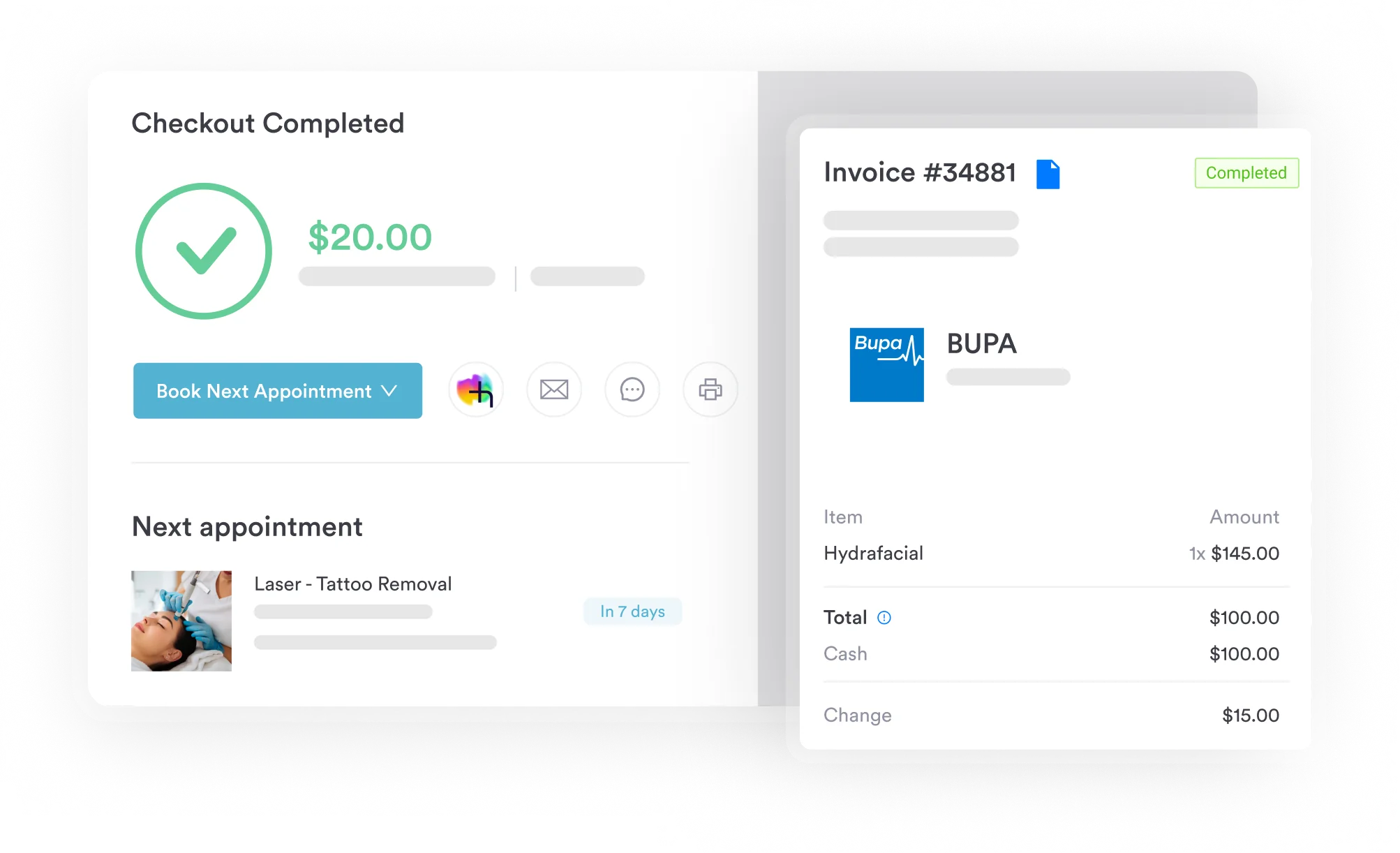
For practices that submit electronically via Healthcode, Pabau supports invoice submission to the clearinghouse, which then routes the CCSD-coded claim to the relevant PMI.
This matters because Healthcode connectivity is a practical requirement for most UK consultants and laboratories billing Bupa, AXA Health, and Vitality at scale. Check Pabau’s current feature documentation to confirm the exact scope of Healthcode integration before relying on it for live submissions.
Managing compliance alongside billing is a connected concern for UK private practices. Practices operating under Care Quality Commission (CQC) registration in England, for example, must maintain auditable clinical and laboratory records that align with their billing activity.
A system that links the CCSD code on an invoice back to the referral and lab report that justify it makes audit preparation substantially more straightforward. For specialist practices.
Practices opening a physiotherapy clinic for the first time should build CCSD billing into their setup from day one, alongside the clinical and compliance groundwork that comes with treating privately insured patients.
Physiotherapy and allied health practices in the UK also bill via CCSD codes when treating privately insured patients. Reviewing the compliance requirements alongside your billing setup ensures the two workflows stay aligned from the start.
Review your CCSD billing rejections by error type every quarter. Most practices find that the majority of their rejections trace to two or three recurring mistakes, often a mismatched code type (billing a pathology code as if it were a procedure) or a missing prior authorisation. Fixing those two issues typically halves the rejection rate without changing anything else in the workflow.
CCSD code 0537G is a Pathology chapter code: a diagnostic laboratory test billed within UK private healthcare, not a surgical or investigative procedure. Getting it right comes down to three things:
Pabau’s private billing workflow connects clinical documentation, CCSD coding, and invoice submission in one platform, so UK private practices spend less time correcting rejections and more time delivering care. To see how it fits your practice, book a demo.

List Item #1
List Item #2
CCSD code 0537G is a code in the Pathology chapter of the CCSD (Clinical Coding and Schedule Development) schedule, used for a diagnostic laboratory test rather than a surgical or investigative procedure. Verify the current descriptor at ccsd.org.uk before submitting.
No. Its four-digit-plus-letter format matches the CCSD Pathology chapter, not the letter-first format the Procedural Schedule uses for surgical and investigative procedures. That makes 0537G a diagnostic/pathology test code, typically raised by a laboratory rather than an operating consultant.
Most CCSD codes start with a letter that identifies the specialty chapter, followed by four numbers. Pathology codes are based on NHS National Laboratory Medicine Catalogue (NLMC) codes and run the other way round, four numbers followed by a trailing letter, which is why 0537G’s format differs from a typical surgical code.
Major UK PMIs including Bupa, AXA Health, Vitality, Aviva, WPA, Cigna, and Allianz Care generally recognise codes from the current CCSD schedule. Pathology and genetic tests are usually reimbursed only with prior authorisation, so confirm acceptance and the applicable fee via each insurer’s provider portal before submitting.
Submit electronically through Healthcode, including the patient’s PMI membership number, a valid pre-authorisation reference, the provider number for whoever raises the claim, and the laboratory report or clinical justification supporting the test, since 0537G is itself the diagnostic code rather than a procedure that needs a separate diagnostic pair.
In most Pathology chapter codes, the trailing letter identifies the specimen type tested, such as B for blood or T for tissue. “G” does not appear on the CCSD Technical Guide’s specimen list, which lines up with other G-suffix pathology codes (0006G, 0022G, 0042G, 0504G) that are molecular or genetic analysis tests rather than specimen-based lab codes. Always confirm the exact test against the live schedule rather than assuming it from the code’s shape.